By Dr Nishma Kotecha, dentist
Every year, Christmas menus try to outdo each other. Gingerbread lattes. Mince pie milkshakes. Pigs in blankets on absolutely everything.
This year, Creams Café has gone somewhere I did not see coming: hot Pepsi.
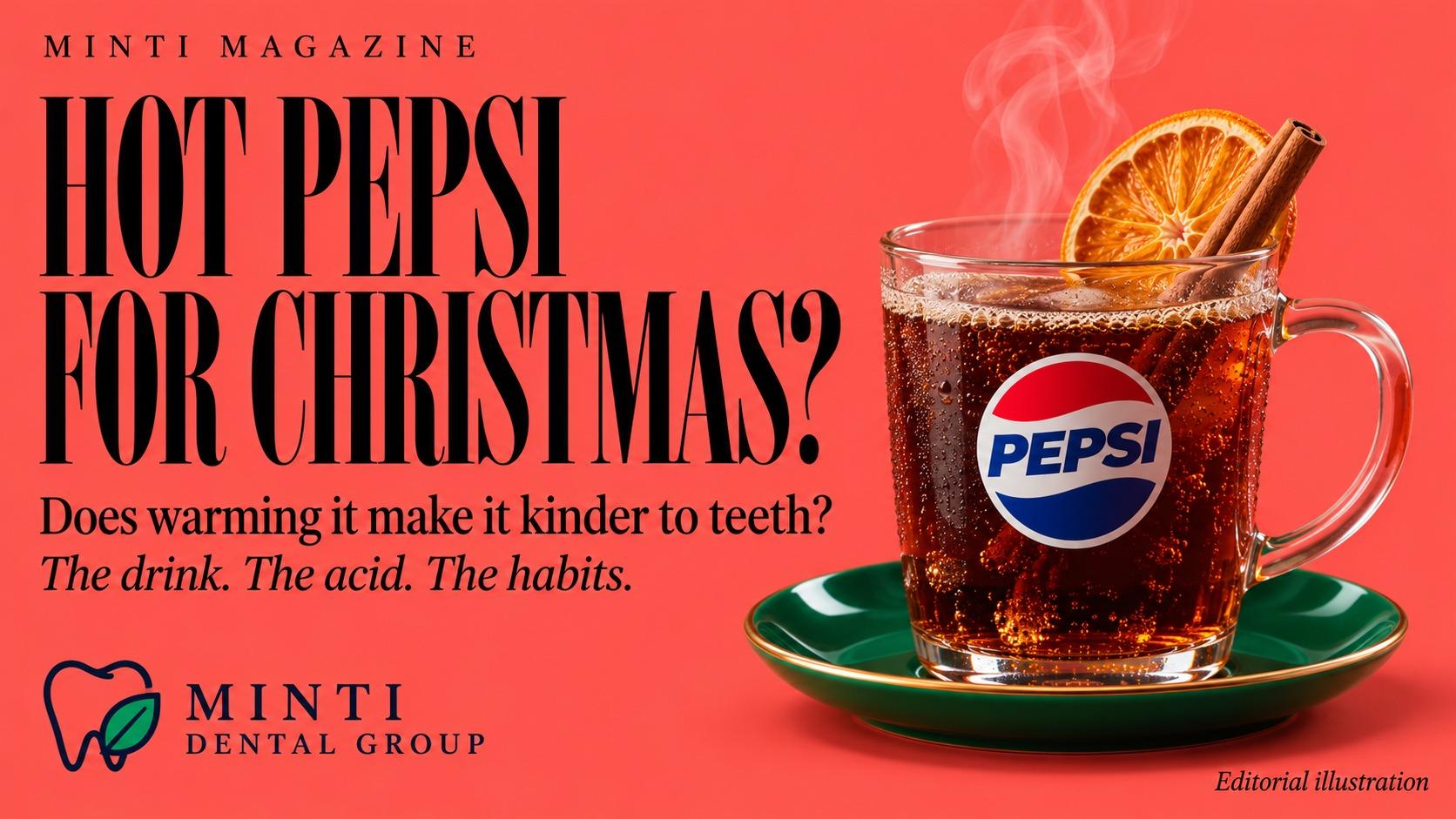
Its new Christmas menu, which launched on 24 November, includes a Mulled Gingerbread Steamer, which Verge Magazine reported is "a hot serve combining" Gingerbread Pepsi, chai and orange juice, steamed together and finished with a cinnamon stick and a dried orange slice. Creams' boss called it "a completely new way to enjoy a familiar Pepsi flavour."
Britain's Christmas drinks menu now includes hot Pepsi. Your dentist has one question: is warm fizzy drink any kinder to your teeth than cold?
The short answer: not necessarily. "Warm" and "alcohol-free" are lovely descriptions, but they aren't dental-health ratings. The Oral Health Foundation lists fizzy drinks (including diet and sugar-free versions) and fruit juices such as orange juice among the acidic drinks that can cause dental erosion, which is the loss of tooth enamel caused by acid. I don't know the sugar content or acidity of this particular drink, and I'm not going to guess. But the same sensible habits apply to any acidic drink, hot or cold: enjoy it as a treat, ideally with food, and don't sip it slowly for an hour. (I've covered similar ground in is Diet Coke bad for your teeth?, and why how often you have sugar matters.)
What's actually in it?
According to Verge's write-up, the Mulled Gingerbread Steamer is made with three main ingredients: Gingerbread Pepsi, chai and orange juice. They're steamed together and served hot.
The article describes it as an "innovative alcohol-free festive drink". It's priced at £4.25 to eat in or take away.
That's all I know about it. The coverage doesn't give any nutritional information, sugar content or acidity, so I'm not going to make any claims about this specific drink or how it compares with anything else. I haven't tried it, and I'm not here to tell anyone not to.
What I can do is explain how drinks like this, in general, interact with your teeth.
"Warm" isn't a dental rating
There's something about warm drinks that feels wholesome. Hot chocolate by the fire. A cup of tea when you're poorly. Mulled anything at Christmas.
But temperature isn't really what your teeth care about. They care about two main things:
- Acid, which can wear away enamel. This is called dental erosion.
- Sugar, which feeds the bacteria in plaque, which then make acid and cause tooth decay.
Warming a drink doesn't magically turn it into something that's kinder to your teeth. Heating a fizzy drink might make it less fizzy, but fizz isn't the only reason fizzy drinks can be acidic. And orange juice is acidic whether it's cold from the fridge or steaming in a mug.
So a warm drink made with fizzy drink and fruit juice still deserves the same respect as a cold one.
"Alcohol-free" isn't a dental rating either
The Steamer is pitched as an alcohol-free alternative to mulled wine. That's brilliant if you're driving, not drinking, or just fancy something different.
But for teeth, alcohol-free doesn't automatically mean tooth-friendly. Plenty of alcohol-free drinks are acidic or sugary. In fact, the Oral Health Foundation's list of acidic drinks includes wine and cider, but also fizzy drinks, fruit juices, smoothies, energy drinks and sports drinks, many of which contain no alcohol at all.
It even lists lemon water and hot water with lemon. So "healthy-sounding" and "warm" don't get a free pass either.
Check-Ups and Hygiene at Minti
A private check-up is £35 to £38 and a hygiene visit is £60 to £76. On the NHS, a check-up is Band 1, £27.90.
Book a check-up
What is dental erosion?
The Oral Health Foundation describes dental erosion as "the loss of tooth enamel caused by acid". Unlike tooth decay, which involves bacteria, erosion is caused by acid alone.
Enamel is the hard, protective outer layer of your teeth. When it wears away, the softer dentine underneath can become exposed. The OHF says teeth can look thinner or more yellow, and you might notice sensitivity or pain.
And here's the important bit: enamel doesn't grow back. So protecting it matters. If you've noticed teeth that suddenly feel sharp or sensitive with hot or cold drinks, here's why teeth can become sensitive all of a sudden.
Why hot drinks can be sneaky
There's one thing about hot drinks that's worth thinking about: we drink them slowly.
A cold can of fizzy drink might be gone in a few minutes. A hot drink gets sipped, put down, picked up again, carried around the shops and finished half an hour later. Every sip brings acid (and any sugar) back into contact with your teeth.
That's the same reason I talk so much about frequency in my Halloween sweets post. It's not just what you have, but how long your teeth are bathed in it.
How to enjoy festive drinks and protect your teeth
I'm not the fun police. Christmas is for treats, and that includes novelty drinks. If you fancy trying hot Pepsi, go for it. Just be sensible about it.
The Oral Health Foundation's advice on preventing erosion includes:
- keeping acidic foods and drinks to mealtimes
- swallowing drinks quickly, rather than holding them in your mouth
- using a straw to reduce contact with your teeth
- finishing with milk or cheese, which can help neutralise acid
- chewing sugar-free gum to increase saliva flow
- waiting at least an hour after eating or drinking before brushing your teeth
That last one surprises lots of people. Acid softens enamel temporarily, so brushing straight away can wear it more. Give your teeth time to recover first. If you're already sensitive, here's how to ease sensitive teeth.
A few more festive tips of my own:
- Make it a treat, not a habit. One novelty drink is very different from one every day through December.
- Don't nurse it. Enjoy it, then finish it, rather than sipping it for an hour.
- Have it with food, not as a between-meals pick-me-up.
- Follow it with water. It helps rinse your mouth.
- Keep brushing twice a day with fluoride toothpaste. Christmas is not a holiday from brushing.
- Book a check-up in the new year if you've noticed sensitivity, or teeth looking thinner or more yellow at the edges.
New Patient Consultations
A new patient consultation is £45 at our Harlow practices and £35 at Enfield Smiles. Every practice offers NHS and private care.
Request an appointment
Sugar is the other half of the story
Even if a drink isn't especially acidic, sugar can still cause problems. Every time sugar reaches your teeth, the bacteria in plaque produce acid, which can lead to tooth decay. Here's what a cavity looks like.
I don't know how much sugar is in this drink, and the coverage doesn't say. But Christmas tends to be a month of sugar on top of sugar: chocolates, mince pies, puddings, fizzy drinks, sweet coffees and sticky cocktails. That's a lot of sugar moments for your teeth to deal with.
Keeping treats to mealtimes, rather than grazing all day, is one of the simplest things you can do to protect your teeth over the festive season.
A few quick questions
Is hot Pepsi bad for your teeth? I don't know the sugar content or acidity of this specific drink. In general, fizzy drinks and fruit juices can be acidic, and warming a drink doesn't automatically make it kinder to teeth.
Are alcohol-free drinks better for your teeth? Not necessarily. Many alcohol-free drinks, like fizzy drinks and fruit juices, can still be acidic or sugary.
Does drinking through a straw help protect teeth? The Oral Health Foundation suggests using a straw to reduce contact between acidic drinks and your teeth.
Should I brush my teeth straight after an acidic drink? The Oral Health Foundation advises waiting at least an hour after eating or drinking before brushing.
The verdict
Hot Pepsi is probably the most unexpected Christmas drink of the year, and I love a bit of festive novelty. But "warm" and "alcohol-free" are descriptions of the experience, not ratings of how kind a drink is to your teeth.
Enjoy it if it takes your fancy. Just treat it like any other acidic or sweet drink: as a treat, with food, not sipped for an hour, and with your teeth brushed well before bed. Your enamel will still be there in January.
This article is general information based on public reporting. It is not personal dental advice. Creams Café and PepsiCo have no connection with this article.