On this page
By Dr Nishma Kotecha, dentist
Spare a thought for Claire Sweeney's campmates.
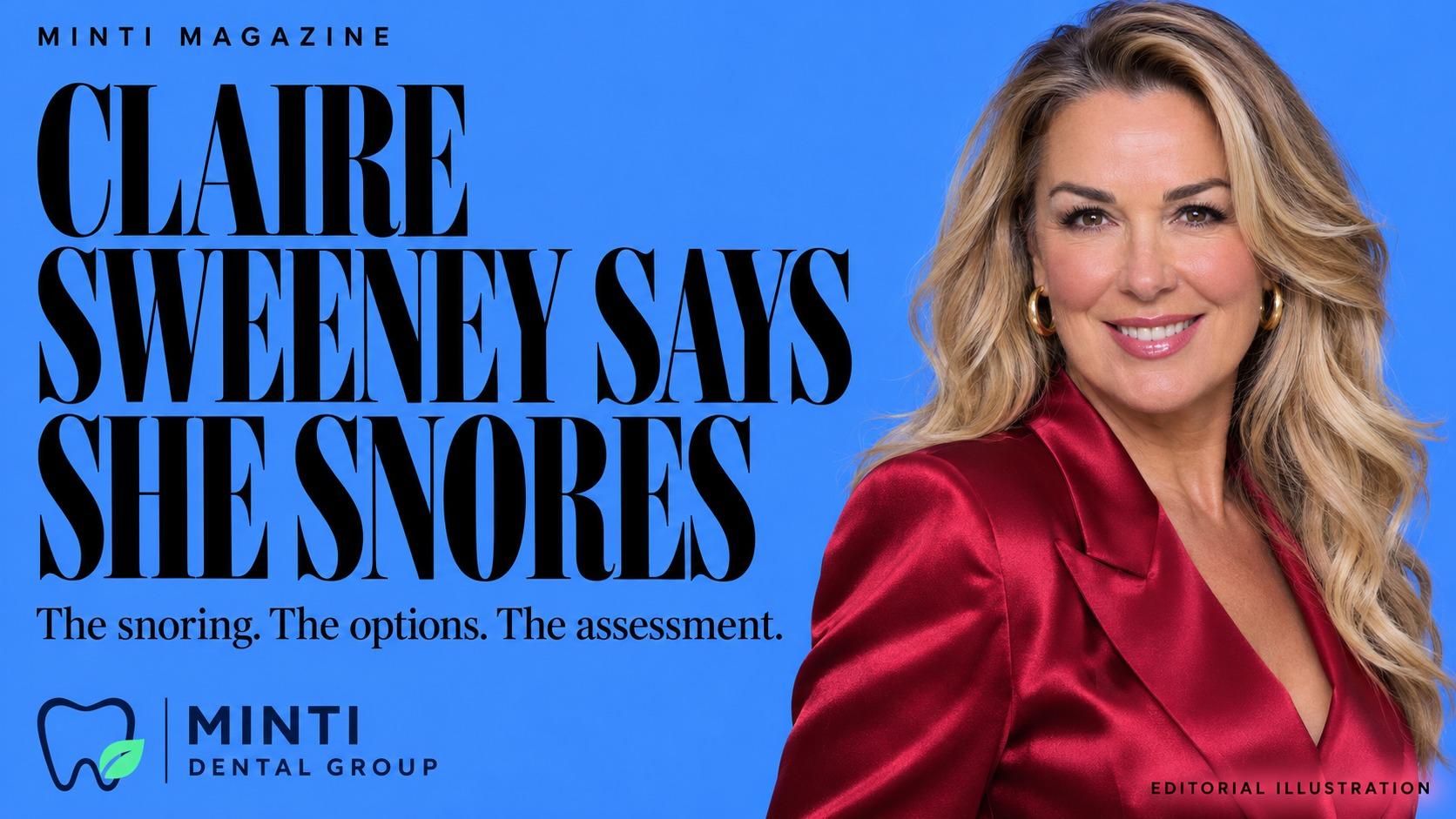
The actress, fresh from three years on Coronation Street, is heading into the jungle for this year's I'm a Celebrity, which starts on Monday 16 November. And ahead of the show, she's been upfront about the habit that might test her campmates. Asked what could rub them up the wrong way, she told The Sun: "I've got bad sinuses and I snore!"
A camp full of celebrities. No walls. Somebody's going to need earplugs.
But Claire's admission raises a question I'm asked more often than you'd think: can a dentist help with snoring? And the answer is: sometimes, yes. But not always, and not with a random mouthguard off the internet.
The short answer: snoring isn't always a nose problem. It can come from the nose, the mouth, the tongue or the throat, and the right treatment depends on the cause. For some people, the NHS says a device worn in the mouth to bring the tongue forward, called a mandibular advancement device, can help. A dentist can assess whether one is suitable and make one that fits properly. But for others, the cause is in the nose or elsewhere, and a mouth device won't help. And if snoring comes with breathing pauses, gasping or choking at night, or feeling very sleepy during the day, the NHS says to see a GP, because these can be signs of sleep apnoea. (If you already wear something at night, I've explained the difference between a retainer and a night guard, which is different again from a snoring device. And if you wake with a sore jaw, see why your tooth hurts when you clench.)
What has Claire said?
Speaking to The Sun on 11 November, Claire was asked what might rub her campmates up the wrong way. Her answer: "I've got bad sinuses and I snore!"
That's her own account, and that's all I know. It isn't evidence that she has sleep apnoea or any other condition, and I'm not going to suggest she does. I also don't know what's behind her snoring, or what, if anything, she's tried for it. And I'm certainly not going to promise that a mouthguard would fix it.
What I can do is explain why snoring happens, and where a dentist does, and doesn't, fit in.
Why do people snore?
According to the NHS, snoring happens when the tongue, mouth, throat or nasal airways vibrate as you breathe. During sleep, those tissues relax and the airway narrows, which makes the vibration more likely.
The NHS says you're more likely to snore if you:
- are overweight
- smoke
- drink a lot of alcohol
- sleep on your back
Sometimes, snoring can also be caused by sleep apnoea, which is more serious.
The important thing is that snoring can come from different places. The NHS lists different treatments depending on whether the problem is:
- the tongue blocking the throat
- the mouth falling open during sleep
- blocked nasal airways
That's why there's no one-size-fits-all fix.
Where a dentist can help
Mandibular advancement devices
For snoring caused by the tongue falling back and blocking the throat, the NHS describes "a device you wear in your mouth to bring your tongue forward". This is called a mandibular advancement device, or MAD for short. (Not my favourite acronym, but there we go.)
It's a custom-made appliance, a bit like a sports mouthguard for both top and bottom teeth, that gently holds the lower jaw slightly forward while you sleep. Bringing the jaw forward brings the tongue with it, which can help keep the airway more open.
Why it needs to be assessed properly
A dentist can check:
- whether your teeth are healthy enough to support a device. It needs enough sound teeth to grip onto.
- your gums, because loose teeth or gum disease can be made worse. Here's what gum disease looks like.
- your jaw joints, because moving the jaw forward every night isn't comfortable for everyone.
- your bite, so changes can be monitored over time. (Teeth can shift for all sorts of reasons, as I explain in why are my teeth moving?)
A custom-made device is made from impressions or scans of your teeth, so it fits closely and can be adjusted gradually. Follow-up appointments let the dentist check comfort and make sure it isn't causing problems with the teeth or jaw.
Why a random mouthguard isn't the answer
This is the bit of the carousel I'd underline twice. Snoring isn't always a nose problem. But buying a random mouthguard isn't the answer either.
Cheap, generic devices are widely available online. The problem is:
- They might not be treating the right thing. If your snoring comes from your nose, pushing your jaw forward won't help.
- They might not fit well. A poor fit can be uncomfortable, fall out during the night, or put pressure on the wrong teeth.
- They can affect your teeth and jaw. Devices that move the jaw can cause jaw ache or changes in how your teeth meet, which is why professional follow-up matters.
- They could hide something more serious. If your snoring is a sign of sleep apnoea, a gadget that makes you quieter doesn't mean the underlying problem has been dealt with.
And please don't confuse a snoring device with a sports guard or a night guard for grinding. They look similar, but they do completely different jobs, as I explained in my Margot Robbie post.
When the answer isn't a dental one
For some people, a mouth device simply isn't the right treatment.
The NHS lists other options depending on the cause:
- If your mouth falls open as you sleep, a chin strap or a vestibular shield, which helps you breathe through your nose.
- If your nose is blocked, nasal dilators or strips, or decongestants and nasal sprays to reduce swelling.
- Surgery, which the NHS says is only considered if other treatments don't work, isn't widely available on the NHS, doesn't always work, and snoring can come back.
And the NHS suggests some simple things to try first: losing weight if you're overweight, sleeping on your side, stopping smoking, cutting down on alcohol, and avoiding sleeping pills.
Given that Claire has mentioned sinus problems, it's worth saying that nasal causes of snoring are often a matter for a GP or ear, nose and throat specialist, not a dentist.
When snoring needs a doctor, not a gadget
This is the most important section of this post.
The NHS says to see a GP if:
- changes to your lifestyle haven't helped
- your snoring has a big impact on your life, or your partner's
- you feel very sleepy during the day
- your breathing stops and starts during the night
- you make gasping or choking sounds while you sleep
Those last three can be signs of sleep apnoea, which can be serious if it isn't treated. It needs a proper medical assessment, sometimes including a sleep study.
The NHS also suggests taking your partner along to the appointment if you can, because they're the one who actually hears your snoring.
If sleep apnoea is diagnosed, treatment often involves a CPAP machine, which pumps air through a mask while you sleep. The NHS also lists a mandibular advancement device among other treatments that are sometimes used. That's a decision for the medical team looking after you, and a dentist can then make and fit the device if it's recommended.
Snoring, teeth and your night-time routine
A couple of dental things are worth knowing if you snore:
- Mouth breathing can dry your mouth. A dry mouth gives saliva less chance to protect your teeth, which can raise the risk of tooth decay. Brushing before bed with fluoride toothpaste matters even more.
- Clenching and grinding can go hand in hand with poor sleep. If you wake up with a sore jaw, headaches or worn teeth, mention it. Here's more on jaw and ear pain linked to teeth.
- Keep up your check-ups. A check-up is a good time to mention snoring. Your dentist may spot signs of grinding, dry mouth or worn teeth before you've noticed anything. Here's how often to see a dentist.
A few quick questions
Does Claire Sweeney snore? She told The Sun: "I've got bad sinuses and I snore!" That's her own account, and it isn't evidence of any particular condition.
Can a dentist help with snoring? Sometimes. A dentist can assess whether a custom-made mandibular advancement device is suitable, if snoring is caused by the tongue falling back. It isn't right for everyone.
Do anti-snoring mouthguards work? They can help some people, depending on the cause. A poorly fitted or unsuitable device may not help, and could affect your teeth or jaw.
When should I see a GP about snoring? The NHS says to see a GP if you feel very sleepy in the day, your breathing stops and starts at night, or you make gasping or choking sounds, as these can be signs of sleep apnoea.
The verdict
Claire Sweeney's campmates might be in for some noisy nights, but she's in good company. Millions of people snore.
The key is knowing where the snoring comes from. Sometimes a dentist can help with a properly assessed, custom-made device. Sometimes the answer is in the nose, the lifestyle, or a medical assessment for sleep apnoea. And sometimes, it's just earplugs for whoever's in the next hammock.
What isn't the answer is grabbing the cheapest mouthguard online and hoping for the best.
This article is general information based on public reporting. It is not personal dental or medical advice. Claire Sweeney and I'm a Celebrity have no connection with this article.