- NHS Band 3
- £332.10
Dental bridges
Fixed replacements that fill the gap left by a missing tooth.
Fixed replacements that fill the gap left by a missing tooth.
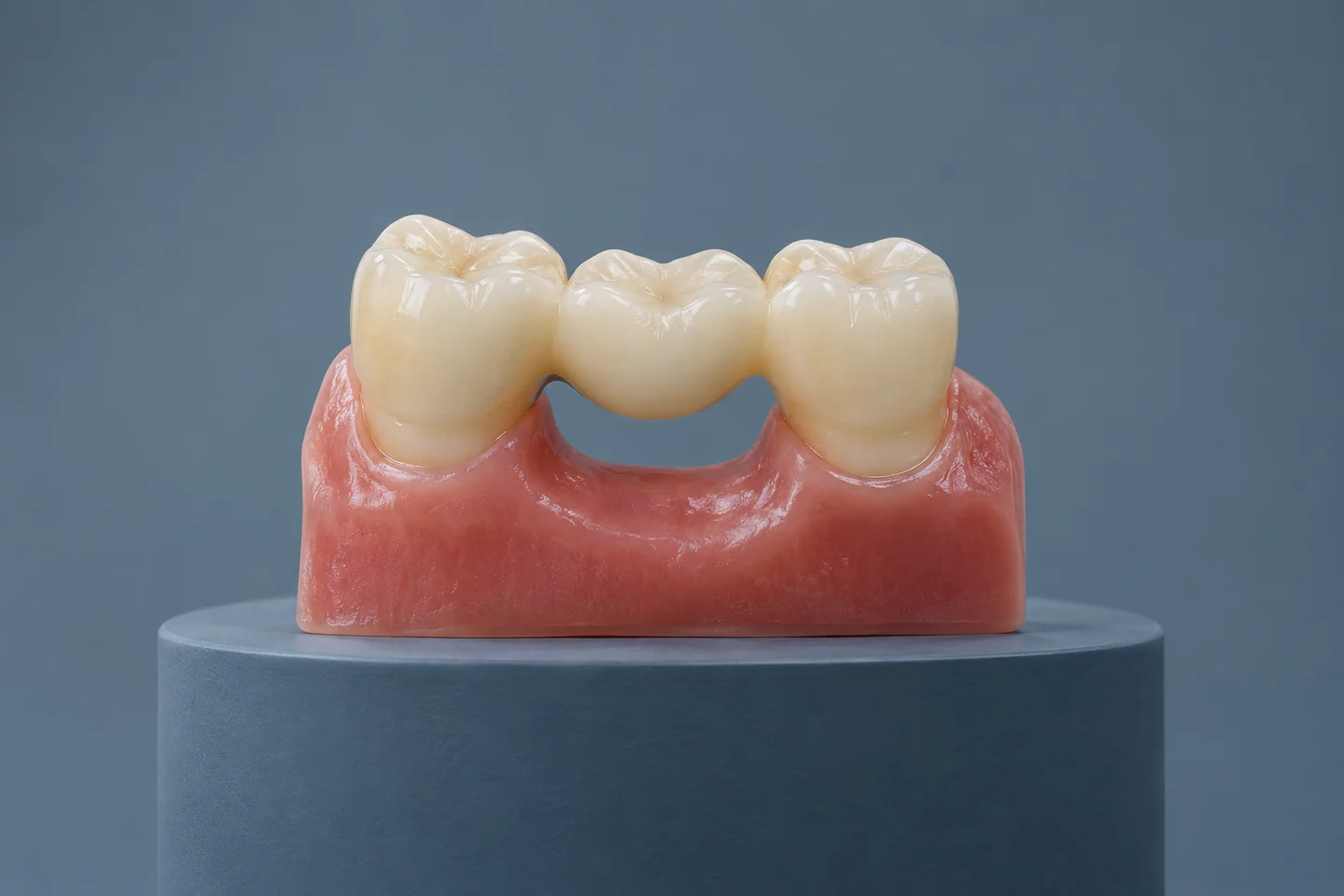
Conventional bridge
£332.10
On the NHS
Choose your practice
On the NHS
Noticed this?
Practices offering dental bridges
Choose your practice to see its prices and book.
- NHS Band 3
- £332.10
- NHS Band 3
- £332.10
Quick answers
Will the teeth next to the gap be filed down?
For a conventional bridge, yes. The supporting teeth are shaped to take crowns, which removes tooth structure for good. A resin-bonded bridge needs little or no drilling but does not suit every gap.
Does having a bridge fitted hurt?
The teeth are numbed with local anaesthetic before they are shaped. Some sensitivity or tenderness for a few days afterwards is common. Contact the practice if pain lasts or the bite feels wrong.
Bleeding gums are worth a check
Bleeding when you brush or floss is one of the first signs of gum disease. A hygiene visit checks your gums and removes the tartar that brushing can’t shift.
Book a hygiene visit
Dental bridges at Minti
Everything you need to know about dental bridges
How a bridge works
A dental bridge fills a gap with a false tooth, called a pontic, fixed to the teeth beside the space or, in some cases, to implants. The supporting teeth are called abutments. A bridge is cemented or bonded in place, so unlike a partial denture you do not take it out.
A bridge can restore the look of a missing tooth, help you chew and stop the neighbouring teeth drifting into the gap. It does not replace the root of the missing tooth, which is one reason your dentist may also discuss an implant.
Before you choose a bridge
A conventional bridge means shaping the teeth either side of the gap, and that can’t be undone. If those teeth are healthy and unfilled, we’ll talk you through a design that needs less preparation, or an implant.
Your dental bridge journey at Minti
- ConsultationWe examine the supporting teeth, check your bite and discuss the design.
- PreparationThe supporting teeth are shaped if needed and a temporary bridge fitted.
- FittingWe check the final bridge’s fit, bite and appearance before fixing it.
- AftercareWe show you how to clean under the bridge and check it is settling.
Compare your options
At your consultation, we discuss whether a bridge or another way of replacing the missing tooth would suit your mouth.
What affects suitability
Whether a bridge will work depends on more than the size of the gap. Your dentist looks at:
- The supporting teethThey must be strong enough to carry the extra load. A conventional bridge makes most sense when those teeth already have large fillings or need crowns. If they are healthy and unfilled, a design that needs less drilling, or an implant, may be better.
- Your gumsActive gum disease needs treating first, and loose or poorly supported teeth may not hold a bridge reliably. Our hygienist team can help get your gums stable.
- The gapShort gaps suit a bridge best. Longer gaps put more strain on the supporting teeth and may be better served by a partial denture or an implant-supported bridge.
- Your biteHeavy biting, clenching or grinding puts extra stress on a bridge, and your dentist takes it into account when choosing the design.
Types of bridge
- Conventional bridgeCrowns on the teeth either side of the gap hold the false tooth. The supporting teeth are shaped to take the crowns, which removes healthy tooth structure and cannot be undone.
- Cantilever bridgeThe false tooth is supported from one side only. It suits a limited number of gaps where the bite allows it.
- Resin-bonded (Maryland) bridgeA wing bonded to the back of the neighbouring tooth holds the false tooth, with little or no drilling. It is often used for front teeth when the neighbouring teeth are healthy, but the bond can fail and the bridge may need re-cementing.
- Implant-supported bridgeDental implants hold the bridge instead of natural teeth, which can suit longer gaps. Implants are placed at Nuffield Dental Practice in Harlow.
Your dentist recommends a design based on your teeth and bite and confirms where the treatment will take place.
Bridge, implant or denture
There is no single best way to replace a missing tooth, and your dentist explains the options that suit your mouth and what each costs.
- A bridge is fixed and avoids surgery. It is usually quicker than an implant, but a conventional bridge relies on shaping the neighbouring teeth, and those teeth need careful cleaning for as long as the bridge is in place.
- An implant does not rely on the neighbouring teeth, so healthy teeth are left alone. It involves surgery, enough bone, several months of treatment and a higher fee.
- A partial denture is removable and can replace several teeth at once. It suits larger gaps or teeth that cannot support a bridge, and it costs less.
- Leaving the gap can be reasonable when it does not affect your bite, chewing or appearance.
If a tooth is due to come out, ask about the options before the extraction, so the replacement can be planned around healing.
Risks and looking after a bridge
A bridge can last many years, but no lifespan is guaranteed. The main risks are:
- Nerve damageShaping a tooth for a conventional bridge occasionally inflames the nerve, and the tooth may later need root canal treatment.
- Decay and gum diseaseThe supporting teeth can still decay, especially at the edges of the crowns where plaque collects.
- A loose bridgeResin-bonded bridges in particular can come unstuck. Do not glue a bridge back yourself. Keep it safe and bring it to the practice, because it can sometimes be cleaned and re-cemented.
- Chips and bite problemsContact the practice if the bridge feels high, moves, or a tooth beside it hurts when you bite. Our guides to pain when biting and a loose adult tooth explain what can cause it.
Brush twice a day with fluoride toothpaste, paying attention to the gum line around the supporting teeth. A toothbrush cannot reach under the false tooth, so clean there every day with a floss threader, bridge floss or an interdental brush, and ask your dental team to show you how. Regular check-ups let your dentist spot problems with the supporting teeth early.
Before you book
- Explain where the gap isSay when the tooth was lost and if you already wear a bridge or a partial denture. Tell reception if an existing bridge is loose or the teeth next to it hurt.
- Ask about the supporting teeth and cleaningYour dentist can explain what will hold the bridge in place, how you will clean underneath it and which alternatives are suitable.
NHS and private bridge fees
Published fees at all three practices. Private bridge fees depend on the design and are confirmed after your dentist has assessed the gap and the supporting teeth.
| Treatment | NHS | Private at Minti |
|---|---|---|
| Conventional bridge | Band 3, £332.10 | On request |
| Resin-bonded (Maryland) bridge | Band 3, £332.10 | On request |
| Implant-supported bridge | Private only | Quoted after consultation |
NHS charges in England are per course of treatment. A clinically necessary bridge falls under Band 3, which also covers any other treatment you need in the same course, and some people get free NHS dental care. Your written quote for a private bridge confirms what is included, such as preparation, laboratory work, a temporary bridge and fitting. Implant-supported bridges need implant treatment at Nuffield Dental Practice, and Enfield Smiles refers implant patients there.
All fees and finance optionsA written quote before you decide
Your practice explains your options and confirms the cost before treatment starts.
Request an appointment
What patients say
- ★★★★★
My dentist was very thorough and communicated with me well about my teeth. Highly recommend.
Tamara B. · Nuffield
- ★★★★★
There’s no other dentist like this one.
Aidan R. · Church Langley
- ★★★★★
Fantastic, thanks for looking after me, even though I got to my appointment late.
Thomas W. · Enfield Smiles
Frequently asked questions
How long does a dental bridge last?
Many bridges last for years, but no lifespan is guaranteed. The design, the health of the supporting teeth, your bite and how well you clean under the bridge all make a difference. Some bridges need re-cementing, repair or replacing over time.
Are dental bridges available on the NHS?
Yes, when clinically necessary. In England a bridge falls under Band 3 (£332.10), and some people get free NHS dental care. Your dentist explains whether a bridge is clinically necessary and which design the NHS can provide for you.
How much does a private bridge cost?
Private bridge fees are on request, because they depend on the design, the materials and the number of teeth replaced. Your practice gives you a written quote after assessing the gap and the supporting teeth.
Request an appointment
Send a request and your practice will call to confirm a time.
Booking at Nuffield · 01279 424 038