- Acrylic denture
- From £820
- Flexible
- From £685
- NHS Band 3
- £332.10
Dentures
Comfortable, natural-looking full or partial sets.
Comfortable, natural-looking full or partial sets.
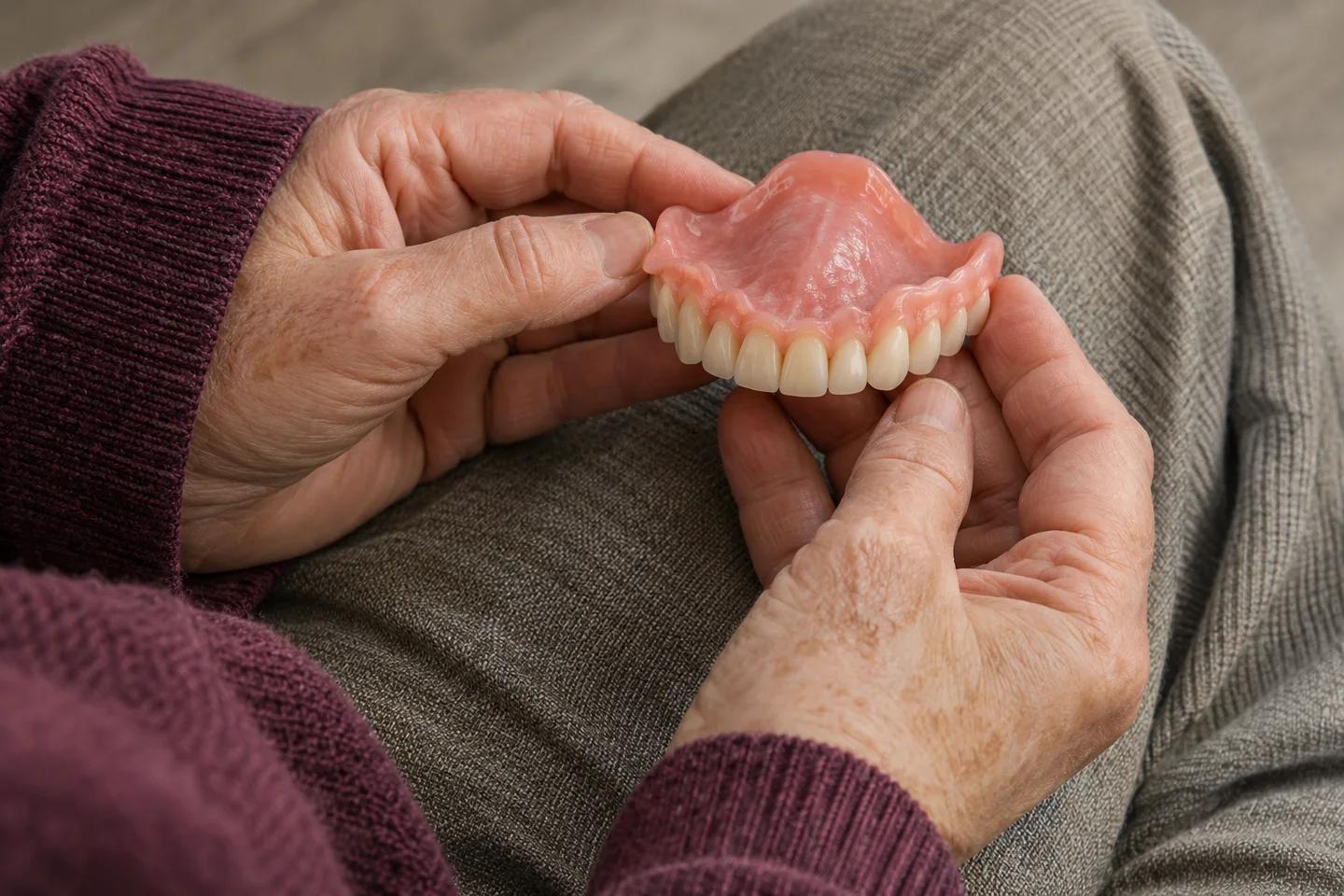
Acrylic denture from
£820
NHS: Band 3, £332.10
Choose your practice
NHS: Band 3, £332.10
Noticed this?
Practices offering dentures
Choose your practice to see its prices and book.
- Acrylic denture
- From £820
- Flexible
- From £685
- NHS Band 3
- £332.10
- Acrylic denture
- From £820
- Flexible
- From £685
- NHS Band 3
- £332.10
Quick answers
Will my dentures look natural?
Denture teeth come in many shades, shapes and sizes, and your dentist chooses them to suit your face. At the try-in you see the proposed appearance and can ask for changes before the denture is finished.
Can I have dentures straight after teeth are removed?
Sometimes. An immediate denture is made beforehand and fitted on the day of the extraction. It usually needs adjusting or relining as the gums heal, and a new denture may be made later.
Bleeding gums are worth a check
Bleeding when you brush or floss is one of the first signs of gum disease. A hygiene visit checks your gums and removes the tartar that brushing can’t shift.
Book a hygiene visit
Dentures at Minti
Everything you need to know about dentures
Full and partial dentures
Dentures are removable replacements for missing teeth and some of the gum around them, made to fit the shape of your mouth. They can make chewing easier, support your lips and cheeks and fill visible gaps, but they do not feel exactly like natural teeth and take time to get used to.
A full denture replaces all the teeth in the upper or lower jaw and rests on the gums. An upper denture gains some grip from the palate. A lower full denture is often harder to keep steady because the tongue moves it and there is less gum to sit on, and your dentist tells you what to expect for your mouth.
A partial denture replaces some teeth while others remain, usually held by clasps around the natural teeth. Its design depends on the health and position of those teeth, so any decay or gum disease is treated first. If you would rather have a fixed replacement, a bridge or dental implant may be an option.
Getting used to them
A new denture can feel bulky for the first few weeks, and most people settle into it. Start with soft food cut small and chew on both sides. If a spot rubs, come back and let us adjust it rather than putting up with it.
Which type of denture might suit you?
Your dentist examines your mouth and discusses the material and design that suit your needs.
- Full or partial replacement
- Acrylic, flexible or cobalt-chrome
- The health of your remaining teeth and gums
- Bridges and implants compared
Your denture journey at Minti
- ConsultationWe examine your mouth and discuss the denture type.
- Impressions and biteWe record the shape of your mouth and how your jaws meet.
- Try-in and fittingYou can see the proposed appearance before the final denture is made.
- Follow-up visitsWe adjust any sore spots as the denture settles.
See the proposed fit before the final denture
At the try-in, we check how the denture looks and sits in your mouth so adjustments can be made before it is finished.
Choosing a denture material
No single material is best for everyone. Your dentist recommends one after examining your gums, remaining teeth and bite.
- Acrylic dentures have a gum-coloured resin base and suit both full and partial dentures. They are straightforward to repair, reline or add a tooth to later, which helps when more changes are expected. The base is thicker than a metal one and can crack if dropped. Privately from £820.
- Flexible (Flexite) dentures are partial dentures in a flexible material that grips the natural teeth without metal clasps. Some people prefer how they look and feel. They are harder to adjust, repair or reline than acrylic and do not suit every gap. Privately from £685.
- Cobalt-chrome dentures are partial dentures on a thin metal framework, which can be stronger and less bulky than acrylic. They need careful planning around the remaining teeth, and some metal may show. Privately from £1,450.
- Implant-retained dentures clip onto implants in the jaw, which can stop a loose lower denture moving. They involve implant surgery at Nuffield Dental Practice and are quoted after an assessment. Read more about dental implants.
Getting used to new dentures
A new denture can feel bulky at first and make you more aware of your tongue and saliva. Most people get used to it within a few weeks, but some take longer or need adjustments.
- EatingStart with soft food cut into small pieces and chew slowly on both sides. Add other foods as you get more confident. Very hard, sticky or chewy foods may stay difficult.
- SpeakingReading aloud helps your tongue and lips adapt. If the denture moves when you talk, ask for the fit to be checked.
- Sore spotsPressure points are common in the first weeks. Do not file or reshape the denture yourself, because your dentist can ease the exact spot. Our guide to denture sore spots explains what helps.
- LoosenessSome movement is normal, especially with a lower full denture. Denture adhesive can help some people, but persistent slipping needs an adjustment, a reline or a different design rather than more adhesive.
Cleaning and caring for dentures
Clean your dentures at least twice a day. Brush them with a soft brush and a non-abrasive denture cleaner, then soak them in denture solution, and rinse them before putting them back in. Clean them over a bowl of water or a folded towel, because they can break if dropped, and avoid hot water, which can warp them.
Take your dentures out at night to rest your gums, unless your dentist has asked you to keep an immediate denture in. Brush any remaining natural teeth twice a day with fluoride toothpaste, paying attention to the teeth that hold the clasps, and gently clean your gums and tongue.
Keep going for dental check-ups even if you have no natural teeth. Your dentist checks the gums and soft tissues as well as the fit of the denture.
Repairs, relines and replacement
If a denture cracks, breaks or loses a tooth or clasp, bring it and any broken pieces to the practice. Do not glue it yourself. Your dentist checks whether a laboratory repair is possible, and the practice tells you the cost and how long it will take.
Gums and bone slowly change shape, so a denture that once fitted well can become loose. A reline reshapes the fitting surface to the gums, and a worn or damaged denture may need replacing. There is no fixed lifespan, and regular check-ups show when either is needed.
See a dentist or GP about any mouth ulcer that lasts longer than three weeks, even if you think the denture caused it. Our guide to a mouth ulcer that won't heal explains why.
Before you book
- Bring your current denture and any broken piecesDescribe when it rubs or moves, whether it affects eating and how long you have worn it. Do not glue a broken denture. If you have a sore or ulcer that has lasted more than three weeks, tell the practice when you book.
- Ask about fit and follow-upThe team can discuss whether an adjustment, repair or new denture is appropriate and when to return for sore spots or looseness.
NHS and private denture fees
Published fees at all three practices. Your dentist confirms which designs suit you and the fee before treatment starts.
| Treatment | NHS | Private at Minti |
|---|---|---|
| Acrylic denture, full or partial | Band 3, £332.10 | From £820 |
| Flexible (Flexite) partial denture | Ask the practice | From £685 |
| Cobalt-chrome partial denture | Ask the practice | From £1,450 |
| Repair of an existing denture | Free for NHS dentures | On request |
| Implant-retained denture | Private only | Quoted after consultation |
NHS charges in England are per course of treatment. New dentures fall under Band 3, which also covers any other treatment you need in the same course, and repairing an NHS denture is free. The NHS provides what is clinically necessary, which may not include every private material or design. Some people get free NHS dental care. Private fees are starting prices, and your written quote confirms what is included. Implant-retained dentures need implant treatment at Nuffield Dental Practice.
All fees and finance optionsA written quote before you decide
Your practice explains your options and confirms the cost before treatment starts.
Request an appointment
What patients say
- ★★★★★
My dentist was very thorough and communicated with me well about my teeth. Highly recommend.
Tamara B. · Nuffield
- ★★★★★
There’s no other dentist like this one.
Aidan R. · Church Langley
- ★★★★★
Fantastic, thanks for looking after me, even though I got to my appointment late.
Thomas W. · Enfield Smiles
Frequently asked questions
Should I sleep with my dentures in?
Usually not. Taking them out at night rests your gums and lets you clean the denture properly. The exception is an immediate denture fitted on the day of an extraction, which your dentist may ask you to leave in for the first night.
Are dentures available on the NHS?
Yes, when they are clinically necessary. In England new dentures fall under Band 3 (£332.10), and some people get free NHS dental care. The NHS may not cover every private material or design, so ask the practice which options are available.
Are implant-retained dentures worth it?
They can make a big difference for people whose lower denture moves a lot, but they involve surgery, extra cost and ongoing care, and not everyone is suitable. Implants are placed at Nuffield Dental Practice in Harlow, and your dentist explains the benefits and risks for you.
Request an appointment
Send a request and your practice will call to confirm a time.
Booking at Nuffield · 01279 424 038