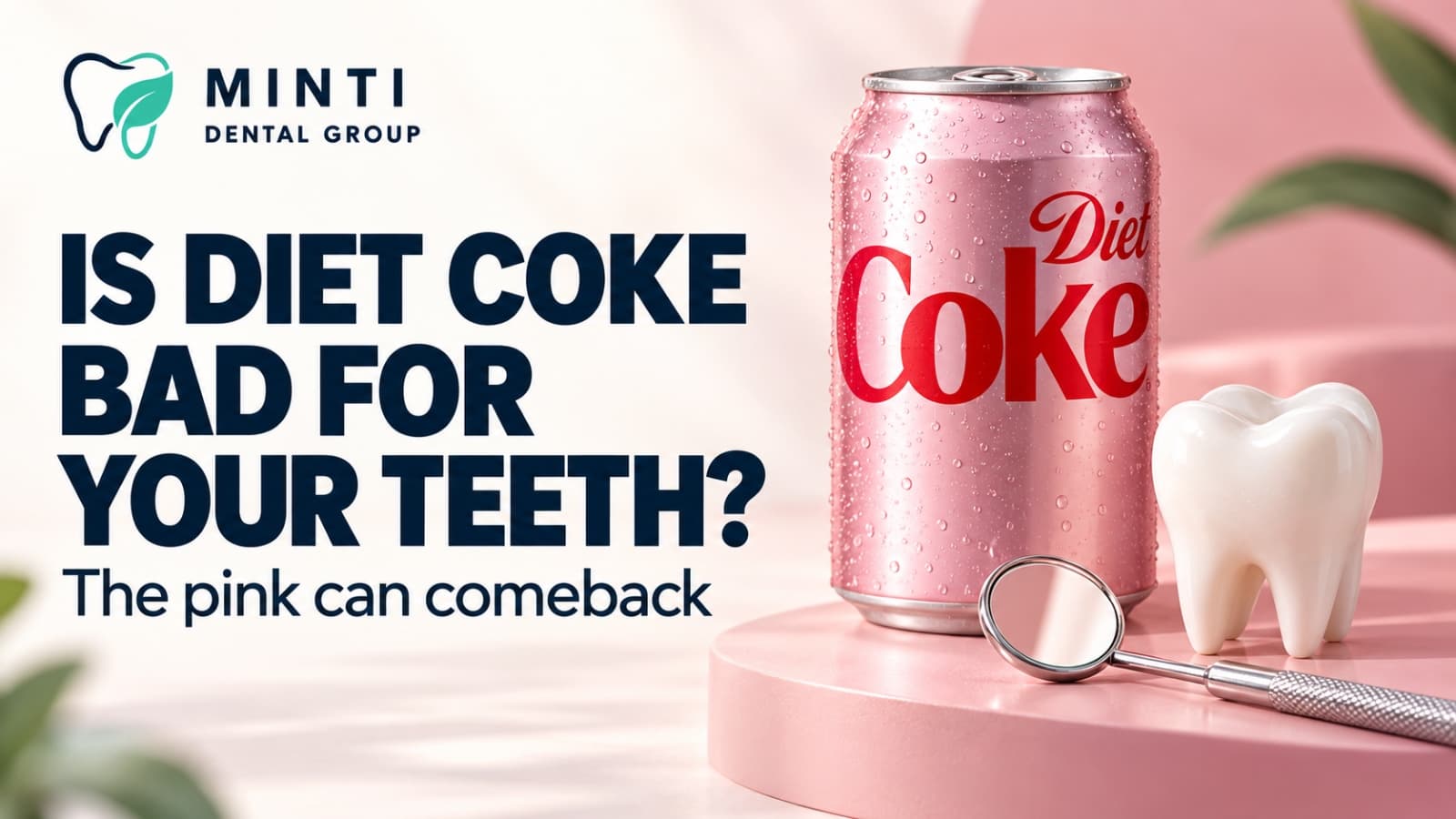
The pink Diet Coke cans are back. Asda's Tickled Pink campaign has turned more than 220 products pink this October, Diet Coke included, and it's the campaign's 30th year. Since 1996 it has raised over £110 million for Breast Cancer Now and CoppaFeel!. I'm all for that, and if a pink can nudges someone into checking their chest this month, brilliant.
But I'm a dentist, so the question I get every time a can like this goes viral is a simple one: it's sugar-free, so it's fine for my teeth, right?
The short answer: sugar-free is better for your teeth than full-sugar, because it takes sugar-driven tooth decay largely out of the picture. But Diet Coke is still a fizzy, acidic drink, and the NHS is clear that carbonated drinks are linked to dental erosion "regardless of whether they contain sugar". So pink can, zero sugar, zero risk to your teeth? Not quite. It's how you drink it that matters most.
Is sugar-free Diet Coke better for your teeth than regular Coke?
Yes, and I'll give the diet version its due. Tooth decay happens when the bacteria on your teeth feed on sugar and make acid. Take the sugar away and you starve them. The NHS says no-calorie sweeteners, in a product with no sugars, can help reduce the risk of tooth decay.
So if you're choosing between the full-fat red can and the pink one, the pink one wins on decay. It just isn't a free pass, because decay isn't the only way a drink can wear your teeth down.
So why can a sugar-free drink still harm your teeth?
Because of the acid. Fizzy drinks are acidic whether they're sweetened with sugar or not. That's where the fizz and the tang come from, and it's a different problem from decay. It's called dental erosion, and it's exactly what it sounds like: acid softening and slowly dissolving the enamel, the hard outer layer of the tooth. No bacteria needed. The drink does the job on its own.
Think of enamel as the varnish on a nice wooden table. One spilt drink, wiped up, does nothing. Leave a wet glass on it every day for a year and you'll find a ring. Your enamel is the same. One can isn't the issue. A can on the go all afternoon, every afternoon, is.
The bit that matters, and the bit I wish more people knew: enamel doesn't grow back. Once it's worn away, it's gone. That's why I'd much rather talk about this over a can of pink pop than over a set of sensitive teeth.
Is it how much you drink, or how you drink it?
Mostly how. Every time acid hits your teeth, your saliva needs time to wash it away and calm things down. The Oral Health Foundation's point is that when acid attacks come too often, your mouth never gets the chance to recover.
So here's the pattern I worry about most. It's not the person who has a Diet Coke with their lunch. It's the person with a can on the desk from 10am, taking a sip every ten minutes until 4pm. In acid terms, that's not one drink. It's thirty little attacks with no break in between. Same can, very different teeth.
What does dental erosion look like?
It's sneaky, because it's slow and it doesn't hurt at first. The signs I look for at a check-up include:
- teeth becoming sensitive to cold or hot drinks, which the Oral Health Foundation says is often the first sign
- teeth looking more yellow, because thinner enamel lets the darker layer underneath show through
- front teeth looking thinner or slightly see-through at the edges
- small dips or hollows on the biting surfaces of back teeth
If a cold drink has started making you wince, I've written about sensitive teeth and how to ease the pain. And if you're thinking of whitening to fix the yellowing, read about whitening sensitive teeth first, because yellowing from erosion isn't a stain and whitening won't put the enamel back.
How can you drink Diet Coke without wrecking your teeth?
I'm not going to tell you to give it up. I'd rather you enjoyed it sensibly than hid it from me. Here's what I'd do:
- Have it with a meal. The Oral Health Foundation recommends keeping acidic drinks to mealtimes, so your teeth get one acid hit instead of a drip-feed all day.
- Drink it, don't nurse it. Finish it in one sitting rather than sipping for hours. And don't swish it round your mouth.
- Use a straw. It sends the drink towards the back of your mouth and away from your front teeth. A pink paper straw, if you want to match.
- Follow it with water, milk or a bit of cheese. Plain water rinses, and milk and cheese help neutralise acid. Chewing sugar-free gum gets your saliva going too.
- Don't brush straight after. This one surprises people. Acid softens enamel, so brushing straight away scrubs the softened layer. The Oral Health Foundation says to wait at least an hour.
- Keep plain water as your everyday drink. Still water is the best drink for teeth. Diet Coke is a treat, not a water bottle.
What does this mean for your next check-up?
Erosion is one of those things you can't see happening in the mirror, but I can usually spot early signs when I look properly, especially on the front teeth and the biting surfaces at the back. Catching it early means the fix is often just a change of habit and a good fluoride toothpaste, rather than repairing worn teeth later.
So enjoy the pink cans, support the campaign, and check your chest while you're at it. Just have your Diet Coke with lunch, not as an all-day companion. Your enamel only gets one go.
This article is general information, not a diagnosis. If your teeth have become sensitive or changed in appearance, a dentist can check for erosion in person.