
You took one sip of iced water, or one bite of ice cream, and a tooth fired a jolt straight up into your eye socket. Now you're drinking tea at exactly body temperature and chewing on the other side like it's a hostage negotiation. You're not imagining it, and you're not the only one. Sensitive teeth are one of the most common things I hear about in my surgery, and the good news is that there's plenty you can do about it.
The short answer: to stop sensitive teeth pain fast, take away the trigger (the cold, the sweet, the acid), rinse with lukewarm water, then dab a little sensitive toothpaste onto the sore spot with a clean fingertip and leave it there. True sensitivity is a quick, sharp pain that fades within seconds once the trigger has gone. Stopping it coming back takes a few weeks of the right toothpaste, a soft brush and a bit less acid, and it's always worth a dental check-up so I can find the cause and treat it at the source. If the pain lingers or throbs after the cold has gone, wakes you up, or comes with swelling, that's not simple sensitivity: call my emergency dentist team in Harlow or Enfield, or NHS 111 if we're closed or you're not local. For the full picture, see my sensitive teeth guide.
Pain that lingers, throbs or keeps you awake? That's more than sensitivity. Call your nearest Minti practice and tell reception it's urgent. I keep same-day appointments for pain and swelling wherever I can.
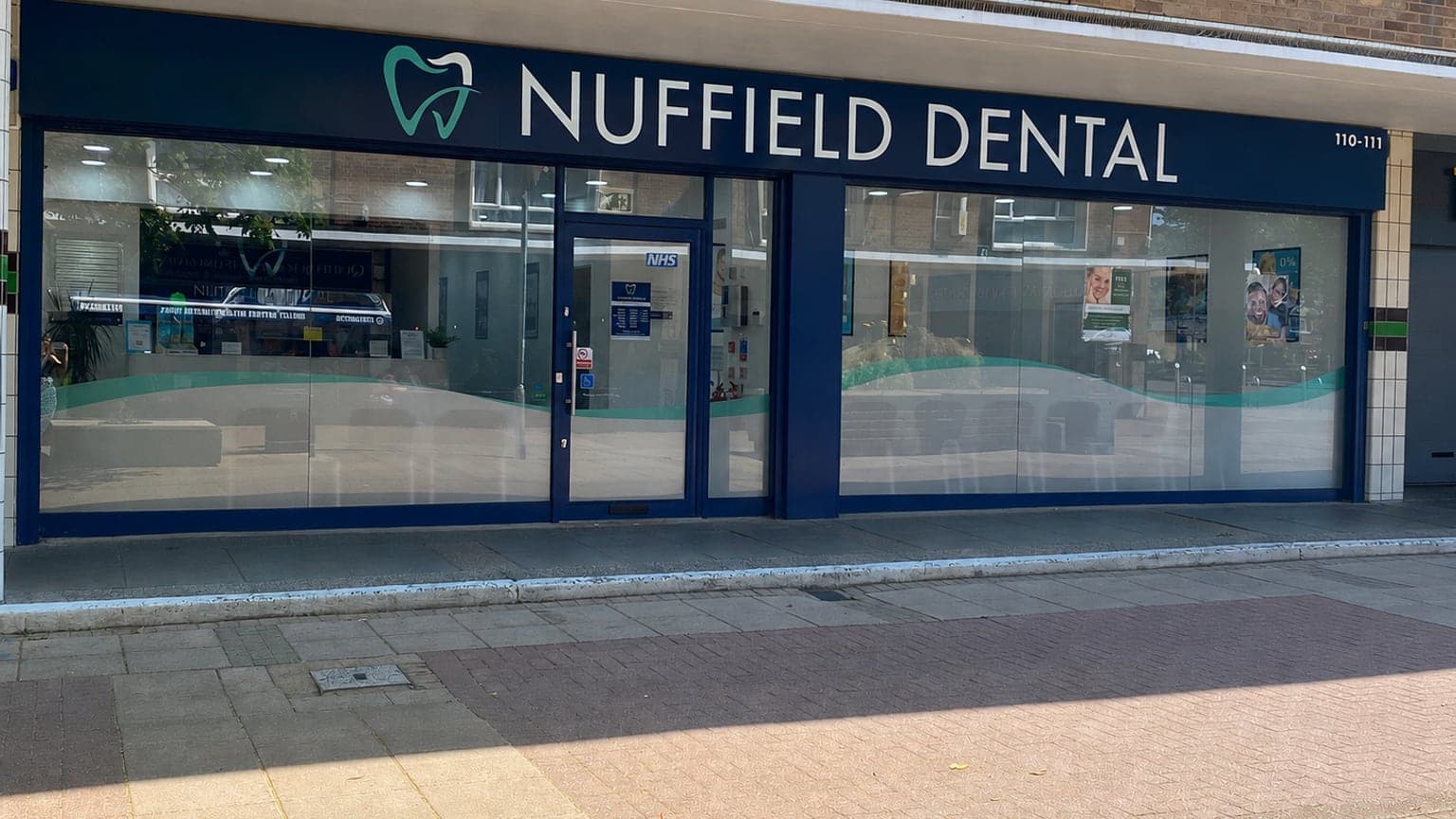
- Nuffield Dental Practice, Harlow: 01279 424 038
- Church Langley Dental, Harlow: 01279 306 690
- Enfield Smiles, Enfield: 020 8804 4320
Evening, weekend, or nowhere near us? Call NHS 111. If you're struggling to breathe or swallow, or swelling is spreading to your eye or neck, that's 999 or A&E.
What can I do right now to stop sensitive teeth hurting?
First, a quick bit of why. Under your enamel is a layer called dentine, and dentine is full of microscopic tubes that run to the nerve. Think of a bundle of very tiny drinking straws, all pointing at the nerve. When a patch of dentine loses its cover, the straws are open at the outside end. Cold, sweet or acidic things make the fluid inside them move, the nerve notices, and you get that zing.
So the "right now" plan is about calming those straws down:
- Stop the trigger. The zing should fade within seconds.
- Rinse with lukewarm water, not cold, not hot.
- Dab on sensitive toothpaste. A small blob on a clean fingertip, rubbed gently onto the sore spot near the gum, and left there.
- Breathe through your nose if cold air is setting it off. My guide covers teeth that hurt when you breathe in cold air.
- Keep food and drink lukewarm for a day or two, and go easy on sweet and acidic things. The NHS toothache advice says the same: avoid foods that are sweet, very hot or very cold.
If you need painkillers to get through the day, I'd want to see you, because that's not how simple sensitivity usually behaves.
Does rubbing sensitive toothpaste on the tooth work?
It's the advice I give in the chair, and it's in the Scottish dental guidance too: apply a small amount of desensitising toothpaste to the sore area with a finger. It gives the active ingredient longer contact with the exposed patch than a quick brush does.
My rule for getting the most out of it:
- Brush twice a day with a toothpaste made for sensitive teeth.
- Spit, don't rinse. Rinsing washes the good stuff away. The Oral Health Foundation says the same.
- At night, after brushing, rub a little extra onto the sore spot and leave it.
- Keep using it once it's working. The effect fades if you stop.
Which toothpaste? I don't recommend brands, but I do care what's in them. My guide covers toothpaste ingredients for sensitive teeth.
How long does it take for sensitive teeth to calm down?
There are two answers here, and they get muddled.
The individual twinge should be over in seconds. That's the classic feature of sensitivity: sharp, sudden and short-lived, gone once the cold or sweet thing has gone.
Getting the tooth to stop reacting in the first place takes longer. Some people notice a difference quite quickly, but the trials on sensitive toothpastes typically measure results at several weeks, often six to eight. So give a new toothpaste a fair run of twice-daily use before you decide it isn't working.
If you've been properly patient and nothing has changed, either the dentine needs more than toothpaste can give, or the cause isn't simple sensitivity at all. You can't tell which from your sofa, and neither can Google. I can, usually in one visit.
What makes sensitive teeth worse?
Mostly, things that uncover more of those straws:
- Brushing too hard. No telling-off here. The people who do this are nearly always the keenest brushers, scrubbing away like the tooth owes them money. A soft brush and small gentle circles are kinder to your gums and the necks of your teeth.
- Acid. Fizzy drinks, fruit juice, citrus and reflux all soften enamel. Brushing straight after acid wears it faster, so give it a while first. I'd wait about an hour.
- Grinding or clenching, which wears teeth down.
- Gum disease and receding gums, which uncover the root. Gums also tend to creep back with age.
- Whitening, which commonly causes temporary sensitivity.
Sensitivity can also turn up after dental work. That's covered in still sensitive to cold weeks after a filling and new crown extremely sensitive to hot or cold. If it has appeared out of nowhere, have a look at why are my teeth suddenly sensitive?
When is it more than sensitivity, and when should I get it checked?
This is the part I most want you to take away. It's not how many things set the tooth off. It's what the pain does afterwards.
- Sharp, and gone within seconds of the trigger going: behaves like sensitivity. Not urgent, but worth a check-up.
- Lingers, throbs, or starts on its own: that suggests the nerve inside the tooth is inflamed. Toothpaste won't fix that, and it needs seeing promptly.
I'd also want to see you sooner rather than at your next routine visit if it's one tooth that's suddenly sensitive, it hurts to bite, you can see a dark spot, hole or chip, or sensitive toothpaste hasn't helped after a few weeks. At the appointment I'll test the tooth with a puff of air and a little cold, and take an X-ray if I need to rule out decay. Beyond toothpaste, I can paint fluoride varnish or a protective coating onto the exposed spot, or cover it with a small tooth-coloured filling, depending on what I find. The NHS also advises seeing a dentist if toothache lasts more than two days.
Call us today if:
- the pain lingers or throbs after the cold has gone
- it wakes you at night, or painkillers aren't touching it
- there's swelling of your gum or face, a bad taste, or a temperature
- a piece of tooth or filling has broken off
Call 999 or go to A&E, not a dentist, if:
- it's hard to breathe, swallow or speak
- swelling is spreading towards your eye or into your neck
- your eye is swollen or painful, or your eyesight suddenly changes
- you can't open your mouth properly because of swelling
If you're near Harlow or Enfield and you're fed up of drinking everything lukewarm, I'd much rather take a look and find the cause than have you keep guarding one side of your mouth. Ring your nearest Minti practice and tell us which tooth and what sets it off. If it has turned into proper toothache, say it's urgent and we'll do our best to see you the same day. Anywhere else, or out of hours, call NHS 111.
This article is general information, not a diagnosis. Tooth pain needs examining in person to find the cause.