- Dental crown
- From £640
- NHS Band 3
- £332.10
Dental crowns
Custom caps that restore strength and shape to damaged teeth.
Custom caps that restore strength and shape to damaged teeth.
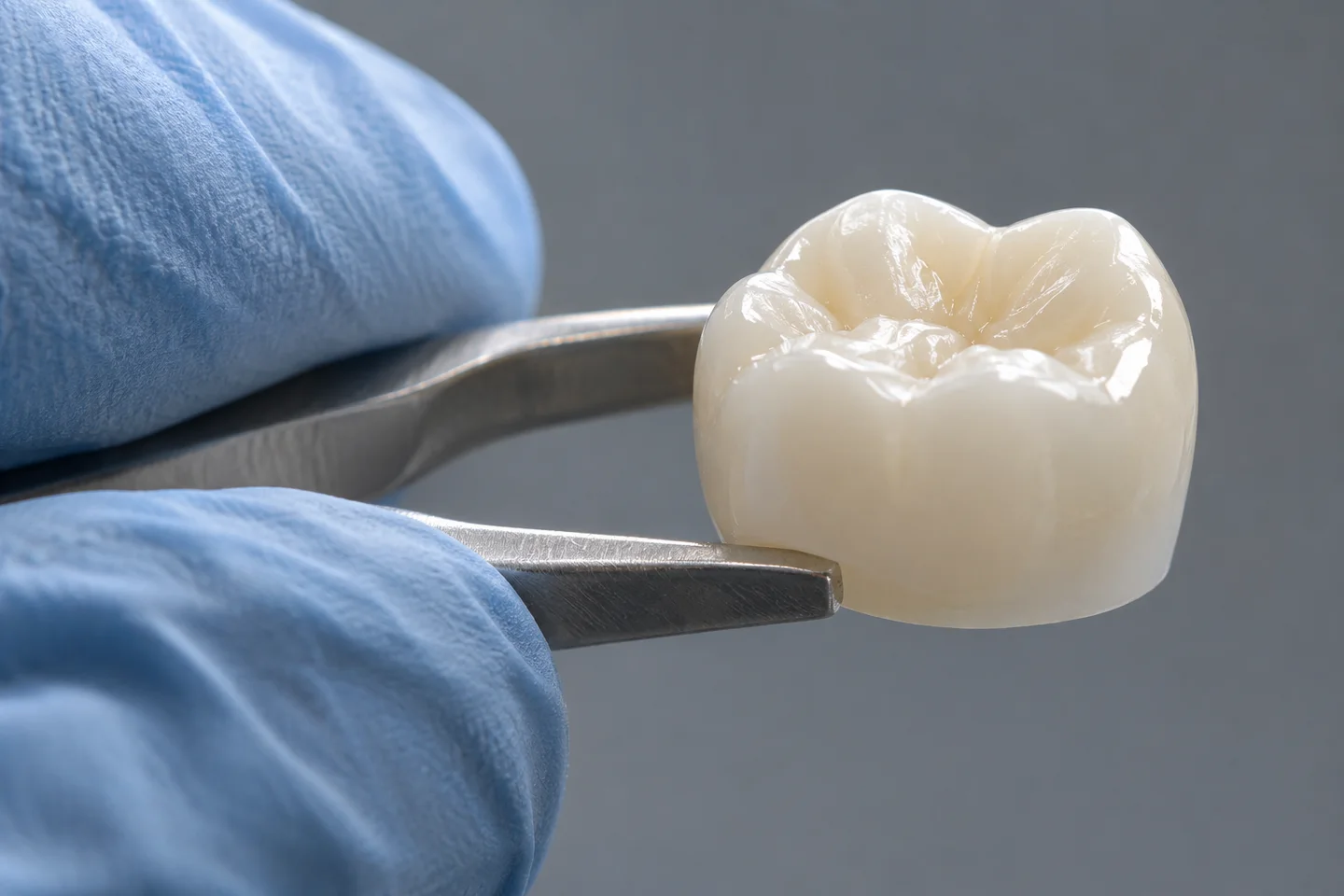
Dental crown from
£600
NHS: Band 3, £332.10
Choose your practice
NHS: Band 3, £332.10
Noticed this?
Practices offering dental crowns
Choose your practice to see its prices and book.
- Dental crown
- From £640
- NHS Band 3
- £332.10
- Dental crown
- From £600
- NHS Band 3
- £332.10
Quick answers
Do I need root canal treatment before a crown?
Not usually. Most crowns go on teeth that have not had root canal treatment. It is only needed when the nerve inside the tooth is infected or badly inflamed.
How long does a dental crown last?
Many crowns last for years, but no lifespan can be guaranteed. It depends on the material, your bite, how well you clean around it and the health of the tooth underneath.
Bleeding gums are worth a check
Bleeding when you brush or floss is one of the first signs of gum disease. A hygiene visit checks your gums and removes the tartar that brushing can’t shift.
Book a hygiene visit
Dental crowns at Minti
Everything you need to know about dental crowns
What a crown does
A crown is a custom-made cap that covers the visible part of a prepared tooth above the gum. It restores the tooth's shape, strength and appearance when too much of it has been lost for a filling to hold up reliably. A filling replaces part of a tooth, while a crown covers the whole biting surface and the sides.
Not every damaged tooth needs a crown. Fitting one means removing a layer of healthy tooth to make room for it, so your dentist recommends it only when the extra protection is worth that trade.
When a crown makes sense
A large filling on its own doesn’t mean you need a crown. We suggest one when too much of the tooth has gone for a filling to hold up. Where an onlay or a filling will do the job, we’d rather keep more of your natural tooth.
What to expect at your crown appointments
- AssessmentYour dentist examines the tooth, may take an X-ray and explains whether a crown, onlay or filling suits it, the materials and the fee.
- PreparationWith the tooth numbed, the dentist shapes it, records it with a scan or impression and usually fits a temporary crown.
- FittingOnce the crown is made, the dentist checks its fit, bite and shade, adjusts it if needed and fixes it in place.
- AftercareContact the practice if the crown feels high, loose or uncomfortable. Your check-ups keep an eye on it from then on.
Teeth that may need a crown
- A tooth with a large fillingThe remaining walls can be thin and prone to breaking. A crown or onlay may protect it, although a large filling on its own does not mean you need one.
- A cracked toothSmall cracks can often be repaired with a filling. A crack that weakens the tooth when you bite may be held together by a crown, but a split running into the root usually cannot be saved this way. Sharp pain when you bite or release is a common sign, and our cracked tooth guide explains it.
- A tooth after root canal treatmentBack teeth that have had root canal treatment often need a crown because they take heavy chewing forces. A front tooth with plenty of structure left may only need a filling.
- A worn toothGrinding, clenching and acid erosion can wear teeth down. A crown can rebuild a badly worn tooth, but your dentist should look at the cause of the wear first.
- Extensive decayWhen decay has destroyed a large part of the tooth, a crown may be the only way to rebuild it once the decay is removed. If the decay has reached the nerve, root canal treatment may be needed first.
Crown, onlay or filling
A filling replaces a damaged or decayed area and keeps the most natural tooth. It suits teeth where the remaining walls are strong enough to support it.
An onlay covers part of the biting surface, including one or more cusps. It gives more support than a filling without removing as much tooth as a full crown.
A crown covers the whole visible tooth. It gives the most protection but needs the most preparation.
There is no fixed rule, such as a percentage of tooth lost, that decides between them. Your dentist looks at how much sound tooth is left, where the damage is and how hard the tooth works when you chew, then explains why they recommend one option over the others.
Crown materials
- All-ceramic crowns, including zirconia, have no metal and can be matched closely to your other teeth. They are often chosen for teeth that show when you smile.
- Porcelain bonded to metal crowns have a metal core covered with tooth-coloured porcelain. They have been used for decades and suit many back teeth, although a thin dark line can sometimes show at the gum.
- Gold and other metal crowns are very hard-wearing and need less tooth removed, which can suit back teeth where appearance matters less.
On the NHS, the crown is chosen to meet your clinical need, and a back tooth may be given a metal crown. Private treatment offers a wider choice of materials. The most expensive option is not always the best one for a particular tooth, and your dentist explains which materials suit yours and what each costs.
Looking after a crown
The tooth under a crown can still decay, especially where the crown meets the gum, so it needs the same care as your other teeth:
- Brush twice a day with fluoride toothpaste, angling the brush into the edge of the crown at the gum.
- Clean between your teeth with floss or interdental brushes. Your hygienist can show you which size to use.
- Avoid biting hard objects such as ice, pen lids or fingernails, which can chip or loosen a crown.
- Tell your dentist if you grind or clench your teeth. A night guard may help protect the crown.
- Keep up your dental check-ups so the crown and the gum around it can be checked.
Many crowns last for years, but none lasts forever. Wear, a chip, decay at the edge or changes in the tooth underneath can mean a crown needs repairing or replacing, and your dentist can tell you what to expect for yours.
If a crown comes off or feels wrong
If a crown comes off, keep it in a clean container and call the practice. Avoid chewing on the exposed tooth and do not use household glue. The dentist checks the tooth and whether the crown can be refitted. Our guide to a lost or loose crown covers what to do in the meantime.
If your bite feels high or the crowned tooth touches before the others, contact the practice that fitted it. A small adjustment usually fixes it.
If the tooth under a crown hurts, it may be decay, a crack, gum inflammation or a problem with the nerve. Pain does not automatically mean the crown has failed. Our page on pain when biting explains the common causes, and your dentist can find the reason.
Before you book
- Tell us about the toothMention which tooth it is, whether it has a large filling or root canal treatment, and any pain when you bite. If a crown has come off, bring it in a clean container.
- Ask what needs checking before fitting a crownYour dentist can explain the condition of the supporting tooth, the purpose of a temporary crown where needed and how the final crown will be reviewed.
NHS and private crown fees
Published fees at each practice. Your written plan confirms the material, the appointments and the total fee before treatment starts.
| Treatment | NHS | Private at Minti |
|---|---|---|
| Dental crown | Band 3, £332.10 | From £600 |
| Refitting a crown that has come off | Urgent, £27.90 | On request |
On the NHS, Band 3 covers the whole course of treatment, including any fillings or root canal treatment in the same course, not each crown separately. Some people get free NHS treatment or help with costs. For private crowns, ask whether the quote covers the temporary crown, laboratory work and review, and whether any treatment needed first, such as a new filling or root canal treatment, is charged separately.
All fees and finance optionsA written quote before you decide
Your practice explains your options and confirms the cost before treatment starts.
Request an appointment
What patients say
- ★★★★★
My dentist was very thorough and communicated with me well about my teeth. Highly recommend.
Tamara B. · Nuffield
- ★★★★★
There’s no other dentist like this one.
Aidan R. · Church Langley
- ★★★★★
Fantastic, thanks for looking after me, even though I got to my appointment late.
Thomas W. · Enfield Smiles
Frequently asked questions
Will my crown look natural?
Tooth-coloured crowns can be matched closely to your other teeth. The result depends on the material, the tooth and the colour of the tooth underneath, and your dentist explains any limits before you start.
Is having a crown fitted painful?
The tooth is usually numbed with local anaesthetic while it is prepared, so you should feel pressure rather than pain. Some sensitivity for a few days afterwards is common. Pain that persists or gets worse should be checked.
What if my temporary crown falls off?
Call the practice that prepared the tooth and keep the temporary crown if you have it. Avoid chewing on the tooth and do not use household glue. The team can refit or replace it before your next appointment.
How much does a crown cost at Minti?
Private crowns start from £640 at our Harlow practices and from £600 at Enfield Smiles. On the NHS a crown is part of the Band 3 charge of £332.10. Your written plan confirms the fee for your crown.
Request an appointment
Send a request and your practice will call to confirm a time.
Booking at Nuffield · 01279 424 038