- NHS
- Free
Children's dentistry
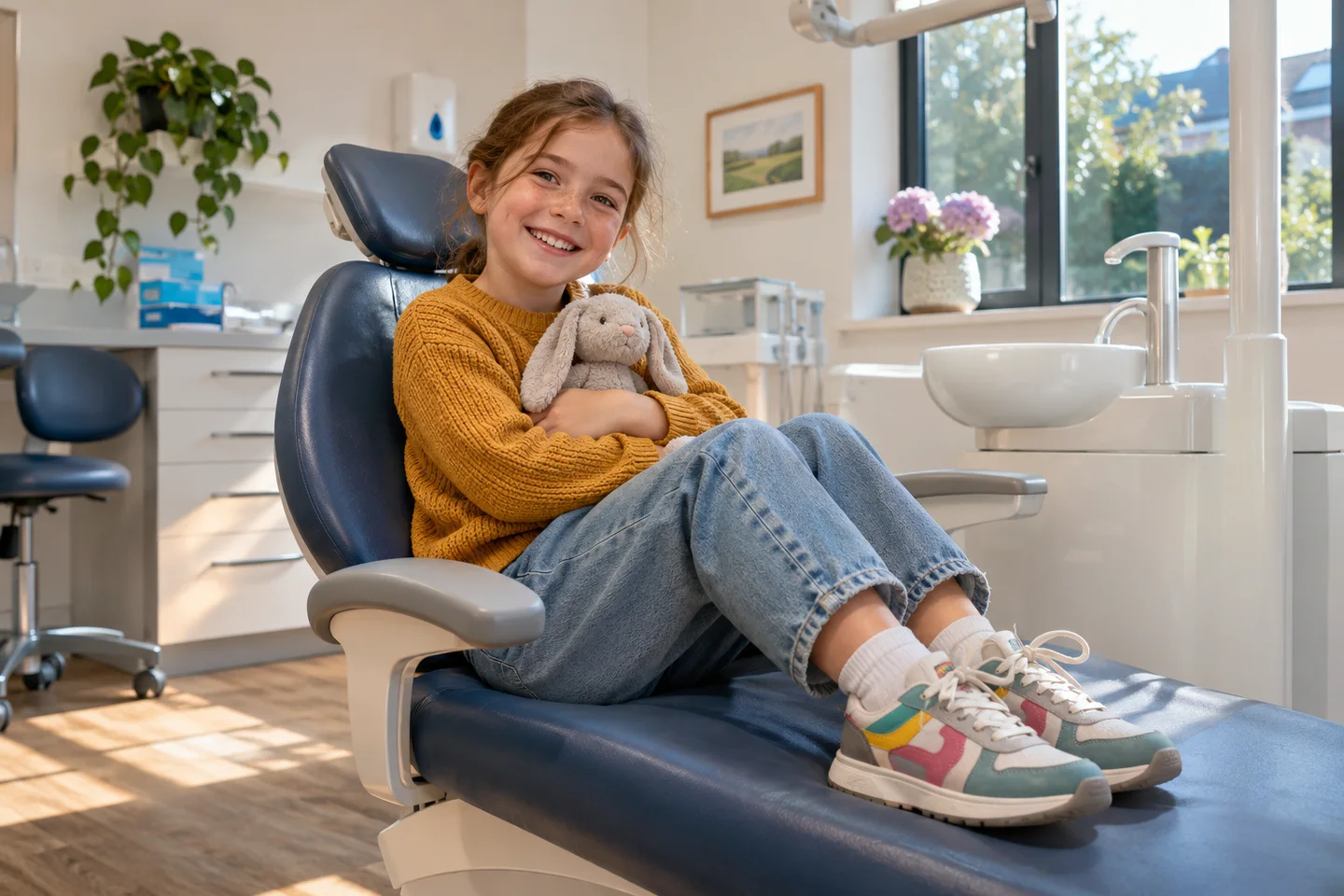
Gentle care for young teeth, from the very first visit.
Gentle care for young teeth, from the very first visit.
Check-ups and X-rays
Free
On the NHS
Choose your practice
On the NHS
Noticed this?
Practices offering children’s dentistry
Choose your practice to see its prices and book.
- NHS
- Free
- NHS
- Free
Quick answers
How often should my child have a check-up?
Your dentist recommends an interval based on your child’s teeth and risk of decay. Children at higher risk are usually seen more often than those with healthy teeth.
At what age can my child brush on their own?
Children need help until they can brush thoroughly themselves, usually around age seven. Keep checking that they reach every tooth after that.
Bleeding gums are worth a check
Bleeding when you brush or floss is one of the first signs of gum disease. A hygiene visit checks your gums and removes the tartar that brushing can’t shift.
Book a hygiene visit
Children's dentistry at Minti
Everything you need to know about children’s dentistry
When to start dental visits
The NHS advises taking your child to the dentist when their first milk teeth appear, usually around six months, or before their first birthday. You do not need to wait for a full set of teeth. An early visit lets your child get used to the surroundings and gives you a chance to ask about brushing, feeding and teething.
Milk teeth matter even though they fall out. They help children eat and speak, and they hold space for the adult teeth coming through. Decay in a milk tooth can cause real pain and affect eating, sleep and school.
If your child is older and has never been, it is not too late. Tell reception it is their first appointment and the team will explain what to expect.
The first visit
Bring your child when their first milk teeth come through, or before their first birthday. Early visits are short. They let your child get used to the chair and give you time to ask about brushing, bottles and teething.
What we cover at children’s visits
We keep early visits short and friendly while your child gets used to seeing the dentist.
- First visits and routine check-ups
- Fluoride varnish and fissure sealants
- Fillings and treatment when needed
What happens at a children’s check-up
- Get familiarThe team says hello and lets your child sit in the chair and see the mirror. Younger children can sit on your lap.
- Check teeth and gumsThe dentist looks for decay and checks how the teeth and jaws are developing. X-rays are only taken when needed.
- Talk about habitsYou can ask about brushing, toothpaste, diet and teething, with advice for your child’s age.
- Agree next stepsMany children just need advice. Others may be offered fluoride varnish, sealants or treatment, which the dentist explains first.
Dental care at every age
- Babies and toddlersShort visits introduce the dental chair and let the dentist check the first teeth. You can ask about brushing, bottles and dummies.
- Preschool childrenAs more milk teeth arrive, the focus is on brushing, diet and spotting early decay. The dentist can talk about habits such as thumb-sucking if they are affecting the teeth.
- Primary school childrenMilk teeth start falling out from around age six and adult teeth come through. Check-ups follow these changes, and fluoride varnish or fissure sealants may be offered. When a tooth comes out, you can download a Tooth Fairy letter or certificate.
- TeenagersThe dentist checks for decay, gum inflammation, wear and how the teeth are lining up. If teeth are crowded or the bite is off, they can refer for an NHS orthodontic assessment, which is mainly for under-18s with a clear need. Teenagers who play contact sports may benefit from a fitted mouthguard, and late-teen wisdom tooth pain can be checked at the same visit.
Brushing your child’s teeth
Start brushing as soon as the first milk tooth appears, twice a day including last thing at night. Younger children need an adult to brush for them, and older children still need checking.
- Under 3a smear of fluoride toothpaste with at least 1,000ppm fluoride, brushed by a parent or carer.
- Aged 3 to 6a pea-sized amount of toothpaste with at least 1,000ppm fluoride, brushed for about two minutes with an adult helping.
- Aged 7 and overtoothpaste with 1,350 to 1,500ppm fluoride, brushed for about two minutes, with an adult checking they reach every tooth.
Encourage children to spit out the toothpaste afterwards rather than rinse with water, so the fluoride stays on their teeth. For a bit of fun while they learn, try Plaque Patrol, our toothbrushing game.
Fluoride varnish, sealants and diet
Fluoride varnish is painted onto the teeth in a few seconds and helps strengthen the enamel against decay. UK guidance recommends it at least twice a year for children from age three, and more often for children at higher risk.
Fissure sealants are thin coatings applied to the grooves of the back adult teeth, which are hard to clean and decay easily. They are mainly recommended for children at higher risk of decay, and your dentist explains whether your child would benefit.
Diet matters as much as brushing. How often teeth meet sugar counts more than the total amount, so keep sweet foods and drinks to mealtimes. Water and plain milk are the best drinks between meals, avoid sweet drinks in bottles, and give only water after brushing at bedtime. If your child takes medicine regularly, ask your pharmacist whether a sugar-free version is available.
Nervous children and extra support
Some children are curious about the dentist and others are frightened by the sounds, the light or a bad experience in the past. If your child is worried, tell the practice when you book so the team can plan the visit.
At home, keep it simple: the dentist is going to count their teeth and check they are healthy. Avoid promising that nothing will happen, or using words like hurt or needle, before you know what the visit involves. Some children need a visit or two just sitting in the chair before a full check, and that is fine.
Tell the practice about any communication, sensory, developmental or physical needs so they can make adjustments. Children who need more support than the practice can offer may be referred to a specialist children's dental service. Our page on nervous patients explains the support available.
Toothache, decay and injuries
- DecayDepending on the tooth and how far the decay has gone, the dentist may suggest extra prevention, a filling or, if the tooth cannot be saved, an extraction. They explain the reasons and the options first.
- ToothacheToothache in a child can come from decay, infection or an injury. Pain that keeps coming back or stops them sleeping needs a dental appointment soon.
- A broken or chipped toothAfter a fall or a knock, call the practice and say what happened and whether it is a milk or adult tooth. Our broken tooth guide explains what to do in the meantime.
- A knocked-out toothA knocked-out adult tooth needs a dentist straight away, and our knocked-out tooth guide shows how to handle it. Never put a baby tooth back in, because it can damage the adult tooth underneath.
- SwellingContact a dentist urgently if your child has facial swelling, a fever or severe pain. Call 999 or go to A&E if the swelling affects their breathing, swallowing or eye.
Before you book
- Tell reception what your child needsMention their age, whether it is their first visit and any toothache, injury or worries. If a tooth has come out after a knock, say when it happened and whether you know it was a baby or adult tooth.
- Ask how the visit can be made comfortableDiscuss what the team will check, how you can help your child prepare and what advice applies to their age and dental needs.
NHS and private fees for children
NHS dental treatment is free for children under 18, and for 18-year-olds in full-time education, at all three Minti practices.
| Treatment | NHS | Private at Minti |
|---|---|---|
| Check-ups and X-rays | Free | Ask the practice |
| Fluoride varnish and fissure sealants | Free | Ask the practice |
| Fillings and extractions | Free | Quoted after assessment |
Being entitled to free NHS treatment does not guarantee a practice has space for new NHS patients, so ask your chosen practice about its current NHS availability. Private appointments are available at participating practices, and the fee is confirmed before any treatment.
All fees and finance optionsA written quote before you decide
Your practice explains your options and confirms the cost before treatment starts.
Request an appointment
What patients say
- ★★★★★
My dentist was very thorough and communicated with me well about my teeth. Highly recommend.
Tamara B. · Nuffield
- ★★★★★
There’s no other dentist like this one.
Aidan R. · Church Langley
- ★★★★★
Fantastic, thanks for looking after me, even though I got to my appointment late.
Thomas W. · Enfield Smiles
Frequently asked questions
Is children’s dental treatment free on the NHS?
Yes. NHS dental treatment is free for children under 18 and for 18-year-olds in full-time education. Ask your chosen practice whether it has space for new NHS patients.
Do baby teeth need fillings if they will fall out?
Sometimes. A decayed milk tooth can cause pain and infection and may be needed for years before it falls out. Your dentist explains whether to fill it, monitor it or take it out.
Can children have braces on the NHS?
NHS orthodontic treatment is available for under-18s whose teeth meet a level of clinical need. Your dentist checks your child’s teeth and can refer them for an assessment.
Request an appointment
Send a request and your practice will call to confirm a time.
Booking at Nuffield · 01279 424 038