By Dr Nishma Kotecha, dentist and mum
I can almost hear the confusion. "Hang on. Isn't she the strict one? The dentist mum who says no to sweets?"
Yes, that's me. I'm careful about sugar, and I'm not shy about saying so. But there's one rule in our family that surprises people more than any other.
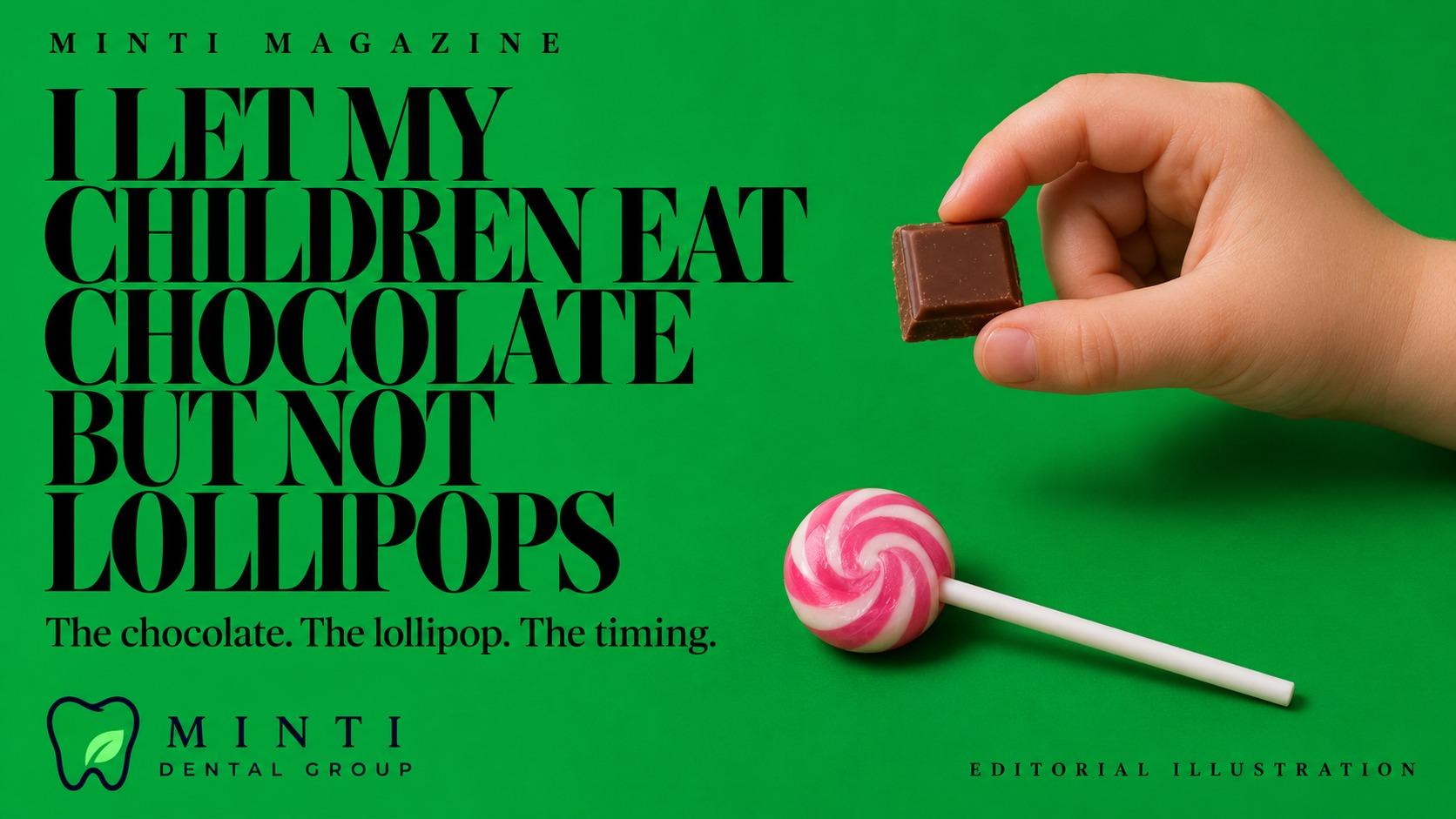
Every now and then, my children can have a little chocolate. Lollipops, though? Never.
It sounds like a strange line to draw. They're both sweet. They both have sugar. Why would a dentist say yes to one and no to the other?
The answer comes down to one simple thing, and once you know it, I think you'll look at the sweet aisle very differently.
The short answer: when it comes to teeth, how long sugar stays in the mouth matters just as much as how much sugar there is. Chocolate, eaten with a meal, is usually finished quickly and clears from the mouth fairly fast. A lollipop is designed to be sucked slowly, sometimes for ages, which bathes the teeth in sugar the whole time and keeps the acid attack going. That's why lollipops, boiled sweets and anything designed to "last" are the ones I avoid most. It's all about how often and how long teeth meet sugar, which is how tooth decay starts. (I explained the same idea in my Halloween sweets post.)
It's not about being the "no" mum
I want to be clear about something first. I don't believe children should grow up thinking food is good or bad, or feeling guilty for wanting something sweet. Wanting a treat is completely normal, for children and grown-ups.
What I try to do, as a mum and a dentist, is make choices that are kinder to their teeth without taking all the joy out of life. And that means thinking less about "sweet or not sweet" and more about how a treat actually behaves in the mouth.
That's where the lollipop loses.
What happens every time sugar meets teeth
Here's the science, in the simplest way I can explain it.
Everyone has bacteria living in the plaque on their teeth. When we eat or drink something sugary, those bacteria feed on the sugar and produce acid. That acid attacks the enamel, the hard protective outer layer of the tooth.
Our saliva is brilliant. Given time, it helps to neutralise the acid and lets the enamel recover. But it needs a break from sugar to do its job.
So if sugar arrives once and then stops, the teeth get an attack, followed by a chance to recover. If sugar keeps arriving, or sits in the mouth for a long time, the teeth never get that break. And that's when decay can start.
Why lollipops are a dentist's worst nightmare
They're designed to last
The whole point of a lollipop is that it lasts. A child can suck on one for a very long time, and it's often passed around, put down, picked up again and finished later.
All that time, the teeth are sitting in sugary saliva. One lollipop can mean a long, slow sugar bath for every tooth in the mouth.
They're often eaten between meals
Lollipops tend to be a snack-time, car-journey, after-school or "well done at the doctor's" kind of treat. They're rarely eaten with a meal. So they add an extra sugar attack on top of the ones from meals.
The sugar coats everything
As the lollipop dissolves, sugar spreads all around the mouth, over every surface, front and back. Nothing escapes.
Crunching can chip teeth
Many children get bored halfway through and start crunching. Biting down hard on a boiled sweet can chip a tooth. I've written about what to do with a chipped or broken tooth, and I'd much rather children never need it.
The same goes for other long-lasting sweets: boiled sweets, gobstoppers, hard candies, sour sweets that get sucked slowly, and even sugary chewing gum. If it's designed to take a long time, it's designed to keep sugar on the teeth.
Why a little chocolate is a different story
I'm not saying chocolate is good for teeth. It has sugar, and it's still a treat.
But compared with a lollipop, it behaves very differently:
- It's usually eaten quickly. A couple of squares are gone in a minute or two, not half an hour.
- It melts and clears more easily. Plain chocolate doesn't tend to cling to teeth in the same way as chewy or hard sweets.
- It can be eaten with a meal. A little chocolate after dinner means the teeth are already dealing with one meal-time acid attack, rather than facing a brand-new one later.
That's why, if my children have chocolate, it's a small amount, it's plain (not caramel or toffee-filled), and it's straight after a meal. Then it's done, and their teeth get a proper break.
The rules I'd suggest to any parent
If you'd like to make sweet treats a bit kinder to teeth, these are the simple rules I'd suggest:
- Treats with meals, not between them. Fewer sugar attacks through the day.
- Quick, not slow. Choose something that's eaten and finished, rather than something sucked or chewed for ages.
- Avoid sticky and chewy. Toffees, caramels and chewy sweets cling to teeth.
- Water afterwards. A drink of water helps rinse away some of the sugar.
- Brush before bed with fluoride toothpaste. Never let sugar be the last thing on their teeth at night.
These won't make sweets healthy. But they can make a real difference to how much harm they do.
How much sugar can children have?
Even when you're careful about how treats are eaten, the amount still matters. According to the NHS, children should have no more than:
- 10g of free sugars a day at age 1
- 14g a day at ages 2 to 3
- 19g a day at ages 4 to 6
- 24g a day at ages 7 to 10
That's for all free sugars across the whole day, including the sugar in cereals, yoghurts, sauces and fruit juice. So even with chocolate, it's a little, not a lot. And for very young children, the less sugar, the better.
Why this matters so much to me
I've seen what sugar can do to children's teeth. The latest national survey of 5-year-olds in England found that 22.4% had visible tooth decay, more than one in five children by the time they start school. And tooth decay is still the most common reason children aged 5 to 9 are admitted to hospital in England.
Behind every one of those figures is a little one who was in pain, and a parent who probably didn't realise that the way a sweet is eaten can matter as much as the sweet itself.
That's why I'm sharing this. Not to tell anyone off, but because I'd want someone to tell me.
Don't forget the everyday habits
Whatever treats your family chooses, these daily habits protect teeth most. According to the NHS guidance on children's teeth:
- Brush twice a day with fluoride toothpaste. A smear for under-3s, a pea-sized amount for 3 to 6-year-olds.
- Spit, don't rinse.
- Help and supervise brushing until children can do it properly themselves.
- Visit the dentist regularly, starting when the first milk teeth appear or before age one. NHS dental care for children is free. Here's what children's dentistry involves, and how often to see a dentist.
It's also worth knowing what a cavity looks like, so you can spot early changes, and remembering that baby teeth really do matter.
A few quick questions
Are lollipops bad for children's teeth? They're one of the worst sweets for teeth, because they're sucked slowly and keep sugar on the teeth for a long time, often between meals.
Is chocolate better for teeth than sweets? It still contains sugar, but plain chocolate eaten quickly with a meal usually spends less time on the teeth than lollipops, boiled sweets or chewy sweets.
When is the best time for children to have a sweet treat? With or straight after a meal, rather than as a snack between meals.
Which sweets are worst for teeth? Ones that last a long time or stick to teeth, like lollipops, boiled sweets, toffees, caramels and chewy sweets.
The verdict
It's not just what's in a treat that matters. It's how long it stays on the teeth.
A few squares of chocolate after dinner, followed by a good brush at bedtime, is a very different story from a lollipop slowly dissolving for half an hour on the walk home. One gives teeth a short challenge. The other gives them a long, slow soak in sugar.
So yes, I let my children have a little chocolate. And no, they'll never get a lollipop from me. Not because I'm strict, but because I love those little teeth, and I know exactly what a lollipop does to them.
This article is general information. It is not personal dental or dietary advice.