By Dr Nishma Kotecha, dentist and mum
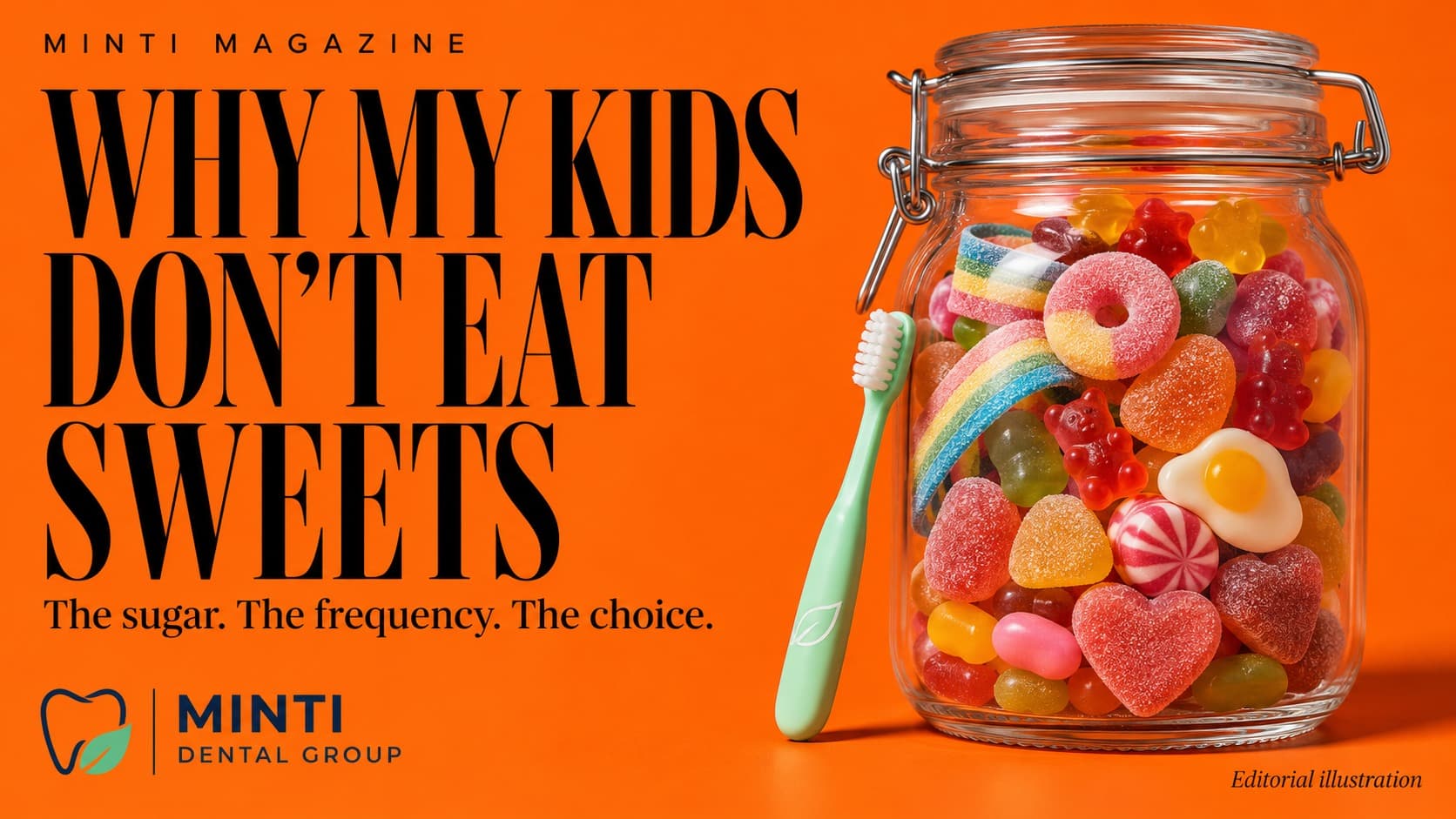
I'll start by saying the thing other parents are probably thinking: yes, I know. The dentist mum who doesn't let her kids eat sweets. It sounds a bit joyless, doesn't it?
I know how it can look from the outside, especially at birthday parties, at Halloween, or when a kind grandparent reaches for a treat. To some people, it seems a little harsh. Maybe even cruel.
So I'd like to explain. Not to lecture anyone, and definitely not to make any parent feel bad. Every family does things differently, and every parent I know is trying their very best. This is simply why I've made this choice for mine, and it all comes from love.
The short answer: sweets are one of the most common sources of free sugars for children, and every time sugar touches the teeth, the bacteria in plaque make acid that attacks the enamel. It's not just how much sugar, but how often, that leads to tooth decay. And tooth decay is still the most common reason children aged 5 to 9 are admitted to hospital in England. Keeping sweets out of everyday life is my way of protecting little teeth, without ever making food feel like something to be scared of. (I've also explained why how often you have sugar matters most, and what a cavity looks like.)
It's not about being strict. It's about what I see.
When you're a dentist, you see things that stay with you.
I see children with toothache who can't sleep. Children who are frightened before treatment even starts. Little ones who need teeth taken out far too young.
And I see their parents, often feeling terrible, saying, "I didn't realise." They weren't careless. They were loving parents who gave sweets as treats, rewards and comfort, the way most of us were raised.
That's what I carry home with me. When I say no to a packet of sweets for my own children, I'm not thinking about rules. I'm thinking about those families, and about how much I want my kids to never sit in that chair in pain.
The numbers behind my decision
I don't share these to scare anyone. I share them because I think every parent deserves to know.
The latest national survey of 5-year-olds in England found that 22.4% had visible tooth decay. More than one in five children, at just five years old. Among children with decay, an average of 3.5 teeth were affected.
Government figures on hospital tooth extractions show 33,976 decay-related extraction episodes in children and young people aged 0 to 19 in England in the year to 2025, up 11% on the year before. And tooth decay remains the most common reason for hospital admissions in children aged 5 to 9.
Tooth decay is largely preventable. That's the bit that breaks my heart.
Why sweets are so hard on little teeth
Sugar feeds the acid attack
Every time your child eats something sugary, the bacteria in the plaque on their teeth feed on it and make acid. That acid attacks the enamel, the hard protective outer layer. Saliva slowly helps to calm things down, but it takes time.
If sugar keeps arriving, the teeth never get the chance to recover. Over months and years, that's how decay starts.
Sweets hang around
Lots of sweets are sticky, chewy or designed to last. Toffees cling to back teeth. Lollipops get sucked for ages. Chewy sweets pack themselves into the grooves of molars. The longer sugar stays on the teeth, the longer that acid attack goes on.
They become an everyday habit
This is the big one. Sweets rarely stay a once-in-a-while thing. They become a reward for good behaviour, a treat after school, a bribe in the supermarket queue, a little something from grandparents. Each one feels small. Together, they mean teeth are meeting sugar again and again, every day.
I explained this in my Halloween sweets post: frequency is everything.
Baby teeth matter more than people think
I often hear, "They're only baby teeth, they'll fall out anyway." I understand why people say it, but baby teeth have a big job. They help children eat, speak and smile with confidence, and they hold space for the adult teeth coming through. Decay in baby teeth can cause pain and infection, and losing them early can affect how adult teeth come in. They deserve looking after just as much. (I wrote more about why baby teeth matter in my piece on Alan Carr.)
How much sugar should children have?
The NHS says children aged 4 to 6 should have no more than 19g of free sugars a day, about five sugar cubes. Children aged 7 to 10 should have no more than 24g, about six cubes.
That's not a lot. Free sugars hide in so many everyday foods, like cereals, yoghurts, sauces and drinks, that by the time you add a bag of sweets, it's very easy to go over without realising.
Taking sweets out of the everyday picture is the simplest way I know to keep my children's sugar where it should be.
"But aren't you making sweets more tempting?"
This is a fair question, and one I've thought about a lot as a mum.
I never want my children to feel that food is "good" or "bad", or that they're naughty for wanting something sweet. Wanting sweets is completely normal. I don't shame it, I don't make a big drama about it, and I never want food to feel scary or forbidden in a way that makes them anxious.
What I try to do instead is simply not make sweets part of everyday life. They're not a reward, not a bribe and not a comfort. And when the answer's no, I explain why in a way they understand: sweets make the tiny germs on our teeth very happy, and those germs can make holes in our teeth.
Children are wonderfully clever. When you explain things kindly, they usually get it.
What I do instead of sweets
Saying no to sweets doesn't mean saying no to fun, treats or love. Here are the swaps I'd suggest to any parent:
- Rewards that aren't food. Stickers, extra story time, choosing the film, a trip to the park. Children remember the experience more than the sweet anyway.
- Tooth-friendly snacks. Cheese, crunchy veg, plain yoghurt, whole fruit, wholegrain crackers.
- Water and milk to drink. Squash, juice and fizzy drinks are some of the sneakiest sources of sugar, and even diet fizzy drinks are acidic.
- Sweet things with meals, not between them. If something sweet is eaten, it's better at the end of a meal than as a snack, so teeth get fewer sugar attacks through the day.
- Talking about teeth in a fun way. Brushing songs, timers, a mirror so they can see what they're doing. Making teeth something they're proud of.
And the bit every parent needs: the teeth routine
Whatever you decide about sweets, these habits help every child. According to the NHS guidance on children's teeth:
- Use fluoride toothpaste. A smear for under-3s, and a pea-sized amount for 3 to 6-year-olds.
- Spit, don't rinse. It leaves fluoride on the teeth to keep protecting them.
- Help them brush. Under-3s need a grown-up to brush for them, 3 to 6-year-olds need supervising, and older children still benefit from a check.
- Start dentist visits early. The NHS says to take your child when their first milk teeth appear, or before they turn one. NHS dental care for children is free.
- Ask about fluoride varnish. From age 3, children should be offered fluoride varnish at least twice a year.
- Keep visits happy. Positive early experiences mean less fear later. Here's how often to see a dentist, and what children's dentistry involves.
To the parents who think I'm cruel
I understand why it might look that way from the outside. Sweets are tied up with so much joy: birthday parties, grandparents, cinema trips, the corner shop after school. Nobody wants to be the parent who takes the joy away.
But I promise this isn't about taking the joy away. Parties, celebrations and special days are still full of fun, laughter and love. Sweets just aren't part of everyday life.
And if you do give your children sweets, please don't feel judged by this post. You know your family best. If you'd like to make one small change, try keeping sweet things to mealtimes rather than dotted through the day, and make sure teeth get a good brush with fluoride toothpaste before bed. That alone makes a real difference.
A few quick questions
Are sweets bad for children's teeth? Sweets contain free sugars, which the bacteria in plaque turn into acid. Frequent sweets, especially sticky or long-lasting ones, increase the risk of tooth decay.
How much sugar can children have a day? The NHS says no more than 19g of free sugars a day for children aged 4 to 6, and 24g for children aged 7 to 10.
Is it better to eat sweets with meals? Yes. Having sweet foods at mealtimes, rather than as snacks, means fewer sugar attacks on the teeth throughout the day.
Do baby teeth really matter? Yes. They help children eat, speak and smile, and hold space for adult teeth. Decay in baby teeth can cause pain and infection.
The verdict
I'm not a cruel mum. I'm a mum who happens to be a dentist, and who has seen too many little ones in pain from something that could have been prevented.
Keeping sweets out of my children's everyday lives isn't about control or perfection. It's about giving their teeth the best possible start, and giving them the confidence to smile without ever worrying.
If that makes me the strict one at the party, I can live with that. I'd rather my children have healthy smiles than a pocket full of sweets.
This article is general information. It is not personal dental or dietary advice.