
Something just went crunch, and it wasn't the toffee. Now your tongue has found the gap and refuses to leave it alone, like it's checking a lost wallet is still lost. You've probably had a look in the bathroom mirror with your phone torch, too. You're not imagining it, and you're far from the only one: a broken tooth or a filling that's fallen out is one of the most common things I hear about in my surgery.
The short answer: a broken tooth or lost filling needs a dentist, but most of the time it's not an emergency. If there's no pain, book an ordinary appointment soon and treat the tooth gently until then. If it hurts, your face or gum is swelling, or a sharp edge is cutting your tongue or cheek, ring my emergency dentist team in Harlow or Enfield today, or NHS 111 if we're closed or you're not local. If you think you've breathed in a piece of tooth or filling, that's emergency care straight away.
If you've got the broken piece, keep it. The NHS says to put it in milk or saliva and bring it with you, because sometimes it can be stuck back on.
Pain, swelling, or a sharp edge cutting your mouth? Keep any broken piece in milk and call your nearest Minti practice. Tell reception it's urgent. I keep same-day appointments for pain and swelling wherever I can.
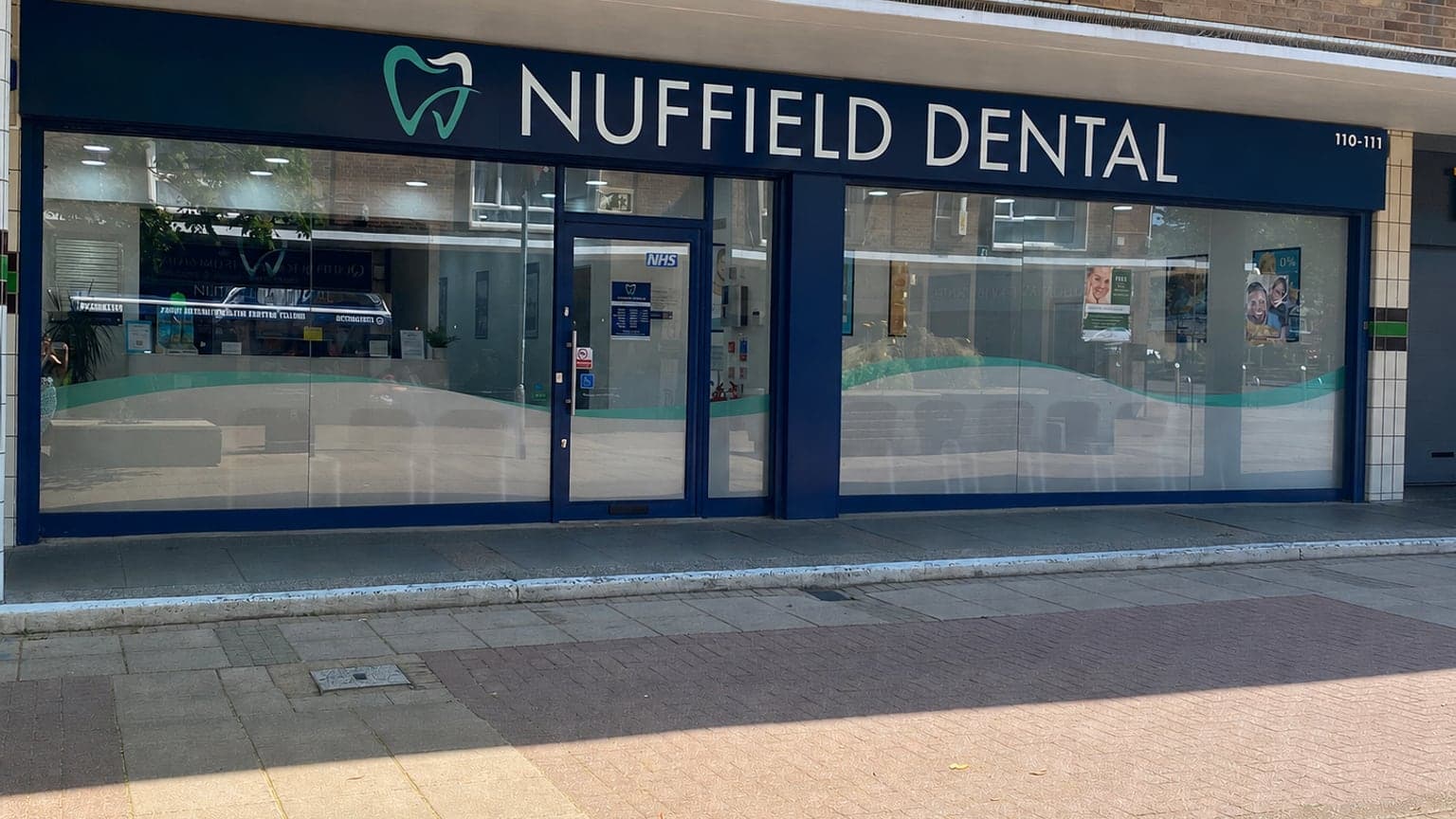
- Nuffield Dental Practice, Harlow: 01279 424 038
- Church Langley Dental, Harlow: 01279 306 690
- Enfield Smiles, Enfield: 020 8804 4320
Evening, weekend, or nowhere near us? Call NHS 111. If you're struggling to breathe or swallow, or you think a piece has gone down the wrong way, that's 999 or A&E.
What should I do if my filling falls out or feels loose?
First things first: don't panic, and don't go to your GP. NHS guidance is plain that a GP can't give you dental treatment. A filling is basically a cork in a hole the tooth once had. When the cork goes, the hole is still there, and it needs a dentist to seal it properly.
My filling fell out
The practical first steps: keep it clean, chew on the other side, and book in. If it was a crown rather than a filling, hang on to it.
My filling fell out and my tooth hurts
Pain changes the picture. It can be exposed dentine reacting to hot, cold and sweet, or a sign the tooth underneath needs more than a new filling. Either way, it's a call today, not next month.
Can a filling falling out cause toothache?
Yes. The filling was the roof over the sensitive inner layer of the tooth. Take the roof off and the weather gets in. How much it hurts depends on how deep the hole is. For a different pain pattern, read why cold water can briefly ease a toothache.
Loose filling
A filling that moves, clicks or lets food in underneath is on its way out. It's worth seeing me before it goes, because the gap it leaves can trap food and bacteria.
My filling keeps falling out
If it's the same tooth again and again, something is behind it: decay under the filling, a crack, a heavy bite, or a tooth that has run out of wall to hold a filling. That's the point where I start thinking about stronger repairs.
My temporary filling fell out
Temporary fillings are designed to be temporary, so this happens. Ring the practice that placed it, especially if the tooth is mid-way through root canal treatment.
Cracked filling
A filling can crack before it falls out. You might feel a rough edge, a twinge on biting, or food catching. It's a routine appointment unless it hurts.
My crown fell off
Keep the crown safe and bring it with you. NHS 111 Wales advises the same. It can often be cleaned and re-cemented if the tooth underneath is sound.
Can I patch it up myself until I see a dentist?
For a short while, yes. SDCEP, the Scottish guidance used by dental teams, mentions emergency temporary repair kits from a pharmacy as a self-help option. My rule, and it's the advice I give in the chair: a pharmacy kit is a plaster, not a repair. It buys you time. It doesn't fix the tooth, and it doesn't stop decay underneath.
Temporary filling kits
A pharmacy kit may cover the gap briefly, but throbbing pain or swelling needs a dentist.
Pharmacy temporary dental cement
Useful for covering a sharp edge or a lost filling for a short while. It's not glue for a crown you're planning to leave on for a year.
How long can you leave a temporary filling in?
Not as long as most people hope. Temporary materials wear and leak, which is the whole reason they're called temporary.
Can you eat with a lost filling?
Yes, carefully. NHS 111 Wales advises avoiding hard foods on that tooth, avoiding very hot or cold food if it's sensitive, and keeping sugary food and drinks to mealtimes. Keep brushing it gently.
What should I do if a piece of my tooth has broken off?
Find the piece if you can and pop it in milk or saliva, as the NHS advises. Then work out which of these sounds like you. The big three questions I ask are: does it hurt, is anything sharp, and how much tooth is left?
A piece of tooth broke off
Keep the fragment in milk or saliva and call a dentist to discuss how quickly you should be seen.
Broken tooth but no pain
No pain is good news, but please don't take it as the all-clear. A tooth can be broken and quiet at the same time.
Broken tooth at the gum line
When a tooth snaps level with the gum, how much is left below the gum decides whether it can be rebuilt. That needs a proper look and usually an X-ray.
Chipped tooth with a sharp edge
Your tongue will treat a sharp edge like a new hobby. Smoothing it is quick, and it's one of the first things SDCEP suggests for a broken tooth.
Broken tooth cutting your tongue
If the edge is actually cutting your tongue or cheek, that's the urgent route: a sore that keeps getting rubbed won't heal.
Bit something hard and my tooth hurts
An olive stone, a popcorn kernel, a fork. Sometimes nothing breaks off but the tooth stays sore to bite on.
What happens if a broken tooth is left untreated?
I'll keep this one straight. A broken tooth doesn't grow back, and the break can let decay or infection in over time.
How do I know if my tooth is cracked?
Cracks are the master criminals of dentistry. They come and go, they don't always show up on X-rays, and the pain is hard to pin to one tooth. Both the American Association of Endodontists and the Oral Health Foundation describe the classic signs as pain on biting or chewing, sensitivity to hot and cold, and pain that comes and goes. They also agree on the important bit: unlike a broken bone, a cracked tooth can't heal itself.
Cracked tooth symptoms
Fine surface lines can be harmless, while deeper cracks need a dentist to assess them.
I can see a crack inside my tooth
Not every visible line is a problem. Fine surface lines are common and painless. Knowing which is which is my job, not your phone torch's.
Cracked tooth from hard food
Hard foods, ice and grinding are common culprits. Call a dentist if the tooth is painful or sensitive afterwards.
My tooth hurts when I release my bite
A sharp jolt as you let go of a bite is a classic crack clue, and one of the first things I ask about.
How can a broken or chipped tooth be repaired?
It depends on how much tooth is left and whether the nerve is involved. NHS guidance lists reattaching the piece, a filling, a crown, or root canal treatment if the break reaches the nerve. The Oral Health Foundation adds bonding, veneers and smoothing for smaller damage. I can't promise which one until I've looked, but here's how I think about it.
Can a broken tooth be repaired with a filling?
Often, yes, if the break is small and there's plenty of healthy tooth to hold it. Bigger breaks usually need more support.
Small chip in a front tooth
Small chips are mostly cosmetic, but a check makes sure nothing deeper is going on. Many can be smoothed or built up with tooth-coloured material.
Front tooth chipped: repair options
Depending on the break, options range from composite bonding to veneers or crowns.
Dental bonding vs a crown for a broken tooth
Bonding adds material to what's there. A crown covers the whole tooth and holds it together, as the Oral Health Foundation puts it. The size of the break usually makes the choice.
When is a broken tooth or lost filling an emergency?
I'll keep this section straight. Most broken teeth and lost fillings are urgent or routine, not emergencies. SDCEP guidance splits it simply: pain that painkillers aren't controlling needs urgent dental care; pain that's managed, or no pain, needs a normal appointment. Painkillers such as paracetamol or ibuprofen can help in the meantime; follow the instructions on the packet.
Can an emergency dentist fix a broken tooth the same day?
Often the first visit is about getting you comfortable and protecting the tooth, then finishing the repair after. What's possible on the day depends on the break.
Book a normal appointment if: there's no pain, the edge isn't cutting you, and you can eat on the other side.
Call us today if:
- the tooth hurts and painkillers aren't controlling it
- a sharp edge is cutting your tongue, lip or cheek
- your gum or face is swelling, or there's a bad taste
- a large piece has broken off or you can see pink or red in the middle of the tooth
- you've swallowed a piece and want advice (tell reception when you ring)
Swelling or a bad taste can point to infection. My dental abscess and tooth infection guide explains when to get urgent help.
Call 999 or go to A&E, not a dentist, if:
- you think you've breathed in a piece of tooth or filling, especially if you're coughing, choking or wheezing
- you're finding it hard to breathe, swallow or speak
- swelling is spreading towards your eye or down into your neck
- you can't open your mouth properly because of the swelling
If you're near Harlow or Enfield, I'd much rather take a look than have your tongue keep guard over that gap for another week. Ring your nearest Minti practice and tell us what's happened. If it hurts or something is cutting you, say it's urgent and we'll do our best to see you the same day. Anywhere else, or out of hours, call NHS 111.
This article is general information, not a diagnosis. A broken tooth or lost filling needs examining in person to find the right repair.