By Dr Nishma Kotecha, dentist and mum
It's funny how the smallest moments can stay with you.
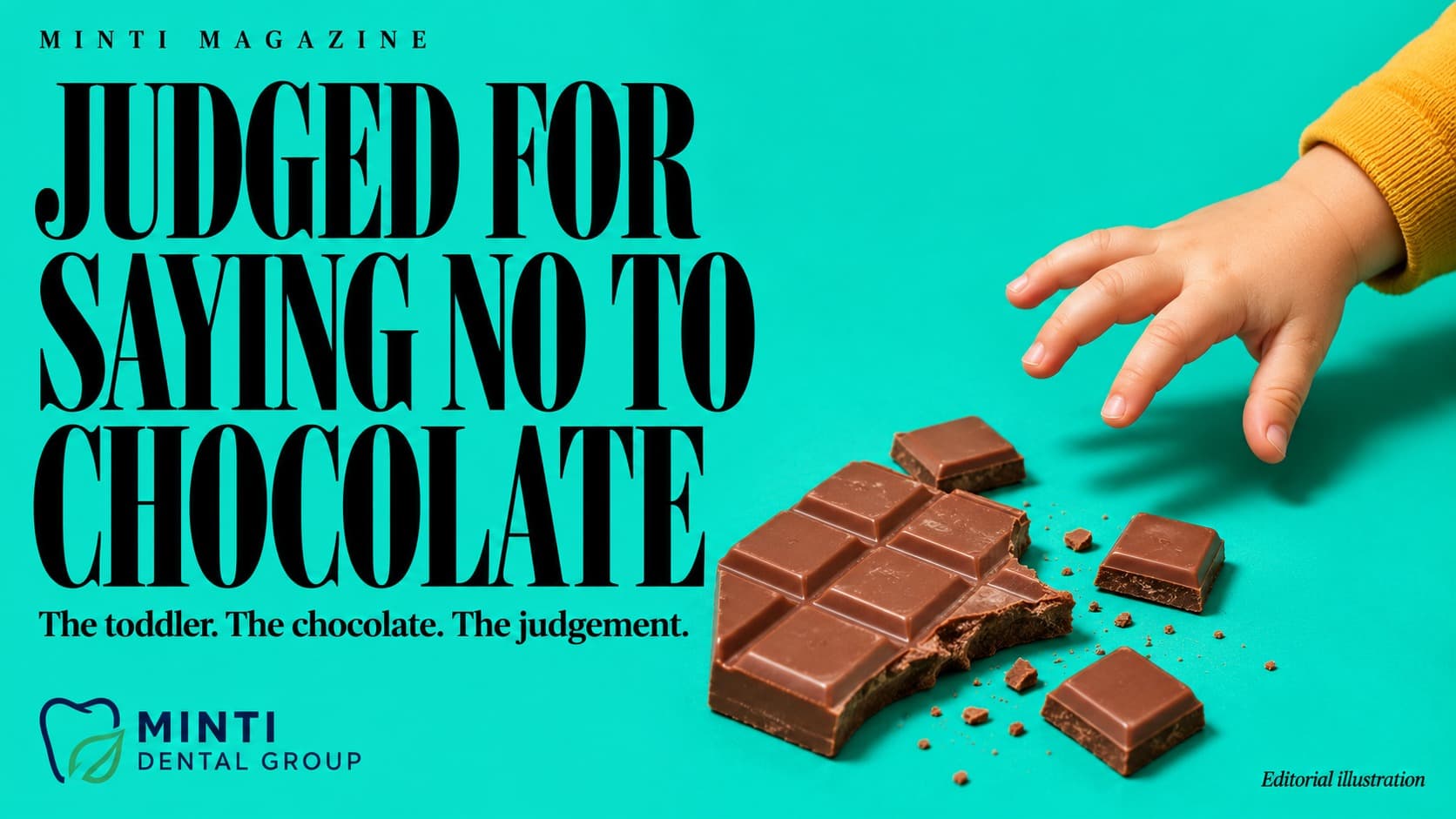
It wasn't a big argument. Nobody raised their voice. It was just a look, and a comment, from another mum, when I said no to chocolate for my toddler. The kind of look that says, without saying anything at all: poor thing. What sort of mother says no to chocolate?
I smiled, I changed the subject, and we all carried on with our day. But I thought about it all the way home.
I'm not writing this to have a go at her. I don't think she was being unkind on purpose, and I know she loves her children as much as I love mine. I'm writing it because I suspect a lot of parents have been on one side of that look or the other. And I'd like to explain, gently, why I said no.
The short answer: toddlers' daily sugar limits are much smaller than most of us realise. The NHS says children aged 2 to 3 should have no more than 14g of free sugars a day, and 1-year-olds no more than 10g. Chocolate is high in sugar, so even a small amount can use up a big part of a toddler's allowance. Baby teeth have thinner enamel, and tooth decay can start as soon as teeth come through. Saying no to chocolate isn't about being mean. It's about protecting brand-new teeth and building habits that last. (I've also written about why how often children have sugar matters, and why baby teeth matter.)
That feeling of being judged
If you're a parent, you'll know this feeling. Whatever you do, someone thinks you're doing it wrong.
Breast or bottle. Screens or no screens. Too strict, too soft. And, it turns out, chocolate or no chocolate.
What I've realised is that food is especially emotional. Chocolate isn't just chocolate. It's love, treats, grandparents, birthdays, comfort, being a "fun" parent. So when you say no to it, some people hear that you're saying no to all of those lovely things. Maybe even that you're judging them for saying yes.
I'm not. I promise. I just know some things about little teeth that I can't un-know.
What I know as a dentist
As a dentist, I see what decay can do to small children. Toothache that keeps them awake. Infections. Treatment that's hard for a little one to cope with. And sometimes, teeth that need to come out.
The latest national survey of 5-year-olds in England found that 22.4% had visible tooth decay. That's more than one in five children, by the time they start school. Decay doesn't appear overnight at five. It starts much earlier, often in the toddler years.
And government figures show tooth decay remains the most common reason for hospital admissions in children aged 5 to 9.
I don't share those numbers to frighten anyone. I share them because tooth decay is largely preventable, and the toddler years are where prevention really begins.
How much sugar can a toddler actually have?
This is the bit that surprised me most when I first looked at it as a mum, rather than as a dentist.
According to the NHS:
- Babies under 1: no sugar should be added to their food or drinks.
- Children aged 1: no more than 10g of free sugars a day, about two and a half sugar cubes.
- Children aged 2 to 3: no more than 14g a day, about three and a half sugar cubes.
That's tiny. And free sugars are already hiding in lots of everyday foods, like yoghurts, cereals, snacks and drinks, including fruit juice.
Chocolate is high in sugar. So even a small bar or a few pieces can come close to a toddler's whole day's allowance. If you've got some in the cupboard, have a look at the label. It's often a bit of a shock.
Why little teeth need extra care
Baby teeth are more delicate
Baby teeth have thinner enamel than adult teeth. That means decay can spread through them more quickly.
Chocolate sticks around
Chocolate melts, coats the teeth and gets into the little grooves and gaps. The longer sugar stays on teeth, the longer the bacteria in plaque have to turn it into acid, which attacks the enamel.
Toddlers graze
Toddlers rarely eat a treat in one go. A bit now, a bit in the buggy, a bit after nap time. Every time sugar arrives, the acid attack starts again. It's the same reason I'm so careful with sweets: how often matters as much as how much.
Habits start early
The toddler years are when children's tastes and habits are forming. If chocolate becomes a daily treat, reward or comfort now, it's much harder to change later. If water, fruit and simple snacks feel normal now, that's a gift that lasts.
"But it's just a little bit of chocolate"
I know. And one piece of chocolate, once in a while, isn't going to ruin anyone's teeth.
What I'm careful about is "just a little bit" becoming the everyday. Because it rarely stays at one piece, once. There's a bit at playgroup, a bit from a kind relative, a bit as a reward for getting into the car seat. Each one feels small. Together, they add up, and the teeth pay the price.
For me, as a mum and a dentist, it's simply easier to keep chocolate out of my toddler's everyday life, rather than trying to count the pieces.
To the mum who gave me that look
If I could say one thing to her, it would be this: I'm not judging you. I really am not.
Every family makes their own choices. Maybe her children have chocolate and brush brilliantly. Maybe her toddler will never have a filling. I hope so.
My choice comes from what I see at work, and from loving my child so much that I want to protect those tiny new teeth for as long as I can. I'd rather be the slightly boring mum at the playground than the one sitting next to my little one in a dental chair.
And to any parent who has been on the receiving end of that look, for whatever choice you've made: you know your child best. A look doesn't change that.
What I offer instead
Saying no to chocolate doesn't mean saying no to treats or fun. Here are some toddler-friendly ideas I'd suggest to any parent:
- Whole fruit, like soft pear, banana, berries or grapes cut lengthways.
- Plain yoghurt, with some fruit stirred in.
- Cheese and simple crackers.
- Soft veg sticks, like cucumber or steamed carrot.
- Water or milk to drink.
- Treats that aren't food: stickers, a song, bubbles, an extra story, a trip to the swings.
And if chocolate is ever eaten, it's kinder to teeth at the end of a meal than as a snack, and best followed by a good brush before bed.
The toddler teeth routine
Whatever you decide about chocolate, these are the habits that protect little teeth most. According to the NHS guidance on children's teeth:
- Brush twice a day with fluoride toothpaste. For under-3s, use a smear, and a parent or carer should do the brushing.
- Spit, don't rinse. It leaves fluoride on the teeth to keep protecting them.
- Start dentist visits early. Take your child when their first milk teeth appear, or before they turn one. NHS dental care for children is free.
- Keep visits positive. Happy early visits make for a confident patient later. Here's what children's dentistry involves, and how often to see a dentist.
- Lift the lip. Every so often, gently lift your toddler's top lip and look at their front teeth. White chalky spots or brown marks are worth showing a dentist. Here's what a cavity looks like.
A few quick questions
How much sugar can a toddler have? The NHS says no more than 10g of free sugars a day for 1-year-olds, and 14g for children aged 2 to 3.
Is chocolate bad for toddlers' teeth? Chocolate is high in sugar and can stick to teeth. Frequent chocolate, especially as a snack between meals, increases the risk of tooth decay.
When should my toddler first see a dentist? The NHS says when their first milk teeth appear, or before they turn one.
Is it OK to give my toddler chocolate occasionally? That's a decision for each family. If it's given, it's kinder to teeth with a meal rather than as a snack, followed by brushing with fluoride toothpaste before bed.
The verdict
Being judged as a parent stings, even when it's just a look. But I'd rather feel that sting for a moment than watch my child go through toothache that could have been avoided.
Saying no to chocolate isn't about being strict, and it's certainly not about judging anyone else. It's about loving those tiny teeth enough to protect them while they're new.
So if you've ever been given that look for a choice you made out of love, you're in good company. Hold your head up. You're doing a wonderful job.
This article is general information. It is not personal dental or dietary advice.