Alan Carr is getting the career retrospective treatment. Channel 5 has announced Alan Carr: My Best Bits & More, a 90-minute special scheduled for Saturday 24 October. Expect chat show chaos, stand-up memories and, inevitably, that grin.
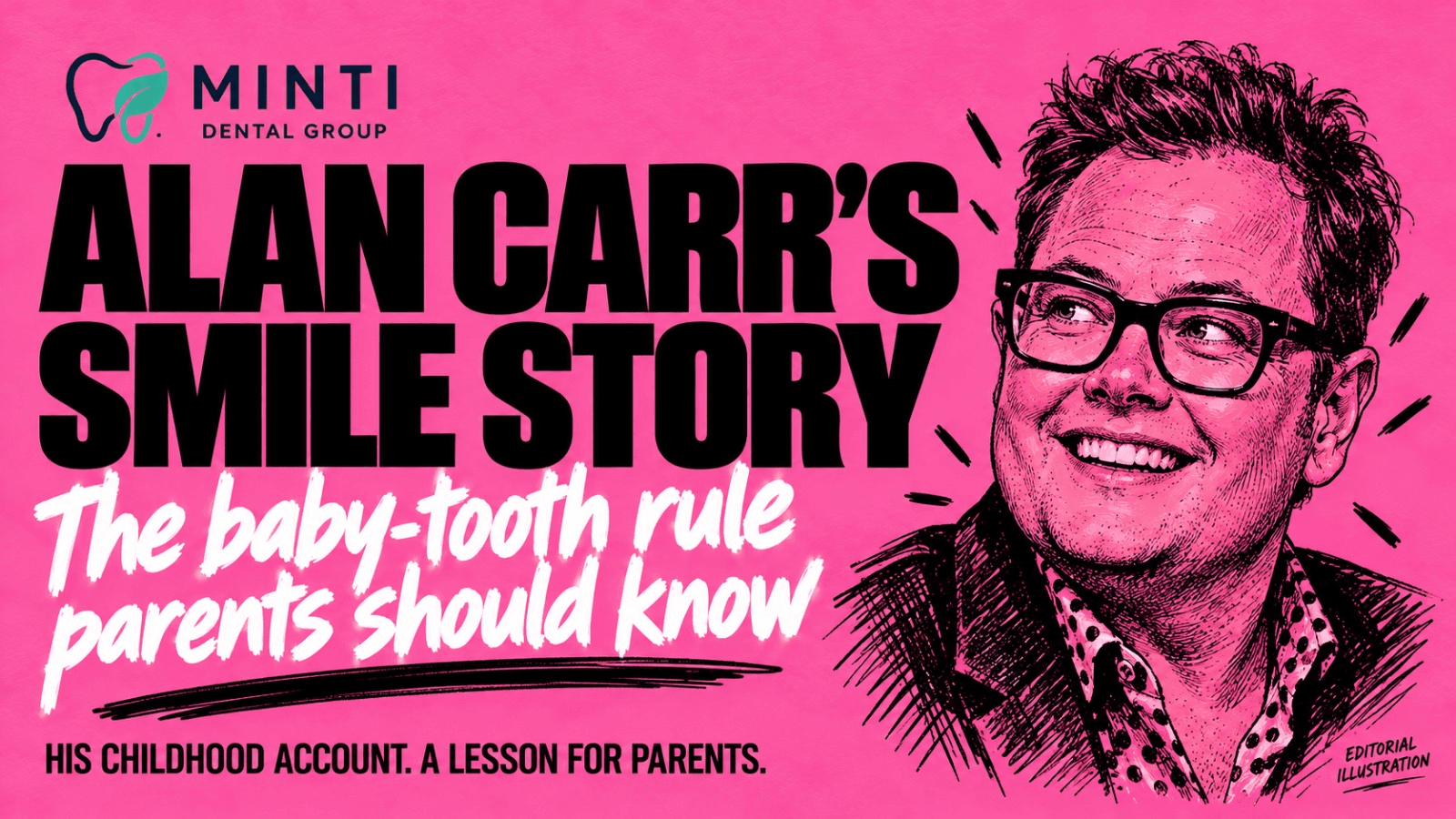
And that grin has a story. Alan has said his famously toothy smile goes back to a childhood accident on a family holiday, when he was six. As a dentist, it's the dental bit of his story that caught my eye. Because hidden inside it is a rule every parent should know.
The short answer: Alan has described falling as a child and losing his milk teeth, with a dentist warning his adult teeth might come through affected. That's his account, and I'm not going to diagnose his smile from the sofa. But his story is a perfect way into the single most useful piece of first aid for parents: never put a knocked-out baby tooth back in. It's the opposite of what you should do with an adult tooth, and mixing them up matters. Either way, get to a dentist as soon as possible. (I've also put together a guide on what to do in a dental emergency, here's what an emergency dentist appointment is for, and this is how I approach children's dentistry more generally.)
What did Alan Carr actually say?
In an interview with the Daily Mail, quoted by What to Watch, Alan described what happened. He was six, on a family holiday, climbing on a caravan towbar. "Then slip... bang!"
His earliest memory, he said, is "of my mum scooping me up as the blood flowed and my milk teeth fell out."
He then recalled the dentist warning that his adult teeth "would either come through all black or all crooked." And, in typical Alan fashion: "He was right, when they came out they looked like they were having a party."
What I love is how he finishes the story. He said he thinks he was lucky, that his looks have made his career, and that "everything I hated about myself at school has become the key to my success."
That's his own account, in his own words, and I'll leave it there. I can't tell you exactly what happened to his teeth, what treatment he's had since, or whether his current smile is down to that fall. Nobody can from a TV screen. But as a story about how a bump to a child's baby teeth can echo into adult life, it's a very good one.
Why a knock to a baby tooth can matter later
Here's the bit most parents don't know.
Baby teeth aren't just placeholders. Each one sits right on top of the adult tooth that's quietly developing underneath it in the jaw, a bit like a bungalow with a whole house being built in the basement.
So when a child takes a hard knock to the mouth, it's not only the baby tooth that takes the hit. The developing adult tooth underneath can sometimes be affected too. That's what Alan's dentist was warning about when he said his adult teeth might come through discoloured or out of line.
This doesn't mean every bump to a baby tooth causes problems later. Plenty don't. But it's exactly why a dentist should check any significant knock to a child's teeth, even if the tooth looks fine afterwards, and even if it's "only a baby tooth".
The baby-tooth rule: never put it back
If your child knocks out a baby tooth, do not try to push it back into the gum.
The NHS is clear on this: don't put a baby tooth back in, because it could damage the adult tooth growing underneath.
I know the instinct. Your child is crying, there's blood everywhere, and you're holding a tiny tooth in your hand thinking, "Surely I should put this back?" Please don't. Pushing it back in risks pressing on the developing adult tooth in the bone above, and that's the tooth that has to last them a lifetime.
What to do instead:
- Stay calm (or at least look calm, which counts).
- Press a clean cloth or gauze gently on the gap to help stop the bleeding.
- Keep the tooth if you've found it, so the dentist can see it's all there.
- Get your child seen by a dentist as soon as possible. If your dentist is closed or you don't have one, call NHS 111 for advice.
The adult-tooth rule: put it back, fast
This is where it flips completely. If an adult tooth is knocked out, the NHS advice is to try to get it back in the socket as quickly as possible.
- Hold the tooth by the crown, the white bit you normally see, and don't touch the root.
- If it's dirty, rinse it gently in milk, saline or saliva. Don't scrub it.
- Try to put it back in the hole in the gum.
- Bite down gently on a clean cloth to hold it in place if it goes back in easily.
- If you can't get it back in, keep it in a container of milk or saliva, not in the mouth. Don't let it dry out.
- Go to a dentist as soon as possible. Even if you can't find the tooth, get an emergency appointment.
With adult teeth, time really matters, so this is one to act on straight away, not after you've finished your cup of tea.
Baby tooth or adult tooth? How to tell
This is the question that trips parents up. Children have a mix of baby and adult teeth for years, and in a panic it's hard to know which one has just come out.
A few clues:
- Age is the biggest one. Very young children will almost always have baby front teeth. Adult front teeth usually start coming through in the early school years.
- Size and shape. Baby teeth are smaller and whiter. New adult front teeth are noticeably bigger and often have slightly bumpy, ridged edges when they first come through.
- Recent history. If you remember a wobbly baby tooth falling out and a big new tooth arriving in that spot, it's probably an adult tooth.
If you really can't tell, don't push it back in. Keep it in milk and get to a dentist quickly. A dentist can tell straight away, and it's much safer than guessing.
What happens at the dentist after a knock?
When a child has had a dental knock, the dentist will usually want to:
- check the mouth, gums and lips for other injuries
- look at the teeth on either side, which may have been loosened, chipped or cracked too
- sometimes take an X-ray to check the roots and the adult teeth underneath
- keep an eye on things over the following weeks and months
That last point is important. A baby tooth that's been knocked can sometimes change colour later, going grey or dark, and the adult tooth underneath may only show any effect years down the line, when it finally comes through. That's why follow-up checks and regular check-ups matter, even if everything looks fine on the day. If you're not sure how often that should be, I've covered how often you should see a dentist.
When it's more than a dental emergency
Most knocks to the mouth are dental problems. But a fall hard enough to knock teeth out can sometimes cause other injuries too.
If your child has hit their head, has been knocked out even briefly, is drowsy, confused or being sick, or you're worried about any injury beyond the teeth, get urgent medical help first. The teeth can wait. Your child's head can't.
A few quick questions
Should I put my child's baby tooth back in? No. The NHS advises never to put a baby tooth back in, as it could damage the adult tooth growing underneath. See a dentist as soon as possible instead.
What should I do with a knocked-out adult tooth? Hold it by the crown, rinse it gently in milk, saline or saliva if it's dirty, and try to put it back in. If you can't, keep it in milk or saliva and see a dentist as soon as possible.
Can a knock to a baby tooth affect the adult tooth? It can, because the adult tooth develops right underneath. Not every knock causes problems, but it's worth getting it checked.
What if I can't find the tooth? Still get an emergency dental appointment. The dentist needs to check the area, and the tooth may not have come out completely.
The verdict
Alan Carr turned a childhood fall into a smile the whole country recognises, and he's said himself that it ended up shaping his career. Not everyone's dental accident has quite such a showbiz ending.
So here's the rule to remember for your own family: adult tooth, put it back fast. Baby tooth, never put it back. Either way, get to a dentist as soon as you can.
This article is general information based on what Alan Carr has said publicly. It is not personal dental or medical advice. Alan Carr and Channel 5 have no connection with this article.