By Dr Nishma Kotecha, dentist and mum
I want to start by saying something important. I love teachers. I think they're some of the hardest-working, most caring people in this country. They look after our children all day, often with very little thanks, and they do it brilliantly.
So this isn't an attack on teachers.
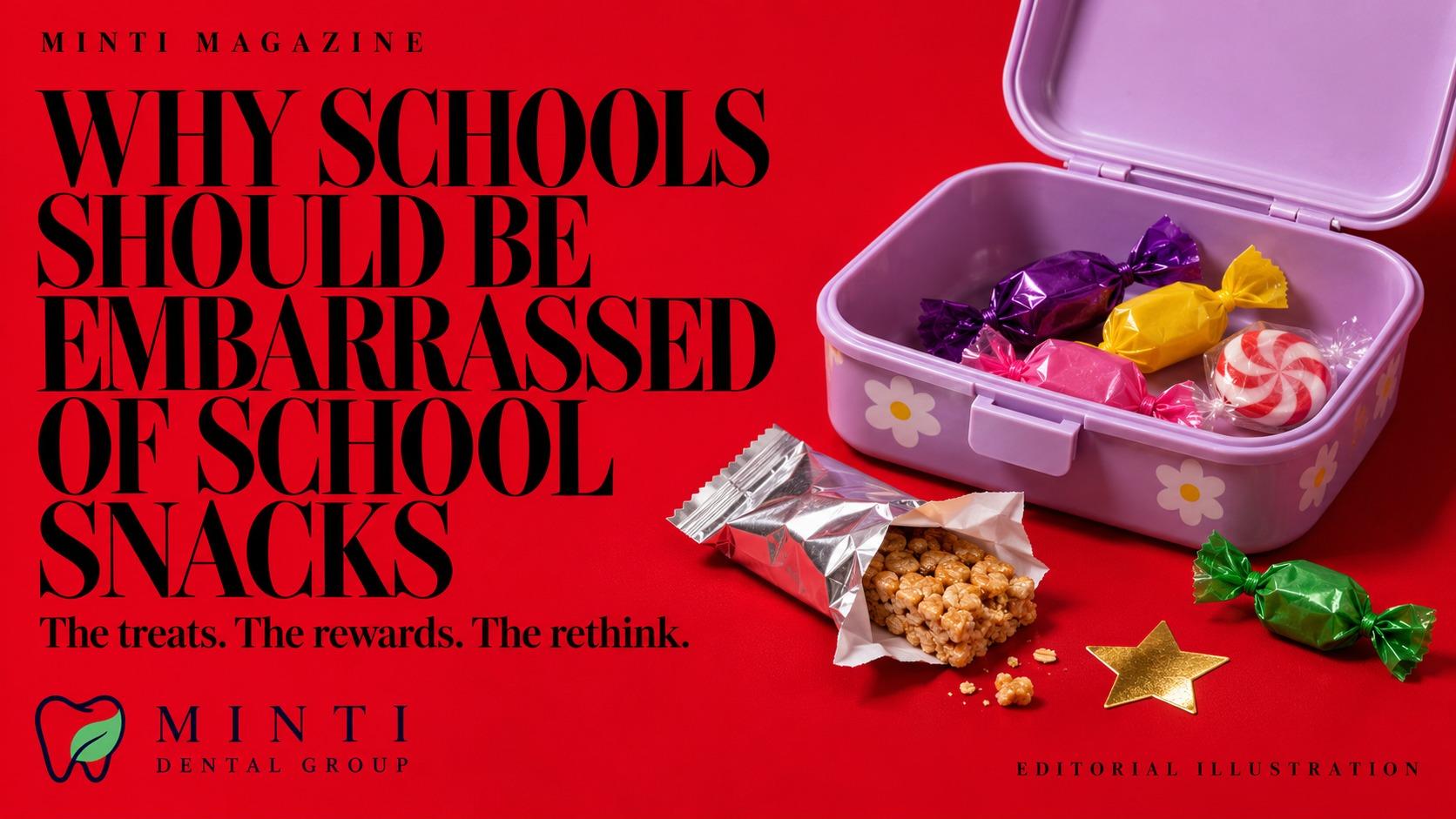
But as a dentist and a mum, I think it's time we talked about school snacks. About the sweets handed out as rewards, the cake sales every other Friday, the birthday treats passed round the classroom, and the "healthy" snack bars with more sugar than a biscuit.
Because when you look at it all together, I think schools should be a little embarrassed. And I think the rest of us, parents included, should be too.
The short answer: tooth decay is still the most common reason children aged 5 to 9 are admitted to hospital in England, and more than one in five 5-year-olds already have visible decay. Tooth decay is mostly about how often teeth meet sugar, and school days can be full of extra sugar moments: rewards, celebrations, fundraisers and break-time snacks. England's school food standards cover food schools provide, but there are exemptions for things like rewards, celebrations and fundraising, which is exactly where a lot of the sugar sneaks in. Schools can't fix children's teeth alone, but they can stop making the problem worse. (I've also written about why baby teeth matter and what a cavity looks like.)
The numbers schools should know
I don't share these to shame anyone. I share them because I think every head teacher, governor and parent deserves to see them.
The latest national survey of 5-year-olds in England found that 22.4% had visible tooth decay. More than one in five children, in their first year of school.
Government figures on hospital tooth extractions show 33,976 decay-related extraction episodes for children and young people aged 0 to 19 in England in the year to 2025, up 11% on the year before. And tooth decay remains the most common reason for hospital admissions in children aged 5 to 9.
Those are primary school children. Children who spend a big part of their day in school.
Isn't school food already regulated?
Partly, yes. England has school food standards that apply to the food and drink schools provide, including school lunches, breakfast clubs, tuck shops, vending machines and after-school clubs. Schools must also provide free drinking water at all times. And the government has said tougher standards are coming from September 2027, including tighter limits on sugary foods and desserts.
That's good news. But here's the catch.
The standards include exemptions. Food provided for religious or cultural celebrations, fundraising events and rewards is exempt, as is food occasionally brought in by parents or pupils.
Read that list again. Celebrations. Fundraising. Rewards.
That's where a lot of the sugar in a school day comes from. The lunch might be carefully planned, but then there's a lolly for good behaviour, a cake sale on Friday, and a birthday treat in the afternoon.
Where the sugar sneaks in
Sweets as rewards
This is the one that frustrates me most. Children are told to look after their teeth, and then rewarded with sweets for good work or good behaviour.
I understand why it happens. Sweets are cheap, quick and children love them. But using sugar as a reward teaches children that sweets are the prize for being good. And because rewards come between meals, they add an extra acid attack on teeth that would otherwise be getting a rest.
Birthday treats
A class of 30 children can mean 30 birthdays a year. If every birthday comes with sweets or cake for the whole class, that's a lot of extra sugar moments over a school year, all happening between meals.
Cake sales and fundraisers
I know how important fundraising is. Schools need the money, and bake sales bring families together. But they often happen during the school day, as an extra snack, and they're often more than once a term.
"Healthy" snacks that aren't
Fruit-flavoured bars, yoghurt-coated snacks, cereal bars and dried fruit pieces often look healthy, but many contain a lot of sugar and stick to teeth. Fruit juice is another one. The NHS counts unsweetened juice as free sugar, the same group as the sugar added to biscuits and sweets.
Grazing
Morning break snack, lunch, afternoon treat, after-school club snack, then home for tea. By the end of the day, some children's teeth have barely had a break from sugar at all. And it's how often sugar arrives, not just how much, that matters most. I explained this in my Halloween sweets post.
Why it matters so much in a school setting
Schools teach children so much more than lessons. They teach habits, values and what "normal" looks like.
If sweets are the reward for good behaviour at school, children learn that sugar equals success. If every celebration involves cake, children learn that sugar equals happiness. Those messages last much longer than a single lollipop.
And schools are in a unique position. They see children every day. They can shape habits for a whole generation. That's exactly why they can do so much good, and why I think the current sweet culture is something to be a little embarrassed about.
It's not all bad news
I want to be fair here, because plenty of schools are doing brilliant work.
Many schools already have fruit-only break times, water-only policies, and non-food rewards. And in March 2025, the government announced £11 million for supervised toothbrushing for 3 to 5-year-olds in nurseries and primary schools in the most deprived areas of England.
That's wonderful. But it does feel a little odd to brush children's teeth in the morning and hand out sweets in the afternoon.
What I'd love schools to do
None of this needs a huge budget. It just needs a change in habits.
- Swap sweet rewards for non-food rewards. Stickers, certificates, extra playtime, choosing the class story, being line leader. Children love these just as much.
- Make birthdays about the child, not the cake. A special badge, a birthday crown, choosing a game, or a birthday book donated to the class library.
- Keep fundraisers and treats to lunchtime or home time. If sweet things happen, they're kinder to teeth with a meal than as a mid-afternoon snack.
- Water-only in classrooms. It's already free in schools, and it's the best drink for teeth.
- Fruit or veg at break time. Simple, cheap, and tooth-friendly.
- Teach teeth in lessons. Children love learning about how their bodies work, and why sugar makes plaque bacteria "happy".
- Share a clear snack policy with parents. It's much easier for families to follow a rule when everyone's doing it.
And what parents can do
This isn't only on schools. As parents, we can help too:
- pack water rather than juice or squash
- choose whole fruit, cheese or veg sticks for snacks
- suggest non-food birthday ideas for the class
- support the school if they introduce a healthier snack or reward policy
- keep up brushing twice a day with fluoride toothpaste at home, and regular check-ups
- know what children's dentistry involves, so dental visits feel normal and positive
If you want to start somewhere, ask your child's school what their reward and celebration policies are. You might be surprised by the answer, in a good way or a not-so-good way.
A few quick questions
Are school snacks bad for children's teeth? They can be, especially sweets, sugary bars and juice eaten between meals. Every extra sugar moment adds another acid attack on the teeth.
Do school food standards ban sweets? England's school food standards apply to food schools provide, but there are exemptions for rewards, celebrations, fundraising and food occasionally brought in by parents or pupils.
What are good alternatives to sweets as rewards? Stickers, certificates, extra playtime, choosing a game or story, or special classroom jobs.
What's the best snack for children's teeth? Whole fruit, vegetable sticks, cheese or plain yoghurt, with water or milk to drink.
The verdict
Schools are full of people who care deeply about children. That's exactly why I think the sweet culture in so many of them should be a source of embarrassment, not habit.
We can't keep teaching children to look after their teeth while rewarding them with the very thing that damages them. Swap the sweets for stickers, the cake for a birthday crown, and the juice for water. It costs almost nothing, and it could save thousands of children from toothache, fillings and hospital visits.
Our children deserve schools that protect their smiles, not schools that chip away at them, one reward at a time.
This article is general information. It is not personal dental or dietary advice.