You've scrolled past the before-and-after photos, the influencer with the suspiciously glowing teeth, the kit with a countdown timer and the salon offering whitening with your eyebrows. You've probably held a tea towel up to your teeth to compare the white. And you're still not sure what's safe, what's legal, what it costs or what actually works. You're not alone. Whitening is one of the most common things people ask me about, and the real version is a lot simpler than the adverts.
The short answer: teeth whitening lightens the natural colour of your teeth using a peroxide gel. In the UK it's dentistry, so it can only legally be done by a dentist, or by a dental hygienist, therapist or clinical dental technician working to a dentist's prescription, after checking your teeth and gums are healthy. Dental professionals can use up to 6% hydrogen peroxide for over-18s; anything sold straight to the public is capped at 0.1%, and salon or kiosk whitening is illegal. It isn't available on the NHS, it isn't permanent, it won't change fillings, crowns or bonding, and the most common side effect is temporary sensitivity. You can see how we do it on our teeth whitening page, and if it's been a while, start with a dental check-up. If you've had whitening and have pain, burnt or blistered gums, or swelling, call my emergency dentist team in Harlow or Enfield, or NHS 111 if we're closed.
Thinking about whitening, or sore after it? Ring your nearest Minti practice and ask for a whitening consultation. If you have pain, burnt or blistered gums, or swelling after whitening, tell reception it's urgent. I keep same-day appointments for pain and swelling wherever I can.
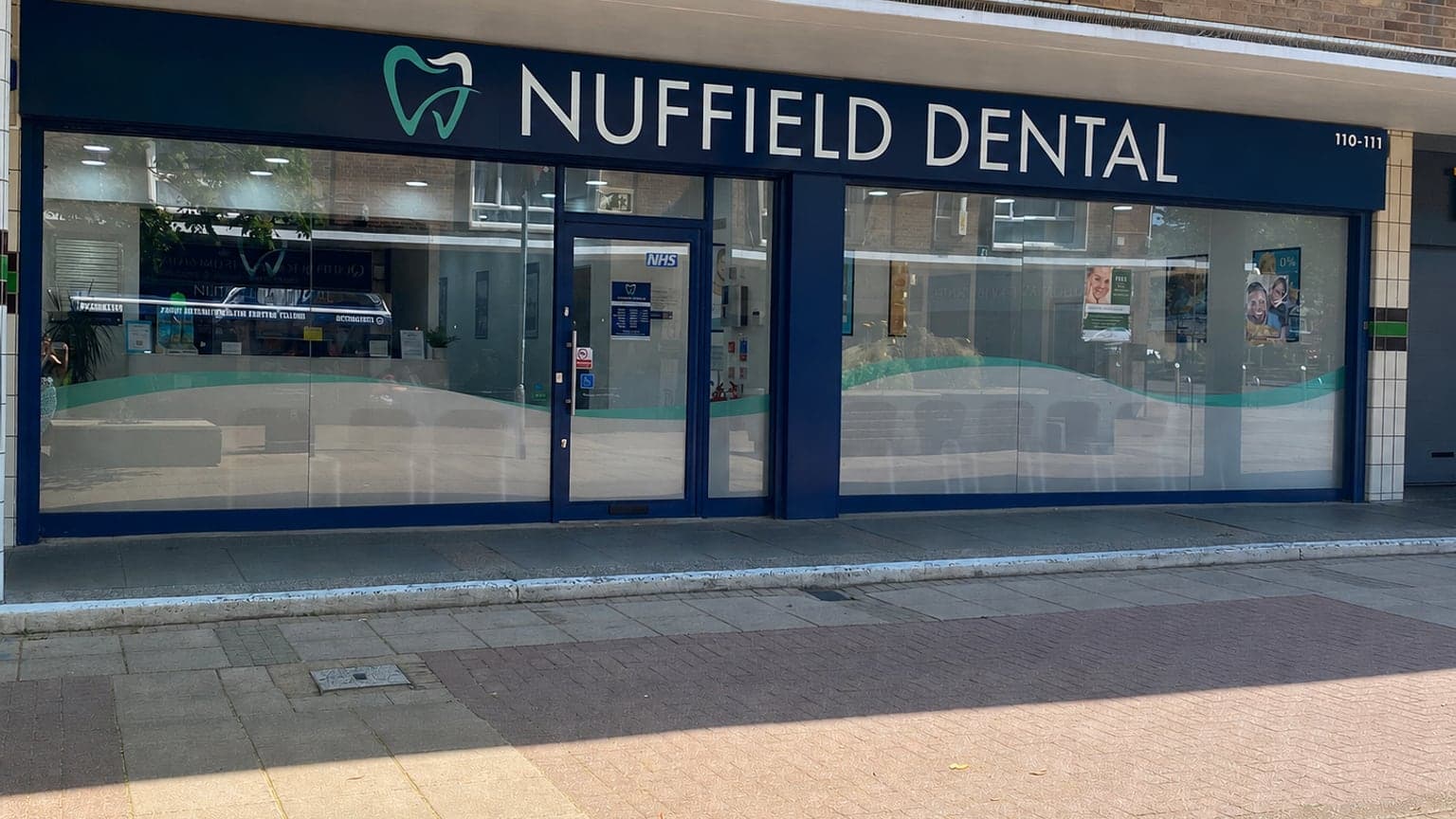
- Nuffield Dental Practice, Harlow: 01279 424 038
- Church Langley Dental, Harlow: 01279 306 690
- Enfield Smiles, Enfield: 020 8804 4320
Evening, weekend, or nowhere near us? Call NHS 111. If you're struggling to breathe or swallow, or swelling is spreading to your eye or neck, that's 999 or A&E.
How does teeth whitening work?
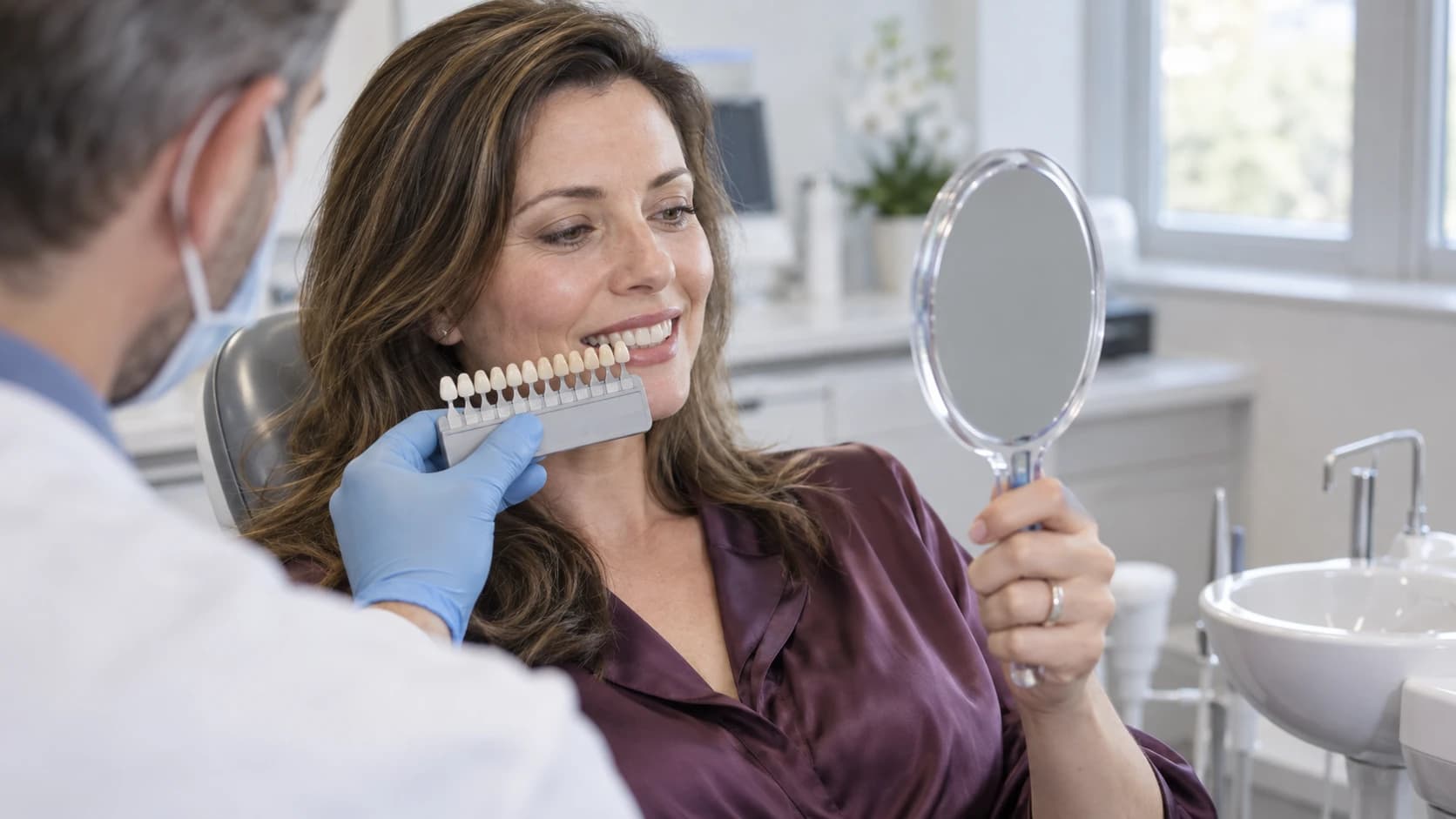
The active ingredient is hydrogen peroxide, or a gel that releases it. It works on the colour inside the tooth, rather than just scrubbing the surface. The NHS describes two main routes: a home kit from a dentist, with gel and trays made to fit your teeth, worn for around two to six weeks; or whitening in the surgery, sometimes with a light or laser.
Three things are true of every type. It only lightens natural teeth. It fades over time. And nobody can promise you a particular shade before looking in your mouth. Anyone who does is guessing, and I'd rather give you a straight expectation than a sales line.
How much is teeth whitening in the UK?
Whitening is private only. The NHS is clear that it isn't available on the NHS, so you pay for it privately. Prices vary a lot between practices, depending on whether it's a home course or in-surgery, whether the check and the trays are included, and whether anything else needs treating first. I couldn't find a typical UK price from a reputable, non-commercial source, so I won't invent one.
My advice is simple: get the full cost in writing, check what's included, and be wary of prices that look too good to be true. Our fees are explained on our fees and finance page.
Is teeth whitening safe?
Done legally, by a dental professional, on healthy teeth and gums, it's generally considered safe. The NHS lists the possible side effects as teeth sensitive to cold or sweet things, sore gums or throat, and white patches on the gums. A 2018 Cochrane review of home whitening found sensitivity and gum irritation were the most common side effects, usually mild and short-lived.
The NHS also says whitening isn't done if you're 17 or younger, if your teeth or gums aren't healthy, and isn't recommended in pregnancy or while breastfeeding. The real danger is illegal whitening. The British Dental Association has warned about burnt lips and gums, nerve damage and even tooth loss from unregistered providers.
What's legal in the UK?
This is the part I'd most like everyone to know, so here it is plainly. According to the General Dental Council (checked 7 October 2026):
- Whitening is the practice of dentistry. Only a dentist, or a hygienist, therapist or clinical dental technician working to a dentist's prescription, can carry it out.
- Products sold straight to the public can contain no more than 0.1% hydrogen peroxide.
- Between 0.1% and 6% can only be used through a dental professional, and only for over-18s, except where it's wholly to treat or prevent disease.
- Over 6% is illegal for cosmetic whitening.
So whitening in a beauty salon, a kiosk or at a "whitening party" is illegal, however professional it looks.
Dentist or at-home whitening: what's the difference?
"At-home" can mean two very different things. A home kit from a dentist uses gel at a strength you can only get through a dental professional, in trays made to fit your teeth, after your teeth and gums have been checked. A home kit from a shop or website is capped at 0.1%, which the Oral Health Foundation says is too little to be effective. The NHS says kits bought from a pharmacy or online don't work as well and may harm your teeth and gums.
Our whitening page describes a full at-home course, planned after checking your teeth and gums.
Are teeth whitening strips safe?
Strips are the most popular shop product, and the question is really two questions: are they legal, and do they work? Strips sold legally in the UK are held to the same 0.1% limit as any other product sold directly to you. The concern is products bought online, where labels aren't always accurate and not everything on sale is legal here.
If you've used strips and your gums are sore or white, stop and get them looked at.
Is laser teeth whitening worth it?
Laser or light whitening looks impressive, but the whitening comes from the gel, not the light. The NHS describes in-surgery laser whitening as faster and more effective than gel alone. Research reviews are less convinced: a 2012 systematic review and a 2026 umbrella review both found that adding a light generally didn't make teeth whiter and may increase sensitivity. Where sources disagree, I go with the cautious reading.
Think of the light as go-faster stripes on a car. The engine is the gel.
Does whitening toothpaste work?
It can remove surface stains, but it doesn't change the natural colour of your teeth. Both the Oral Health Foundation and the American Dental Association say whitening toothpastes work on surface staining rather than the tooth's own shade. A coffee ring on a wooden table wipes off; the colour of the wood stays the same.
If stains are the problem, a hygiene appointment may do more than any tube. Whatever toothpaste you choose, make sure it has fluoride.
How long does teeth whitening last?
Not forever, but a good while. The NHS says the effect may last around three years if you follow your dentist's advice, and the Oral Health Foundation says results can last several years but vary from person to person. Smoking, tea, coffee and red wine bring staining back sooner.
Good brushing, fewer dark drinks and regular hygiene visits all help. Top-ups should go through a dentist too.
Can you whiten sensitive teeth?
Often, yes, but only once a dentist has found out why they're sensitive. Sensitivity can come from gum recession, worn enamel, decay, a crack or a leaky filling, and some of those need treating before whitening. Once your teeth and gums are healthy, whitening can be planned around sensitivity, with a sensitive toothpaste beforehand and a gentler, adjustable plan.
What if your teeth are sensitive after whitening?
It's common and usually settles within days. Pause the whitening, tell whoever prescribed it, switch to a toothpaste for sensitive teeth and go easy on very cold, hot or acidic food and drink. A 2015 systematic review found potassium nitrate and sodium fluoride reduced sensitivity during whitening.
If it's one tooth, it's getting worse, or it throbs or lingers, that's not the usual pattern. For sensitivity in general, see my sensitive teeth guide.
Can you whiten composite bonding, fillings or crowns?
No. Whitening only works on natural teeth. The Oral Health Foundation says it won't work on fillings, crowns or veneers, and composite bonding stays the colour it was made. That matters if you have front fillings or bonding: whitening the teeth around them can make them stand out more.
If you're planning both, the order matters. My composite bonding guide explains how the treatment works.
When should you see a dentist about whitening?
Before you start, book a check-up if you haven't had one recently, if your teeth are sensitive, or if one tooth is darker than the rest. That last one usually isn't a surface stain and needs a look rather than more gel.
I'll keep this bit straight. After any whitening, call us today if:
- you have pain that isn't settling, or sensitivity that's getting worse
- your gums look burnt, white and sore, or are blistering
- your gums, lips or face are swollen
- you had whitening from someone who isn't a registered dental professional and something doesn't feel right
If you used a product that didn't come from a dental practice, stop using it and rinse well with water.
Call 999 or go to A&E, not a dentist, if:
- you're finding it hard to breathe, swallow or speak
- swelling is spreading towards your eye or down into your neck
- you can't open your mouth properly because of swelling
If you're near Harlow or Enfield and you're weighing up whitening, I'd much rather take a look and give you a straight answer than have you gamble on a salon, a mystery gel or a glowing light. Ring your nearest Minti practice and ask for a whitening consultation. If you're sore after whitening and it's getting worse, say it's urgent. Anywhere else, or out of hours, call NHS 111.
This article is general information, not a diagnosis or treatment plan. Your teeth and gums need examining in person before any whitening treatment.