
If you've spent any time on social media lately, you'll have seen composite bonding. Short videos, dramatic music, a before-and-after that takes eight seconds. Then you look in the mirror, run your tongue over that one chipped edge or small gap, and start wondering whether it's for you. You're in good company. It's one of the most common cosmetic questions I'm asked, and the answer deserves more than eight seconds.
The short answer: composite bonding is a tooth-coloured resin that's stuck onto your teeth and shaped by hand to repair chips, close small gaps, even up edges or cover patches of discolouration. It usually involves little or no removal of natural tooth and is often done without an injection. It isn't permanent: it can stain, chip and wear, and needs polishing, repairs and eventually replacing. Cosmetic bonding is private, with fees that vary, while a clinically necessary repair to a broken tooth can be NHS treatment. Whether it's right for you depends on your teeth, your bite and what you'd like to change, so the best first step is a consultation. You can read how we do it on our composite bonding page, and if you'd like a general check first, book a dental check-up. If a tooth is broken or painful, that's different: call my emergency dentist team in Harlow or Enfield, or NHS 111 if we're closed.
Thinking about composite bonding? Call your nearest Minti practice to book a consultation. If a tooth is broken, painful or you've had a knock, tell reception it's urgent. I keep same-day appointments for pain and swelling wherever I can.
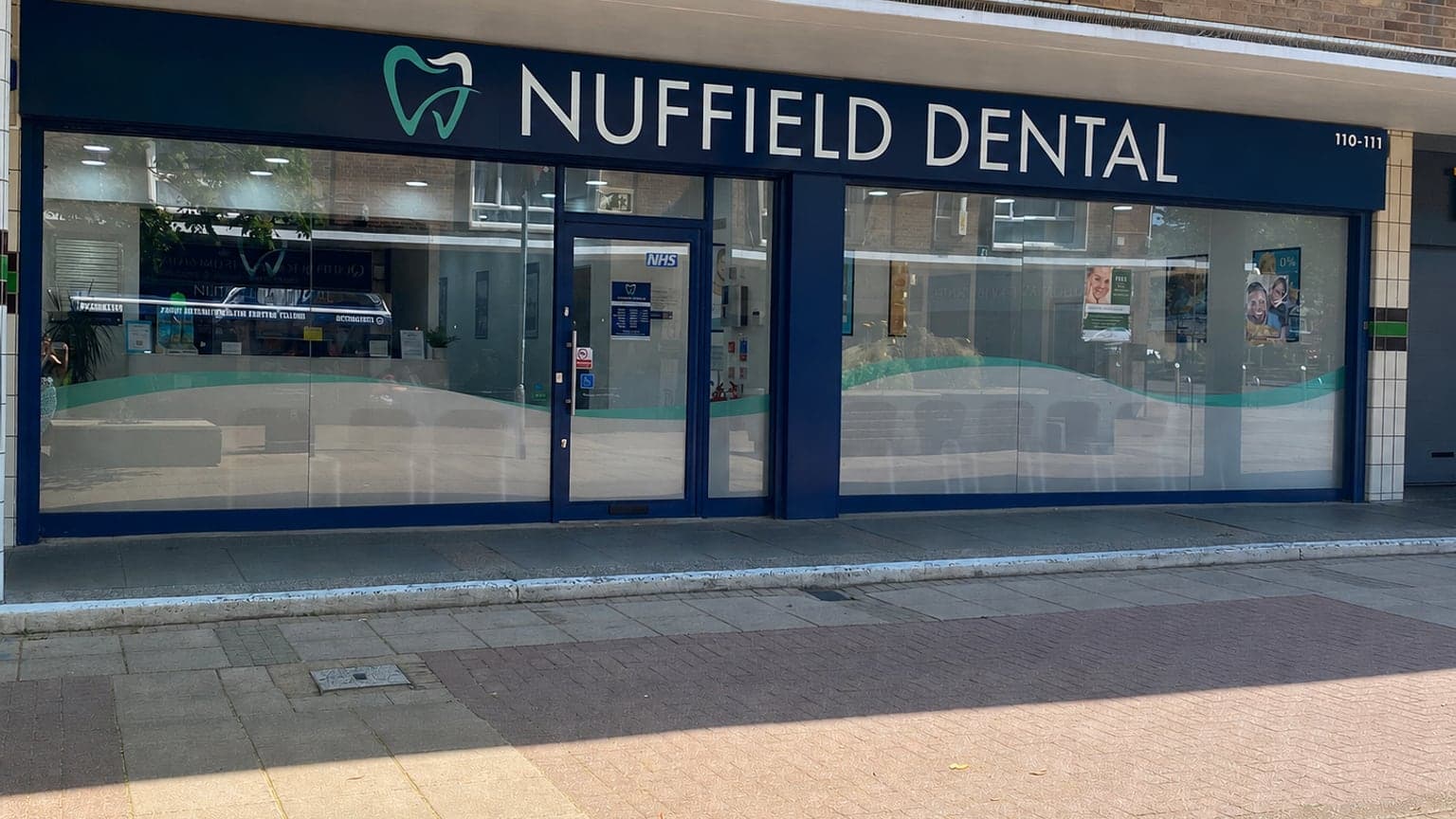
- Nuffield Dental Practice, Harlow: 01279 424 038
- Church Langley Dental, Harlow: 01279 306 690
- Enfield Smiles, Enfield: 020 8804 4320
Evening, weekend, or nowhere near us? Call NHS 111. If swelling is spreading to your eye or neck, or you're struggling to breathe or swallow, that's 999 or A&E.
What is composite bonding, and what can it do?
Composite is the same family of tooth-coloured material used for white fillings: a resin with fine glass or ceramic particles in it. For bonding, the tooth surface is prepared so the resin can grip, then composite is added in thin layers, each hardened with a curing light, and shaped and polished to sit in line with your other teeth. Think of it as sculpting rather than drilling.
The General Dental Council lists uses including closing gaps between teeth, restoring tooth shape, rebuilding worn teeth, managing discolouration and correcting minor positional problems. Bonding is best at small changes. For bigger changes, other treatments may do the job better.
What it isn't: a quick, risk-free, fully reversible fix. The GDC has specifically warned against bonding being described that way. Composite can be removed, but taking it off completely without affecting the enamel underneath is very difficult. I'd rather you knew that before you start.
How much does composite bonding cost?
Private fees vary from practice to practice and depend on how many teeth are involved and how much work each one needs. I don't quote figures in articles, because a number without an examination is a guess. After a consultation you should get a written plan and the fee in writing before any treatment starts, and our fees and finance page explains how that works at Minti.
The number of teeth and the complexity of the work affect the fee. Upkeep is part of the real price too.
Can you get composite bonding on the NHS?
Not for purely cosmetic reasons. nhs.uk says the NHS provides clinically necessary treatment needed to keep your mouth, teeth and gums healthy, and that you'll usually need to get cosmetic treatments privately (checked 27 September 2026). A clinically necessary repair to a broken or decayed tooth is a different matter, and a filling-type repair falls in NHS Band 2, currently £76.60 in England (checked on nhs.uk on 27 September 2026).
How long does composite bonding last?
Years rather than decades, and with maintenance along the way. Estimates vary: Cleveland Clinic, for example, says bonding typically lasts between three and 10 years before it needs touching up or replacing. How long yours lasts depends on things like your bite, whether you grind, what you eat and drink, and how well it's looked after. Composite is more porous than enamel, so tea, coffee, red wine and smoking can stain it.
A good way to think of it: bonding is less like a new kitchen and more like a good paint job. It looks great, but you'll need to touch it up now and then.
What if my bonding chips?
Chips are one of the most common ways bonding fails, and they're usually not an emergency. Small chips can often be repaired rather than the whole thing redone.
Can you whiten composite bonding?
Whitening works on natural teeth, not on composite, so the order matters. If you're thinking of whitening, it's usually done before bonding so the shades match. You can also read about teeth whitening at Minti.
Is composite bonding right for you?
In my view, bonding tends to suit people with healthy teeth and gums who want a small, specific change: a chipped edge, a small gap, an uneven shape or a patch of discolouration. It tends to suit people less well if they grind heavily, have a bite that puts a lot of force on the front teeth, or want a big change across lots of teeth. Those aren't always deal-breakers, but they change the plan.
Composite bonding vs veneers
Veneers are thin facings, often porcelain, that usually involve preparing the tooth first. Bonding is generally more conservative and easier to repair, while porcelain tends to resist staining better. Neither is automatically "better". You can read about dental veneers at Minti.
Composite edge bonding
Edge bonding means adding composite to just the biting edges of the front teeth, usually to even up edges that are chipped, worn or uneven. It's a smaller job than covering the whole front of the tooth, but it still needs planning around your bite.
Bonding on overlapping or crooked teeth
Bonding can disguise a small overlap, but it doesn't move teeth. For more than a mild overlap, a brace or aligners are often the better option, sometimes with a little bonding afterwards. You can read about our clear aligners.
Bonding for a chipped or broken front tooth
Bonding isn't only cosmetic. It's often used to repair chipped front teeth. A chipped or broken tooth needs checking so the dentist can assess the damage. For a bigger break, a dental crown may provide more protection. A broken tooth that is painful should be seen promptly, before anyone talks about cosmetics.
Is composite bonding safe for your teeth?
Planned and done well, bonding is a conservative treatment. But "conservative" isn't the same as "risk-free". The GDC has highlighted problems that can happen when bonding isn't planned properly, including changes to the bite, a feeling of bulk, speech changes, fractures, staining, and gum problems made worse if the teeth become harder to clean. It has also reported a rise in the share of complaints about composite bonding to its Dental Complaints Service, from 18% of clinical complaints in 2021 to 22% in 2022.
That's why a proper assessment matters: your medical and dental history, an examination of your teeth, gums and bite, and X-rays, scans or photos where needed.
Does composite bonding damage your teeth?
Bonding itself usually involves little or no removal of natural tooth, but the surface is prepared so the resin can stick, and removing composite later without affecting enamel is hard.
Does composite bonding hurt?
For most people, no, and an injection often isn't needed. Some notice brief sensitivity afterwards. It's different if the tooth being bonded is broken or decayed.
Thinking about composite bonding abroad?
Lots of people from the UK travel for dental treatment, and plenty of skilled dentists work abroad. The GDC and the Oral Health Foundation suggest the same checks wherever you go: who's treating you and how they're regulated, a written plan and full costs, and what aftercare, guarantee and complaints process you'll have when you're home. The GDC has no jurisdiction over dentists practising outside the UK. Because bonding needs upkeep for years, it's worth planning who'll look after it.
If you've already had treatment abroad and something hurts or feels wrong, I can assess it and talk you through the options.
How do I find out if composite bonding suits me?
Book a consultation. I'll look at your teeth, gums and bite, talk about what you'd like to change and what bonding can and can't do, and explain the alternatives, including doing nothing if your teeth are healthy and you're happy enough. I'll also go through the upkeep, because that's part of the decision. Any fee is confirmed in writing before we start, and there's no obligation to go ahead.
Call us today, rather than waiting for a consultation, if:
- a tooth is broken, chipped with a sharp edge, or painful
- you've had a knock to the mouth
- bonding has come off and the tooth underneath is sensitive or broken
- your bite feels wrong after bonding, or sensitivity is getting worse
- there's swelling of the gum or face, or a bad taste
Call 999 or go to A&E, not a dentist, if:
- you're finding it hard to breathe, swallow or speak
- swelling is spreading towards your eye or down into your neck
- you can't open your mouth properly because of swelling
If you're near Harlow or Enfield, I'd much rather talk it through with you in the chair than have you decide from an eight-second video. Ring your nearest Minti practice and ask for a consultation. If a tooth is broken or painful, say it's urgent and we'll do our best to see you the same day. Anywhere else, or out of hours, call NHS 111.
This article is general information, not a diagnosis. Your teeth need examining in person before any treatment is recommended.