By Dr Nishma Kotecha, dentist
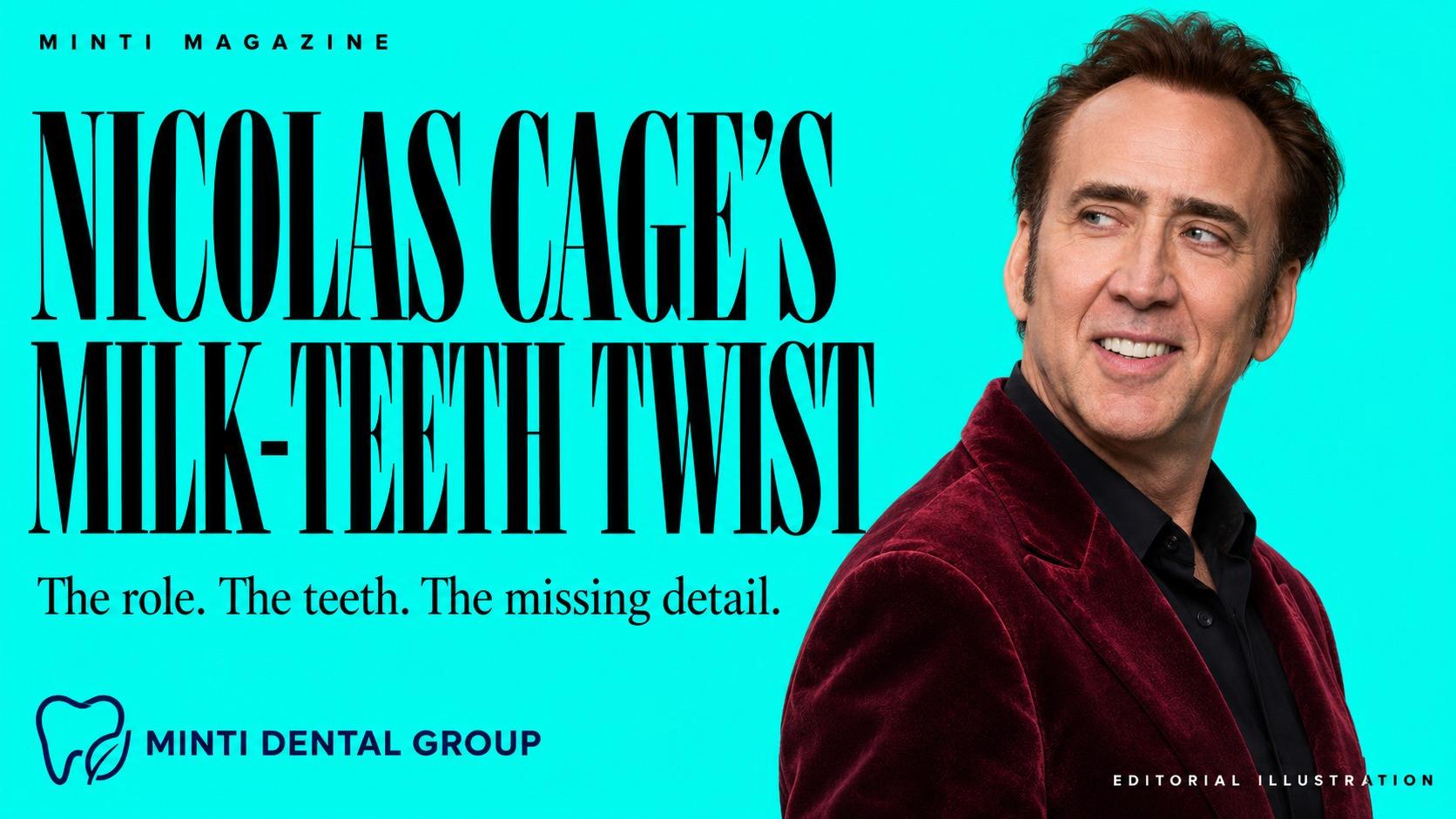
Nicolas Cage has never done anything by halves. For his new film Madden, out on 18 November, he's transformed himself to play the late NFL coach John Madden. He told People he gained some of the weight with "pasta and my sourdough bread", and added the rest with prosthetics, because at 62, "I'm not going to gain 60 pounds. That's dangerous," as reported by The Daily Beast.
Sensible. Because Nicolas Cage has history when it comes to going to extremes for a role.
The most famous example? His teeth. For the 1984 film Birdy, he had teeth pulled out to play a soldier with a facial injury. It's one of those Hollywood stories that gets passed around as proof of how wild method acting can get.
But there's a detail that usually gets left out. In his own words, they were baby teeth.
The short answer: Cage has said the teeth he had pulled for Birdy were his baby teeth, which "weren't coming through", and that medically he did need them out, just not while making a film. That's a reminder that some adults still have milk teeth. According to University College London Hospitals, when adult teeth fail to develop, baby teeth very commonly stay in place well into adulthood. That doesn't mean every retained baby tooth needs to come out. Many can be kept and looked after for years. I'm not going to diagnose Nicolas Cage from a 40-year-old film, but I can explain what's going on when adults still have baby teeth. (I've also written about why baby teeth matter, and another Hollywood teeth story involving Tom Cruise.)
What did Nicolas Cage actually say?
In an interview with the journalist David Sheff, reported by Far Out, Cage was asked about pulling his teeth for Birdy. His answer was surprisingly reflective.
He said he wouldn't do it again: "I didn't need to pull my teeth out." Then he added: "Medically, I did; my baby teeth weren't coming through," but he "didn't need to do it while making the movie."
He explained that he thought it would be "a way to connect with some kind of physical pain", and admitted: "I don't know what I was doing. I found myself, at 19, in a demanding role without proper training."
He's also said, in an interview with Vanity Fair reported by SlashFilm, that afterwards "they hadn't grown in yet, so when I did 'Moonstruck,' you still see a gaping hole."
That's what's on the record. I don't know exactly which teeth they were, why they weren't coming through, or what happened next in his dental treatment. I'm not going to guess. But "my baby teeth weren't coming through" opens up a question I get asked more often than you'd think.
Can adults still have baby teeth?
Yes. It's more common than most people realise.
Normally, baby teeth (also called milk teeth or primary teeth) loosen and fall out as the adult teeth underneath push through. But sometimes that doesn't happen, and a baby tooth stays in place into adulthood. These are often called retained baby teeth.
There are a few reasons this can happen, including:
- The adult tooth never developed. This is called hypodontia. UCLH describes it as a condition where "one or more teeth fail to develop", and says it's seen in about 5% of the population. When there's no adult tooth to push the baby tooth out, the baby tooth can simply stay.
- The adult tooth is stuck or in the wrong position. Sometimes an adult tooth is there but doesn't come through properly, so the baby tooth isn't pushed out.
- The baby tooth is fused to the bone. In some cases, a baby tooth can become stuck in place.
Only a dentist, usually with an X-ray, can tell which of these is going on in any one person.
Does a retained baby tooth need to come out?
Not necessarily. And this is the bit I really want people to hear, because Cage's story can give the impression that baby teeth in adults should just be pulled out.
According to UCLH, when adult teeth haven't developed, baby teeth very commonly stay in place well into adulthood. Many people keep them for years, sometimes for life, without any trouble. If a retained baby tooth is healthy, stable and doing its job, it's often best left exactly where it is.
That said, UCLH explains that it's hard to predict how long any individual baby tooth will last. Retained baby teeth can:
- become very worn down
- become loose or painful
- appear to sink into the gum compared with the teeth around them
- get in the way of neighbouring adult teeth
In those situations, removal may be needed. But that's a decision based on the individual tooth, not a blanket rule.
How retained baby teeth can be looked after
If a baby tooth is staying put, there are ways to help it last. UCLH mentions restorative options such as onlays to help prolong the life of retained baby teeth. And small or oddly shaped teeth can sometimes be built up with composite bonding so they blend in better with the rest of the smile.
Most importantly, retained baby teeth need the same care as every other tooth: brushing twice a day with fluoride toothpaste, cleaning between the teeth, and regular check-ups so any changes are spotted early.
What happens if a retained baby tooth is lost?
If a retained baby tooth eventually needs to come out, or falls out on its own, there are several ways to fill the gap. UCLH lists options including:
- Bridges, including adhesive bridges, which UCLH says are preferred where possible. Here's more on dental bridges.
- Dental implants, although bone grafting may be needed if there isn't enough bone.
- Dentures or overdentures.
- Orthodontics, sometimes used to move teeth and either close a space or create the right space for a replacement.
The right option depends on the person, their bite, their bone, and the teeth around the gap. If you're thinking about straightening as part of the plan, I've written about straightening teeth as an adult.
How would you know if you have a baby tooth?
Plenty of adults have no idea they still have a baby tooth until a dentist mentions it. Signs might include:
- one tooth that looks noticeably smaller or shorter than the one on the other side
- a tooth that looks a slightly different shape or colour
- a tooth that seems to sit lower than its neighbours
- a gap or extra space that's never closed
None of these automatically means anything's wrong. But if you're curious, ask at your next check-up. An X-ray can show whether there's an adult tooth underneath.
Please don't follow Nicolas Cage's lead
I have to say it. Pulling out your own teeth, for a film or for any other reason, is a very bad idea.
Teeth should only ever be removed by a dental professional, after a proper assessment. An extraction done properly involves numbing the area, checking the roots, and making sure the socket heals well. Done badly, it risks infection, broken roots, damage to nearby teeth and a lot of pain.
Even Cage himself has said he wouldn't do it again. And when someone who once ate a cockroach for a role says something was too far, I think we should listen.
Actors and their teeth
Cage isn't the only star with a dental story from a film. Ben Affleck says he was told to fix his teeth for Armageddon, and Tom Cruise famously wore braces at 39. Teeth are part of how we read a character, so it's no surprise film-makers care about them.
But in real life, your teeth aren't a costume. They're meant to last.
A few quick questions
Did Nicolas Cage pull out his teeth for Birdy? Yes. He has said he had teeth pulled for the 1984 film, and that they were baby teeth that "weren't coming through".
Can adults have baby teeth? Yes. Baby teeth can stay into adulthood, often because the adult tooth underneath never developed.
Should a baby tooth in an adult be removed? Not automatically. Many retained baby teeth last for years. Removal may be needed if the tooth becomes worn, loose, painful or causes problems for nearby teeth.
What replaces a lost baby tooth in an adult? Options include bridges, implants, dentures and sometimes orthodontics. The best choice depends on the individual.
The verdict
Nicolas Cage's tooth story is famous for being extreme. But the twist is that the teeth he lost were baby teeth that weren't coming through, and by his own account, needed to come out at some point anyway.
For the rest of us, it's a useful reminder that adults can still have milk teeth, and that's often perfectly fine. If you think you might have one, there's no need to panic, and definitely no need to pull it out yourself. Just ask your dentist to take a look.
This article is general information based on public reporting. It is not personal dental advice. Nicolas Cage and the makers of Madden and Birdy have no connection with this article.