
You went to check on the hole where your tooth used to be, as you do roughly every forty minutes, and something white was looking back at you. Pus? A bit of tooth left behind? Something from the dentist that should have come out? You've probably poked it with your tongue already, and you've definitely Googled it. You're not the only one. White stuff in the socket is one of the most common worries I hear after an extraction.
The short answer: in most cases, a soft white or creamy yellow layer in the socket a few days after an extraction is normal healing tissue. It forms as your body replaces the original blood clot, and it usually appears from around day two or three. It's a good sign, so leave it alone. It's worth getting checked if the socket looks empty with bone showing, if there's a bad smell or taste, if pus is coming out, or if the pain is getting worse rather than better. Those point to a problem such as a dry socket or infection, and my emergency dentist team in Harlow or Enfield can look, or call NHS 111 if we're closed. My tooth extraction guide covers the whole recovery.
White stuff plus worsening pain, a bad smell, or pus? Call your nearest Minti practice and tell reception you've had a tooth out. I keep same-day appointments for pain and swelling wherever I can.
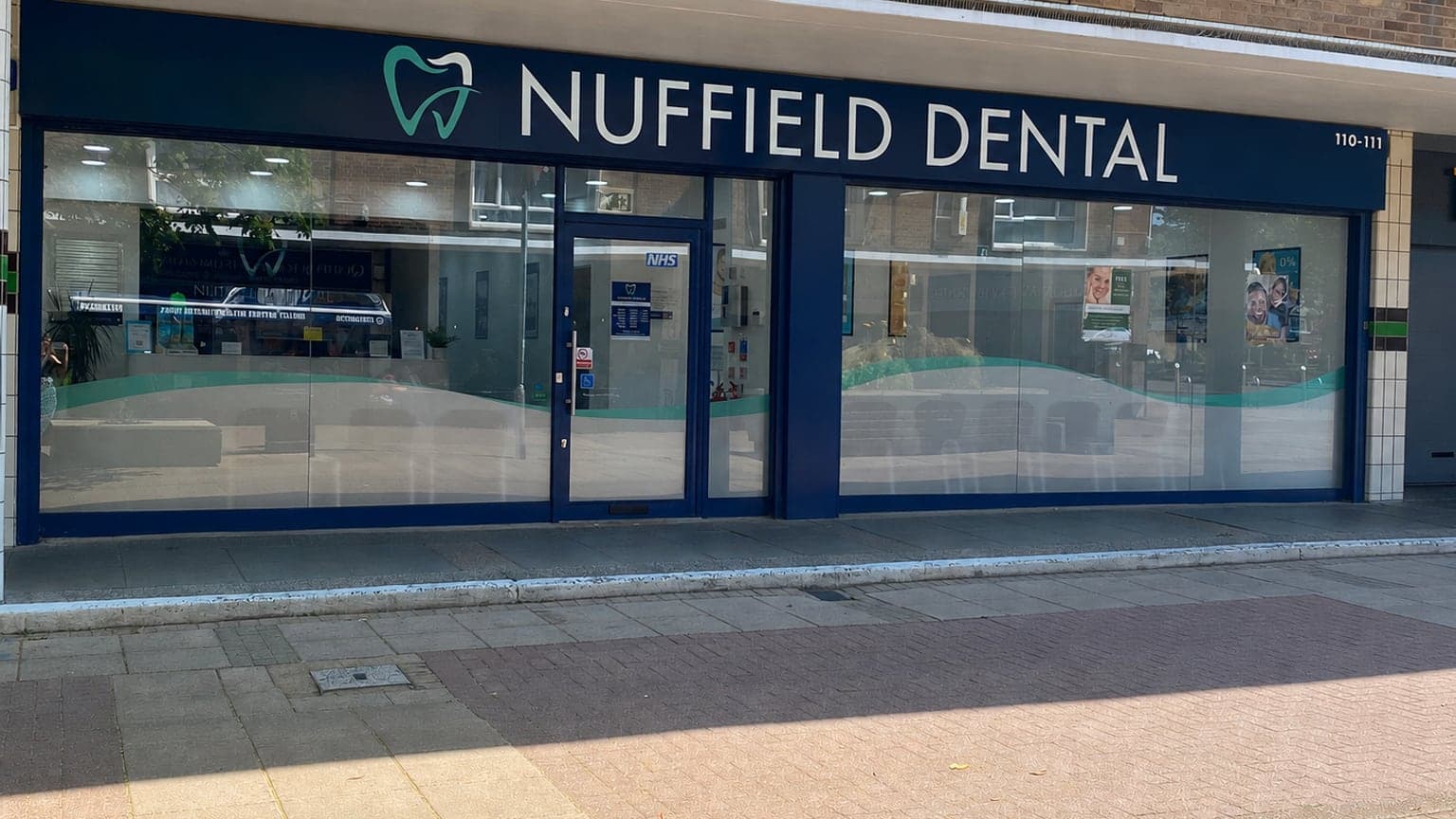
- Nuffield Dental Practice, Harlow: 01279 424 038
- Church Langley Dental, Harlow: 01279 306 690
- Enfield Smiles, Enfield: 020 8804 4320
Evening, weekend, or nowhere near us? Call NHS 111. If you're struggling to breathe or swallow, or swelling is spreading to your eye or neck, that's 999 or A&E.
What is the white stuff in my extraction socket?
Nearly always, it's healing tissue. Here's what happens. Straight after the extraction, the socket fills with blood and forms a clot. That clot is blood cells held together by a mesh of a protein called fibrin. Over the first week, your body gradually swaps the clot for new healing tissue, called granulation tissue, full of tiny new blood vessels.
As that swap happens, the socket stops looking dark red and starts looking pale: white, cream or pale yellow on the surface. Think of it as the builders laying the foundations. It's not pretty, but it's exactly what you'd want to see on a building site.
The other thing that can look white, and is usually harmless, is food. Rice, bread and pasta love a socket. Food sits on the surface and doesn't stick to the tissue.
If you're not sure which one you're looking at, don't go digging to find out. That's how a healthy socket gets disturbed.
When does the white stuff appear, and how long does it last?
Here's the rough day-by-day, which I cover more fully in what should a normal socket look like?
- Day 1: dark red clot. No white yet. Some blood-stained spit is normal.
- Days 2 to 3: a thin pale film may start to appear on the clot. Swelling and soreness are often at their peak.
- Days 3 to 7: the white or creamy layer is usually most obvious. The socket should feel steadily better.
- Weeks 1 to 3: the gum edges draw in and the white area shrinks. Hospital leaflets say the gum heals over in a few weeks.
A surgical or wisdom tooth extraction can take longer than a simple one. Everyone's socket also runs to its own timetable, a bit like a train company.
How can I tell healing tissue from dry socket?
This is the question that matters, so I'll keep it straight. In a dry socket, the clot has broken down or been lost, and the socket looks empty. You might see greyish-white bone at the bottom rather than a soft layer filling the hole. The big clue is the pain: it gets worse from around day two to four, rather than better, and often spreads towards the ear. There may be a bad taste or smell too.
Roughly:
- Healing tissue: soft layer filling the socket, pain easing day by day, no bad smell.
- Possible dry socket: socket looks empty or bony, pain getting worse after day two or three, often a bad taste.
I can't make that call from a description, and you can't reliably make it from a mirror. If it sounds like the second list, read my full dry socket or normal healing? guide and ring us. For wisdom teeth, see dry socket vs normal wisdom tooth extraction pain.
Could the white stuff be pus or infection?
It can be, but it usually behaves differently. Pus often comes with a bad taste, and the area usually becomes more swollen and sore rather than less. Hospital leaflets say an infected socket more often shows up around a week after the extraction, with pus, increasing swelling or a temperature.
Please don't treat this one as a wait-and-see. If you think there's pus, or you feel hot and unwell, call. More on the signs in infection after a tooth extraction and bad taste or smell after an extraction.
Should I try to remove the white stuff?
No. If it's healing tissue, removing it sets your healing back to the start. No cotton buds, no fingernails, no toothpicks, no tongue excavations.
What you can do, following NHS and hospital aftercare advice:
- no rinsing for the first 24 hours
- after that, rinse gently with warm salt water, especially after meals. A teaspoon of salt in a glass of warm water is the usual recipe; let it wash over the socket rather than swishing hard
- keep brushing your other teeth, and brush carefully near the socket
- don't smoke, and eat soft food for the first few days. See things to avoid after a tooth extraction
If food is stuck and gentle rinsing won't shift it, ring us rather than going in with tweezers.
When should I get it checked?
Call us today if:
- the socket looks empty or you can see bone
- the pain is getting worse rather than better after day two or three
- there's pus, or a foul taste or smell that doesn't go
- swelling is increasing after day three, or you feel hot and unwell
- it's still bleeding after 30 minutes of firm pressure on gauze (see extraction won't stop bleeding)
Call 999 or go to A&E, not a dentist, if:
- it's hard to breathe, swallow or speak
- swelling is spreading towards your eye or into your neck
- your eye is swollen or painful, or your eyesight suddenly changes
- you can't open your mouth properly because of swelling
For pain in the meantime, the NHS advice is paracetamol or ibuprofen. If it isn't touching the pain after a few days, see still in agony three to five days after an extraction?
If you're near Harlow or Enfield and you can't tell whether that white patch is healing or trouble, I'd much rather take a look than have you spend another night staring at it. Ring your nearest Minti practice, tell us when the tooth came out, and we'll fit you in as soon as we can.
This article is general information, not a diagnosis. A healing socket needs examining in person to know whether it's on track.