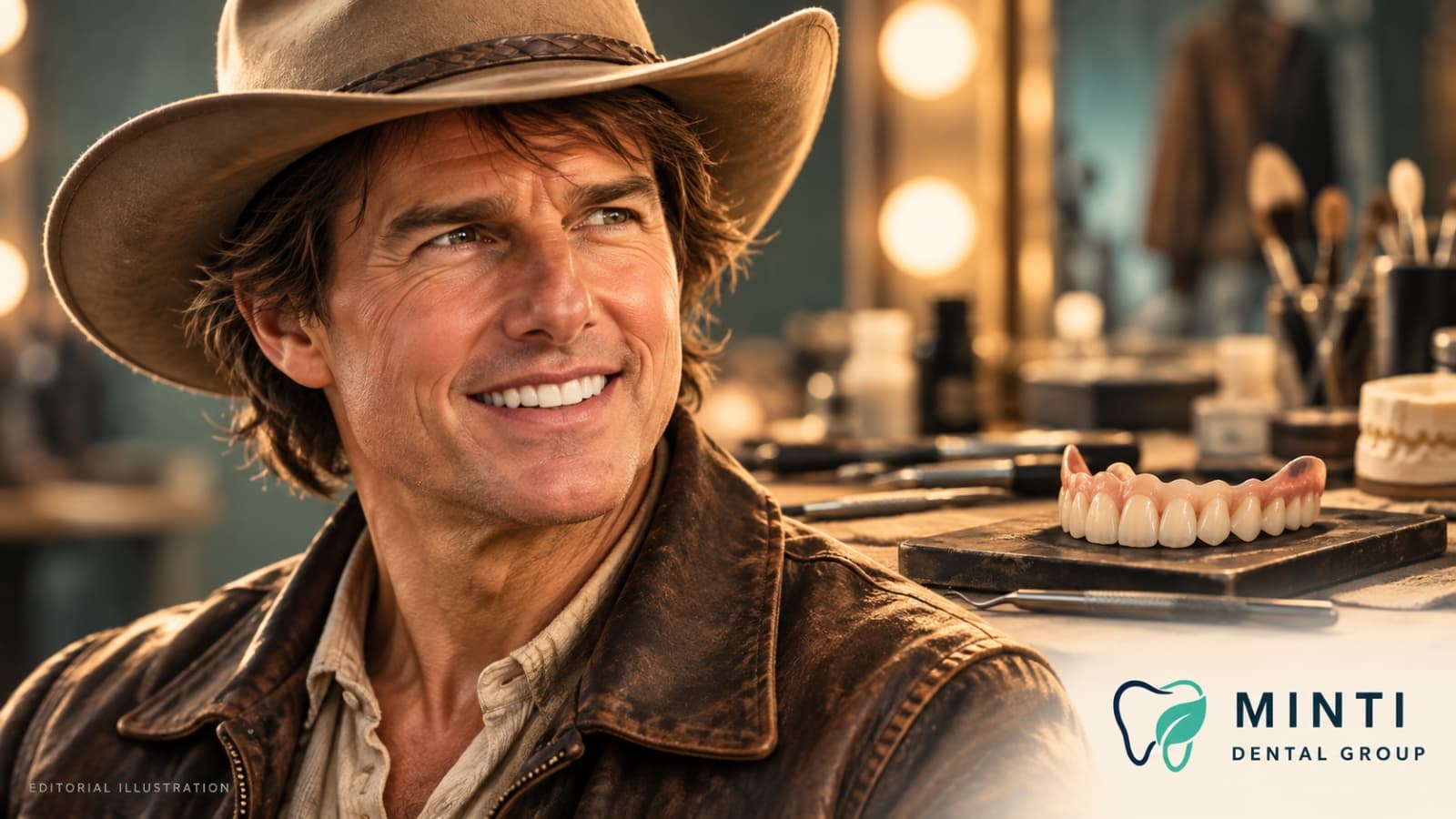
Tom Cruise's new film Digger opened on 2 October, and the reviews keep landing. Alejandro G. Iñárritu directs, Cruise plays oil baron Digger Rockwell, and the transformation is the talking point: a wispy wig, a ten-gallon hat and, as The Ringer's review put it, false teeth.
Cruise has talked about the teeth himself. At a Warner Bros. press event in July he said that putting them in was the moment the character clicked: "I put the teeth on, and it's like, 'Let's f***in' go.'" I've kept the asterisks; the enthusiasm is all his.
As a dentist, that's the bit I loved. Not the wig. The teeth. Because he's right: change someone's teeth and you change their whole face, their voice and how they carry themselves. So let's talk about how movie teeth work, and how they're nothing like the veneers and dentures real people wear.
One thing first, to be clear: this is about a costume for a character. It tells us nothing about Tom Cruise's own teeth, and I'm not going to guess.
The short answer: film teeth are removable props, made from moulds or scans of the actor's own teeth so they clip over the top for a scene and come out at the end of the day. Everyday restorations like veneers, crowns and dentures are built to be worn for years, to chew with, and to keep your mouth healthy. They look similar on screen. They're completely different jobs.
How are false teeth for films made?
They're made by specialist dental technicians, the same trade that makes crowns and dentures, working with a film's make-up department.
Gary Archer, one of the best-known names in film teeth, has described the process in interviews. His studio takes impressions of the actor's teeth, and more recently digital scans, so that everything is "articulated with moulds", meaning they know exactly how the actor's top and bottom teeth meet. The teeth themselves are often made from "the same acrylics that we use for normal dentures".
The golden rule he describes is that the actor still has to be able to talk and act: "They mustn't suddenly have a speech impediment." Which, if you've ever had a new denture or a gum shield in, you'll know is harder than it sounds.
Think of it like a really well-tailored costume. It's made to measure for one person, it goes on in the morning, and it comes off at night.
Why do teeth change a character so much?
Your teeth hold up more of your face than people think. They support your lips and cheeks, set how wide your smile looks, and change the shape of your mouth when you talk.
Push the front teeth slightly forward and the lips sit fuller. Make them longer or more uneven and the whole face reads older, rougher or more nervous. Even the way you form "s" and "th" sounds shifts when there's something new on your teeth. So when an actor says the teeth unlocked the voice, I believe them. Your tongue suddenly has a different set of furniture to work around.
Are film teeth the same as veneers?
No, and this is the bit worth knowing if you're thinking about your own smile.
- Film teeth sit over your natural teeth and come straight out. Nothing is done to the teeth underneath. They're made for looks and dialogue, not for eating a steak.
- Porcelain veneers are thin shells bonded permanently onto the front of your teeth. To make room, a small amount of enamel is usually removed first, and that can't be undone. I've written more about whether veneers are permanent.
- Composite bonding adds tooth-coloured material to your own teeth, often with little or no removal of tooth. It's the gentler option for small changes, and I've covered it in my composite bonding guide.
- Dentures replace teeth that are missing. They're designed to chew with and to be worn every day, which is a much harder brief than a few takes on set.
So a movie can give someone a brand-new smile on Monday and hand their old one back on Friday. Real dentistry has to last, has to work when you bite into a crusty roll, and has to be kind to the teeth and gums underneath.
What about clip-on teeth you can buy online?
This is where film teeth and real life cross over, and it's the part I'd flag. You can now buy "clip-on" or "snap-on" veneers online, which are basically a consumer version of the movie idea: a removable shell over your own teeth.
For a fancy-dress party, fine. As something you wear every day, I'd be more cautious. A professional prop is made from careful moulds and worn for a shoot. A mail-order version may not fit as well, can trap food and plaque against the teeth and gums, and isn't designed to eat in.
So what's the lesson from Digger?
That teeth are a huge part of who we look like, which is exactly why film-makers bother with them. A set of false teeth helped turn one of the most famous faces on the planet into someone else.
If you're unhappy with your own smile, the good news is that real dentistry has more options than ever, from whitening and bonding to veneers and aligners. The difference is that yours has to work when the cameras stop rolling. So the conversation should always start with what's healthy for your teeth, then what looks good, and never the other way round.
This article is general information, not personal advice. If you're considering any change to your teeth, a dentist can talk you through the options in person.