You've either got a tooth coming out soon, or it's already out and you're now inspecting the gap with the concentration of a detective at a crime scene. Is that colour normal? Should it still hurt? Can I have a coffee? You're not the only one asking. Questions about recovery after an extraction are some of the most common I get, and most of the answers are reassuring.
The short answer: a tooth extraction on the NHS in England is a Band 2 treatment (£76.60, checked on the NHS site on 1 October 2026); private fees vary and should be confirmed in writing first. After an extraction, some pain, swelling and oozing for the first two or three days is normal, and it should then get steadily better over about a week. Pain that gets worse after day two or three, swelling that keeps growing, a bad taste, a temperature or bleeding that won't stop are not normal and need a dentist. Ring the practice that took the tooth out; if you can't reach them and you're local, call my emergency dentist team in Harlow or Enfield, or NHS 111 if we're closed. If you need a tooth out, you can read how our tooth extraction works or book a dental check-up.
Pain, swelling or bleeding after an extraction that's getting worse? Call the practice that did the extraction first. If that's us, or you can't get hold of them and you're near Harlow or Enfield, call your nearest Minti practice and tell reception it's urgent. I keep same-day appointments for pain and swelling wherever I can.
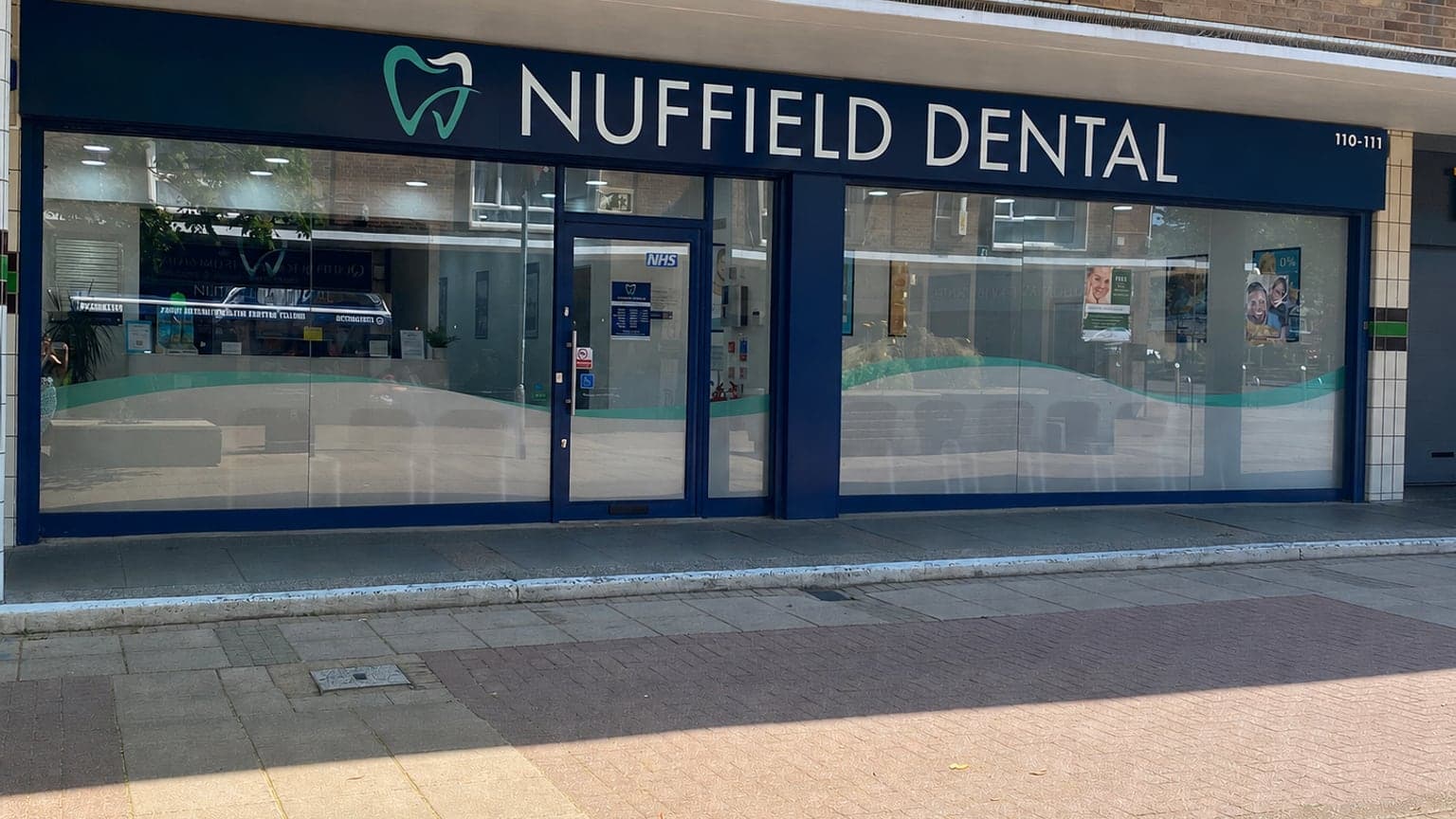
- Nuffield Dental Practice, Harlow: 01279 424 038
- Church Langley Dental, Harlow: 01279 306 690
- Enfield Smiles, Enfield: 020 8804 4320
Evening, weekend, or nowhere near us? Call NHS 111. If bleeding is heavy and won't stop, swelling is spreading to your eye or neck, or you're struggling to breathe or swallow, that's 999 or A&E.
What happens when you have a tooth out?
Taking a tooth out should be the last option, not the quick one. Before I suggest it, I'll look at whether root canal treatment or a crown could save it.
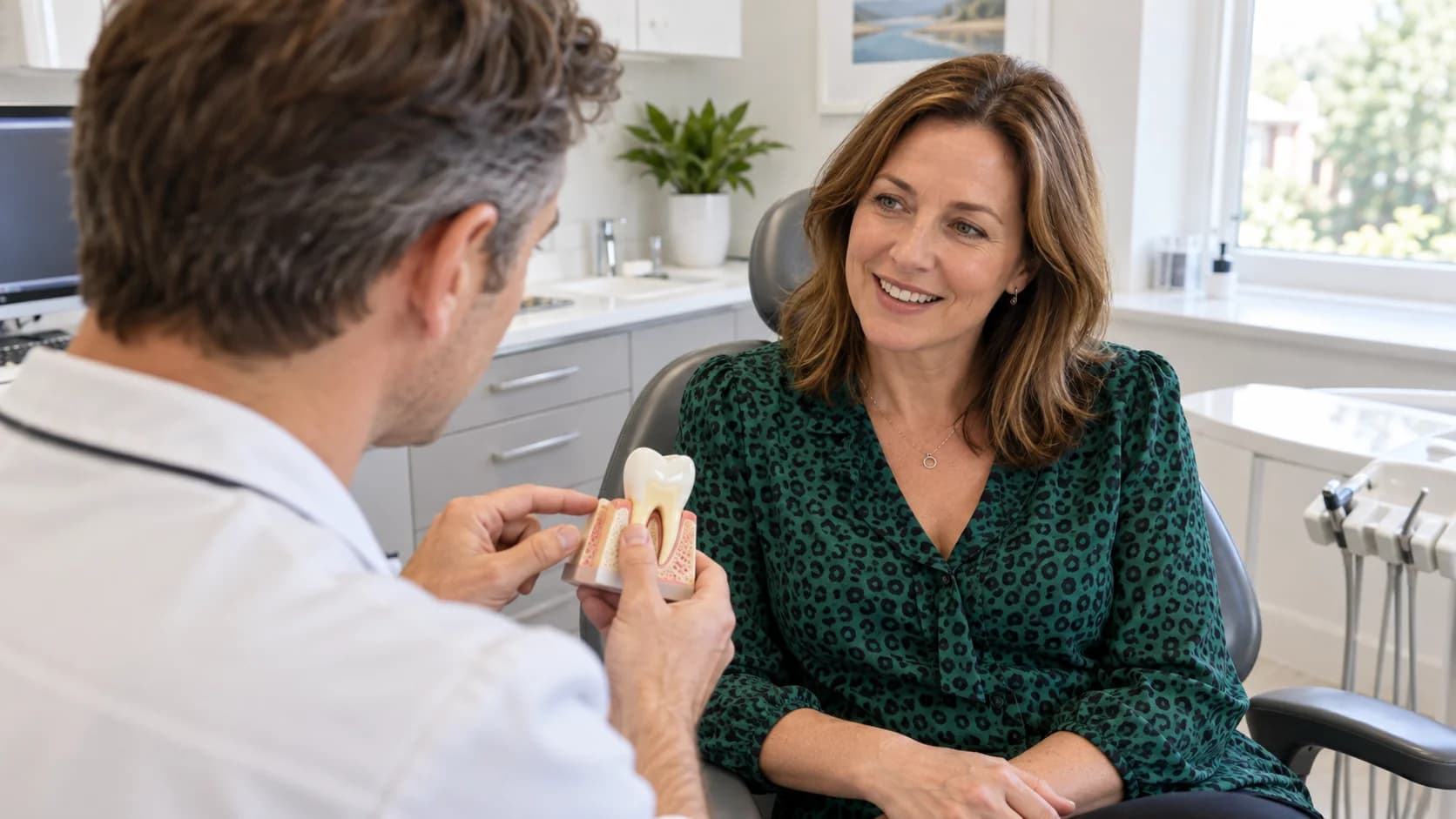
When a tooth does need to come out, there are broadly two kinds of extraction. A simple extraction is for a tooth that's fully through the gum: the area is numbed, the tooth is loosened and eased out. A surgical extraction is for a tooth that's broken at the gum line, has a heavily curved root or isn't fully through, and involves a small cut in the gum and sometimes dividing the tooth. Where a case is beyond what we should do at the practice, we refer rather than attempt it.
If you're thinking about an implant afterwards, tell us before the extraction. Implant surgery at Minti is done at our Nuffield practice in Harlow, not at Enfield Smiles.
How much does a tooth extraction cost?
How much is a tooth extraction on the NHS vs private?
On the NHS in England, an extraction is Band 2, £76.60, and that one charge covers the whole course of treatment, however many teeth come out. As urgent treatment, the £27.90 urgent charge can include removing up to two teeth. Some people pay nothing, including under-18s and people who are pregnant or had a baby in the last year. Private fees depend on the tooth and how complex it is, and should always be confirmed in writing before treatment. Our fees and finance page explains how payment works at Minti.
What's normal in the first few days?
Think of a healing socket like roadworks. It looks worse before it looks better, there's a bit of mess, and nobody's impressed by the view. What matters is that work is progressing. Better each day means healing.
What should a normal socket look like after an extraction?
A healthy socket goes through a few stages: a dark red clot at first, then changes in colour and texture as new tissue grows in. It can look odd without anything being wrong. walks through what to expect, day by day.
White stuff in the socket after an extraction: is it normal?
Often, yes. A whitish or creamy layer in the socket a few days in is frequently healing tissue, not pus. The difference usually shows in how you feel: getting better, or getting worse.
Swelling after a tooth extraction: how long does it last?
Swelling usually builds over the first two or three days and then settles over about a week, sometimes up to ten days after a surgical extraction, according to NHS hospital leaflets. Cold packs in the first day or two and sleeping propped up help. Swelling that's still growing after day three needs a call.
Surrounding teeth hurt after an extraction: why?
It's common for the teeth next to the socket to feel tender or sensitive for a while, and NHS leaflets suggest a desensitising toothpaste. Pain that's building, or a neighbouring tooth that feels broken, is worth a look.
Pain after wisdom tooth removal: what's normal?
Wisdom teeth, especially lower ones, often mean a bigger recovery: more swelling, a stiff jaw and a few more days of discomfort. The same direction-of-travel rule applies.
How do I look after the socket?
For the first 24 hours the job is simple: protect the clot. That means no rinsing, spitting, straws, smoking or alcohol. From the next day, gentle warm salt water rinses after meals help keep it clean. That's the advice I give in the chair, and it's on our tooth extraction page too.
What can I eat after a tooth extraction?
Soft, lukewarm food for the first few days, chewing on the other side. Think mashed potato, soup that's cooled down, scrambled egg and yoghurt, not crusty bread and crisps.
How soon can I drink after a tooth extraction?
Sips of water are usually fine once the bleeding has settled, but go carefully with very hot drinks and alcohol, and skip the straw.
Things to avoid after a tooth extraction
The short list: rinsing and spitting on day one, straws, smoking, alcohol, very hot drinks, hard exercise, and poking the socket with your tongue or finger. Aspirin can increase bleeding, so avoid it unless a doctor has prescribed it.
Can I smoke or vape after a tooth extraction?
Ideally not. The NHS says smoking can increase the risk of infection, and it's one of the best-known risk factors for dry socket. If you can hold off for as long as possible, your socket will thank you.
I accidentally rinsed after an extraction: is that bad?
Usually not. One gentle rinse doesn't normally shift the clot, and the thing to watch is what happens over the next few days.
When is it not normal?
I'll keep this part straight. These are the problems that need a dentist, and each needs the right response.
Still in agony three to five days after an extraction?
Normal pain peaks in the first two or three days and then eases. Pain that gets worse, or suddenly ramps up a few days in, is not normal healing, and the most common reason is dry socket.
Dry socket or normal healing?
Dry socket happens when the blood clot doesn't form properly or is lost. It typically shows up as worsening pain a few days after the extraction, often spreading to the ear, with a bad taste or smell. It isn't an infection, and it's very treatable: I wash the socket out and place a soothing dressing.
Dry socket vs normal wisdom tooth extraction pain
After a wisdom tooth comes out, normal pain can be quite significant, which makes dry socket harder to spot. The pattern is the giveaway.
Bad taste or smell after a tooth extraction?
A slight taste of blood early on is normal, and food can collect in the socket. A foul taste with worsening pain points to dry socket or infection.
Extraction won't stop bleeding?
Some oozing is normal for a day or so. If the socket is actively bleeding, sit up, bite firmly on a clean, damp pad of gauze or cotton for 20 minutes without checking, and repeat once if needed. If it still won't stop, get urgent help.
Infection after a tooth extraction: signs to watch for
Infection tends to show up around four to six days after the extraction: pain and swelling getting worse, red gums, pus, a bad taste, a temperature or feeling unwell. It needs a dentist the same day. Antibiotics are only part of the answer, when an infection is spreading or making you unwell, and they don't replace treating the socket itself.
When should I get help after a tooth extraction?
The NHS says to get urgent help from a dentist or NHS 111 for bleeding that won't stop, pain and swelling that's severe or getting worse, or pain with a bad taste, a high temperature or feeling unwell. Ring the practice that took the tooth out, or us if you can't reach them and you're local, if:
- the pain was easing and has got worse, or painkillers aren't touching it
- swelling is still growing after the first two or three days
- there's a bad taste, a bad smell or pus
- you have a high temperature or feel unwell
- the socket keeps bleeding after two goes of 20 minutes' firm pressure
Call 999 or go to A&E, not a dentist, if:
- you're finding it hard to breathe, swallow or speak
- swelling is spreading towards your eye or down into your neck
- your eye is swollen or painful, or your eyesight suddenly changes
- you can't open your mouth properly because of swelling
- bleeding is heavy and you can't control it
If you're near Harlow or Enfield, whether you need a tooth out or you've had one out and it's getting worse rather than better, I'd much rather take a look than have you spend another night Googling your socket. Ring your nearest Minti practice and tell us what's going on. If it's painful, swollen or bleeding, say it's urgent and we'll do our best to see you the same day. Anywhere else, or out of hours, call NHS 111.
If you need to replace missing teeth after healing, my dentures guide explains the types, costs and care involved.
This article is general information, not a diagnosis. Pain after an extraction needs examining in person to find the cause.