
Whether you're about to get your first denture, you've worn one for years, or you're looking into it for a parent, you probably have a handful of questions: which type, how much, and what to do when it starts to rub or rattle. This page covers the main types of dentures, what affects the cost and how to look after them.
The short answer: a denture is a removable plate that replaces missing teeth. A complete (full) denture replaces all the teeth in one jaw; a partial denture fills gaps between your own teeth. Dentures can be made in acrylic (plastic), cobalt-chrome (metal) or a flexible material, and some can clip onto implants. On the NHS in England, dentures are a Band 3 treatment; private fees vary with the type and material. With good care, dentures last for years, but your gums change shape over time, so most need relining or replacing at some point. You can see what we offer on our dentures page, or start with a check-up. If your denture has broken, or you're in pain, call my emergency dentist team in Harlow or Enfield, or NHS 111 if we're closed.
Denture sore, broken or loose? Call your nearest Minti practice. If you're in pain or anything is swollen, tell reception it's urgent. I keep same-day appointments for pain and swelling wherever I can.
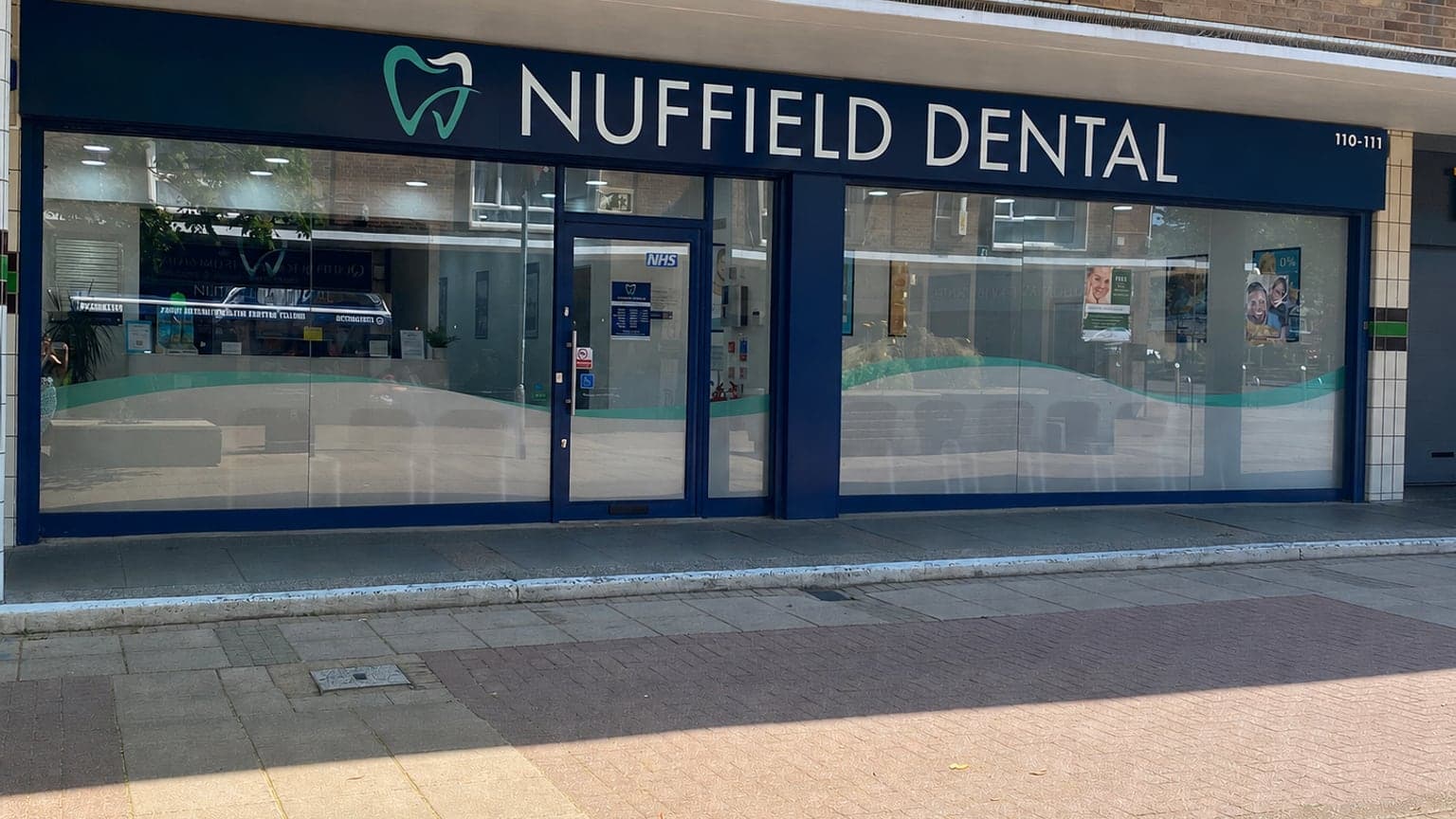
- Nuffield Dental Practice, Harlow: 01279 424 038
- Church Langley Dental, Harlow: 01279 306 690
- Enfield Smiles, Enfield: 020 8804 4320
Evening, weekend, or nowhere near us? Call NHS 111. If you're struggling to breathe or swallow, or swelling is spreading to your eye or neck, that's 999 or A&E.
What types of dentures are there?
The NHS describes two main kinds: complete dentures, for when all the teeth in a jaw are missing, and partial dentures, for when some natural teeth remain. Within those, there are choices about material, how the denture stays in, and when it's fitted. In my view, the right denture is the one that suits your mouth and your life, not the one with the fanciest name.
Partial dentures
A partial denture replaces one or more missing teeth when you still have some of your own. It usually stays in by gripping the teeth either side with small clasps, and it helps stop the neighbouring teeth drifting into the gap. The NHS lists dental bridges and implants as the main alternatives.
Single tooth dentures
A single tooth denture is a small partial denture carrying one false tooth. People often ask how something so small stays put. The answer is a combination of clasps or a flexible material that hugs the neighbouring teeth, and a plate that fits closely against the gum or the roof of the mouth. Made to fit you properly, it shouldn't need glue.
Acrylic, chrome or flexible dentures
Acrylic is the most common material and is used for both full and partial dentures. Cobalt-chrome is used for partials: the metal framework is thinner and lighter, but it usually costs more. Flexible dentures are mainly for partials and grip your teeth without metal clasps, so nothing silver shows when you smile. There's no single best material, only the best one for your mouth, a bit like choosing glasses frames.
Snap-in (implant-retained) dentures
For some people, a denture can clip onto dental implants placed in the jaw. This can make it much more stable, particularly a lower denture that never quite settles. It does involve surgery, it isn't right for everyone, and at Minti routine implant work is private. Implants are placed at our Nuffield practice in Harlow; if you're at Enfield Smiles and implants are right for you, we'd arrange for you to be seen there. You can read about dental implants at Minti.
Immediate dentures after extractions
An immediate denture is made before your teeth come out and fitted on the same day, so you're never without teeth. The NHS says they can usually be made within a few days. Because your gums and bone shrink as they heal, the denture usually loosens, so expect adjustments, often a reline, and in many cases a new denture later. NHS guidance says immediate dentures often need adjusting or replacing up to a year later.
How much do dentures cost?
It depends on whether you're treated on the NHS or privately, and on the type of denture.
The cost of dentures in the UK
On the NHS in England, dentures are a Band 3 treatment. As of 5 October 2026, the NHS charges page (last reviewed 13 March 2025) lists Band 3 at £332.10 for the whole course of treatment. Some people pay less, or nothing at all, depending on their circumstances. Private fees don't have one set price: they vary with the material, the number of teeth, and how much work is involved. Whichever route you choose, I'll always want you to have the fee in writing before anything starts; you can see how we explain fees on our fees and finance page.
NHS dentures
You can get dentures on the NHS when they're clinically necessary. NHS dentures can be made from plastic or metal, and nhs.uk says denture repairs don't carry a charge. Relining is charged as a Band 2 course, which the same nhs.uk page lists at £76.60. Our NHS dentist page explains NHS care at Minti.
What problems can dentures cause, and what helps?
Most denture problems come back to one of three things: the fit has changed, something is rubbing, or the denture and gums need more thorough cleaning. None of them is anything to be embarrassed about, and all of them are worth mentioning to your dentist.
Loose dentures
Dentures tend to loosen because the gums and bone underneath slowly shrink, while the denture itself doesn't change shape. The NHS says dentures may loosen as your gums shrink with age. A little denture adhesive, used correctly, can help a well-fitting denture feel more secure, but the Oral Health Foundation is clear that adhesive can't make up for a denture that no longer fits. Please don't try home relining kits or glue: a reline or a new denture is a far safer fix.
Sore gums from dentures
Sore gums usually come from a denture rubbing in one spot, a denture that has become loose, or an infection under the denture. Gum disease can also need attention when natural teeth remain. The NHS lists badly fitting dentures as a cause of mouth ulcers. In the meantime, keep the denture and your mouth clean, take it out at night, choose softer food, and ask a pharmacist about a soothing gel. If you have a review booked, wearing the denture beforehand makes it much easier for me to find exactly where it's rubbing.
Denture stomatitis
If the gum under your denture, often the top one, looks bright red, it may be denture stomatitis. The Oral Health Foundation and the MSD Manual describe it as usually caused by an overgrowth of candida, a yeast that lives in most mouths. It's often painless, which is why it's easy to miss. Wearing dentures overnight and not cleaning them thoroughly both make it more likely. The usual first steps are careful cleaning of the denture and your mouth and leaving the denture out at night; if it doesn't settle, your dentist may prescribe an antifungal and check the fit.
How long dentures last
The NHS says dentures can last for years if you look after them properly, and the Oral Health Foundation says many need replacing every five to eight years. Signs it's time for a check include clicking when you talk, slipping, discomfort, worn-looking teeth, or needing more and more adhesive. Sometimes a reline is all that's needed; sometimes a new denture is the better choice.
A broken denture
Dentures are surprisingly tough in the mouth and surprisingly fragile on a bathroom floor. If yours cracks or snaps, keep all the pieces and resist the superglue: household glues can irritate your mouth and make a proper repair harder. On the NHS, repairs don't carry a charge.
A tooth fell out of my denture
If a tooth comes off your denture, keep it safe in a small container and bring it with you, along with the denture. Often the tooth can be reattached, which is usually quicker than making something new. Don't try to glue it back yourself.
How do I look after my dentures?
A few habits make a real difference to how comfortable your dentures are and how long they last. This is the advice I give in the chair:
- Clean your denture every day with soft soap or washing-up liquid and a soft brush. The NHS says not to use toothpaste, as it can damage dentures.
- Clean it over a bowl of water or a folded towel, so a slip doesn't mean a crack.
- Take it out at night, unless your dentist has advised otherwise, and store it in water or denture solution so it doesn't dry out.
- Avoid hot water, which can warp a denture.
- Brush any remaining teeth, your gums and your tongue.
- Keep up your check-ups, even if you have no natural teeth left. I'm checking the fit, and the health of your gums and the rest of your mouth.
When should I see a dentist about my dentures?
Book a routine appointment if your denture is loose, clicks, slips, rubs, looks worn, or you can't remember when it was last checked. Call us sooner if a sore spot is stopping you wearing it, it has broken, or your gums under the denture are red and sore.
Please also see a dentist or GP if you have a mouth ulcer or sore that has lasted more than 3 weeks, a red or white patch in your mouth, or a lump in your mouth, on your lip or in your neck. The NHS says a mouth ulcer lasting longer than 3 weeks should be checked, and lists these as possible signs of mouth cancer. Most turn out to be something else, but they always need looking at. Don't assume a sore that won't heal is just the denture.
Call 999 or go to A&E, not a dentist, if:
- you're finding it hard to breathe, swallow or speak
- swelling is spreading towards your eye or down into your neck
- you can't open your mouth properly because of swelling
If you're near Harlow or Enfield, whether you need your first denture, a reline or a repair, I'd much rather take a look than have you put up with a denture that hurts or won't stay put. Ring your nearest Minti practice to book. If you're in pain or it's broken, say it's urgent and we'll do our best to see you the same day. Anywhere else, or out of hours, call NHS 111.
This article is general information, not a diagnosis. Your mouth and dentures need examining in person before any treatment is recommended.