If you've been told you need a denture, the first question is rarely about acrylic or metal. It's "can I get this on the NHS, and what's it going to cost me?" It's a sensible question. I'm asked it all the time, and the answer is simpler than the internet makes it look.
The short answer: yes, you can get dentures on the NHS in England when they're clinically necessary. They're a Band 3 treatment, currently £332.10 for the whole course of treatment (checked on nhs.uk on 22 October 2026), and some people pay less or nothing. NHS dentures can be made from plastic or metal, and nhs.uk says repairs don't carry a charge. The best place to start is a dental check-up, where I can tell you what you need. You can read about NHS dentistry and dentures at Minti, and my guide to dentures covers the bigger picture. If you've got a sore that won't heal, swelling or real pain, don't wait for a routine slot: call my emergency dentist team in Harlow or Enfield.
Need new dentures, or a repair? Call your nearest Minti practice and ask what NHS appointments are open.
Don't wait for a routine slot if you're in pain, you have a sore or ulcer that hasn't healed within 2 weeks, or your denture has broken and you can't eat properly. Tell reception it's urgent. I keep same-day appointments for pain and swelling wherever I can.
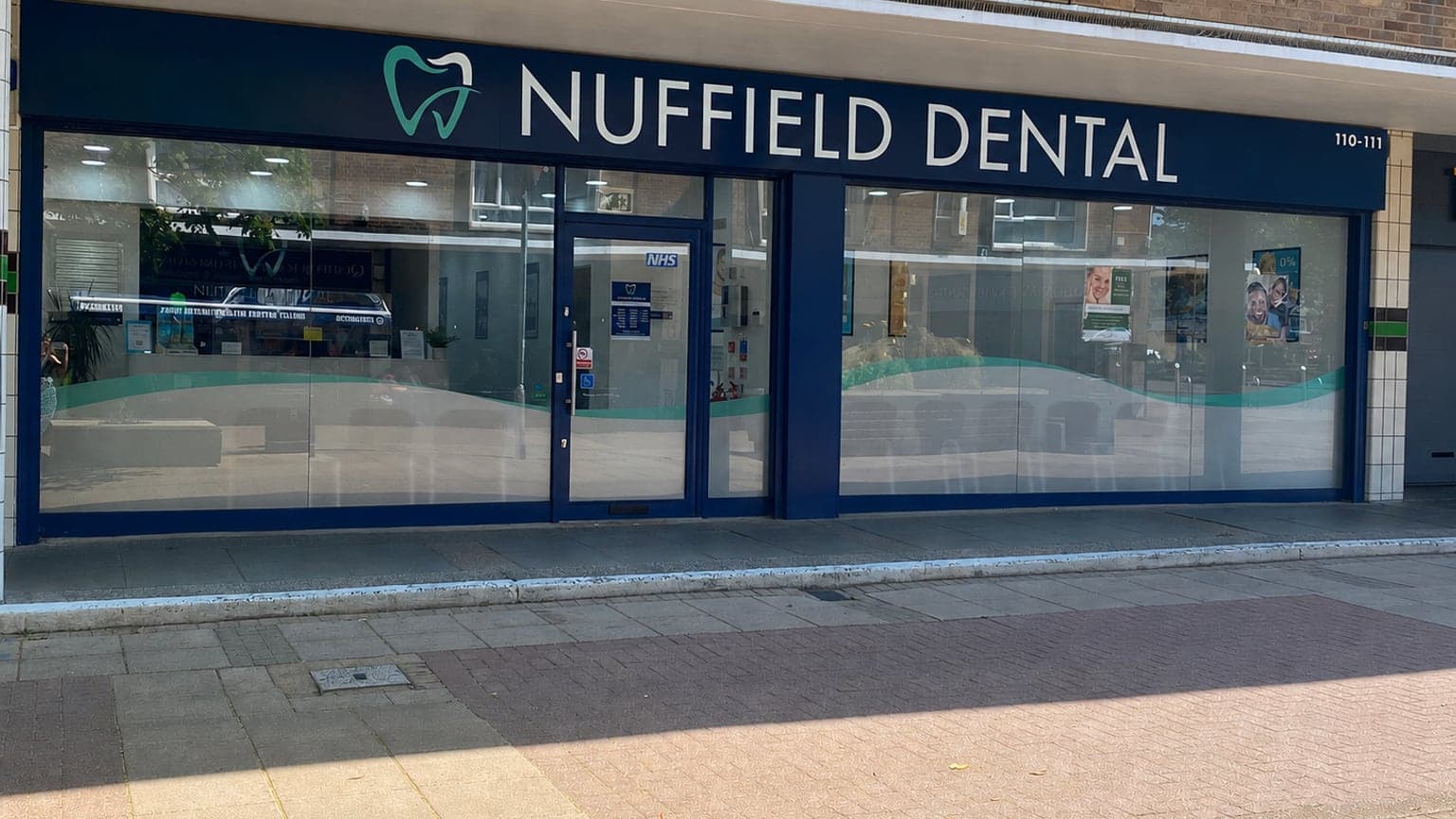
- Nuffield Dental Practice, Harlow: 01279 424 038
- Church Langley Dental, Harlow: 01279 306 690
- Enfield Smiles, Enfield: 020 8804 4320
Evening, weekend, or nowhere near us? Call NHS 111. If you're struggling to breathe or swallow, or swelling is spreading to your eye or neck, that's 999 or A&E.
What dentures can I get on the NHS?
The NHS provides the treatment you need to keep your mouth healthy and working, and dentures are part of that. nhs.uk lists "false teeth (dentures) made from plastic or metal" in Band 3. My dentures page puts it the same way: the NHS covers any clinically necessary denture.
That covers the two main kinds:
- Complete dentures, which replace all the teeth in your upper jaw, lower jaw, or both.
- Partial dentures, which fill gaps when you still have some natural teeth. There's more on these in partial dentures: types, costs and how they stay in.
"Clinically necessary" is the key phrase. It means the denture is there to help you eat, speak and keep your mouth healthy. Which material and design is right for you is something I'd decide with you after an examination, not something I can promise from a blog.
What does the NHS denture charge cover?
Dentures sit in Band 3, £332.10, which also covers crowns and bridges. Two things are worth knowing. First, Band 3 includes everything in Bands 1 and 2, so if you need a filling or an extraction as well as the denture in the same course, you still pay the Band 3 charge once. Second, nhs.uk says that if you need further treatment within 2 months, you don't pay extra as long as it's in the same band or a lower one. Which? adds that if you pay NHS charges for Band 3 treatment, you should be given a written treatment plan, so you'll know where you stand before anything starts.
Some people pay nothing, and if you're on a low income, the NHS Low Income Scheme may help with part of the cost. I've listed who qualifies in can I get dentures free on the NHS? Please do check: it's far better to ask than to go without. For how NHS compares with private, see how much do dentures cost in the UK?
What happens at NHS denture appointments?
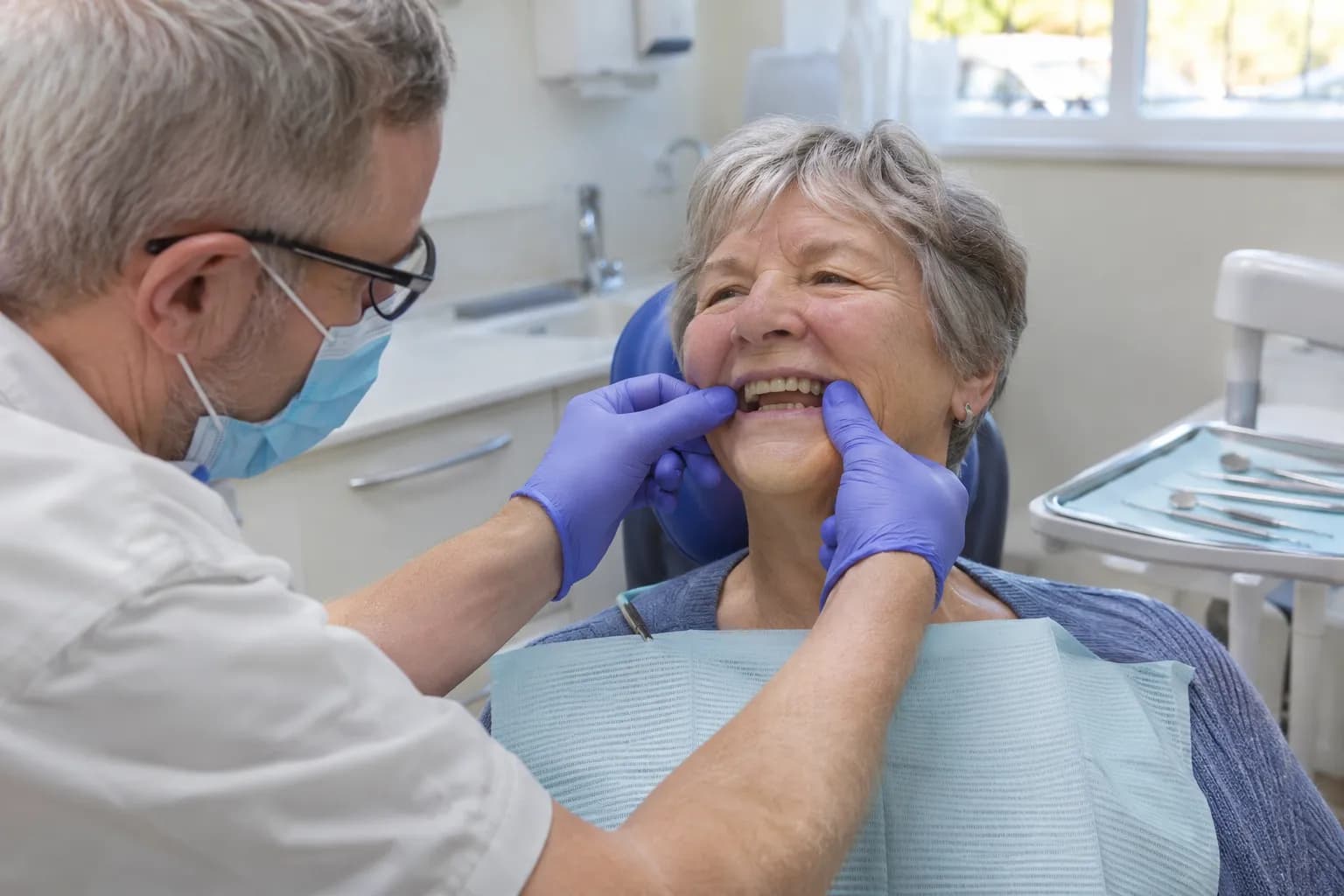
Getting dentures isn't one visit. It's more like having a suit made than buying one off the peg: measure, try on, adjust, and only then take it home. At my practices, new dentures typically take five to seven appointments over six to ten weeks. Along the way there are impressions, a check of how your teeth meet, a try-in and the fit, with reviews at one and four weeks. Those reviews matter, because sore spots are common early on and they're easy to ease.
A denture technician at the laboratory makes the denture itself. Your job is mainly to tell me what feels wrong. No complaint is too small.
nhs.uk says it can take a few weeks to get used to new dentures, and suggests starting with softer foods. That's normal, and it gets easier.
If you need teeth out first, you may be offered immediate dentures, fitted straight after the extractions. nhs.uk notes these often need adjusting or replacing up to a year later, because your gums change shape as they heal.
Are repairs and replacements free on the NHS?
Repairs, yes. nhs.uk says you don't have to pay if your dentures need to be repaired. If they can't be repaired, you'll pay for new ones, which is a new Band 3 course.
So if a tooth pops off or the plastic cracks, don't bin it and don't glue it. Bring it in. My articles on a broken denture and a tooth falling out of your denture explain what to do in the meantime.
What's the difference between NHS and private dentures?
Both are made to fit your mouth, and both need the same care. The differences tend to be about choice. Some options, such as dentures that clip onto implants, are usually private: my implants page explains that NHS implants are reserved for narrow medical situations, such as after head and neck cancer treatment. There's more on those in snap-in dentures, and on materials in flexible, acrylic or chrome dentures.
My view: start with what your mouth needs, then talk about options. I'll tell you what the NHS can provide for you and, if you want to know, what private options exist and what they'd cost, in writing, before anything starts. There's no pressure either way. Our fees and finance page explains how fees work.
When should I see a dentist about my dentures?
Book a routine appointment if you're thinking about dentures, your current ones are loose or clicking, or they're simply getting old. nhs.uk says to see a dentist if dentures click, slip, cause pain or are damaged, or if you notice very red or bleeding gums or bad breath.
Call us today if:
- a sore spot from your denture isn't settling
- your denture has broken and you can't eat properly
- a sore spot or ulcer hasn't healed within 2 weeks (and the NHS says any mouth ulcer lasting more than 3 weeks should be checked by a dentist or GP)
- you notice a red or white patch, or a lump, in your mouth
- there's swelling in your gum or face
Call 999 or go to A&E, not a dentist, if:
- you're finding it hard to breathe, swallow or speak
- swelling is spreading towards your eye or down into your neck
- you can't open your mouth properly because of swelling
Until then, the NHS advice is to take your dentures out at night unless your dentist has advised otherwise.
If you're near Harlow or Enfield, I'd much rather take a look and tell you plainly what the NHS can do for you than have you worrying about the cost at the kitchen table. Ring your nearest Minti practice and ask about an appointment. Anywhere else, or out of hours, call NHS 111 if something is urgent.
This article is general information, not a diagnosis or a quote. NHS charges shown are for England and were checked on 22 October 2026.