
You spat after brushing and there it was again: a little pink in the sink. You rinsed, looked closer in the mirror, pulled your lip down, and started wondering what's normal. You're in very good company. Bleeding gums are one of the most common things I see in my surgery, and gum disease is common enough that most adults will have a brush with it at some point.
The short answer: gum disease is inflammation of the gums caused by plaque, the sticky film of bacteria that builds up along the gum line. The earliest and most common sign is gums that bleed when you brush, floss or eat something hard, often with red, puffy gums and bad breath. Caught early (gingivitis), it can be reversed. Left alone, it can become periodontitis, which damages the bone that holds your teeth in and can make them loose. It's usually not an emergency, but it won't sort itself out, so book a dental check-up, and I may pass you to my hygiene team for the cleaning. If your gums are very sore and swollen, a tooth has gone loose, or a gum won't stop bleeding, call my emergency dentist team in Harlow or Enfield, or NHS 111 if we're closed.
Gums bleeding, sore or swollen? Call your nearest Minti practice to book a gum check. I keep same-day appointments for pain and swelling wherever I can.
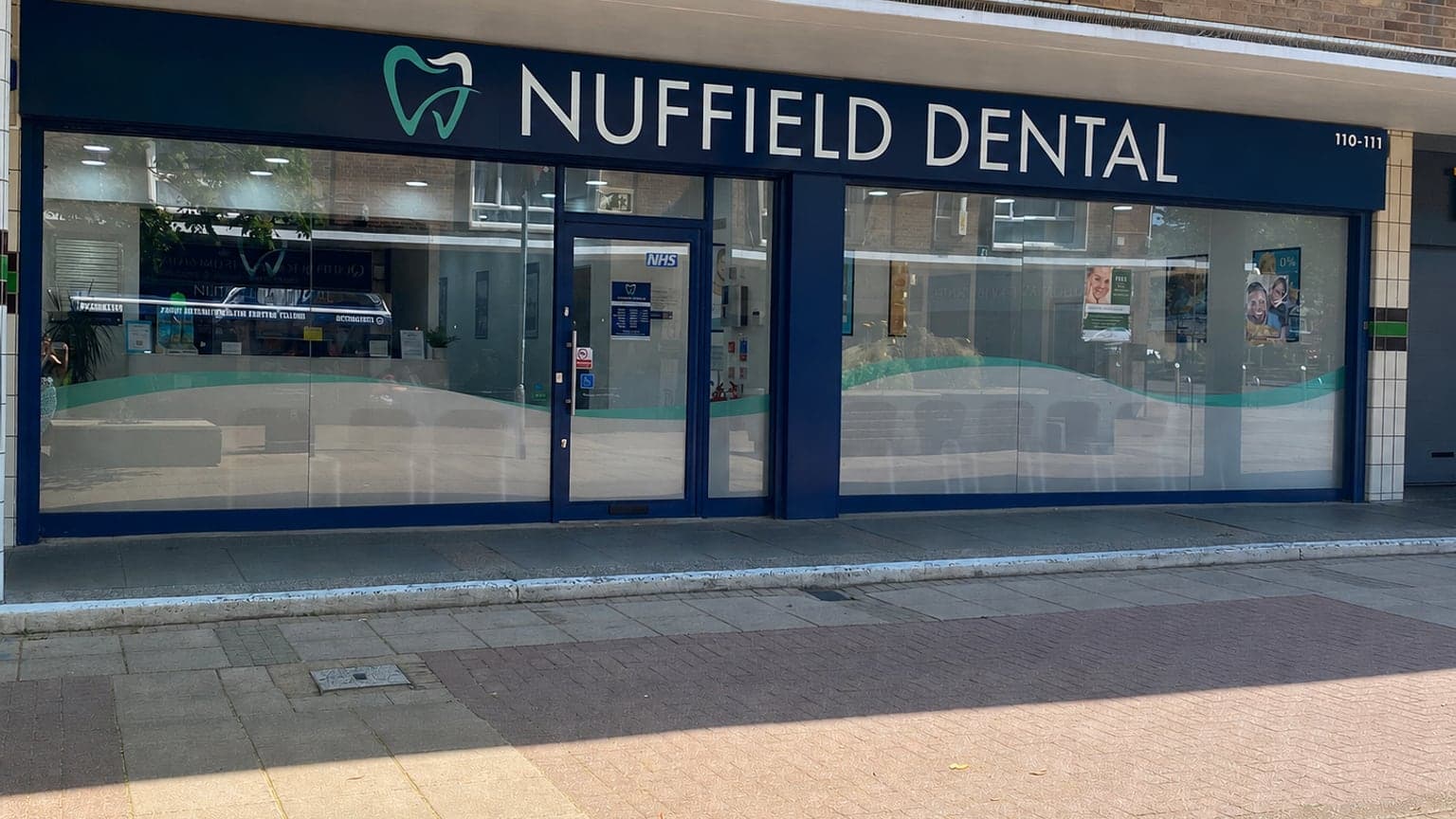
- Nuffield Dental Practice, Harlow: 01279 424 038
- Church Langley Dental, Harlow: 01279 306 690
- Enfield Smiles, Enfield: 020 8804 4320
Evening, weekend, or nowhere near us? Call NHS 111. If bleeding is heavy and you can't stop it, or you're struggling to breathe or swallow, that's 999 or A&E.
Bleeding gums and bruising? If your gums bleed and you're also bruising easily or for no reason, or you feel very tired, weak, pale or generally unwell, see a GP as well as a dentist. The NHS says bleeding or bruising easily for no reason needs an urgent GP appointment or a call to NHS 111.
What is gum disease, and how do I spot it?
Here's the whole thing in one picture. Your gums are the bouncers at the door of your teeth. Plaque is the rowdy crowd that gathers outside every day. Brush and clean between your teeth and the crowd gets moved on. Leave it, and the bouncers get more and more wound up: red, puffy, and bleeding at the slightest nudge. That's gum disease.
What are the early signs of gum disease?
The NHS lists gums that bleed when you brush, floss or eat hard foods, and gums that are swollen, red and sore. Bad breath and a bad taste can come with it. Later signs include gums shrinking back, loose teeth and gum abscesses. The catch is that it often doesn't hurt, so plenty of people have it without knowing.
What does gum disease look like?
Healthy gums are usually pink (or naturally darker, depending on your skin tone), firm, and fit snugly around each tooth. Gum disease tends to look redder, puffier and shinier, especially along the edges and in the little triangles between teeth. The mirror can give you a clue; it can't give you a diagnosis.
What's the difference between gingivitis and periodontitis?
Gingivitis is the early stage: inflamed gums, no lasting damage, and reversible with good cleaning. Periodontitis is when the inflammation reaches the bone and supporting tissues. That damage can't be undone, but it can be stopped. It's the difference between a leaky tap and a soggy floor.
Why are my gums bleeding?
Why do my gums bleed when I brush?
Usually because they're inflamed by plaque, and inflamed gums bleed easily. It's the most common early warning sign of gum disease, and the Oral Health Foundation's advice is simple: don't ignore it. Please don't stop brushing because of it either. That just gives the plaque a free run.
What if my gum won't stop bleeding?
I'll keep this bit straight. A little blood when you brush is common. Bleeding that carries on after firm, steady pressure with clean damp gauze is different, and so is bleeding in anyone who takes blood-thinning medicine. Heavy bleeding you cannot stop is A&E.
What if it's just one small area that keeps bleeding?
One spot that bleeds again and again, when the rest of your mouth is fine, often points to something local: a trapped bit of food, a rough filling edge, or a deeper pocket around one tooth.
How does gum disease progress, and can it be fixed?
What are the stages of gum disease?
UK dentists describe periodontitis in four stages (I to IV) by how much bone support has been lost, and three grades (A to C) by how quickly it's progressing. Think of the stage as the milometer and the grade as the speedometer. For most people it's a slow burner, but smoking and poorly controlled diabetes can speed it up.
Can gum disease be cured?
Gingivitis, yes. Periodontitis can't be reversed, but the Oral Health Foundation says it can be controlled, and the aim of treatment is to get it stable and keep it there.
What will the dentist actually do?
Mostly very thorough cleaning. I'll check your gums, measure any pockets and take X-rays. Gingivitis usually needs a professional clean and a better routine at home. Periodontitis needs a deep clean under the gum line, usually with local anaesthetic, then regular maintenance. Antibiotics and surgery are only for some cases. On the NHS, a clinically needed scale and polish is Band 1 and more extensive gum treatment is Band 2 (current NHS charges).
Why are my gums swollen, sore or receding?
Why are my gums swollen all over?
Usually gingivitis. Pregnancy and other hormone changes, some medicines (including some epilepsy and blood pressure medicines), and occasionally a general health problem can play a part too.
Why are my gums sore?
Sore gums all over can be gum inflammation, a change in brushing or flossing, a brace or denture rubbing, or mouth ulcers. A sudden, very painful gum infection with ulcers, bad breath and a temperature needs seeing promptly.
Why are my gums receding?
Gums can shrink back because of gum disease, and brushing too hard can play a part. Receded gum doesn't grow back on its own, but the cause can be stopped and the exposed root protected.
What if one gum is swollen around one tooth?
Swelling around a single tooth is usually a different story from gum disease all over, often an infection. It can need seeing sooner, especially if it's painful or spreading.
What if one gum hurts around one tooth?
A sudden sore spot by one tooth can be trapped food, a gum abscess or a problem with the tooth itself.
What if my gum is swollen but the tooth doesn't hurt?
A painless swelling can still be an infection that has found a way to drain, so painless isn't the same as harmless.
What's that pimple or boil on my gum?
A small spot on the gum that comes and goes, sometimes with a salty or bad taste, is often a sign of infection draining from a tooth or gum pocket. It needs a dentist even if it doesn't hurt.
Is gum disease contagious?
Not in the way a cold is. The bacteria can pass between people in saliva, and people who live together often share mouth bacteria, but whether you develop gum disease depends mostly on your own cleaning, smoking, diabetes, stress and genes. If your partner has just been diagnosed, it's a good nudge to book your own check-up.
What raises the risk of gum disease, and how do I prevent it?
The NHS puts it down to plaque, and lists smoking as a big risk. The British Society of Periodontology adds family history, stress and diabetes. The prevention is the same for everyone, and it's the advice I give in the chair:
- brush at least twice a day with fluoride toothpaste
- clean between your teeth every day with floss or interdental brushes (I'll show you which sizes)
- don't use mouthwash straight after brushing
- stop smoking if you smoke; your GP or pharmacist can help
- keep up regular check-ups; if you're pregnant, NHS dental care is free during pregnancy and for a year after
When should I see a dentist about gum disease?
Book a check-up if your gums bleed when you brush, floss or eat, look red, swollen or sore, or you've noticed bad breath or gums pulling back. The NHS says to see a dentist for all of these. It's not an emergency, but the earlier it's treated the simpler it is.
Call us today if:
- your gums are very sore and swollen
- a tooth has gone loose or is moving
- a gum is bleeding and won't stop after firm pressure
- you have painful ulcers on the gums, very bad breath, or a temperature
- there's a lump or swelling on the gum, or swelling spreading into your cheek or face
See a GP, not just a dentist: if your gums bleed and you're also bruising easily or for no reason, or you feel very tired, weak, pale or generally unwell. It's usually something far less serious, but it needs a blood test to be sure.
Call 999 or go to A&E, not a dentist, if:
- bleeding from your mouth is heavy and you cannot stop it
- you're finding it hard to breathe, swallow or speak
- swelling is spreading towards your eye or down into your neck
- your eye is swollen or painful, or your eyesight suddenly changes
- you can't open your mouth properly because of swelling
If you're near Harlow or Enfield, I'd much rather take a look at your gums than have you checking the sink for pink every morning. Ring your nearest Minti practice to book a check-up. If your gums are very sore, swollen or a tooth feels loose, say so and we'll do our best to see you quickly. Anywhere else, or out of hours, call NHS 111.
This article is general information, not a diagnosis. Gum problems need examining in person to find the cause.