
On this page
Maybe you've lost a tooth or two and you've got used to chewing on the other side. Maybe you've started smiling with your mouth closed in photos. Or maybe you've just been told you need a partial denture and you're picturing something that'll fall out mid-sentence. Plenty of people are where you are, and a well-made partial denture is far more secure, and far less obvious, than most people expect.
The short answer: a partial denture replaces one or more missing teeth when you still have some natural teeth. It's usually made from acrylic (plastic), cobalt-chrome (metal) or a flexible material, and it stays in by gripping your remaining teeth, usually with small clasps. On the NHS in England, dentures are a Band 3 treatment, currently £332.10 (checked on nhs.uk on 30 October 2026); private fees vary with the type and are confirmed in writing before treatment. The first step is a dental check-up, so I can look at the gap and the teeth around it. You can read about the options on our dentures page and in my guide to dentures. If a tooth has just broken or come out painfully, or there's swelling, call my emergency dentist team in Harlow or Enfield.
Got a gap you'd like to fill? Call your nearest Minti practice and ask for a check-up to talk through partial dentures. If you're in pain, a denture sore hasn't healed within 2 weeks, or your denture has broken, tell reception it's urgent. I keep same-day appointments for pain and swelling wherever I can.
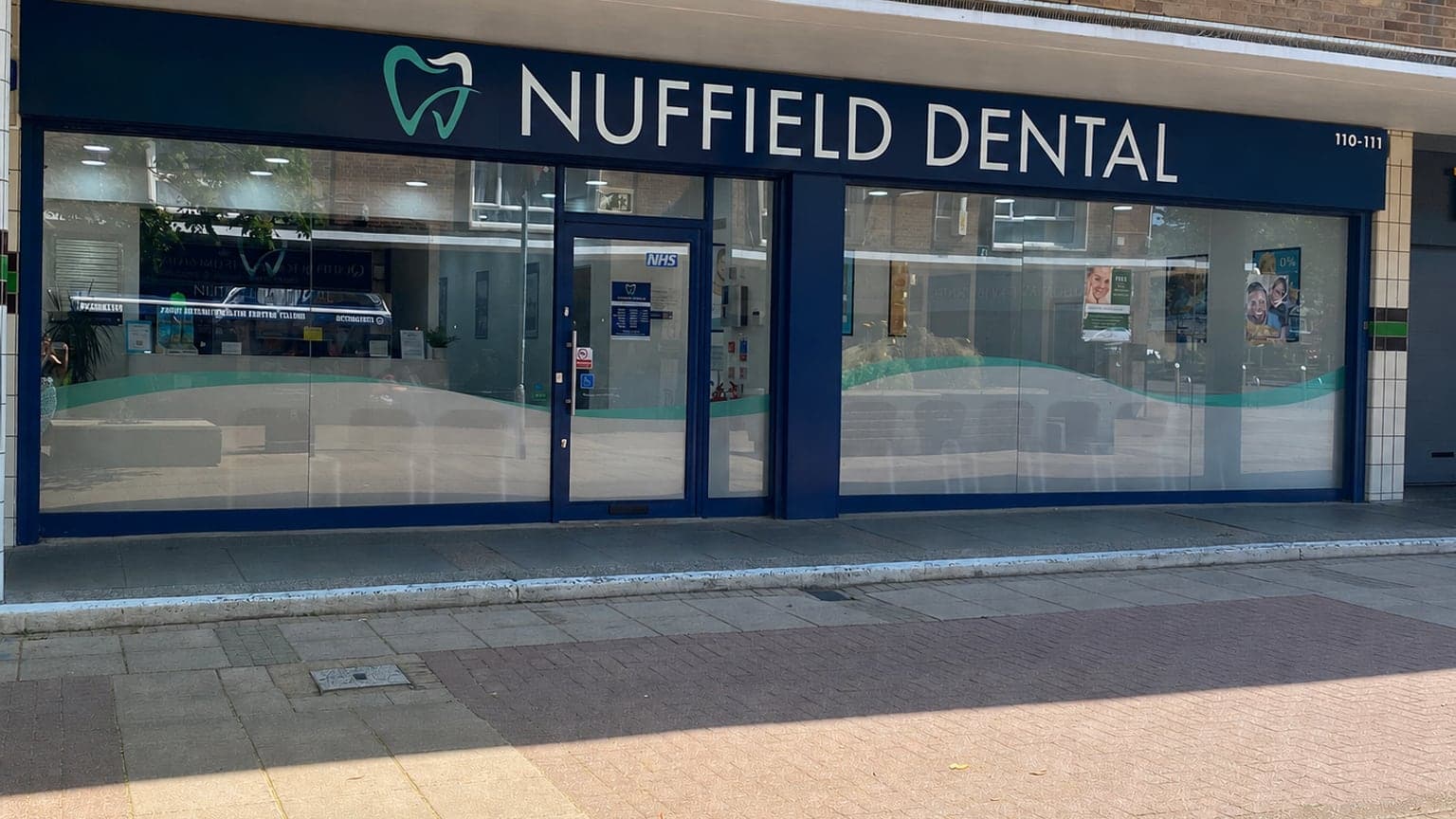
- Nuffield Dental Practice, Harlow: 01279 424 038
- Church Langley Dental, Harlow: 01279 306 690
- Enfield Smiles, Enfield: 020 8804 4320
Evening, weekend, or nowhere near us? Call NHS 111. If you're struggling to breathe or swallow, or swelling is spreading to your eye or neck, that's 999 or A&E.
What is a partial denture?
It's a removable plate carrying one or more false teeth, made to fit around the teeth you still have. A complete denture replaces a whole arch. A partial denture fills the gaps and leaves your own teeth where they are.
It isn't only about looks. A gap can make chewing harder and, over time, the teeth either side can drift or tip into the space. Filling the gap is one of the ways I'd try to stop that. A partial can replace a single tooth or several teeth in different places, all on one plate. If it's just one tooth you're missing, I've written about that in single tooth denture: how does it stay in?
What types of partial denture are there?
There are three main materials, and the Oral Health Foundation describes all three:
- Acrylic (plastic). The most common type. It's usually held in with small metal clasps. My dentures page describes acrylic as economical and easy to repair. It tends to be a little bulkier because plastic needs thickness to be strong.
- Cobalt-chrome (metal). A metal framework with the false teeth attached. The Oral Health Foundation says metal dentures are smaller and lighter than plastic ones, and usually more expensive. My dentures page calls chrome a premium option for partials.
- Flexible. Made from a soft, flexible plastic and usually used for partials. The Oral Health Foundation says they stay in by lightly flexing around your natural teeth rather than using metal clasps, so there's no silver showing.
Think of it like choosing between a sturdy everyday coat, a lighter tailored one, and a stretchy one. All three keep you warm.
How do partial dentures stay in?
This is one of the questions I get most. The answer: by holding on to your own teeth.
- Clasps. Small arms, usually metal, that curl around nearby natural teeth. MSD Manual describes partial dentures as typically having clasps that snap over the supporting teeth.
- Flexing around the teeth. Flexible dentures grip by hugging the teeth and gum, with no metal clasps.
- Precision attachments. My dentures page mentions these as an alternative to clasps.
- Implants. For some people, a denture can clip onto implants instead. More in snap-in dentures.
A partial denture that's made to fit your mouth shouldn't need glue to stay put. If it keeps slipping, rocking or clicking, that's a sign it needs adjusting, not a sign that you're doing something wrong. nhs.uk says to see a dentist if your dentures click, slip or cause pain.
Because the clasps hold on to your natural teeth, those teeth matter even more. Keep brushing them well, and take the denture out to clean it. nhs.uk advises taking dentures out at night unless your dentist recommends otherwise.
How much do partial dentures cost?
On the NHS in England, partial dentures are Band 3, the same as full dentures: £332.10 for the course of treatment, checked on nhs.uk on 30 October 2026. nhs.uk lists dentures "made from plastic or metal" in Band 3. Some people pay less or nothing, depending on age, pregnancy, certain benefits or the NHS Low Income Scheme. There's more detail in NHS dentures: what you get and what you pay.
Privately, fees vary with the material, the number of teeth and any work needed first. I don't give figures in articles, and I couldn't find a reputable, non-commercial UK source giving a typical range. You'll get a written plan and fee before anything starts, and our fees and finance page explains how that works. For the bigger picture, see how much do dentures cost in the UK?
Partial denture, bridge or implant?
A partial denture isn't the only way to fill a gap. nhs.uk lists bridges, which are fixed to the teeth either side, and dental implants as alternatives.
- Partial denture: removable, can replace several teeth in different places at once, and usually involves little or no drilling of your other teeth.
- Dental bridge: fixed in place, but normally relies on the neighbouring teeth for support.
- Dental implant: a fixed option that doesn't lean on other teeth, but it involves surgery and is usually private. Implant surgery is carried out at our Nuffield practice in Harlow; if you're at Enfield Smiles and an implant is right for you, we'd refer you there.
Which suits you depends on how many teeth are missing, the health of the teeth and gums around the gap, and what you want. My guides to dental bridges and dental implants go into both. If a tooth is failing and you're deciding whether to save it or take it out, root canal or extraction: which is better? is worth a read first, because the answer changes what goes in the gap.
When should I see a dentist about a partial denture?
Book a routine appointment if you've got a gap you'd like to fill, or your partial denture is loose, rocking or catching. If a tooth has come off it or it's cracked, see my denture has broken or a tooth fell out of my denture.
Call us today if:
- a clasp or edge is digging in and has made a sore spot that isn't settling
- a tooth the denture clasps onto has become painful or loose
- a sore spot or ulcer hasn't healed within 2 weeks (and the NHS says any mouth ulcer lasting more than 3 weeks should be checked by a dentist or GP)
- you notice a red or white patch, or a lump, in your mouth
- there's swelling in your gum or face
Call 999 or go to A&E, not a dentist, if:
- you're finding it hard to breathe, swallow or speak
- swelling is spreading towards your eye or down into your neck
- you can't open your mouth properly because of swelling
If you're near Harlow or Enfield, I'd much rather take a look at the gap and give you your options straight than have you chewing on one side for another year. Ring your nearest Minti practice and ask for a check-up. Anywhere else, or out of hours, call NHS 111 if something is urgent.
This article is general information, not a diagnosis or a quote. Partial dentures need planning in person.