
You've got a problem in your mouth and one question in your head: is this an emergency, or am I overreacting? You've probably poked it, looked at it in the bathroom mirror with your phone torch, and asked someone else in the house to have a look (they said "hmm"). It's one of the most common questions I'm asked, and the good news is there's a clear, sensible way to answer it.
The short answer: you need an emergency dentist the same day for severe toothache that painkillers aren't helping, swelling in your face or gum, a knocked-out adult tooth, or a dental injury. You need 999 or A&E, not a dentist, if swelling is affecting your breathing or swallowing, spreading to your eye or neck, or you have heavy bleeding or a serious face or jaw injury. Most other problems, like a lost filling without much pain, can wait a few days for a normal appointment. If you're not sure, ring. Call my emergency dentist team in Harlow or Enfield, or NHS 111 if we're closed or you're not local.
Dental emergency? Here's what to do right now. Call your nearest Minti practice as early in the day as you can and tell reception it's urgent. I keep same-day appointments for pain and swelling wherever I can. Adult tooth knocked out? Hold it by the crown, put it back in or keep it in milk, and come straight in.
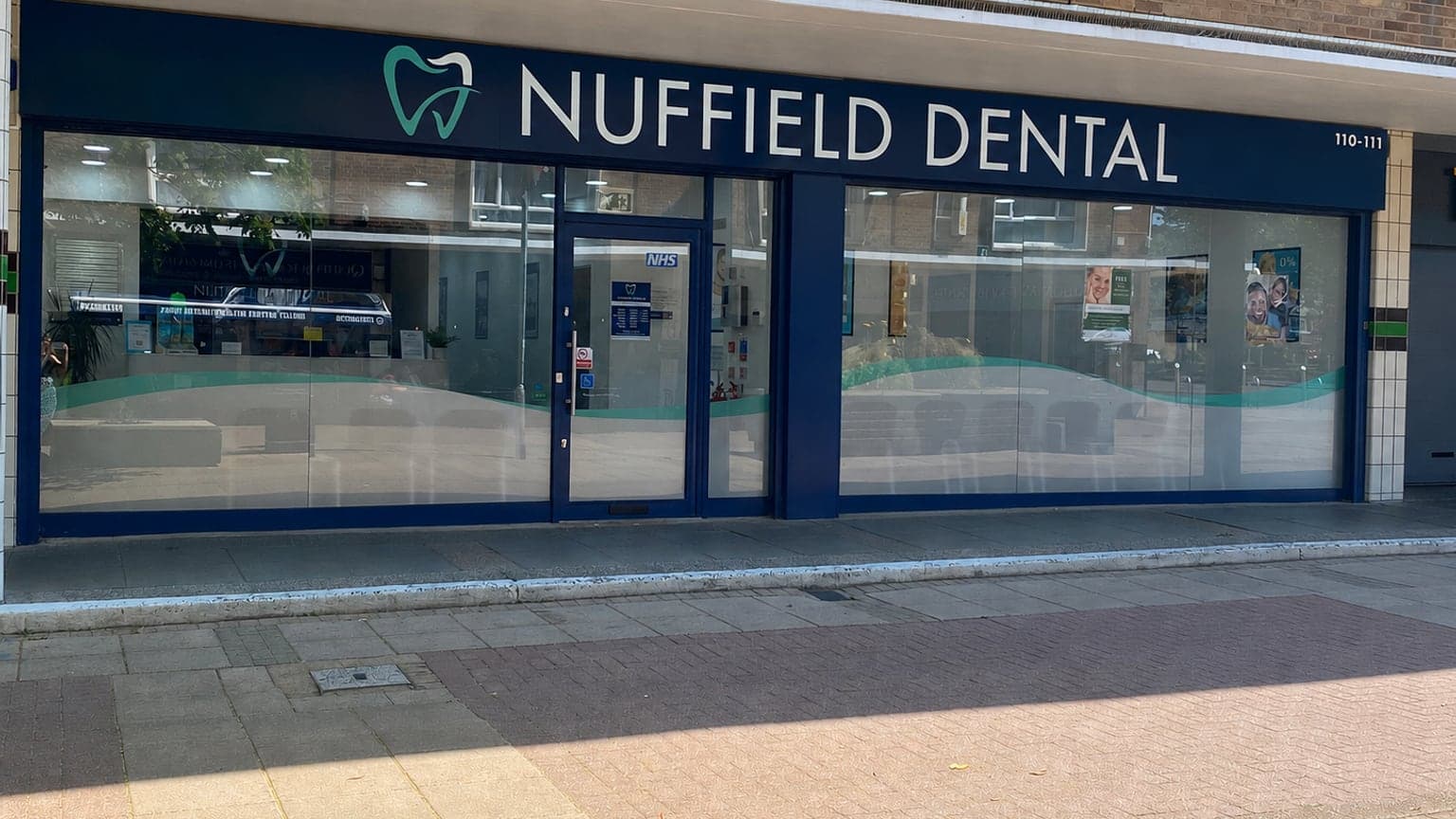
- Nuffield Dental Practice, Harlow: 01279 424 038
- Church Langley Dental, Harlow: 01279 306 690
- Enfield Smiles, Enfield: 020 8804 4320
Evening, weekend, or nowhere near us? Call NHS 111 or use 111 online.
Call 999 or go to A&E, not a dentist, if you have:
- swelling in your mouth, lips, throat or neck that's making it hard to breathe, swallow or speak
- swelling around your eye or spreading into your neck, or a change in your eyesight
- heavy bleeding from your mouth that won't stop
- a serious injury to your face or jaw, or a head injury with passing out, being sick or double vision
What counts as a dental emergency?
Urgent dental problems in the UK are sorted using triage guidance from the Scottish Dental Clinical Effectiveness Programme (SDCEP), and NHS England's own guidance is built on it. I find it easiest to think of it as four buckets. Knowing which one you're in answers the "do I need an emergency dentist?" question for you.
Emergency: 999 or A&E now. Problems that can affect your breathing or your general health. NHS England's guidance includes swelling that threatens the airway, being severely unwell, fractures of the face or jaw, and bleeding in the mouth that can't be controlled. These need a hospital, not a dental chair.
Urgent: see a dentist within 24 hours. NHS England describes this as care within 24 hours or as soon as practically possible. It includes:
- swelling that's spreading, especially with swollen glands in the neck
- severe dental or facial pain that isn't helped by painkillers and self-care
- injuries to the teeth that affect eating or biting
- heavy bleeding from the gums
A knocked-out adult tooth is the fastest of all: the NHS says it needs seeing within 1 hour, or as soon as possible.
Non-urgent: see a dentist within 7 days. Things that need a professional but aren't getting dangerous. The guidance includes mild or moderate pain that responds to painkillers, minor chips, a bit of bleeding after an extraction that you can control, a loose denture or brace, and a small swelling that isn't spreading.
Routine: book a normal appointment. A painless mark on a tooth, a question about whitening, a slightly sensitive tooth that's been the same for months. Book a check-up.
My own emergency dentist page lists the problems we treat as urgent calls: toothache that keeps you awake or doesn't settle with painkillers; facial swelling or swelling around a tooth; a knocked-out adult tooth; a broken, cracked or badly chipped tooth; a lost crown, bridge or filling; bleeding that won't stop after an extraction; and an abscess, or a bad taste with pain. Reception triages urgent calls ahead of routine bookings and will tell you how quickly you need to be seen.
The NHS also has a simple rule for toothache: see a dentist if it lasts more than 2 days or painkillers aren't helping. If you're sat there on day three hoping it'll sort itself out, it's time to ring.
Is my problem an emergency? A quick guide
Here's where the common problems usually land.
- Toothache: urgent if severe, keeping you awake or not helped by painkillers.
- Swollen face or gum, or a bad taste with pain: urgent. Could be an abscess. See dental abscess and tooth infection.
- Wisdom tooth pain: urgent if there's swelling, a temperature, or you can't open your mouth. See wisdom tooth pain.
- Knocked-out adult tooth: immediate. Baby tooth: never put back.
- Broken tooth or lost filling: urgent if painful or sharp; otherwise within days. See broken tooth or lost filling and cracked tooth.
- Crown fallen off: keep it safe and ring us. See lost crown.
- Pain or bleeding after treatment or an extraction: urgent if the bleeding won't stop with pressure or pain is getting worse after a few days. See after dental treatment and tooth extraction.
- Bleeding gums when you brush: not an emergency, but don't ignore it. See gum disease.
- Sensitivity to hot or cold: usually routine, unless it lingers or turns into a throb. See sensitive teeth.
Still not sure? That's what the phone is for. You can't triage yourself from the sofa, and neither can Google. My reception team can, in about two minutes.
How do I get an emergency dentist?
During the day, ring your own dentist first. If you're near Harlow or Enfield, that can be us. My emergency dentist page says: "call as early in the day as you can and we will find you a same-working-day slot wherever possible."
If you can't get through, or you don't have a dentist at all, the NHS says if you need urgent dental treatment you should be offered it within 24 hours or 7 days, depending on your symptoms, and 111 is how you get it out of hours.
How much does an emergency dentist cost?
On the NHS in England, urgent treatment is a single charge, currently £27.90 (nhs.uk, checked 12 October 2026). That covers things like an examination, X-rays, a temporary filling, emergency partial root canal treatment, draining an abscess, and taking out up to 2 teeth. Some people get NHS dental treatment free, including under-18s.
Private emergency fees vary between practices. At Minti, urgent NHS treatment is charged at the NHS urgent rate, and private emergency appointments are also available, with the fee confirmed when you call.
What can an emergency dentist actually do on the day?
The job of an urgent visit is to get you out of pain and deal with any infection safely. Sometimes that fixes the whole thing. Sometimes it's step one of two. I'll always tell you which.
The appointment is simple: a few questions, a look, a couple of quick tests, and an X-ray if needed. Then I treat what I find. That might be dressing the tooth, starting root canal treatment, draining an abscess, or smoothing a broken edge.
Antibiotics aren't the main event. SDCEP and NICE guidance is that they're for infection that's spreading or making you unwell, alongside dental treatment, not instead of it. I won't promise them before I've seen you.
What about children and dental emergencies abroad?
Two situations worth knowing about.
Children: a knocked-out adult tooth is the one to move fast on. A knocked-out baby tooth is never put back, because it could damage the adult tooth underneath, but it's still worth a call. Swelling in a child's face is always same-day. And NHS dental treatment is free for under-18s. Our children's dentistry page explains what we offer.
Travelling: travel insurance often includes some emergency dental cover, usually for the immediate relief of pain only, and a GHIC may help with state care in the EU.
Getting it fixed properly after the emergency
An emergency visit gets you comfortable. The follow-up is where the tooth gets properly sorted, and that's usually a normal, planned appointment. Depending on what I find, that might be:
- a filling, often after tooth decay has been found
- root canal treatment, often followed by a crown
- replacing a lost tooth with a bridge, implant or dentures
- repairing a chipped front tooth with composite bonding or veneers
And for the record: teeth whitening is never an emergency, however important the wedding. Book it in the normal way.
When should I call an emergency dentist?
If you're still wondering, here's the checklist. The NHS says see a dentist if toothache lasts more than 2 days or painkillers aren't helping, and get urgent help for swelling, injuries or severe pain.
Call us today if:
- you have toothache that keeps you awake or isn't helped by painkillers
- your face, jaw or gum is swelling
- an adult tooth has been knocked out (come in now)
- a tooth is broken, cracked or badly chipped, especially if it hurts
- you have a bad taste with pain, or a high temperature with tooth pain
- bleeding after an extraction won't stop with firm pressure
- a crown, bridge or filling has come out
Call 999 or go to A&E, not a dentist, if:
- it's hard to breathe, swallow or speak
- swelling is spreading towards your eye or down into your neck
- your eye is swollen or painful, or your eyesight changes
- you can't open your mouth properly because of swelling
- bleeding from your mouth is heavy and won't stop
- you've had a serious injury to your face or jaw
While you wait, the NHS suggests ibuprofen or paracetamol as the pack says, soft foods, and a salt water rinse for adults.
If you're near Harlow or Enfield, I'd much rather take a look than have you spend another day wondering whether it counts. Ring your nearest Minti practice as early in the day as you can. Out of hours, or anywhere else, call NHS 111.
This article is general information, not a diagnosis. Tooth pain needs examining in person to find the cause.