
Wisdom teeth are the last teeth to arrive and, in my view, the least welcome. They turn up in your late teens or twenties, into a jaw that filled up years ago, and plenty get stuck half-way. If you're reading this, the back of your jaw is probably sore, swollen or throbbing, and you want to know whether you need to do anything about it tonight. You're not imagining it, and you're not the only one. Wisdom tooth pain is one of the most common reasons people ring my practices.
The short answer: most wisdom tooth pain is one of three things. A tooth pushing through (uncomfortable, usually settles). An infected gum flap over a tooth that's only part-way out, called pericoronitis (needs cleaning out, gets worse if ignored). Or decay in a tooth that's too far back to clean (needs treating, never settles on its own). The NHS rule is that toothache lasting more than two days, or that painkillers don't control, needs a dentist. Swelling, a bad taste or trouble opening your mouth mean don't wait the two days. Call my emergency dentist team in Harlow or Enfield, or NHS 111 if we're closed or you're not local.
Call 999 or go to A&E, not a dentist, if:
- you're finding it hard to breathe, swallow or speak
- swelling in your mouth or neck is making it difficult to breathe, swallow or speak
- swelling is spreading towards your eye or down into your neck, or the area around your eye or your neck is swollen
- you can't open your mouth properly because of the swelling
- you have a very high or very low temperature, feel hot or cold to the touch or shivery, are confused or not making sense, are breathing very fast, or have blue, pale or blotchy skin. The NHS lists these as possible signs of sepsis.
This is NHS advice, not mine, and it applies whatever time of day it is. A spreading infection from a wisdom tooth is a hospital problem.
Wisdom tooth pain, swelling or a bad taste? Call your nearest Minti practice and tell reception it's urgent. I keep same-day appointments for pain and swelling wherever I can.
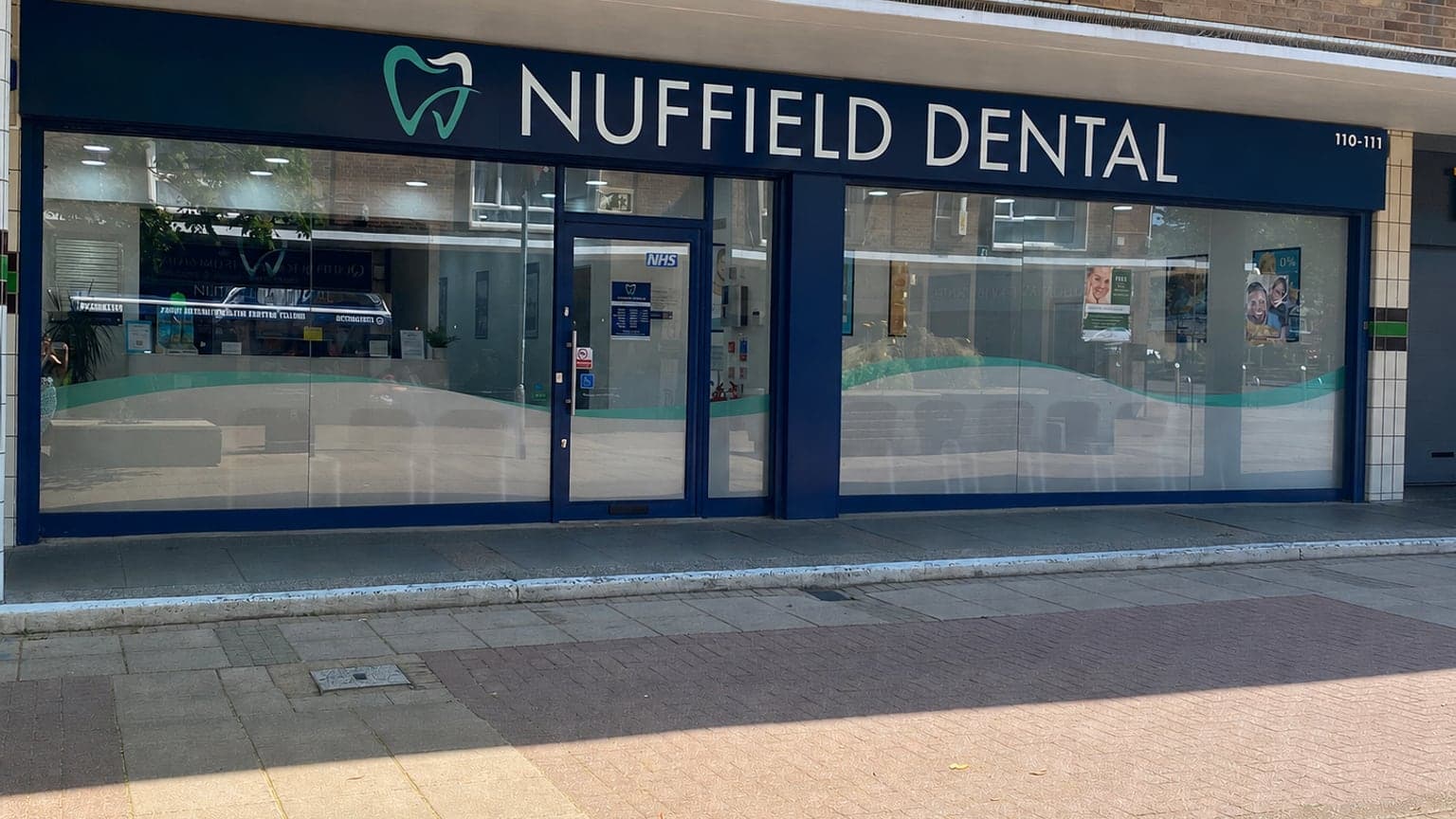
- Nuffield Dental Practice, Harlow: 01279 424 038
- Church Langley Dental, Harlow: 01279 306 690
- Enfield Smiles, Enfield: 020 8804 4320
Evening, weekend, or nowhere near us? Call NHS 111.
Is my wisdom tooth pain an infection or an emergency?
This is the first thing I sort out on the phone. Most wisdom tooth pain is not an emergency: uncomfortable, worth seeing quickly, but a dentist's job. It becomes an emergency when infection spreads beyond the tooth into the neck or the floor of the mouth, or far enough to affect breathing or swallowing. The list above is the line. Anywhere near it, it's 999. Nowhere near it but your face is swelling, that's me today or NHS 111 tonight.
What are the symptoms of a wisdom tooth infection?
An infected gum flap over a partly-erupted wisdom tooth is the commonest wisdom tooth problem I see, and the signs are fairly consistent: pain around the back tooth, a red swollen gum over it, sometimes cheek swelling on that side, a bad taste or smell, discomfort swallowing, trouble opening your mouth wide, and feeling feverish or run down. Any of those and it's past "just coming through".
Is it the tooth or just a sore gum?
A tender gum on its own, with no swelling, taste or fever, can just be the gum being stretched as the tooth comes up. The line between that and the start of an infection is the first thing I look at in the chair.
Swollen lymph nodes with a wisdom tooth
Tender lumps under the jaw or in the neck on the sore side are the glands doing their job against an infection. On their own they're a sign the infection is real, not a sign it's spreading dangerously, but they tip a "maybe" into a "ring today".
What does the type of pain tell me?
Throbbing wisdom tooth pain
Throbbing in time with your pulse means something is inflamed inside a tight space: either the gum flap or the nerve inside the tooth. It's the pain that keeps people awake, and it's a tooth that needs seeing, not settling.
Pain radiating into the jaw
Wisdom teeth sit deep in the jaw, so the pain often spreads along it rather than staying put. Radiating pain is common and usually still dental, but a spreading ache with swelling is a different matter.
Wisdom tooth pain and headaches
A sore back tooth can set off a headache on the same side, partly through the jaw muscles clenching to protect it. Fixing the tooth usually fixes the headache.
How long does wisdom tooth pain last?
There isn't a tidy number, and the cause sets the clock. A tooth coming through tends to grumble on and off and then ease. An infected flap gets worse until it's cleaned out. Decay never settles. After removal, swelling peaks within a day or two and discomfort lasts several days. The question I'd ask is not "how long has it been" but "is it getting better or worse".
Wisdom tooth coming through: what's normal?
Mild soreness, a tender gum, some pressure and pain that comes and goes are all normal on the way in. A properly swollen gum, a bad taste, trouble opening or feeling unwell are not.
Do I need antibiotics for a wisdom tooth infection?
Usually not, and I'll keep this bit straight. The guidance I work to says antibiotics are for infection that's spreading, such as facial swelling or limited mouth opening, or when you're unwell with it. For a straightforward infected flap the treatment is cleaning it out properly, which no tablet can do.
When does a wisdom tooth need removing?
Not just because it exists. NICE, whose guidance the NHS follows, says wisdom teeth that aren't causing problems are left alone and monitored. Removal is for teeth with a problem: decay that can't be fixed, an abscess, damage to the tooth in front, a cyst, or repeated infections. On that last one, NICE says a first bout of pericoronitis, unless particularly severe, isn't on its own a reason, but a second or later bout is. I can assess it, treat the infection and refer you if removal is needed.
What's normal pain after wisdom tooth removal?
The NHS says swelling peaks within one to two days, most people are back to normal the day after a simple extraction, and a difficult one may need a few days off. Paracetamol or ibuprofen as directed, and it should get a little better each day.
Dry socket or normal healing?
Dry socket is the one to know about: the clot in the socket is lost and pain gets noticeably worse a few days after the extraction rather than better. It's not dangerous, but it's miserable and it needs dressing, so it's a ring-today problem.
How much does wisdom tooth removal cost in the UK?
On the NHS in England, tooth extraction is a Band 2 treatment. The NHS charges page listed Band 2 at £76.60 when I checked it on 25 September 2026, and an urgent appointment at the Band 1 rate of £27.90. If you're referred to hospital oral surgery for the removal itself, that's NHS hospital care. Private fees vary from practice to practice and are confirmed in writing before any treatment.
NHS vs private wisdom tooth removal
NHS removal follows the NICE rules above: the tooth has to have a problem, referral to a hospital oral surgery department is common for the trickier ones, and waits vary. Going private doesn't change whether the tooth should come out, but it can change how soon and where.
Other wisdom tooth problems
These are other symptoms and situations worth mentioning when you call.
- Swollen gum flap over a wisdom tooth: the flap itself, why it swells, and why it needs cleaning under rather than around.
- Wisdom tooth pain and can't open your mouth: limited opening is a sign the infection is spreading into the jaw muscles. Same-day, and 999 if breathing or swallowing is affected.
- Bad taste from a wisdom tooth: nearly always pus or trapped food under the flap.
- Food stuck around a wisdom tooth: how to flush it safely, and why it keeps happening.
- Wisdom tooth ear pain: lower wisdom teeth and ears share nerve supply, so earache with a sore back tooth is often the tooth.
- Wisdom tooth pain when swallowing: discomfort swallowing is on the infection list. Difficulty swallowing is on the 999 list. The difference matters.
- Infected wisdom tooth with a fever: a temperature means the infection is affecting your whole body, which is a same-day appointment at least.
- Wisdom tooth jaw swelling: visible swelling of the jaw or cheek is spreading infection until proven otherwise.
- Broken wisdom tooth: a chipped or crumbled wisdom tooth, sharp edges and what needs doing.
- Partially erupted wisdom tooth pain: the half-out tooth, and why it's the one that causes most of the trouble.
- Wisdom tooth pain years later: a tooth that's been quiet for a decade can still decay or flare, and it's worth an X-ray to see why now.
- Wisdom tooth emergency at the weekend: what to do when it flares on a Saturday: NHS 111, what they can arrange, and when it's A&E instead.
- Recurring pericoronitis: the flap infection that keeps coming back, and why the second time changes the plan.
- Wisdom tooth rubbing the cheek: an angled tooth wearing a sore patch inside your cheek, and the options.
If pain spreads beyond the tooth, toothache spreading to the ear, jaw or head explains why that can happen.
When should I see a dentist about wisdom tooth pain?
The NHS says see a dentist if toothache lasts more than two days, or doesn't go away when you take painkillers. My rule for wisdom teeth is a bit tighter: if there's swelling, a bad taste, or you can't open your mouth as wide as usual, that's infection, and it gets seen today, not in two days.
Call us today if:
- the pain has lasted more than two days, or is getting worse rather than better
- painkillers aren't controlling it, or it's keeping you awake
- your gum, cheek or jaw is swollen
- there's a bad taste, pus or a smell from the back of your mouth
- it hurts to swallow, or you can't open your mouth as wide as usual
- you have a temperature, swollen glands, or feel generally unwell with it
- the same tooth has flared up before
- pain after an extraction is getting worse from day two or three rather than better
While you wait to be seen, the NHS advice is ibuprofen or paracetamol as the pack directs (no aspirin under 16), warm salt water rinses, soft food, a soft brush around the area, and no smoking. The appointment itself is quick: a look, a gentle check of the gum and tooth, and an X-ray to see where the tooth sits. If it's an infected flap I can clean it out and settle it. If the tooth needs to come out, I can assess it, treat the infection and refer you if removal is needed.
If you're near Harlow or Enfield and it's getting worse rather than better, I'd much rather take a look than have you spend another night with a hand pressed to your jaw. Ring your nearest Minti practice, tell us it's urgent, and we'll do our best to see you the same day. Anywhere else, or out of hours, call NHS 111.
This article is general information, not a diagnosis. Tooth pain needs examining in person to find the cause.