
Someone has said the word "crown", and suddenly you have a dozen questions. Zirconia or porcelain? NHS or private? Two visits or one? Will it look like a tooth or like a tooth-shaped sticker? And how long before you're doing this all again? You're not the only one with the list. Questions about crowns are some of the most common I get, so I've put all the answers in one place.
The short answer: a dental crown (also called a cap) is a custom-made cover that fits over the whole visible part of a damaged tooth to protect it and restore its shape. Crowns come in porcelain bonded to metal, all-ceramic options such as zirconia, and gold or other metals. On the NHS in England, a crown is a Band 3 treatment, £332.10 when I checked the NHS charges page on 2 October 2026; private fees depend on the material and should be confirmed in writing first. With good care, crowns commonly last many years. You can read how our dental crowns work, or book a dental check-up to find out whether your tooth needs one. If a crown has come off or broken, or the tooth is painful or swollen, call my emergency dentist team in Harlow or Enfield, or NHS 111 if we're closed or you're not local.
Crown come off, broken, or the tooth is hurting? Keep the crown somewhere safe and don't glue it back yourself. Call your nearest Minti practice and tell reception what's happened. I keep same-day appointments for pain and swelling wherever I can.
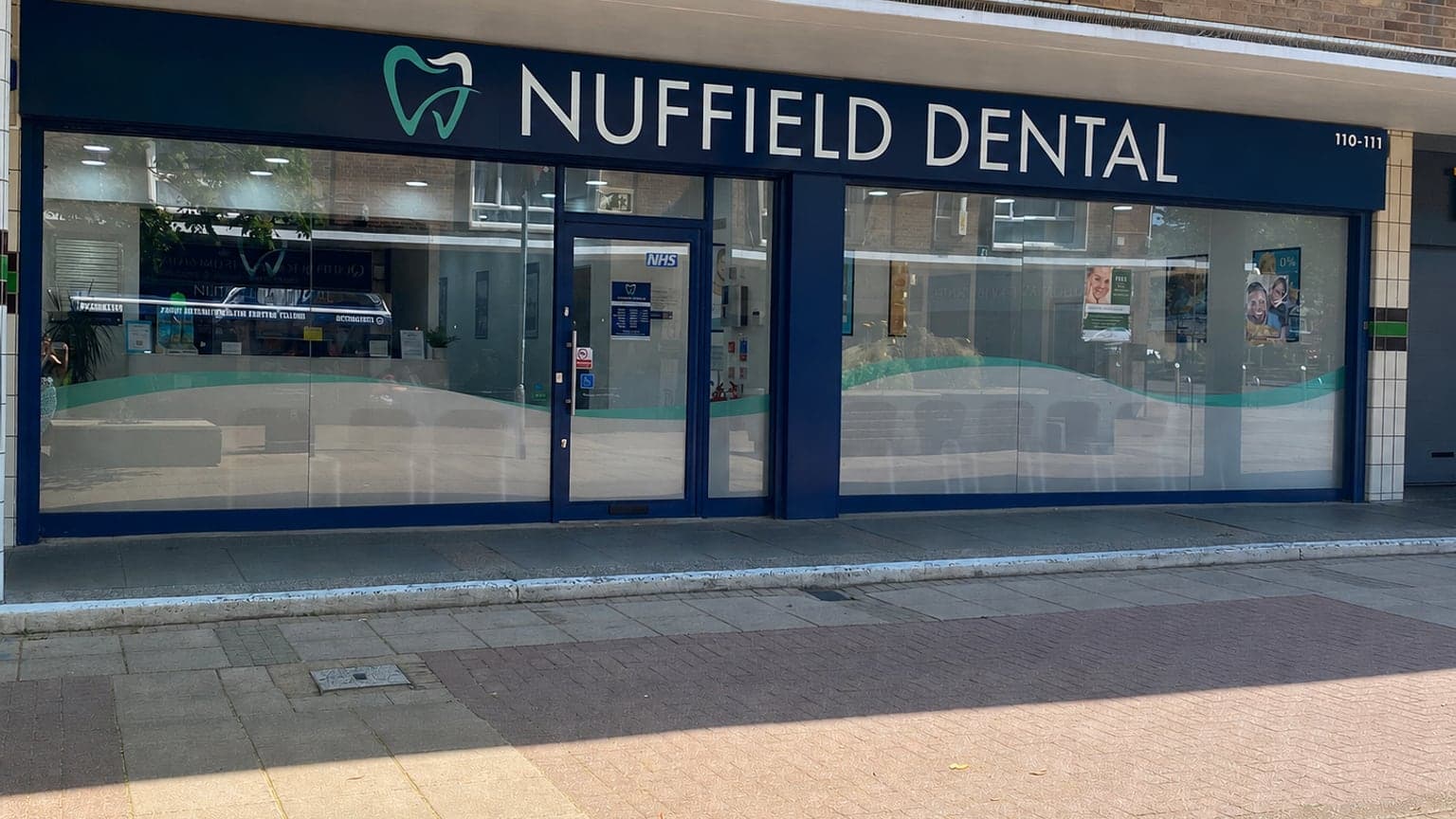
- Nuffield Dental Practice, Harlow: 01279 424 038
- Church Langley Dental, Harlow: 01279 306 690
- Enfield Smiles, Enfield: 020 8804 4320
Evening, weekend, or nowhere near us? Call NHS 111. If you're struggling to breathe or swallow, or swelling is spreading to your eye or neck, that's 999 or A&E.
What is a dental crown?
A crown is a new outer shell for a tooth. It covers every surface you can see, down to around the gum line, and once it's cemented it stays put. It isn't something you take out at night. Think of it as a bespoke helmet for a tooth that's been through the wars.
Tooth cap vs crown: is there a difference?
No. "Cap" is the everyday word, "crown" is the one on your treatment plan, and they mean exactly the same thing. What varies is the material.
Do I need a crown?
A crown is usually suggested when too much tooth has been lost for a filling to hold it together safely. As a rough guide, if more than half the tooth has gone, a crown is usually the safer option than another big filling. Common reasons are a very large filling, a cracked or broken tooth, heavy wear from grinding or acid, and a tooth that has had root canal treatment. Here's my rule: I'd always rather keep healthy tooth than remove it, so I'll look at smaller options first.
Crown or inlay: which does your tooth need?
An inlay or onlay is a lab-made piece that repairs part of a tooth rather than covering all of it, so it keeps more of your own tooth. It suits a tooth with healthy walls but too much damage for a filling. Not every practice offers them, so it's worth asking.
How much tooth do you need for a crown?
Less than you'd think, but it has to be the right bit: a collar of sound tooth just above the gum, all the way round, and a healthy root. Missing sections can often be rebuilt first with a core or a post.
Do you need a crown after a root canal?
Often, especially on back teeth, because a root-filled tooth is hollowed out and more likely to split. Front teeth don't always need one. Our root canal treatment guide explains why some teeth need that protection afterwards.
Dental bonding vs crown for a broken tooth
For a smaller chip or break, composite bonding can often repair a tooth in one visit with little or no drilling. For bigger breaks, a crown is usually the stronger option. You can read about composite bonding at Minti.
What types of crown are there?
There are three main families:
- Porcelain bonded to metal: a metal base with tooth-coloured porcelain on top. Long-standing and strong, and common on the NHS.
- All-ceramic, including zirconia and e.max: no metal, so light passes through more like a natural tooth.
- Gold or other metal: very durable and kind to the teeth they bite against, but not tooth-coloured.
The NHS says you may be offered a metal-coloured crown on a back tooth, and other materials may be available privately.
Porcelain vs zirconia crowns: which should you choose?
Both are tooth-coloured. The choice usually comes down to where the tooth is, how hard you bite or grind, and how closely it needs to match its neighbours.
Gold or metal crowns: are they still worth it?
For a back molar that nobody sees, a gold crown can be an excellent choice: it needs less tooth removed and has a very long track record.
Crown vs veneer: what's the difference?
A veneer is a thin facing on the front of a tooth, mostly for appearance. A crown covers the whole tooth and is about strength as well as looks. My veneers guide explains the types, costs and effect on your natural teeth.
Front tooth crown: cost and what to expect
Front crowns are all about the colour match. You leave the first visit with a tooth-coloured temporary, and if you want whitening, do it before the crown is made, because whitening doesn't change a crown's colour.
How much does a dental crown cost?
On the NHS in England, a crown is Band 3: £332.10 when I checked on 2 October 2026. That one charge covers the whole course of treatment, including the check-up, X-rays and any fillings or root canal treatment alongside. Some people get NHS treatment free or with help towards the cost. Private fees vary with the material, the lab and the practice. We'll always confirm yours in writing before we start, and our fees and finance page explains how payment works.
How much is a dental crown in the UK?
The fee depends on NHS or private treatment, material, front or back teeth, and whether the tooth needs work first.
How much is a crown on the NHS?
Clinically necessary crowns fall under Band 3 in England. Check current NHS charges and help with costs before your appointment.
What happens when you get a crown?
Most crowns take two visits, a couple of weeks apart. At the first, the tooth is numbed, shaped, scanned or measured, and given a temporary crown. A lab makes the permanent crown, and at the second visit it's checked for fit, bite and colour before it's cemented. At Minti, crowns are made by UK-based dental laboratories.
What happens at a crown appointment?
The dentist numbs and prepares the tooth, takes a scan or impression, and fits a temporary crown. At the second appointment, the permanent crown is checked and fitted.
My temporary crown fell off: what now?
It happens, because temporaries are fitted with weaker cement on purpose. Keep it, don't superglue it, and call the practice.
New crown sensitive to hot or cold?
Some sensitivity for a short while after a new crown is common and usually settles. If it's getting worse, lingering or throbbing, it needs a look.
Why does my crown still hurt when I chew?
The commonest reason is a crown that's sitting a touch high, which is a quick fix. It can also point to a problem underneath.
How long do dental crowns last?
Many years, with good care. Our crowns page gives 15 to 20 years for ceramic crowns and 20 to 30 years for gold, with proper maintenance, but treat those as a guide rather than a promise. What shortens a crown's life is mostly what damages natural teeth: decay creeping in at the edge, gum problems, grinding, and chewing things that aren't food. Brush twice a day with fluoride toothpaste, clean between your teeth daily, and keep up your check-ups.
When is a crown problem urgent?
I'll keep this part straight. A crown that's comfortable and intact can wait for your next check-up. These can't.
Lost crown: what to do, costs and when it's an emergency
If a crown has come off, keep it, keep the tooth clean, and call a dentist. My lost crown guide explains the immediate steps and when to get urgent help.
My crown fell off
Keep the crown in a safe container, avoid chewing on that tooth and contact a dentist. Do not use superglue to put it back.
My crown feels loose
A crown that wobbles, clicks or lets in a bad taste is worth seeing soon, before it comes off or decay gets underneath.
Call us today if:
- a crown has come off, feels loose, or has cracked
- the tooth under a crown aches, throbs, or keeps you awake
- it hurts to bite on, or your bite feels wrong after a new crown
- there's swelling of the gum or face, a bad taste, or a temperature
Call 999 or go to A&E, not a dentist, if:
- you're finding it hard to breathe, swallow or speak
- swelling is spreading towards your eye or down into your neck
- your eye is swollen or painful, or your eyesight suddenly changes
- you can't open your mouth properly because of swelling
If you're near Harlow or Enfield and you're weighing up a crown, or one is giving you trouble, I'd much rather take a look than have you choose a material or diagnose a problem from a search results page. Ring your nearest Minti practice to book. If it's come off, broken or painful, say it's urgent and we'll do our best to see you the same day. Anywhere else, or out of hours, call NHS 111.
This article is general information, not a diagnosis. Whether a tooth needs a crown, and which kind, can only be decided after an examination in person.