You've probably had a good look in the mirror lately. Maybe a zoom-in on a photo, a finger over one chipped edge, a squint at a shade that isn't quite matching its neighbours. Then you typed "veneers" into Google and got a wall of before-and-afters, price lists and very strong opinions. You're not alone. Veneers are one of the most common cosmetic questions I'm asked, and they deserve a calm, straight answer before anyone picks up a drill.
The short answer: veneers are thin coverings fixed to the front of teeth to change their colour, shape or size. They come in two main types: composite (tooth-coloured resin, usually built up on the tooth) and porcelain (thin ceramic shells made in a lab). Porcelain veneers usually need a thin layer of enamel removed first, and that can't be undone, so the tooth will always need a covering afterwards. In the UK, veneers for appearance are private treatment, and the fee depends on your teeth and the plan. Veneers aren't always the right answer: whitening, bonding or straightening can sometimes do the job with less or no drilling. You can read how we plan veneers on our dental veneers page and how fees work on our fees and finance page. If a veneer has broken or come off, or a tooth hurts, that's different: call my emergency dentist team in Harlow or Enfield, or NHS 111 if we're closed.
Thinking about veneers? Call your nearest Minti practice to book a consultation. If a tooth is painful, you've had a knock, or a veneer has broken or come off, tell reception it's urgent. I keep same-day appointments for pain and swelling wherever I can.
- Nuffield Dental Practice, Harlow: 01279 424 038
- Church Langley Dental, Harlow: 01279 306 690
- Enfield Smiles, Enfield: 020 8804 4320
Evening, weekend, or nowhere near us? Call NHS 111. If swelling is spreading to your eye or neck, or you're struggling to breathe or swallow, that's 999 or A&E.
What are veneers, and what types are there?
A veneer is a thin covering bonded to the front surface of a tooth. It changes what you see from the front, not what's underneath. Think of it as a new front on a kitchen cupboard: the shelves inside are the same shelves, and they still need looking after.
Composite vs porcelain veneers
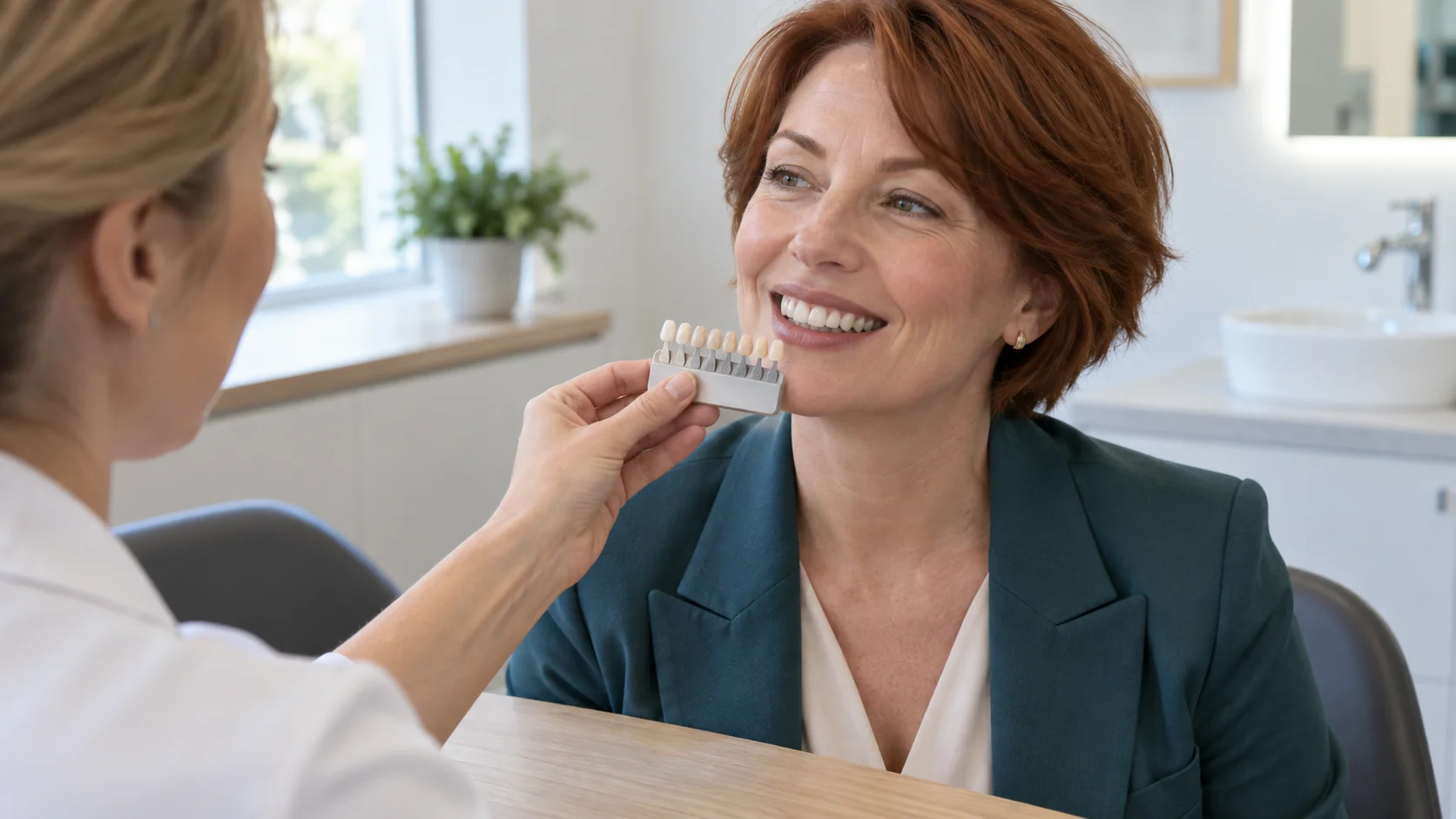
Composite veneers are made from tooth-coloured resin, usually shaped directly on the tooth in one visit, often with little or no tooth removed. They're easier to repair, but they stain and chip more readily. Porcelain veneers are made in a lab and fitted at a later visit. They generally last longer and hold their colour better, but they usually mean removing some enamel.
Emax veneers
You'll see "Emax" on a lot of price lists. It's a brand name for lithium disilicate, a type of glass-ceramic, so an Emax veneer is a porcelain veneer made from that particular material. It's strong for its thickness, but it still usually needs enamel removed and still needs looking after. The label matters less than whether veneers suit your teeth at all.
Clip-on veneers
Clip-on (or snap-on) veneers aren't veneers in the dental sense. They're removable covers, usually bought online and made from an impression you take at home, that slot over your own teeth. They aren't fitted or checked by a dentist, and there's very little research on them. The concerns raised in the dental press are about fit, bite and food and plaque held against the teeth and gums. They can also hide problems that need treating.
How much do veneers cost in the UK?
I don't put figures in articles, because a price without an examination is a guess. What I can tell you is what drives the fee, and what a good quote should include.
What goes into the cost
The Oral Health Foundation says costs vary between practices and your dentist should give you an estimate before starting. The fee depends on how many teeth, which material, what needs doing first (gums, fillings, sometimes straightening or whitening), and how much upkeep you're signing up for over the years. At Minti, you get the plan and fee in writing before any tooth is prepared.
Veneers on two front teeth
It's very often the front two that start the whole conversation. Two veneers can work well, but matching them to the natural teeth either side takes careful planning, and sometimes whitening, bonding or a repair is the better fix.
Can you get veneers on the NHS?
Not for cosmetic reasons. nhs.uk says the NHS provides clinically necessary treatment and that "you'll usually need to get cosmetic treatments privately" (page last reviewed 11 February 2025; checked 28 September 2026). Where a front tooth is broken, decayed or badly worn, repairing it is clinical treatment, and the NHS can offer options such as white fillings or crowns where they're clinically needed. Now and then a veneer may be the clinically appropriate repair, but that's the exception, not a route to a cosmetic makeover. At Minti, veneers are private only.
What happens to your teeth under veneers?
This is the question I most want people to ask before they book, not after. I'll keep this bit straight, because it's the part the before-and-after videos skip.
The tooth underneath
For most porcelain veneers, a thin layer of enamel is taken off the front of the tooth so the veneer sits flush rather than bulky. The tooth underneath is still your tooth: alive, with its own nerve and root. It can still decay at the edges and the gum around it still needs cleaning. The heavily filed-down "pegs" you may have seen online are usually a different, more destructive job altogether.
Are veneers permanent?
Porcelain veneers are generally treated as a permanent commitment. As we say on our veneers page, enamel doesn't grow back, so once a tooth has been prepared it will always need a veneer or a crown on it. Composite is more conservative, but the General Dental Council warns that removing composite completely without altering the enamel is extremely difficult. "Permanent" also doesn't mean "forever": the veneers themselves need repairing and replacing over time.
How long do veneers last?
The Oral Health Foundation says veneers can last many years if looked after properly, but they can chip, crack or come loose. Porcelain generally lasts longer than composite, and research on porcelain veneers shows most are still in place at five and ten years. How long yours last depends on the material, your bite and whether you grind. On our veneers page, I've said that grinding is the single most common reason a veneer chips or comes off, which is why a night guard can be part of the plan.
Are veneers the right choice for you?
Sometimes yes, sometimes no, and a good consultation should be happy to tell you either. My rule is simple: the least drilling that does the job well. Before veneers, I look at gum health, whether the teeth are in the right place (straightening first can mean less preparation), and the shade you want, because porcelain can't be whitened afterwards. So if whitening is on your list, it comes first.
Veneers vs crowns
A veneer covers the front of a tooth. A dental crown covers the whole tooth and generally means removing more of it, which is why crowns tend to be kept for teeth that are heavily filled, broken or root-treated. They're different jobs, not a better and worse version of the same one.
Veneers vs composite bonding
For small chips, gaps or uneven edges, composite bonding can often do the job with little or no tooth removed, and without a lab. It needs more upkeep than porcelain, but it keeps more options open.
Thinking about veneers abroad?
Lots of people from the UK travel for dental treatment, and plenty of skilled dentists work abroad. My aim isn't to talk anyone out of it. It's to make sure you ask the right questions, the same ones I'd want you to ask any clinic, including mine.
Veneers in Turkey
The GDC, the NHS and the British Dental Association give similar advice: talk to your own dentist first, get a written plan that says what's being done to each tooth, check who is treating you and whether they're insured, and know how aftercare and complaints work once you're home. It's also worth checking whether a plan is veneers, crowns or a mix, because they're different treatments.
Composite bonding in Turkey
If the plan abroad is bonding rather than veneers, the questions are much the same, plus a few about upkeep, because composite needs polishing and repairs over the years.
Problems after treatment abroad
If you're already home and something doesn't feel right, you can see a UK dentist. The NHS can help with urgent problems such as pain or infection, while redoing cosmetic work would normally be private. I can assess your teeth, wherever the work was done, and I won't judge you for it.
What if a veneer comes off or breaks?
It happens, even to well-made veneers. My article on Cardi B's veneers, their reported cost and the bagel incident looks at the confidence and upkeep behind a celebrity smile. Keep the veneer if you have it, in a clean container, and don't glue it back on yourself. A tooth that has been prepared can be sensitive without its covering, and a sharp edge can catch your tongue or cheek. Ring us and say what's happened.
How do I find out if veneers suit me?
Book a consultation. It's a conversation and an examination, not a commitment. I'll check your teeth and gums, ask what bothers you about your smile, and talk you through the options, including the ones that don't involve veneers. You'll get a written plan and fee before any tooth is touched, and time to think about it.
Call us today, and say it's urgent, if:
- a veneer has come off, cracked or broken
- you've had a knock to your front teeth
- a tooth under or next to a veneer is painful, throbbing or keeping you awake
- your gum is swollen around a veneered tooth, or there's a bad taste
- your bite suddenly feels different
Call 999 or go to A&E, not a dentist, if you're finding it hard to breathe, swallow or speak, swelling is spreading towards your eye or down into your neck, or you can't open your mouth properly because of swelling. After a blow to the face, go to A&E if you've also hit your head or feel drowsy or sick.
If you're near Harlow or Enfield and you're weighing up veneers, I'd much rather sit down with you and look at your teeth than have you decide from a filtered photo. Ring your nearest Minti practice to book a consultation. If something hurts or has broken, say it's urgent and we'll do our best to see you the same day. Anywhere else, or out of hours, call NHS 111.
This article is general information, not a diagnosis or a treatment recommendation. Your teeth need examining in person before any treatment is suggested, and results vary from person to person.