
Few words in dentistry clear a room faster than "root canal". Say it at a dinner party and someone will wince, someone will tell a story about their uncle, and someone will ask if it's true you can just have the tooth out instead. So if you've been told you need one and you've spent the evening reading horror stories, I understand. It's one of the most common worries I hear in my surgery. Most of what people fear about root canals is out of date, and the pain they remember is usually the toothache that came before it.
The short answer: root canal treatment removes the infected or inflamed pulp from inside a tooth, cleans the canals, then fills and seals them so you can keep the tooth. It's done under local anaesthetic, so it should feel like a long filling rather than an ordeal. The NHS says it usually takes two or more appointments. On the NHS in England it's Band 2, listed at £76.60 (checked 27 September 2026); privately, fees vary and are confirmed in writing first. Many back teeth need a crown afterwards. You'll find how I do it on my root canal treatment page. If a tooth is throbbing, keeping you awake or your face is swelling, call my emergency dentist team in Harlow or Enfield, or NHS 111 if we're closed or you're not local.
Toothache, swelling, or a root-filled tooth playing up? Call your nearest Minti practice and tell reception it's urgent. I keep same-day appointments for pain and swelling wherever I can.
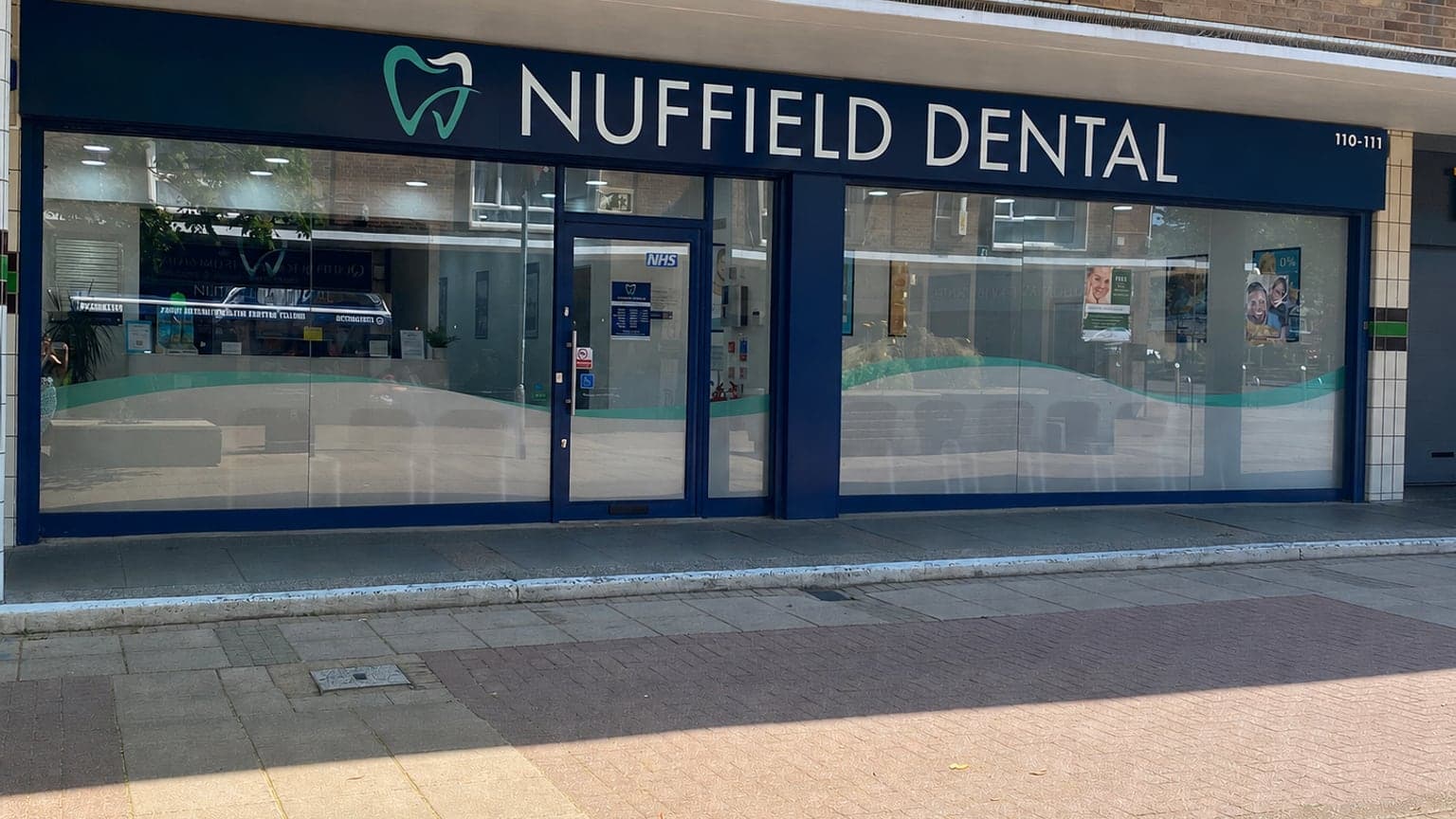
- Nuffield Dental Practice, Harlow: 01279 424 038
- Church Langley Dental, Harlow: 01279 306 690
- Enfield Smiles, Enfield: 020 8804 4320
Evening, weekend, or nowhere near us? Call NHS 111. If you're struggling to breathe or swallow, or swelling is spreading to your eye or neck, that's 999 or A&E.
What is root canal treatment and why would I need it?
Inside every tooth is the pulp: the soft core of nerve and blood supply that runs down through the roots in narrow channels called root canals. When deep decay, a crack, a knock or a leaky old filling lets bacteria in, the pulp gets inflamed and then infected. It can't heal itself once it gets to that stage, and because it's trapped inside a hard shell, the swelling has nowhere to go. That's why it hurts so much.
Root canal treatment is a deep clean for the inside of the tooth. The NHS describes the steps simply: make a small opening, remove the infected pulp, clean and shape the canals, then fill and seal them. The alternative, as the NHS puts it, is that you may need the tooth taken out. The British Endodontic Society says root canal treatment carried out to a good standard succeeds in up to 90% of cases.
Does root canal treatment hurt?
This is the question everyone asks first, so it gets its own section.
Is a root canal painful?
It shouldn't be. The Oral Health Foundation says the treatment itself should not be painful, because the tooth is numbed with local anaesthetic, just like a filling. You'll feel pressure and vibration, and you'll be lying back with your mouth open for a while, which is dull rather than painful. The British Endodontic Society puts it well: there's often pain before treatment, and the treatment relieves it. The root canal gets the blame for the toothache, a bit like the fire brigade getting blamed for the fire.
Pain after a root canal
Some soreness afterwards is normal. The NHS says the area may feel swollen and sore but should get better in a couple of weeks, and the American Association of Endodontists says most discomfort settles within a few days. Pain that's getting worse rather than better, or new swelling, isn't part of the plan.
Root canal recovery time
Most people go back to work the same day or the next. The numbness can last a few hours, so go easy with hot drinks and try not to chew your cheek. The AAE advises not chewing on the treated tooth until it has been properly restored.
What happens during root canal treatment?
Once the tooth is numb, I isolate it with a thin rubber sheet (a rubber dam) to keep it clean and dry, then remove the pulp, clean and shape each canal with fine files, and fill them with a rubbery material called gutta-percha. If the tooth needs more than one visit, it gets a temporary filling in between. Then it's sealed for good with a filling or a crown.
How long does a root canal take?
The NHS says it usually takes two or more appointments, each lasting one to two hours or sometimes longer. It depends mostly on the tooth: a front tooth with one canal is quicker than a molar with three or four narrow, curved ones.
Root canal on a front tooth
Front teeth are usually simpler, often done in one visit, and often don't need a crown. The main thing people worry about is the colour, since a tooth that has lost its nerve can darken over time, and there are ways to lighten it.
Emergency root canal
If you're in severe pain, an urgent appointment can often start a root canal the same day. The aim of that first visit is to get you out of pain, usually by removing the inflamed nerve or draining an infection, with the rest of the treatment finished at later visits. We'll find you a same-day slot wherever possible.
How much does a root canal cost?
NHS root canal cost
On the NHS in England, root canal treatment is Band 2, listed at £76.60, and that covers the whole course of treatment even if it takes several visits. If you need a crown as part of the same course, it's Band 3, listed at £332.10. Urgent NHS treatment is £27.90 and can include an emergency partial root canal (all checked 27 September 2026; page last reviewed 13 March 2025).
Private root canal cost
Private fees vary with the tooth, the number of canals, and whether a crown is needed. At Minti, fees are always confirmed in writing before treatment starts; see our fees and finance page.
Should I save the tooth or have it out?
Root canal or extraction
If the tooth can be saved and is worth saving, a root canal is usually the better choice, and that's the view of the NHS, the British Endodontic Society and the AAE as well as mine. Extraction makes sense when the tooth can't be restored or is cracked through the root. On the NHS both are Band 2; the difference comes when you want the gap filled. I weigh them up in root canal or extraction: which is better?
Do you need a crown after a root canal?
Often, especially at the back. The Oral Health Foundation notes that a root-filled tooth can become more brittle, and back teeth take the heaviest chewing forces, so a crown protects them from splitting. Front teeth often manage with a filling. You can read about dental crowns at Minti too.
What if a root-filled tooth causes problems later?
Most root-filled teeth get on with life quietly. When one doesn't, the pain comes from the tissues around the root, since the tooth itself can no longer feel hot or cold. Here's where to go next.
My root canal tooth has started hurting again
An ache months or years after treatment usually means infection has lingered or got back in, or there's a crack. It won't settle for good without a look.
Root canal tooth hurts when I bite
Tenderness on biting can be normal for a few days after treatment. If it goes on longer, or starts up later, it needs checking.
Swelling after a root canal
A little puffiness can happen early on. Swelling that grows, or appears later, is a reason to call the same day.
Failed root canal
If a root canal hasn't healed, the options are redoing it (retreatment), a small operation on the root tip (apicectomy, often by a specialist) or taking the tooth out.
Dental abscess treatment
A root canal is one of the main ways an abscess is treated, by draining the infection through the tooth.
When should I see a dentist?
Book an appointment if a tooth is sensitive or aching on and off, if a front tooth has darkened, or if a root-filled tooth still has only a temporary filling. The NHS advice is to see a dentist if toothache lasts more than two days.
Call us today if:
- a tooth throbs, aches by itself or kept you awake
- pain lingers after hot or cold, or it hurts to bite
- the gum is swollen, there's a pimple on the gum or a bad taste
- a root-filled tooth starts hurting or swelling
- you have a temperature or feel unwell
Call 999 or go to A&E, not a dentist, if:
- you're finding it hard to breathe, swallow or speak
- swelling is spreading towards your eye or down into your neck
- your eye is swollen or painful, or your eyesight suddenly changes
- you can't open your mouth properly because of the swelling
Until you're seen, the NHS advice for toothache is paracetamol or ibuprofen as the packet says, soft food, and avoiding very hot, cold or sweet things.
If you're near Harlow or Enfield, I'd much rather take a look at that tooth and talk you through your options than have you spend another night reading root canal horror stories. Ring your nearest Minti practice. If it's painful or swollen, say it's urgent and we'll do our best to see you the same day. Anywhere else, or out of hours, call NHS 111.
This article is general information, not a diagnosis. Tooth pain needs examining in person to find the cause.