
So. Your crown has come out, you've turned it over in your hand, and the tooth seems to be inside it. You've checked the mirror with your phone torch, found a stump or a hole, and quietly decided the tooth has gone. You're not imagining it, and you're not the only one. It's one of the most common things I hear in my surgery, and the gap nearly always looks worse than it is.
The short answer: when a crown falls out and there seems to be no tooth left, the root is nearly always still there under the gum. What's gone is the bit of tooth the crown was gripping. Whether it can be rebuilt, given a post, or needs to come out depends on how much sound tooth is left and how healthy the root is, and that needs an examination and usually an X-ray. Keep the crown, keep the area clean and book in within the next few days. If it hurts, there's swelling, a sharp edge is catching your tongue, or you think you've swallowed or breathed in a piece, call my emergency dentist team in Harlow or Enfield today, or NHS 111 if we're closed or you're not local. For the basics on any lost crown, see my lost crown guide.
Keep the crown in a clean, dry pot and bring it with you. Call your nearest Minti practice and tell reception what's happened. I keep same-day appointments for pain and swelling wherever I can.
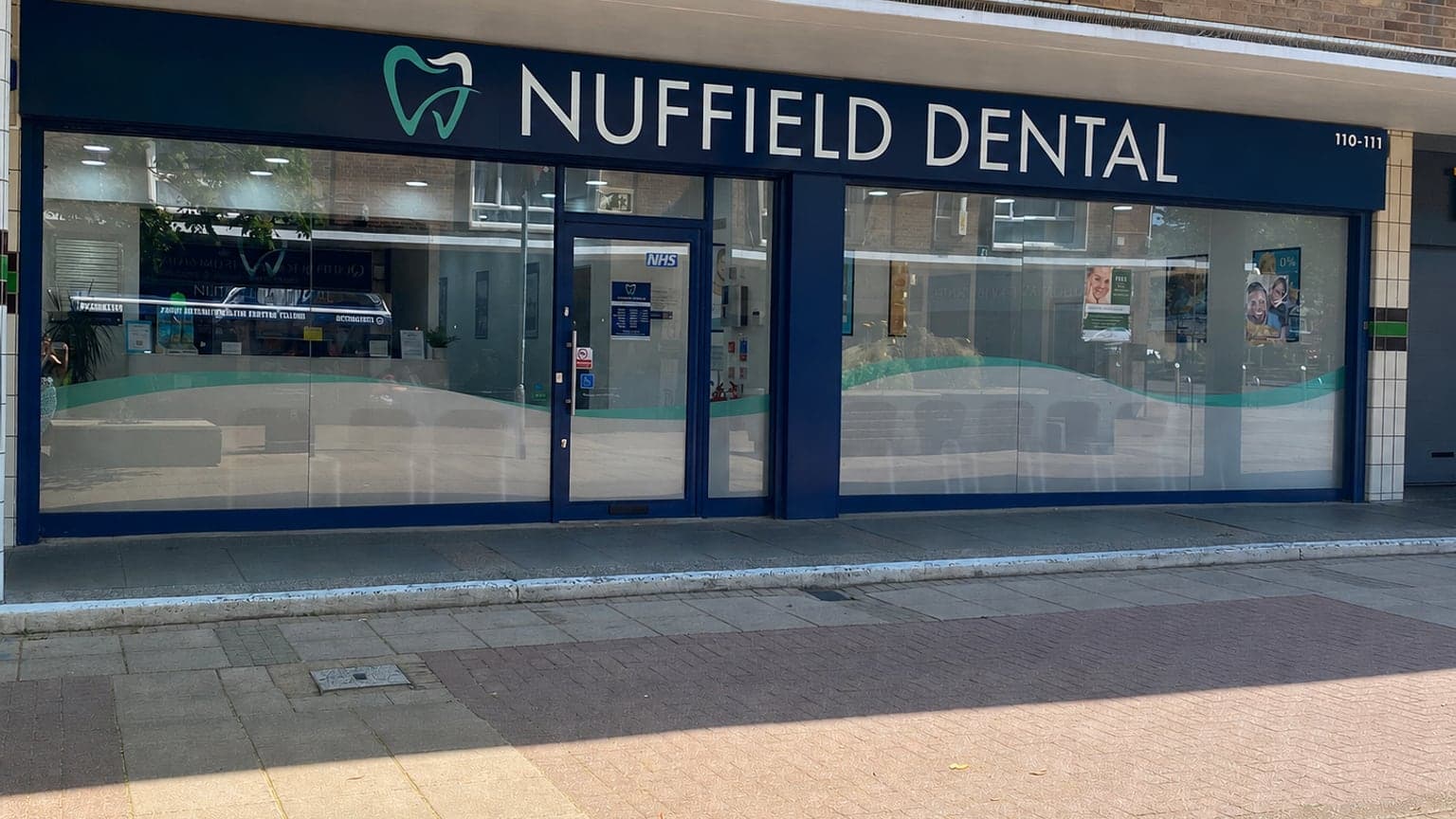
- Nuffield Dental Practice, Harlow: 01279 424 038
- Church Langley Dental, Harlow: 01279 306 690
- Enfield Smiles, Enfield: 020 8804 4320
Evening, weekend, or nowhere near us? Call NHS 111. If you're struggling to breathe or swallow, you're coughing or wheezy after the crown came loose, or swelling is spreading to your eye or neck, that's 999 or A&E.
Is there really no tooth left under the crown?
Almost never. A crown is a cap, and to fit one the tooth is shaped down to make room, so there's always less tooth under there than you'd guess. When the crown comes off with that core still inside it, what's left can look like nothing at all: a flat stump level with the gum, a dark spot, or a little crater.
Think of a tree after the chainsaw. The trunk has gone, but the roots are very much still in the ground. The first thing I want to know is whether that root is healthy and whether there's enough of it above the gum to build on.
A dark stump isn't automatically decay, either. Metal fillings and root-filled teeth can both look dark.
Why did the crown come out with the tooth still inside it?
There are a few usual reasons, and none of them means anyone did anything wrong. Crowns last many years, but not forever.
- Decay at the edge. The weak spot of any crown is the join where it meets the tooth. Decay can creep in there quietly, soften the tooth inside, and eventually the whole lot lets go.
- A root-filled tooth. Root canal treatment is one of the main reasons a tooth gets a crown in the first place, because it has usually lost a lot of structure already. What's left can snap off inside the crown.
- A hard bite. A pork bone, a toffee, a jaw that clenches at night. Sometimes the tooth simply loses the argument.
Often it's a mix. If the crown felt wobbly for a while first, that's a clue too.
Can a crown go back on with so little tooth left?
Sometimes, but usually not the same crown on its own. A crown needs something to grip, like a jam jar lid needs a rim. If the core of the tooth is still inside the crown, there's nothing left underneath to hold it, and cementing it back onto a flat stump is like putting a lid on a plate.
What I look for in the chair is how much firm tooth sits above the gum all the way round. If there's enough, the tooth can often be built back up with a core, sometimes held by a post in the root if it's been root treated, and then a new crown made over it. If there's very little, other options come in. I'll be straight with you: I can't predict this from a description. Two stumps that look identical in the mirror can have very different answers on an X-ray.
One thing I say to everyone: please don't glue it back on yourself. Household glue isn't made for mouths, and cementing a crown over a broken or decayed stump can trap the problem underneath. A pharmacy temporary repair kit can cover a sharp or sensitive stump for a few days, but it's a stopgap, not a fix.
What are the options if the tooth can't hold a crown?
If the root is healthy but there isn't quite enough tooth above the gum, there are sometimes ways to gain a little more, such as a small gum procedure or gently moving the root up with a brace. If the root is cracked, or badly broken or decayed well below the gum, taking it out may be the kinder option.
Losing the tooth isn't the end of the story. A gap can be filled with a bridge, a denture or an implant, and some people choose to leave a gap at the back alone. If the root needs root canal treatment first, that comes before any new crown.
On cost: on the NHS in England, crowns, bridges and dentures sit in the top charge band, Band 3. Private fees vary with what's needed and are always confirmed in writing before treatment starts; our fees and finance page explains how it works.
When should I call, and is it an emergency?
Most of the time, a crown falling out with no pain isn't an emergency. It still needs seeing soon, because an uncovered stump is more exposed to decay and breakage. My rule: book in within a few days, not a few months.
Until then, the NHS advice is simple: keep brushing twice a day with fluoride toothpaste, including gently around the stump, avoid biting hard foods on that side, and skip very hot or cold food and drinks if it's sensitive.
Call us today if:
- the tooth or gum hurts and painkillers aren't keeping on top of it
- there's swelling of the gum or face, a bad taste, or a temperature
- a sharp edge is cutting your tongue or cheek
- it was a root-filled tooth and it's started to ache
- you think you swallowed the crown or part of it and feel fine
Call 999 or go to A&E, not a dentist, if:
- you're finding it hard to breathe, swallow or speak
- you think you've breathed in the crown or a piece of tooth, especially if you're coughing, wheezy or short of breath
- swelling is spreading towards your eye or down into your neck
- you can't open your mouth properly because of swelling
If you're near Harlow or Enfield, I'd much rather take a look than have you inspecting that stump by torchlight all week. Ring your nearest Minti practice, bring the crown, and tell us what happened. If it hurts or there's swelling, say it's urgent and we'll do our best to see you the same day. Anywhere else, or out of hours, call NHS 111.
This article is general information, not a diagnosis. A lost crown needs examining in person to find the right next step.