
You've been told a tooth needs a crown, you nodded politely in the chair, and the moment you got home you typed "how much is a dental crown" into Google. Now you've got a dozen tabs open, every one with a different number, and at least one that seems to be pricing a crown made of moon rock. You're not alone. Cost is one of the first things people ask me about crowns, and it's a perfectly fair question.
The short answer: on the NHS in England, a crown is a Band 3 treatment, which costs £332.10 (checked on the NHS site on 19 October 2026). That one charge covers the whole course of treatment, including your examination, X-rays and any fillings or root canal work done in the same course. Private crown fees vary from practice to practice, mainly with the material and how much work the tooth needs, so there's no single "UK price", and any private fee should be confirmed in writing before treatment starts. To find out what your tooth needs, book a dental check-up, see how our dental crowns work, and read our fees and finance page. My full guide to dental crowns covers types and lifespan. If you're in pain, swollen or a crown has come off or broken, that's different: call my emergency dentist team in Harlow or Enfield, or NHS 111 if we're closed.
Want to know what your tooth needs, and what it'll cost? Call your nearest Minti practice to book. If it's painful, swollen, or a crown has come off, tell reception it's urgent. I keep same-day appointments for pain and swelling wherever I can.
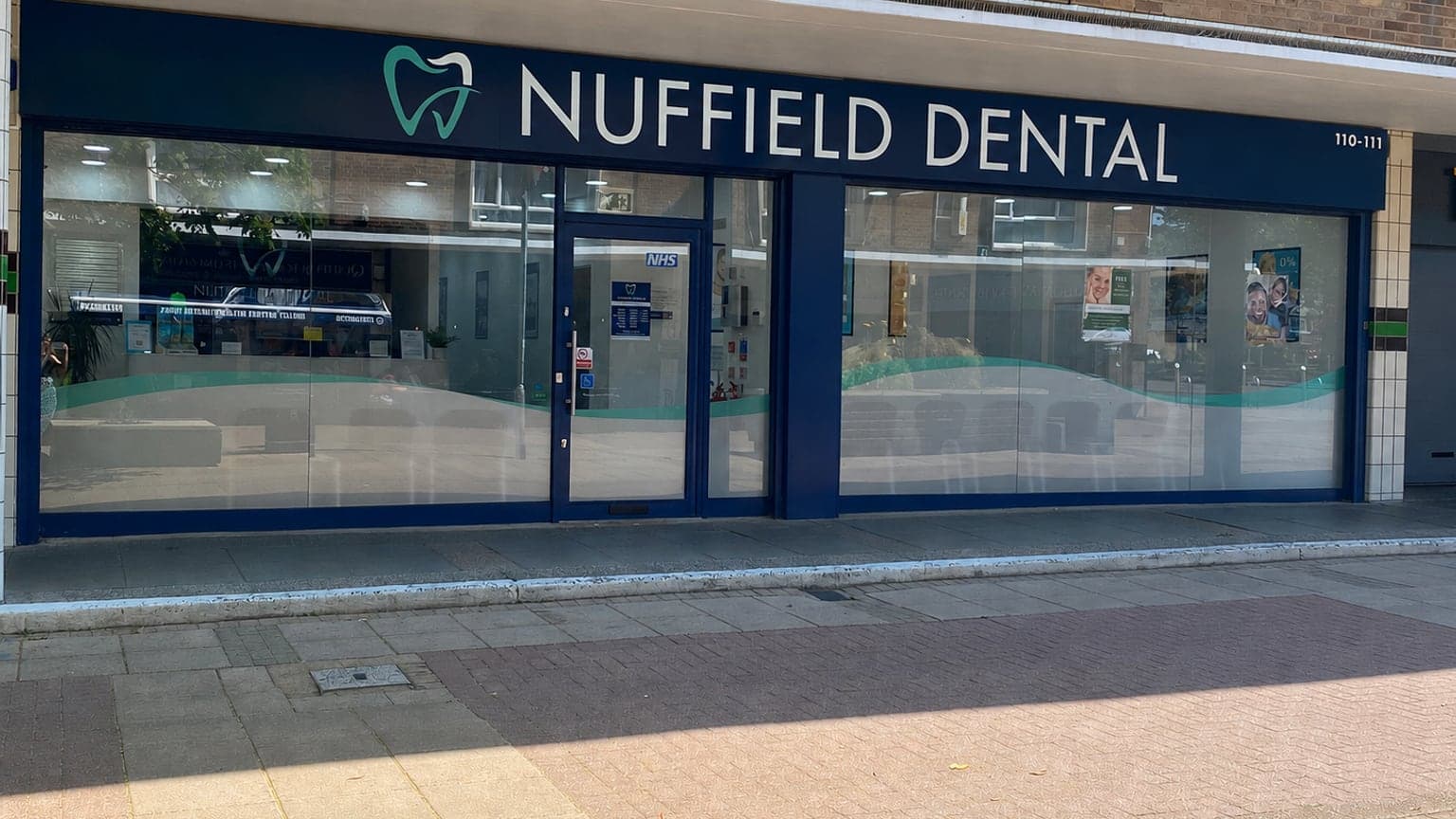
- Nuffield Dental Practice, Harlow: 01279 424 038
- Church Langley Dental, Harlow: 01279 306 690
- Enfield Smiles, Enfield: 020 8804 4320
Evening, weekend, or nowhere near us? Call NHS 111. If swelling is spreading to your eye or neck, or you're struggling to breathe or swallow, that's 999 or A&E.
How much is a crown on the NHS?
NHS dental charges in England come in three bands, plus an urgent charge. You pay one charge per course of treatment, not per tooth. These are the figures on nhs.uk, checked on 19 October 2026 (page last reviewed 13 March 2025):
- Band 1, £27.90: examination, diagnosis and advice, X-rays, and a scale and polish if clinically needed.
- Band 2, £76.60: everything in Band 1, plus treatment such as fillings, root canal treatment and extractions.
- Band 3, £332.10: everything in Bands 1 and 2, plus crowns, dentures and bridges.
- Urgent treatment, £27.90: urgent care to get you out of pain.
So if one tooth needs a root canal and then a crown, and another needs a filling, all in the same course of treatment, that's still one Band 3 charge. I think of Band 3 as the "all you can eat" ticket: expensive for one dish, better value if the table is full. The NHS says that if you need a mix of treatments from different bands, you pay the highest band once.
These figures are for England only. Wales, Scotland and Northern Ireland set their own charges. Some people don't pay at all; there's more on that in how much is a crown on the NHS.
How much is a private crown?
I'll be straight with you: there isn't a reliable national average I'm happy to give you. The consumer group Which? gathered private prices from practice websites in May 2026, and it leaves the private "starting from" figure for crowns blank. The NHS, the British Dental Association and the Oral Health Foundation don't publish a typical private crown price either.
What I can tell you is how it should work. The NHS says your dentist should tell you the cost before starting any treatment. Which? says to always confirm the total cost before committing, so there are no surprises. That's how we do it too: once I've examined the tooth, you get a written plan with the fee on it before we start. Our fees and finance page explains how payment works at Minti.
A price quoted for "a crown" without anyone seeing your tooth is like a mechanic quoting for "a car repair". It might be right. It'd be a lucky guess.
At Minti, published private crown fees start from £640 in Harlow at Nuffield Dental Practice or Church Langley Dental, and £550 in Enfield at Enfield Smiles. These are starting prices, not fixed prices for every crown. Your exact fee depends on your case and is confirmed at your examination. Our fees and finance page lists these fees without separate prices for porcelain, zirconia or gold; ask us to explain the material and fee in your treatment plan.
Why do crown prices vary so much?
Mostly because "a crown" isn't one thing. The main factors are:
- The material. The Oral Health Foundation lists porcelain bonded to metal, all-porcelain, all-ceramic and gold. Which? notes that newer materials such as zirconia and Emax (lithium disilicate) will likely cost more, and precious metals such as gold carry their own cost. My guide to porcelain vs zirconia crowns compares the tooth-coloured options, and gold or metal crowns covers the metal ones.
- Where the tooth is. A front tooth has to match its neighbours in shade and shape, which takes more care than a back molar nobody sees unless you yawn at them.
- What the tooth needs first. A tooth with a big old filling, a lot of decay or a root filling may need building up before a crown can go on. That's extra work, and privately it's usually extra cost.
Is an NHS crown different from a private one?
The real difference is mostly about material and looks, not about whether the tooth is looked after properly. The NHS says you may be offered a metal-coloured crown on a back tooth, and that you can discuss other options available privately with your dentist, including the risks, benefits and costs. Which? describes NHS crowns as typically having a metal core with a porcelain wrapping, with a more limited choice of shades.
On the NHS, the material is chosen on what the tooth clinically needs, not on appearance. For a back tooth doing heavy chewing, a metal or metal-based crown can be a perfectly good choice. Where people often choose private is a front tooth, or when they want a metal-free crown. Sometimes a crown isn't the right tool at all: see crown vs veneer.
Either way, the tooth underneath is what decides how long a crown lasts, along with how you look after it. There's more on that in how long do dental crowns last.
What can add to the cost of a crown?
The usual extras, so the written plan doesn't come as a shock:
- Root canal treatment if the nerve is inflamed or infected. See our root canal treatment page.
- A core or post to rebuild a badly broken tooth so the crown has something to hold on to.
- Replacing a crown later. The NHS says crowns may need to be replaced in the future, so it's a long-term cost, not a one-off.
And sometimes the cheapest crown is the one you don't need. For a chipped or broken tooth, bonding may be an option; I compare the two in dental bonding vs crown for a broken tooth.
When should I book, and when is it urgent?
If you've been told you need a crown and the tooth isn't hurting, book an ordinary appointment. I'll examine it, take an X-ray if needed, go through the materials and the costs, and make sure you have the fee in writing before anything happens.
Call today, and say it's urgent, if:
- the tooth is painful, keeping you awake, or painkillers aren't helping
- your gum or face is swelling
- a crown has come off, broken or feels loose (see lost crown, my crown fell off and my crown feels loose)
Call 999 or go to A&E, not a dentist, if:
- you're finding it hard to breathe, swallow or speak
- swelling is spreading towards your eye or down into your neck
- your eye is swollen or painful, or your eyesight suddenly changes
- you can't open your mouth properly because of swelling
If you're near Harlow or Enfield, I'd much rather take a look at the tooth and give you a clear plan with the cost in writing than have you comparing prices for a tooth nobody has examined. Ring your nearest Minti practice to book. If it's painful, swollen or the crown has come off, say it's urgent and we'll do our best to see you the same day. Anywhere else, or out of hours, call NHS 111.
This article is general information, not a diagnosis or a quote. What a tooth needs, and what it costs, can only be confirmed after an examination.