By Dr Nishma Kotecha, dentist
Every week, someone shows me an advert for cheap dental implants. Sometimes it's on Instagram. Sometimes it's a leaflet. Sometimes it's a package deal abroad with flights and a hotel thrown in.
And every time, I have the same reaction: how?
Because I know what goes into placing an implant properly. I know what the materials cost, what the scans cost, and what a good dental lab charges. And some of the prices I see advertised are lower than our own lab fees and bills for the same job. Not our price to the patient. Our costs.
That worries me. And I think patients deserve to know why.
The short answer: dental implants aren't cheap to do well. When the price is far below what's usual, something has usually been cut: cheaper implant components or lab work, less planning and technology, less time, or less aftercare. Any of those can raise the chance of problems later. That doesn't mean every lower price is dangerous, but it does mean you should ask exactly what you're paying for. If implants feel too expensive, that's completely understandable. They are a big investment, and options like spreading the cost with finance or considering alternatives are far safer than going for the cheapest quote. (If you're comparing options, I've also covered dental bridges and dentures.)
Remember when Botox was cheap everywhere?
Think back a few years. Botox and fillers were suddenly available everywhere, often for a fraction of the price you'd pay with a doctor, dentist or nurse. Beauty salons, pop-up clinics, house parties. It looked like a bargain.
Then the stories started. Botched results, infections, and people needing medical help to fix what had gone wrong. In 2022, the government took powers to bring in a licensing scheme for Botox and fillers, with the Health Secretary saying that "far too many people have been left emotionally and physically scarred after botched cosmetic procedures".
And in 2025, the UK Health Security Agency investigated 41 confirmed cases of botulism linked to cosmetic Botox injections in England. Thirty-two people were admitted to hospital, and eight needed intensive care. Most of them had been given products that weren't licensed for use in the UK.
Cheap Botox looked like a bargain, until it wasn't.
Now, implants are different in one important way. In the UK, implants have to be placed by a registered dental professional, so this isn't about beauticians doing dentistry. But the lesson is the same. When something medical is sold at a price that seems too good to be true, the savings have to come from somewhere. And it's usually somewhere you can't see.
What actually goes into an implant
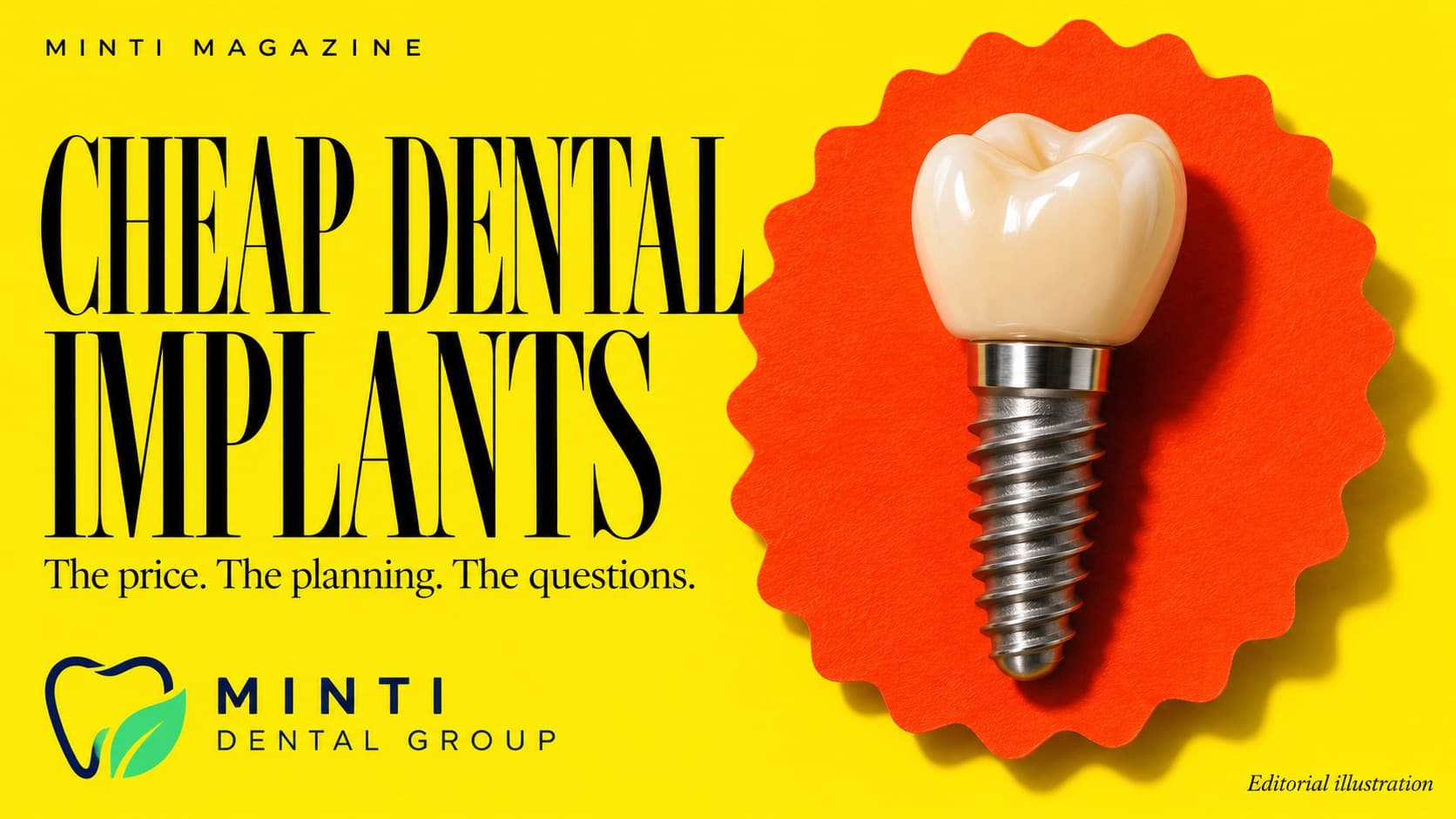
To understand why cheap implants worry me, it helps to know what you're actually paying for. A dental implant isn't just a screw. According to the Oral Health Foundation, it's a small titanium post placed into the jawbone to act as a tooth root, which then holds a crown, bridge or denture.
Done properly, the process involves:
- A thorough consultation, checking your teeth, gums and jawbone.
- Scans and planning, so the dentist knows exactly how much bone there is and where nerves and sinuses sit.
- The implant itself, plus the connecting part (the abutment) and the crown or bridge on top.
- Placing the implant, in a clean, safe surgical setting.
- Healing time, usually around four months, according to the Oral Health Foundation.
- Fitting the final tooth, often made by a specialist dental lab.
- Follow-up and maintenance, to keep the implant healthy for years.
Every one of those steps has a real cost. When a price is very low, I always want to know which step is missing.
1. Cheaper materials
Not all implants are made equal.
There are implant systems from well-established manufacturers, backed by years of research and long-term results. And there are cheaper systems with much less evidence behind them.
That matters more than people think. An implant is meant to sit in your jaw for many years. If the brand used is little-known or disappears, it can be hard for another dentist to find compatible parts to repair or replace the top section in future. You can be left with an implant that nobody can easily work on.
The same goes for what sits on top. A crown made by a skilled lab, from good-quality materials, is very different from one made as cheaply as possible. It affects the fit, the strength, how it looks next to your other teeth, and how easy it is to keep clean.
You won't see any of this in an advert. But you'll feel it if something goes wrong.
2. Less technology and less planning
Good implant treatment is all about planning.
Before placing an implant, a dentist needs to know how much bone you have, how wide and deep it is, and exactly where important structures like nerves and sinuses are. Detailed 3D scanning helps with that. Digital planning, and sometimes surgical guides, help the dentist place the implant in the right position, at the right angle.
All of that costs money: the equipment, the software, the training and the time.
Cutting corners here might mean relying on more basic X-rays, rushing the planning, or skipping steps like bone grafting when the bone isn't really sufficient. That's a bit like building a house without properly surveying the ground first. It might look fine on day one. The problems show up later.
3. A higher chance of things going wrong
Implants are a well-established treatment, and when they're planned and placed well, they can last for many years. But the Oral Health Foundation is clear that there's no lifetime guarantee.
Things that can go wrong include:
- Peri-implantitis, an infection around the implant that the Oral Health Foundation says can cause red, swollen or bleeding gums and, in some cases, loosening and loss of the implant.
- The implant not fusing with the bone properly.
- Poor positioning, which can make the crown look wrong, feel awkward or be hard to clean.
- Nerve or sinus problems, if the planning wasn't careful enough.
- Loose or broken components, particularly if the parts or lab work aren't up to standard.
Some of these can happen even with the best care, because bodies are bodies. But rushed treatment, poor planning and cheap components can make them more likely. And fixing a failed implant is usually much more complicated, and expensive, than doing it properly the first time. I've written before about what happens when a crown comes off, and a failed implant can be a much bigger job than that.
4. The numbers don't add up
This is the part that really gets me.
As a practice owner, I see the bills. Our lab fees alone, for the high-quality crowns and components we use, are higher than what some places advertise as their total price for an implant. And that's before you add the implant itself, the scans, the surgical setup, the clinical time, the sterilisation, the insurance and the aftercare.
So when I see a very low headline price, I can only think of a few explanations:
- The price isn't the full price. It might cover the implant post only, with the abutment, crown, scans or bone grafting charged on top.
- Something has been cut. Cheaper parts, cheaper lab work, less planning, or less time.
- Aftercare isn't included. Who sees you if something goes wrong in two years' time?
None of these are things a patient can spot from an advert. Which is exactly why I think people need to know to ask.
What about implants abroad?
Many people consider travelling abroad for cheaper implants. I understand why. The prices can look very tempting.
Some clinics abroad do excellent work, and I don't want to tar everyone with the same brush. But there are extra things to think about. Implant treatment often needs several visits over months. If you have a problem once you're home, getting back to the original clinic can be difficult and costly. And dentists in the UK may not be able to work easily on implant systems they don't recognise.
If you do go abroad, make sure you know exactly which implant system is being used, get copies of your records and scans, and have a clear plan for aftercare at home.
Questions to ask before you book
Whoever you see, and whatever the price, these questions protect you:
- What exactly does the price include? The implant, abutment, crown, scans, any bone grafting, and follow-up?
- Which implant brand do you use? Is it well-established, and could another dentist work on it in future?
- Will I have a 3D scan before treatment?
- Who makes the crown, and from what material?
- Who's placing the implant, and what's their training and experience?
- What happens if something goes wrong? Is there a guarantee, and what does it cover?
- What aftercare will I need, and how much will it cost?
A good dentist will be happy to answer every single one of these. If anyone is vague or rushes you, that tells you something.
If implants feel too expensive, that's okay
I want to say this clearly, because I never want anyone to feel embarrassed about cost.
Implants are not cheap. If the price feels like a lot, that's because it is a lot. It's completely understandable to want to spread the cost, or to look at other options.
Many practices offer finance to help break the cost into monthly payments. And implants aren't the only way to replace a missing tooth. Bridges and dentures can be good, more affordable alternatives for many people. Your dentist should talk you through all of them.
What I'd gently urge you not to do is choose an implant purely because it's the cheapest. A missing tooth is frustrating. A failed implant can be far worse.
Looking after an implant, wherever you had it
However much you paid, the Oral Health Foundation advises:
- brushing twice a day with fluoride toothpaste
- cleaning around the implant every day with interdental brushes
- going for regular dental and hygiene check-ups, with a hygienist if you can
Healthy gums are essential for healthy implants. If you notice bleeding, swelling or soreness around an implant, get it checked. Here's what gum disease looks like.
A few quick questions
Why are some dental implants so cheap? Usually because something has been cut, such as cheaper implant components or lab work, less planning and scanning, less clinical time, or limited aftercare. Some low prices also don't include the crown or other essential parts.
Are cheap dental implants safe? Not always. A lower price isn't automatically unsafe, but it's important to ask what's included, which implant system is used, and what aftercare you'll get.
How long do dental implants last? They can last many years with good care, but the Oral Health Foundation says there's no lifetime guarantee.
What if I can't afford implants? Ask about finance options, and about alternatives such as bridges or dentures. These are often safer choices than going for the cheapest implant quote.
The verdict
Cheap Botox looked like a bargain, until people ended up in hospital. I don't want implants to go the same way.
A dental implant is a medical procedure, placed into your jawbone, meant to last for years. The materials, the planning, the lab work and the aftercare all matter, and all of them cost money. When a price seems too good to be true, ask what's been left out.
If implants are too expensive right now, that's okay. Spread the cost, or look at other options. But please don't let the cheapest advert make the decision for you. When it comes to implants, you really do get what you pay for.
This article is general information. It is not personal dental advice.