So. You've got a gap, someone has mentioned the word "bridge", and you've spent the evening opening price lists in eleven tabs, each one with a different number and a footnote. By tab nine the numbers had stopped meaning anything. You're not the only one doing this, and it's a fair question. It's one of the most common things I hear in my surgery.
The short answer: on the NHS in England, a dental bridge is Band 3 treatment, which is £332.10 for the whole course (checked on nhs.uk on 22 October 2026). Privately, there's no single UK price: it depends on the type of bridge, how many teeth it replaces and what it's made from, so the only figure worth trusting is the one written on your own treatment plan. At Minti we do both NHS and private dental bridges, and private fees are confirmed in writing before we start (see our fees and finance page). If you want the bigger picture first, my guide to dental bridges: types, costs and how long they last covers it.
Cost isn't urgent. Pain is. If a tooth under a bridge is aching, your gum is swollen, or the bridge is loose or has come off, call my emergency dentist team in Harlow or Enfield, or NHS 111 if we're closed or you're not local.
Want a proper answer on cost? Book a consultation at your nearest Minti practice. I'll check the gap and the teeth either side, tell you which options suit you, and you'll get the fees in writing before anything happens.
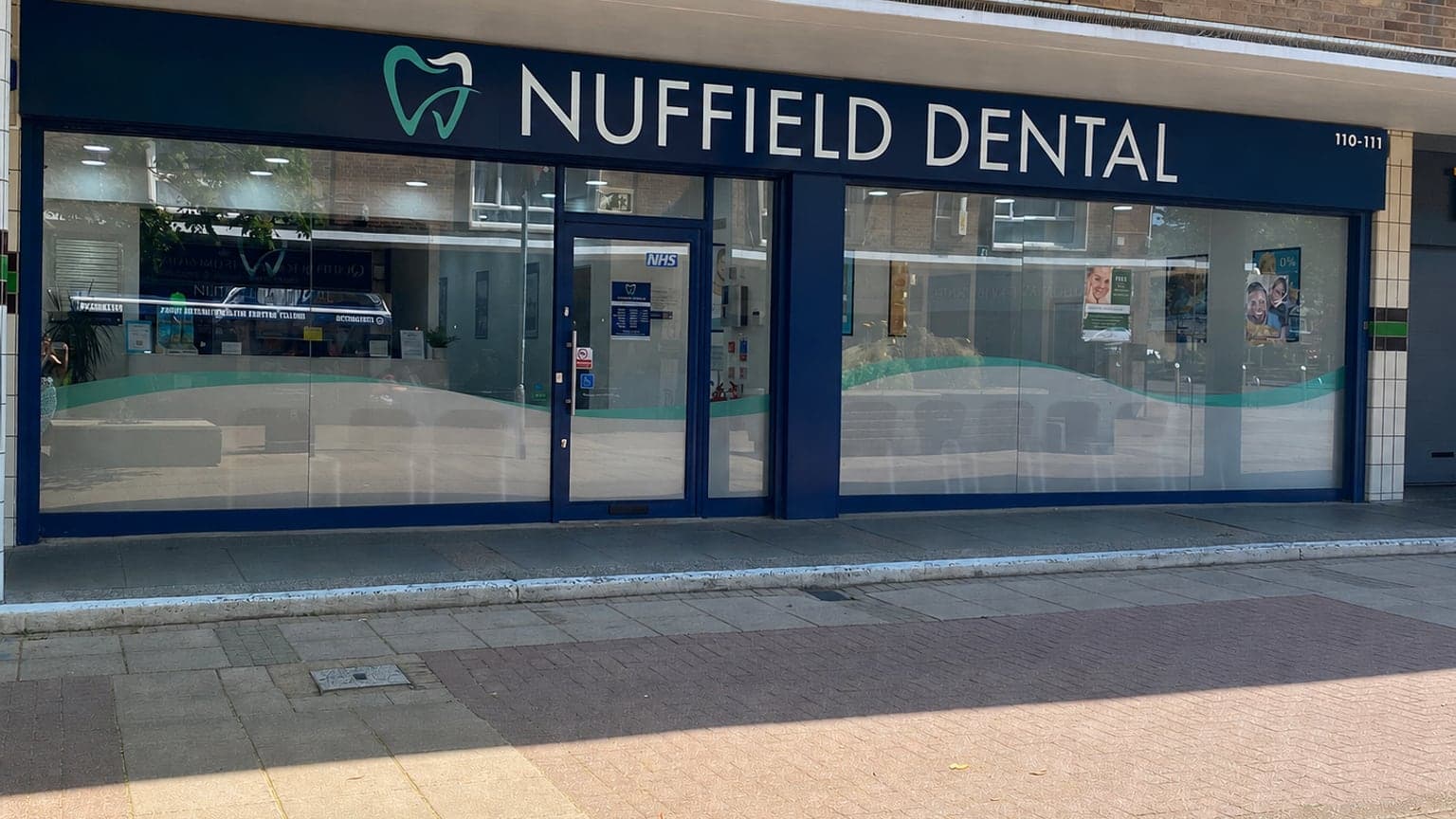
- Nuffield Dental Practice, Harlow: 01279 424 038
- Church Langley Dental, Harlow: 01279 306 690
- Enfield Smiles, Enfield: 020 8804 4320
Pain, swelling, or a loose or broken bridge? Tell reception it's urgent. I keep same-day appointments for pain and swelling wherever I can. Evening, weekend, or nowhere near us? Call NHS 111. If swelling is making it hard to breathe or swallow, that's 999 or A&E.
How much is a dental bridge on the NHS?
The NHS puts bridges in Band 3, alongside crowns and dentures. Band 3 is £332.10 in England, and that's one charge for the whole course of treatment, including the check-up, X-rays and any fillings you need beforehand. You don't pay per tooth.
Some people don't pay at all. The NHS says treatment is free if you're under 18, under 19 and in full-time education, pregnant or have had a baby in the last 12 months, or getting certain benefits. If money is tight, the NHS Low Income Scheme can help too.
The NHS provides what's clinically necessary to keep your mouth healthy. So a bridge on the NHS is a sound, functional bridge, but the choice of design and material is guided by what your mouth needs rather than by preference.
Why do private bridge prices vary so much?
Asking what a private bridge costs is a bit like asking what a house costs. Two bedrooms or five? Zone 1 or the Essex border? Everyone can quote you a number, and none of them is about your house.
The Oral Health Foundation says the cost depends on the type of bridge, the number of teeth involved and the materials used. In my chair, the things that move the price are:
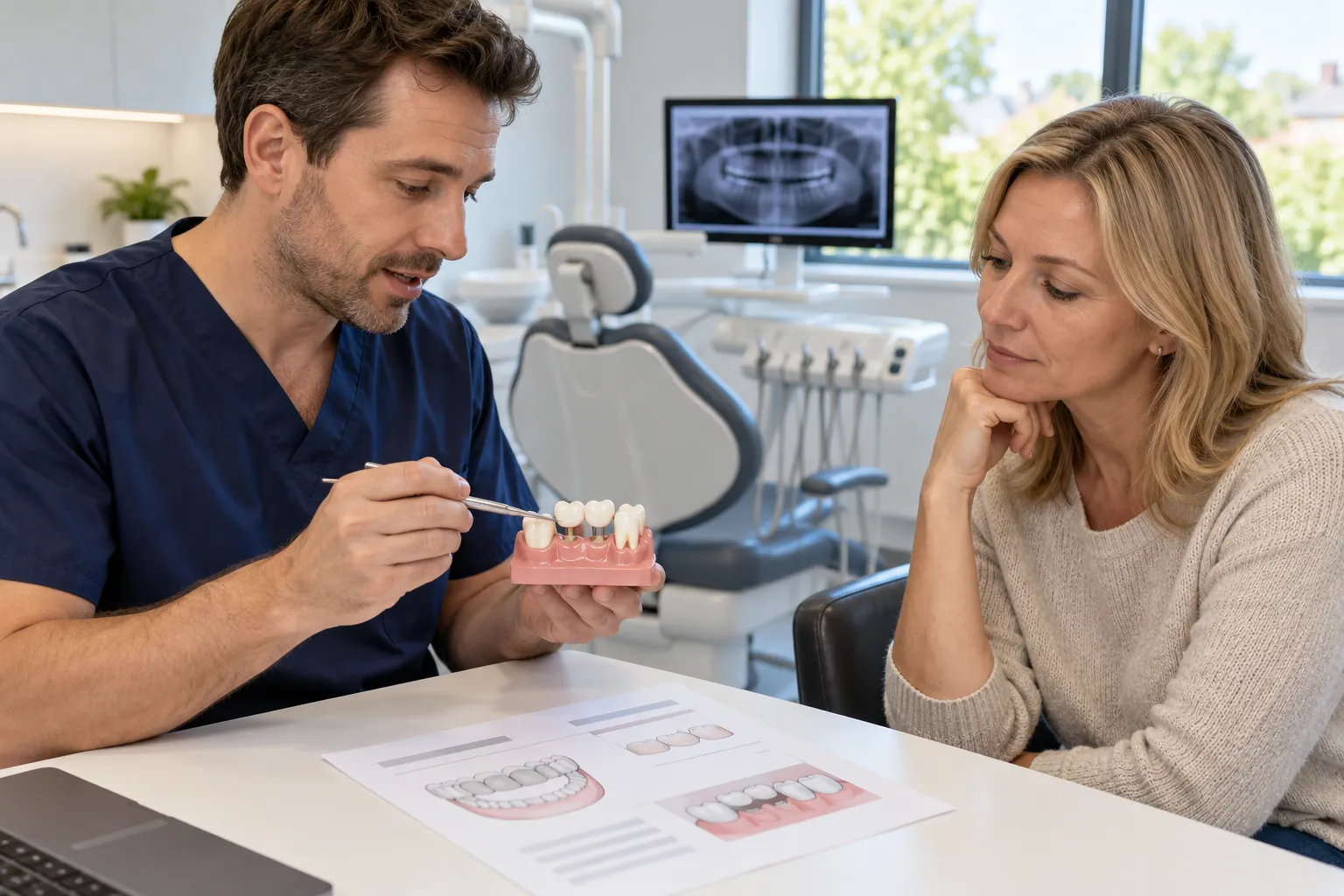
- The type of bridge. A conventional bridge crowns the teeth either side. A Maryland bridge glues small wings onto the back of them. A cantilever hangs off one tooth. More preparation and more lab work usually means more cost.
- How many teeth it replaces. One missing tooth is simpler than three.
- The material. Porcelain fused to metal, all-ceramic and zirconia all cost different amounts to make.
- What needs doing first. Gum treatment, a filling on a support tooth or a root canal can all come before the bridge itself.
That last one is the one people forget. A bridge is only as good as the teeth holding it up. I'll always sort the foundations before I build on them. That's why a price quoted without an examination isn't really a price.
Which? advises getting a detailed written cost for your exact treatment after your first assessment, and confirming the total before you commit. I agree completely. At Minti, private fees are set out in writing before treatment starts, and our fees and finance page explains how payment works.
Does the type of bridge change the cost?
Yes, and it changes more than the cost. Here's the quick version:
- Conventional (fixed-fixed) bridge. A false tooth held by crowns on the teeth either side. The teeth get shaped, so it's a bigger job, but it's the classic design for a reason.
- Maryland bridge. The false tooth is held by thin wings bonded to the back of the neighbouring teeth, with little or no drilling. Usually used at the front.
- Cantilever bridge. Supported from one side only. Useful in the right spot, not for heavy biting.
- Implant-supported bridge. Held by dental implants rather than your own teeth. Implants are usually private, so this is the priciest route.
If you're only missing one tooth, my single tooth bridge guide lays out the options side by side.
Is a bridge cheaper than an implant or a denture in the long run?
It depends how long it lasts, so here's what the research says. A large 2004 systematic review (Tan and colleagues) estimated that most conventional bridges were still in place after ten years. For Maryland-style resin-bonded bridges, two 2017 reviews found that most were still in place at five years. The Oral Health Foundation puts it simply: with good care, a bridge can last many years.
The honest comparison, then, looks like this:
- A denture usually costs least up front but comes out at night. There's more in my guide to a single tooth denture.
- A bridge is fixed and feels like your own teeth, but a conventional one means shaping the neighbours.
- An implant leaves the neighbours alone but costs the most and takes longest. The NHS says implants are usually only available privately.
There's no universal winner. The cheapest option on day one isn't always the cheapest over ten years, and the most expensive isn't always the best for you. What decides it is your gap, your bite and the health of the teeth next door, and you can't see those from a price list. I can, usually in one visit. My bridge vs implant guide goes deeper.
When should you book, and when is it urgent?
If you're weighing up the cost, book a normal consultation. There's no rush on the gap itself, but teeth either side of a gap can drift over time, so it's worth getting advice rather than leaving it for years.
Call us today if:
- a tooth holding a bridge aches, throbs or is tender to bite on
- your gum around the bridge is swollen or there's a bad taste
- your bridge is loose, has come off or has broken (my guide to a bridge that's loose or fell out tells you what to do with it in the meantime)
Call 999 or go to A&E, not a dentist, if: you're finding it hard to breathe, swallow or speak, or swelling is spreading towards your eye or down into your neck.
If you're near Harlow or Enfield, I'd much rather take a look and give you a real figure in writing than have you open a twelfth tab. Ring your nearest Minti practice and ask for a bridge consultation. If something is hurting or has come loose, say it's urgent and we'll do our best to see you the same day. Anywhere else, or out of hours, call NHS 111.
This article is general information, not a diagnosis or a quote. Your options and costs depend on an examination in person.