If you're looking into dental implants, you've probably reached the stage of research where you know a bit too much and not quite enough. You've seen the before-and-after photos, winced at a few prices, read one forum post that put you off for a week, and pressed your tongue into the gap more times than you'd admit. You're not the only one. Implants are one of the biggest decisions I talk people through, and it helps to have everything in one place.
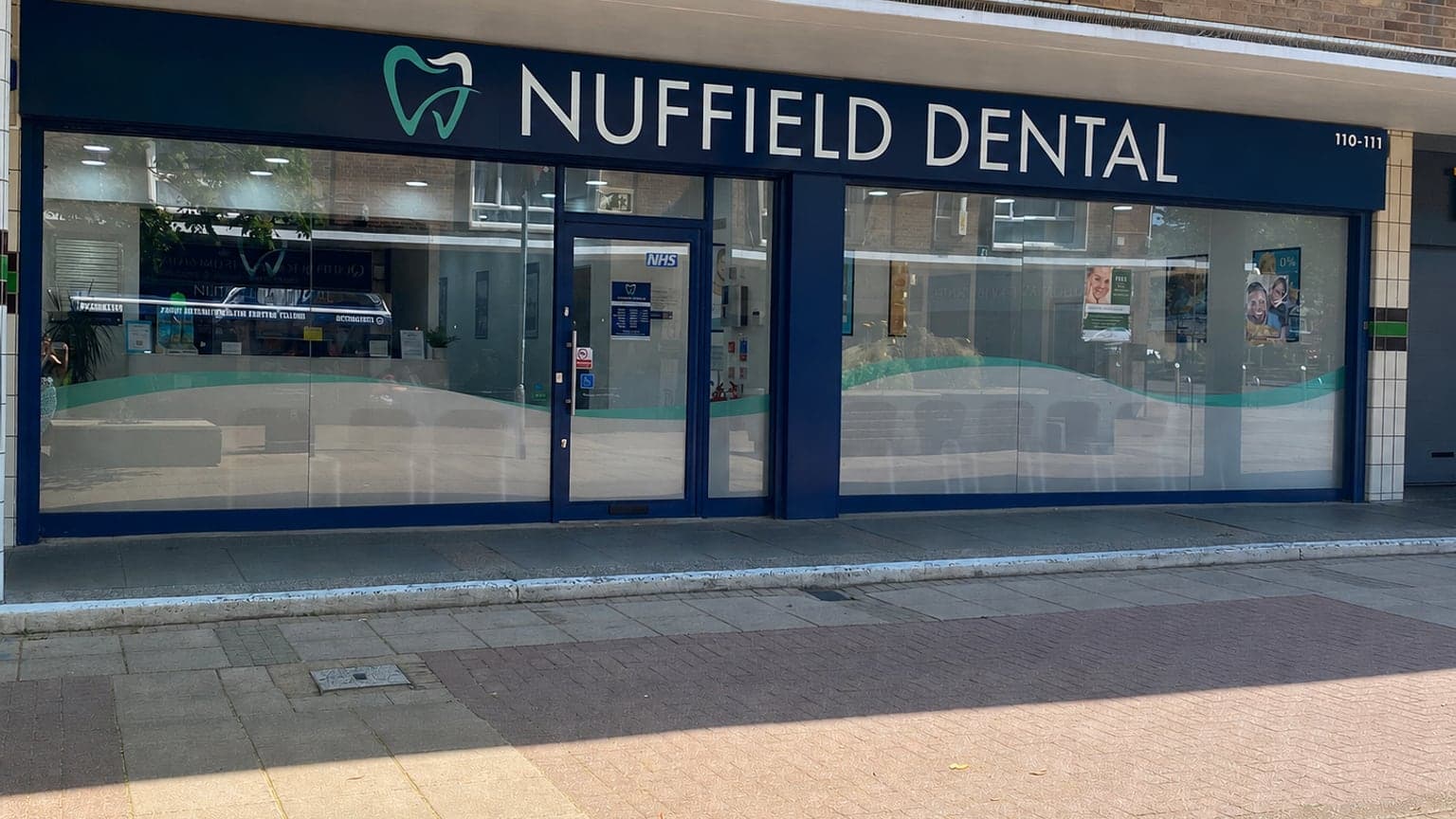
The short answer: a dental implant is a small titanium screw placed in the jawbone to replace the root of a missing tooth, with a crown, bridge or denture fitted on top. Treatment is usually in stages over a few months, placed under local anaesthetic, and most people find it less uncomfortable than they feared. Implants are almost always private in the UK; the fee depends on your mouth and is confirmed in writing before anything starts. Looked after well, they can last many years. At Minti, implant treatment is carried out at our Harlow practices, Nuffield Dental Practice and Church Langley Dental; you can read about it on our dental implants page, and the first step is a dental check-up or implant consultation. If you already have an implant that's painful, swollen or loose, call my emergency dentist team in Harlow or Enfield, or NHS 111 if we're closed or you're not local.
Thinking about implants, or worried about one you've got? Ring your nearest Minti practice. If an implant is painful, swollen or loose, tell reception it's urgent. I keep same-day appointments for pain and swelling wherever I can.
- Nuffield Dental Practice, Harlow: 01279 424 038
- Church Langley Dental, Harlow: 01279 306 690
- Enfield Smiles, Enfield: 020 8804 4320
Evening, weekend, or nowhere near us? Call NHS 111. If you're struggling to breathe or swallow, or swelling is spreading to your eye or neck, that's 999 or A&E.
What is a dental implant?
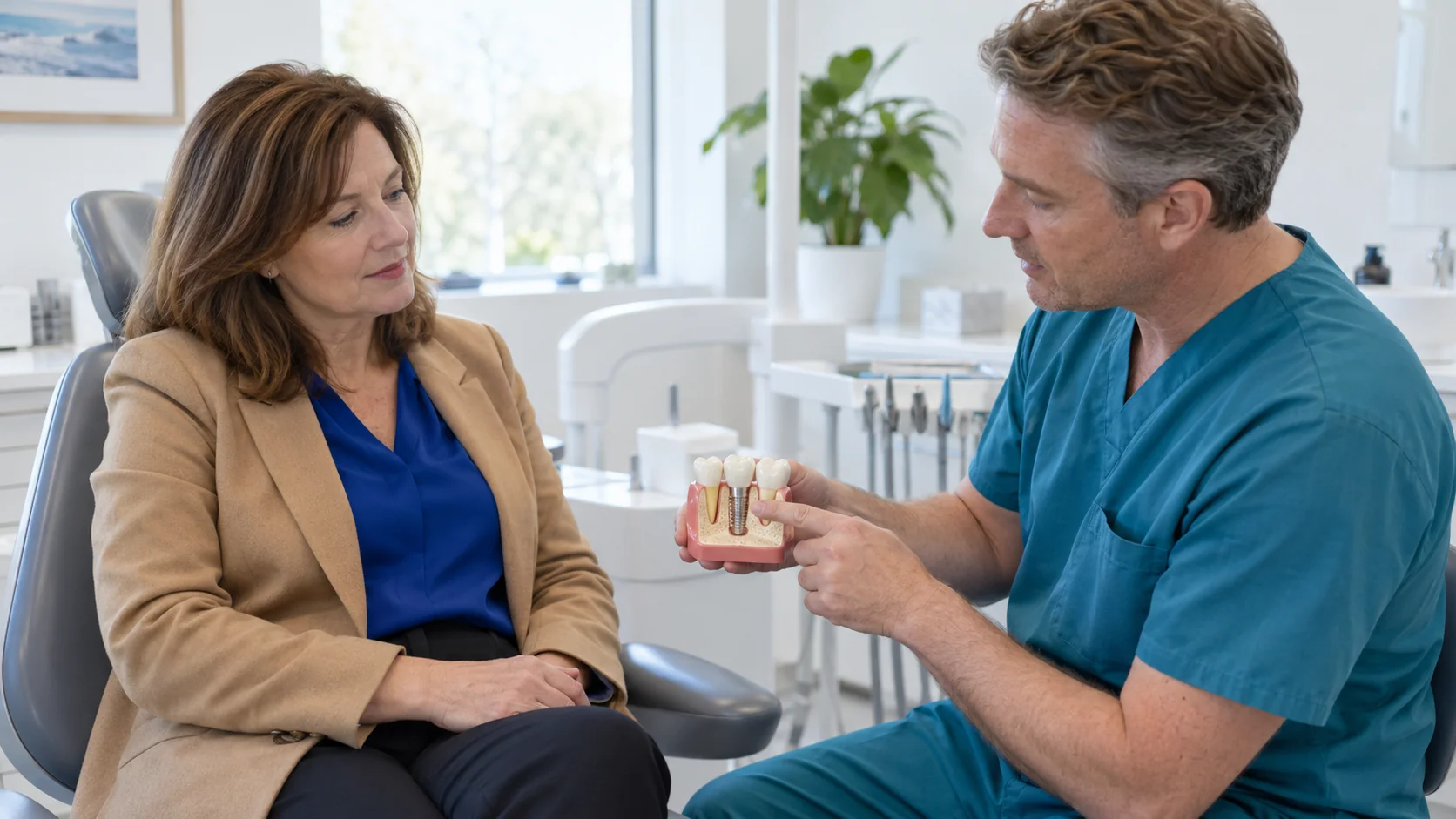
The Oral Health Foundation describes it neatly: a small titanium screw placed into the jawbone, replacing the root of a missing tooth, which can support one or more replacement teeth. Think of it as the foundations rather than the house. The implant sits in the bone; the crown, bridge or denture on top is the part you see and chew with.
Our implants page sets out four stages: consultation and assessment, placing the implant, a healing period while it bonds with the bone, and fitting the final crown. The bonding stage takes three to six months, and the Oral Health Foundation puts it at around four months, though some cases can have teeth fitted sooner.
Not everyone is suitable straight away. Our implants page lists uncontrolled diabetes, current bisphosphonate treatment, heavy smoking and not enough bone (without being willing to have a graft) as reasons implants may not be advised. That's exactly what the assessment is for.
How much do dental implants cost?
I don't put prices in articles, because the honest answer is "it depends on your mouth", and a number without an examination is just a guess wearing a suit. Fees at Minti are confirmed in writing before treatment, and our fees and finance page explains how that works. Our implants page also says what a single implant fee includes (consultation, placement, healing reviews, the connecting part and the final crown) and that bone grafting and 3D scans are quoted separately when needed.
A single implant
Ask for a written breakdown of what is included in the fee for one tooth and whether any additional treatment is needed.
A full set of implants
Replacing all your teeth doesn't usually mean one implant per tooth. A whole arch is usually rebuilt on a handful of implants.
All-on-4
All-on-4 replaces a whole arch with a fixed bridge held on four implants. It's widely advertised and suits some people well, but not everyone.
Implants on the NHS
nhs.uk says implants are usually only available privately, and that although it's rare, they're sometimes available on the NHS for people who can't wear dentures for certain reasons, such as mouth cancer or an accident. Our implants page says the same: routine implant work is private.
Do dental implants hurt?
This is the question behind half the searches I see. Our implants page describes placing an implant as a 60 to 90 minute procedure under local anaesthetic, and you go home the same day. You'll feel pressure and hear some noises, but the anaesthetic is there so that you don't feel pain.
During the procedure
If dental anxiety is the real worry, our nervous patients page is worth a read.
Afterwards
NHS hospital leaflets describe some discomfort, swelling and bruising for the first couple of days, usually managed with ordinary painkillers. The key is that it should be improving, not getting worse.
How long do dental implants last?
A long time, with the right care. The British Society of Periodontology says implants may be expected to last 10 to 20 years before retreatment with care and maintenance, and Leeds Teaching Hospitals tells its patients that about 90% of implants placed 10 years ago are still working. Our own implants page says properly placed implants routinely last 20 years and beyond. The crown on top usually needs attention before the implant does, a bit like replacing the tyres rather than the car.
Daily cleaning, including interdental brushes around the implant, and regular professional checks make the biggest difference.
What can go wrong with an implant?
I'll keep this section straight. Most implants do well, but it's worth knowing the signs, because problems caught early are far easier to deal with.
Infection around an implant
The British Society of Periodontology lists pain, bleeding or a bad taste around an implant, and looseness, as warning signs. Gum disease around an implant is called peri-implantitis, and the Oral Health Foundation says it can lead to the implant loosening or being lost. Swelling spreading to your eye or neck, or trouble breathing or swallowing, is 999 or A&E.
A failed implant
Occasionally an implant doesn't bond with the bone in the first months, or fails later because of gum disease. Cambridge University Hospitals says a failed implant has to be removed, and it may be possible to replace it after healing, depending on the cause.
A loose implant crown
A wobble isn't always the implant itself. Often it's the crown or the small screw holding it, which is usually a much simpler fix.
Are there alternatives to an implant?
Yes, and an implant isn't automatically the best choice for everyone. Cambridge University Hospitals lists dentures and bridges as the conventional alternatives.
Bridge or implant?
A bridge uses the teeth either side of a gap for support; an implant stands on its own. Each has pros and cons depending on the neighbouring teeth, your bone and your budget. My dental bridges guide explains the types and costs.
Snap-in dentures
If you wear a full denture that won't stay put, especially on the lower jaw, a denture that clips onto a small number of implants can make a big difference. My dentures guide explains removable and implant-retained options.
Should I have dental implants abroad?
That's your choice, and lots of people from the UK look at it. The General Dental Council recommends talking to your own dentist first and asking any overseas provider who will do the treatment, how they're regulated, what aftercare is offered and who pays if something needs putting right. With implants, also plan for the healing time between stages, which usually means more than one trip, and for who will check your implants for years afterwards.
When should I see a dentist about implants?
If you're thinking about an implant, book a check-up. I'll look at the gap, your gums and bone, talk through whether an implant, bridge or denture suits you best, and arrange a 3D scan if the case needs one. It's one conversation and it doesn't commit you to anything.
Call us today if you have an implant and:
- the gum around it is red, swollen, sore or bleeding, or there's pus or a bad taste
- pain after surgery is getting worse rather than better
- the implant, crown or denture on it feels loose or moves
- it hurts to bite on
Call 999 or go to A&E, not a dentist, if:
- you're finding it hard to breathe, swallow or speak
- swelling is spreading towards your eye or down into your neck
- your eye is swollen or painful, or your eyesight suddenly changes
- you can't open your mouth properly because of swelling
If you're near Harlow or Enfield, I'd much rather take a look and tell you straight what your options are than have you piecing it together from forums and adverts. Ring your nearest Minti practice and ask for a check-up or implant consultation. Anywhere else, or out of hours, call NHS 111 if something is urgent.
This article is general information, not a diagnosis or a quote. Suitability for implants depends on an examination in person, and fees are confirmed in writing before treatment.