By Dr Nishma Kotecha, dentist
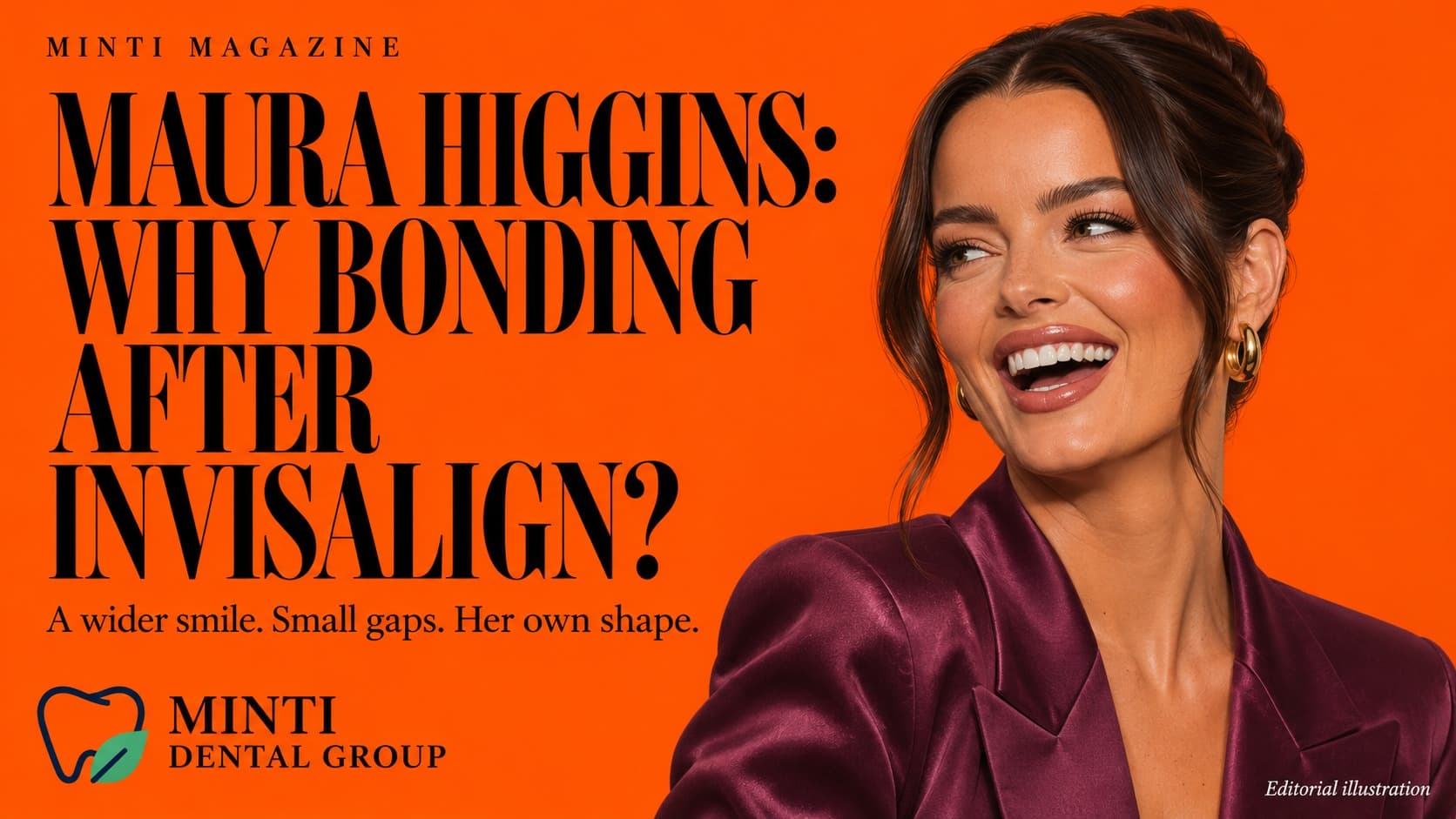
Maura Higgins is having a tough few weeks in the ballroom. This week on Dancing With The Stars, she and Mark Ballas tied for the lowest score of the night with their Peter Pan jive, and she shared how hard the week had been. "I'm only human," she said.
Still, the smile was on full beam. And that smile has an interesting backstory, because it's not the result of one treatment. It's two.
Maura has talked about having Invisalign to straighten her teeth. She's also had bonding. And the question I always get when people hear that is: if she'd already straightened her teeth, why did she need bonding as well?
The short answer: moving a tooth and changing its outline are two completely different jobs. Invisalign moves teeth into a better position, but it can't change their shape, size or edges. Composite bonding can tweak the outline of a tooth, like closing a small gap or evening out an edge, but it doesn't move anything. Maura has said she wanted a wider smile, and then chose subtle bonding for small gaps while keeping the shape of her own teeth. That's a really sensible way to think about it: what do you want to move, what do you want to change, and what do you want to leave alone? (I've previously written about the order Maura had her treatments in, and why straightening first often makes sense.)
What has Maura actually said?
Back in 2021, Maura spoke about her teeth. She said she'd wanted a wider smile, and that she chose subtle bonding to close small gaps, while keeping the natural shape of her own teeth.
That's what she's confirmed. I don't know exactly how many teeth were bonded, how much material was used, or anything else about her treatment plan, and I'm not going to guess. What I love about what she's said is the thinking behind it. She wasn't asking for a brand-new set of teeth. She wanted specific changes, and she wanted to keep what she already liked.
Job one: moving teeth
Straightening treatments, like braces and clear aligners, work by moving your own teeth gradually into a better position.
They're brilliant at:
- straightening crooked or rotated teeth
- closing or opening spaces by moving teeth
- improving how the top and bottom teeth meet
- changing the shape of the overall arch, which can affect how wide a smile looks
That last one is interesting in Maura's case. A "wider smile" often isn't about making teeth bigger. It can be about how the teeth sit in the arch. If teeth are tipped inwards or crowded, the smile can look narrow, with dark spaces at the corners. Moving them into a better position can change how much of the smile shows.
But here's what straightening can't do. It can't make a short tooth longer, a narrow tooth wider, or a chipped edge smooth. Once the teeth are straight, their shape is still their shape.
Job two: changing the outline
Composite bonding is tooth-coloured resin that's added to the surface of a tooth, sculpted by hand and polished. It can:
- close small gaps between teeth
- even out uneven edges or lengths
- repair small chips
- subtly change the shape of a tooth
It usually needs little or no drilling of the natural tooth, because it's adding material rather than taking it away. And it can be adjusted, repaired or even removed later. (I wrote about that in Molly-Mae's decision to have her bonding removed.)
But bonding can't move a tooth. If a tooth is twisted or sits too far back, bonding can only disguise it by adding material, which can end up looking bulky.
Why you'd do both
So, put the two together, and you can see why someone might need both.
Straightening puts the teeth in the right place. Bonding then fine-tunes the details. It's a bit like moving furniture into the right spot in a room, then adding the cushions and finishing touches. You wouldn't try to make a sofa look straight by stacking cushions on one end.
Doing it in that order also means the bonding usually needs to do less. If the teeth are already well-aligned, small additions can make a big difference, without building up lots of material.
Job three: leaving things alone
This is the bit of Maura's story I like most, and it's the one people forget.
She chose to keep the shape of her own teeth. That's a deliberate decision not to change something, and it's just as important as the decisions to change things.
So many people go into a cosmetic consultation with a picture of a "perfect" smile in their heads, and leave with much more treatment than they needed. Sometimes the most natural results come from changing the fewest things.
When I talk patients through a smile makeover, I often think about it in three columns:
- What do you want to move? Teeth that are crooked, crowded, tipped or gappy.
- What do you want to change? Edges, small gaps, chips, colour.
- What do you want to leave alone? The things you already like about your teeth.
That third column protects your natural smile. It's also usually the cheapest column.
Isn't this just what veneers do?
Not quite. Veneers cover the front of teeth to change their colour, shape and sometimes how straight they look. Many involve removing some enamel first, which can't grow back.
For someone like Maura, who wanted small gaps closed and to keep her own tooth shape, bonding after straightening is a much more conservative route. That doesn't mean veneers are never right. It just means they solve a different problem. If you're curious, I've covered composite veneers vs bonding and what some celebrities have said about their veneers.
What to know before you go for both
If you're thinking about straightening and bonding, a few things are worth knowing:
- Health first. Teeth and gums need to be healthy before any cosmetic work. Start with a check-up.
- Straighten, then bond. Bonding done first may need redoing once teeth move.
- Whiten before bonding. Whitening works on natural teeth, not on bonding, so if you want whiter teeth, do it first so the bonding can be matched to the new shade.
- Wear your retainer. The British Orthodontic Society says teeth tend to drift back after straightening and recommends long-term retention. A retainer keeps them where they've been moved to, and keeps your bonding looking right.
- Bonding needs looking after. It can stain and chip over time, and may need polishing, repairing or replacing. Here's how long composite bonding lasts, and how much composite bonding costs in the UK.
A few quick questions
Did Maura Higgins have Invisalign? Yes. Maura has spoken about straightening her teeth with Invisalign.
Why did Maura Higgins get bonding as well? She has said she chose subtle bonding to close small gaps, while keeping the shape of her own teeth. Straightening moves teeth; bonding changes their outline.
Can Invisalign close gaps? It can close gaps by moving teeth. Bonding closes small gaps by adding material to the teeth instead.
Should I straighten my teeth before bonding? Often, yes. Straightening first usually means the bonding needs less material and looks more natural.
The verdict
Maura Higgins' smile isn't a mystery, and it isn't a full makeover. It's two sensible treatments doing two different jobs, plus a smart decision to leave the rest alone.
If you're thinking about changing your smile, borrow her approach. Work out what you want to move, what you want to change, and what you love enough to keep. Often, the best results come from that last list.
This article is general information based on public reporting. It is not personal dental advice. Maura Higgins and Dancing With The Stars have no connection with this article.