On this page
You've had a tooth out, the numbness is wearing off, and your stomach has noticed it skipped lunch. Now you're standing at the fridge, negotiating with yourself about whether a sandwich counts as soft if you tear off the crusts. You're not the only one. What to eat after an extraction is one of the first things I get asked as people get up out of the chair.
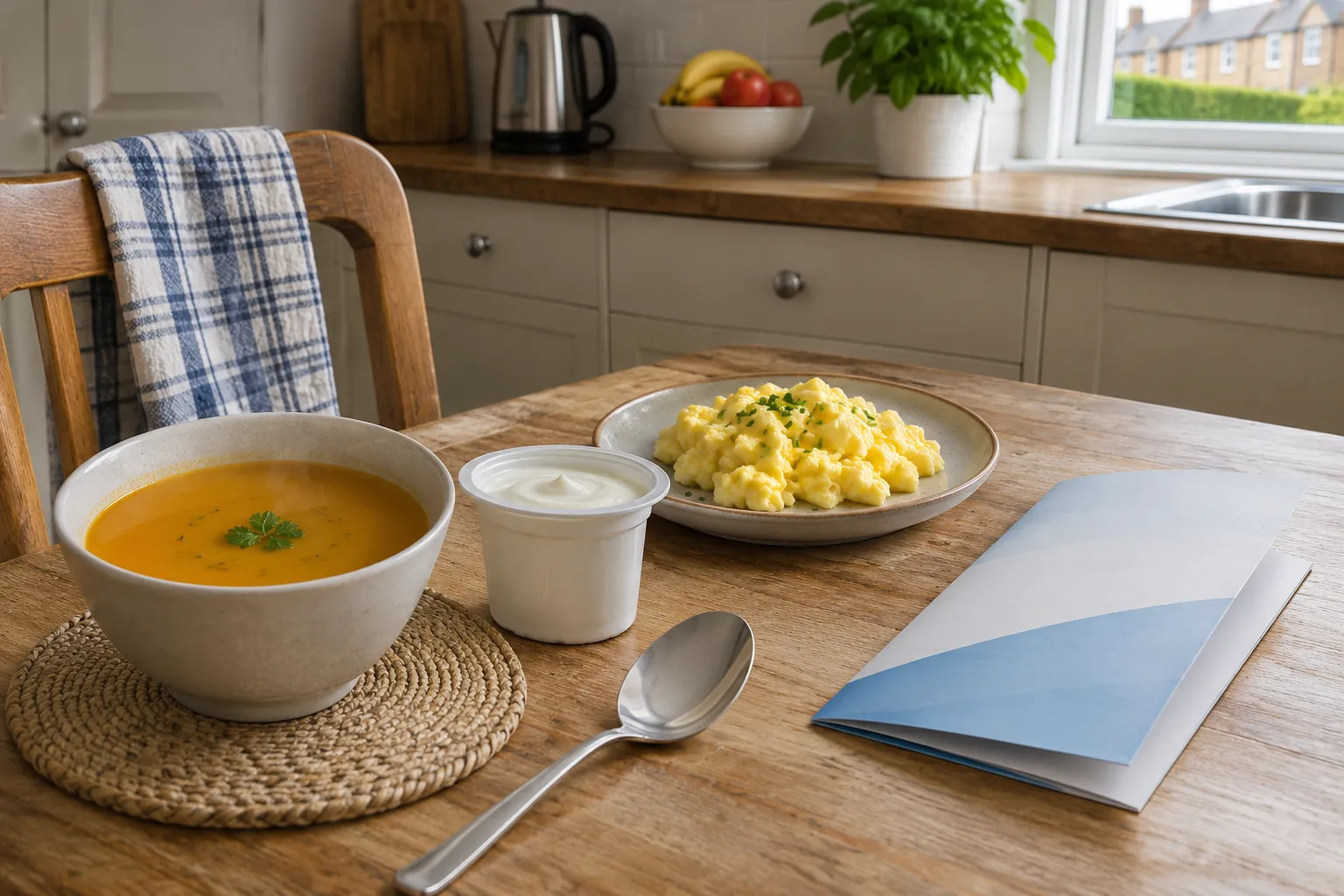
The short answer: after a tooth extraction, wait until the numbness has worn off, then eat soft, lukewarm food you barely need to chew, on the other side of your mouth, for the first few days. Think soup that's cooled down, yoghurt, scrambled egg, mashed potato, porridge, pasta and fish. Avoid hard, crunchy, sharp or very hot food, and anything that crumbles into the socket, until you can chew comfortably again. If eating is getting more painful after day two or three rather than easier, that needs a look, so call my emergency dentist team in Harlow or Enfield, or NHS 111 if we're closed. The full recovery picture is in my tooth extraction guide.
Pain getting worse, a bad taste, or bleeding that won't stop? Call your nearest Minti practice and tell reception you've had a tooth out. I keep same-day appointments for pain and swelling wherever I can.
- Nuffield Dental Practice, Harlow: 01279 424 038
- Church Langley Dental, Harlow: 01279 306 690
- Enfield Smiles, Enfield: 020 8804 4320
Evening, weekend, or nowhere near us? Call NHS 111. If you're struggling to breathe or swallow, or swelling is spreading to your eye or neck, that's 999 or A&E.
How soon can I eat after a tooth extraction?
Wait until the numbness has fully worn off. NHS hospital leaflets give the same advice. Hospital advice varies on the exact number of hours, from about one to four, so treat the feeling coming back as your green light rather than the clock.
Here's why. While you're numb, you can't feel your lip, cheek or tongue properly, and it's surprisingly easy to chew on them without noticing. You also can't feel temperature, so a hot drink can scald you. Your mouth is basically running with the sensors switched off. Nobody wants to discover they've chewed their own cheek at teatime.
If you're hungry before then, a cool drink sipped carefully is fine.
What soft foods are best in the first few days?
The NHS advice is to eat soft or liquid food until you can chew more comfortably. Hospital leaflets usually say to stick to a soft diet for the first 24 to 48 hours at least, and to chew on the opposite side. Good options:
- soup, cooled to warm rather than hot, without big lumps
- yoghurt, fromage frais, custard, rice pudding
- scrambled or soft-boiled eggs, omelette
- mashed potato, sweet potato or other mashed veg
- porridge or soft cereal left to soak
- soft pasta, macaroni cheese, risotto
- flaky fish, soft cooked beans, dhal
- smoothies and milkshakes, eaten with a spoon
- ripe banana, avocado, stewed fruit
Rice is fine for most people, but it does love to get into a socket. If it does, a gentle warm salt water rinse after the first 24 hours usually shifts it.
What foods should I avoid after an extraction?
For the first few days, keep off anything that could scrape, poke or lodge in the socket, or irritate the gum. NHS and hospital leaflets list:
- hard or crunchy food: crisps, nuts, toast, crusty bread, raw carrot, popcorn
- food that gets stuck: seeds, grains and crumbly biscuits
- very hot food and drink, especially while you're numb and on the first day or two
- spicy food, which can sting a healing gum
- chewy food: tough meat, chewy sweets
I'd also go easy on anything very acidic, like citrus, for a day or two, simply because it tends to sting. That's my own advice rather than an official rule. And for the first day, keep alcohol off the menu too. The NHS says not to drink alcohol after an extraction because it raises the risk of bleeding. The full list of things to steer clear of is in things to avoid after a tooth extraction.
When can I go back to eating normally?
Most people can move back towards their normal diet over a few days to a week, as chewing gets comfortable. The NHS says to eat soft food until you can chew more comfortably, which is the most useful guide: let your mouth tell you.
A sensible order is soft food first, then things that need a little chewing on the other side, then normal food, with crunchy and seeded things last. If the extraction was surgical, or a wisdom tooth, expect it to take a bit longer. My what should a normal socket look like? post gives the day-by-day picture.
Two small habits make eating easier while it heals. Rinse gently with warm salt water after meals, from the day after the extraction, to clear food away. And keep brushing your other teeth as normal, taking care around the socket.
What if eating hurts or food gets stuck in the socket?
Some soreness when you eat is normal in the first two or three days. It should get easier each day. If it's getting harder instead, especially with a throbbing ache that spreads towards your ear or a bad taste, that can be a dry socket, and it's worth a call. See also still in agony three to five days after an extraction? and, for wisdom teeth, pain after wisdom tooth removal.
If food gets stuck, don't dig it out with a toothpick, fingernail or tongue. Let warm salt water do the work. If it still won't shift, ring us and I'll clean it properly. A socket that looks pale or white with food on top is often just healing tissue; there's more in white stuff in the socket after an extraction.
When should I call a dentist?
Call us today if:
- eating is getting more painful after day two or three, not less
- there's a bad taste or smell that won't go (see bad taste or smell after an extraction)
- the socket looks empty or you can see bone
- swelling is increasing after day three, or you feel hot and unwell
- it's still bleeding after 30 minutes of firm pressure on gauze (see extraction won't stop bleeding)
Call 999 or go to A&E, not a dentist, if:
- it's hard to breathe, swallow or speak
- swelling is spreading towards your eye or into your neck
- your eye is swollen or painful, or your eyesight suddenly changes
- you can't open your mouth properly because of swelling
Meanwhile, the NHS advice is paracetamol or ibuprofen for pain, no smoking, and gentle salt water rinses once the first 24 hours have passed.
If you're near Harlow or Enfield and eating is getting harder rather than easier, I'd much rather take a look than have you live on lukewarm soup for another week. Ring your nearest Minti practice, tell us when the tooth came out, and we'll take it from there.
This article is general information, not a diagnosis. Problems after an extraction need examining in person to find the cause.