You caught your smile in a shop window, or a photo, and one tooth looked longer than you remembered. Now you're in the mirror running a fingernail along the edge of your gum, feeling for a little ledge, and wondering whether your teeth are getting taller or your gums are getting shorter. (It's the gums. Teeth don't grow.) You're not imagining it, and you're far from the only one. It's one of the most common things I get asked about in my surgery.
The short answer: receding gums means the gum has pulled back from the tooth, exposing more of it and sometimes the root. The main causes are gum disease, brushing too hard, and gums that are naturally thin. Gum that has receded doesn't grow back on its own, but it can usually be stopped from getting worse, and in some cases a specialist can cover the exposed root with a gum graft. Book a dental check-up so I can find the cause, with my hygiene team on hand if gum disease is behind it. If a tooth has become loose or your gum is swollen and sore, call my emergency dentist team in Harlow or Enfield, or NHS 111 if we're closed. The bigger picture is in my gum disease guide.
Loose tooth, or swollen, sore gum? Call your nearest Minti practice and tell reception. I keep same-day appointments for pain and swelling wherever I can.
- Nuffield Dental Practice, Harlow: 01279 424 038
- Church Langley Dental, Harlow: 01279 306 690
- Enfield Smiles, Enfield: 020 8804 4320
Evening, weekend, or nowhere near us? Call NHS 111. If you're struggling to breathe or swallow, or swelling is spreading to your eye or neck, that's 999 or A&E.
What are receding gums?
Normally your gum sits snugly around the neck of each tooth, covering the root. When gums recede, that edge creeps back. The signs are:
- teeth that look longer than they used to
- a slightly yellower or darker band near the gum, which is root surface showing
- a little step or notch you can feel with a fingernail
- sensitivity: a short, sharp twinge with cold, hot, sweet or sour things
The sensitivity makes sense once you know what a root is made of. The crown of your tooth wears a hard enamel coat. The root doesn't; it's normally tucked under the gum and wasn't designed to meet an ice cream. Expose it and it lets you know. The twinge is a clue, not just an annoyance.
Leeds Teaching Hospitals notes that recession doesn't always shorten the life of a tooth, but it can make teeth sensitive and harder to clean. Exposed roots are also more prone to decay.
Gum Health Checks at Minti
A hygiene visit checks your gums and removes the tartar that brushing can’t shift. Private hygiene is £60 to £76, and NHS hygiene is Band 1, £27.90, when clinically needed.
Book a hygiene visit
What causes receding gums?
There's usually more than one thing going on. The main causes are:
- Gum disease. One of the main causes. When gum disease reaches the bone and tissue holding the tooth (periodontitis), the gum can shrink back with it. The NHS lists gums shrinking among the things gum disease can lead to.
- Brushing too hard. Heavy, side-to-side scrubbing can wear gums back over the years. If this is you, it's the technique, not the effort, that needs a tweak.
- Naturally thin gums. Some people are simply born with a thinner, more delicate layer of gum, which recedes more easily.
- Tooth position. A tooth that sits further out than its neighbours may have less gum and bone covering it.
- Other habits. Lip or tongue piercings that rub on the gum are also linked with recession.
Working out which of these applies to you matters, because the fix for hard brushing is different from the fix for gum disease. If your gums are also bleeding or puffy, that points me towards gum disease; see gum disease symptoms.
Can receding gums grow back?
I'll be straight with you, because there's a lot of wishful thinking online about this: no, gum that has receded doesn't grow back on its own. Once the gum and the bone underneath have been lost, the body doesn't rebuild them by itself. The guidance for dentists in Scotland (SDCEP) says the damage from periodontitis is irreversible, and the Oral Health Foundation says the same.
That sounds bleak, but it isn't the end of the story. Two good things are true:
- It can usually be stopped from getting worse. Gum disease can be stabilised with treatment and good cleaning at home, and brushing damage stops when the technique changes.
- Some recession can be covered surgically. That's a gum graft, which I'll explain below.
So the realistic goal for most people is "stop it where it is and protect what's there", and that's a very achievable goal. You can read more about what gum disease treatment can and can't do in can gum disease be cured?
New Patient Consultations
A new patient consultation is £45 at our Harlow practices and £35 at Enfield Smiles. Every practice offers NHS and private care.
Request an appointment
What can be done about receding gums?
It depends on the cause and how much has gone. The usual steps are:
- Treat any gum disease. A thorough professional clean above and, if needed, below the gum line, and a home routine that keeps plaque off.
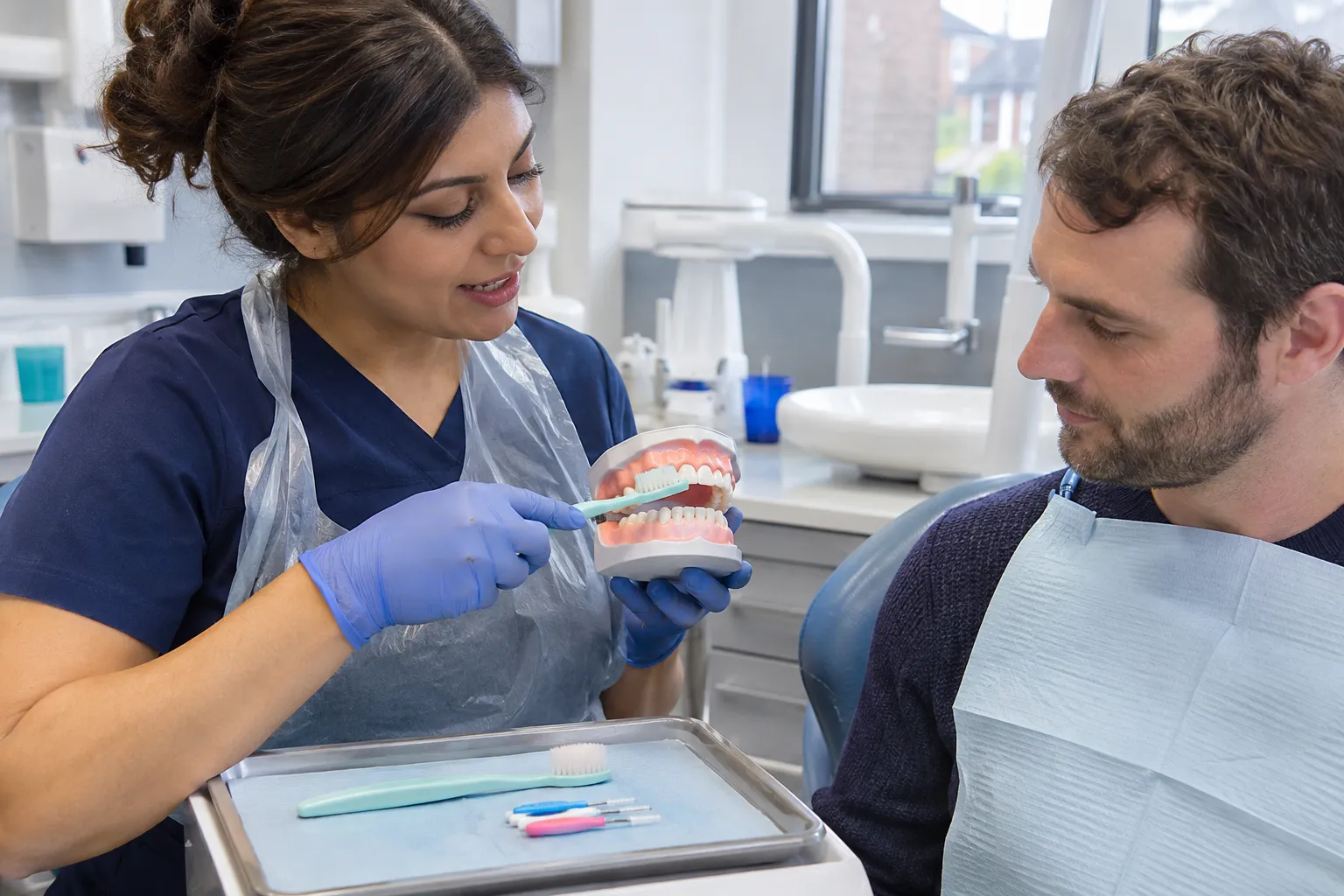
- Change the brushing, not the effort. Gentle, small movements angled at the gum line, and cleaning between the teeth every day.
- Manage sensitivity. Sensitive toothpaste or treatments applied in the surgery can help the twinges.
- Keep an eye on it. Recording where your gum line sits means future visits can show whether it's stable.
Gum grafts. Where recession is causing problems, a gum graft can sometimes cover the exposed root. According to NHS hospital patient leaflets from Cambridge and Leeds, a small piece of your own gum tissue is taken, usually from the roof of the mouth, and stitched over the area. It's used to reduce sensitivity, protect the root, improve the look, or thicken thin gum. Leeds is clear that results vary: the graft may not cover the whole area, and sometimes it doesn't take. Your gum health needs to be in good shape first. Grafting is specialist surgery, so it usually means a referral to a specialist.
When should I see a dentist about receding gums?
Book a check-up if:
- a tooth looks longer than it used to, or you can feel a notch at the gum line
- teeth have become sensitive near the gum
- your gums bleed when you brush, or look red or puffy
- you're not sure whether it's getting worse
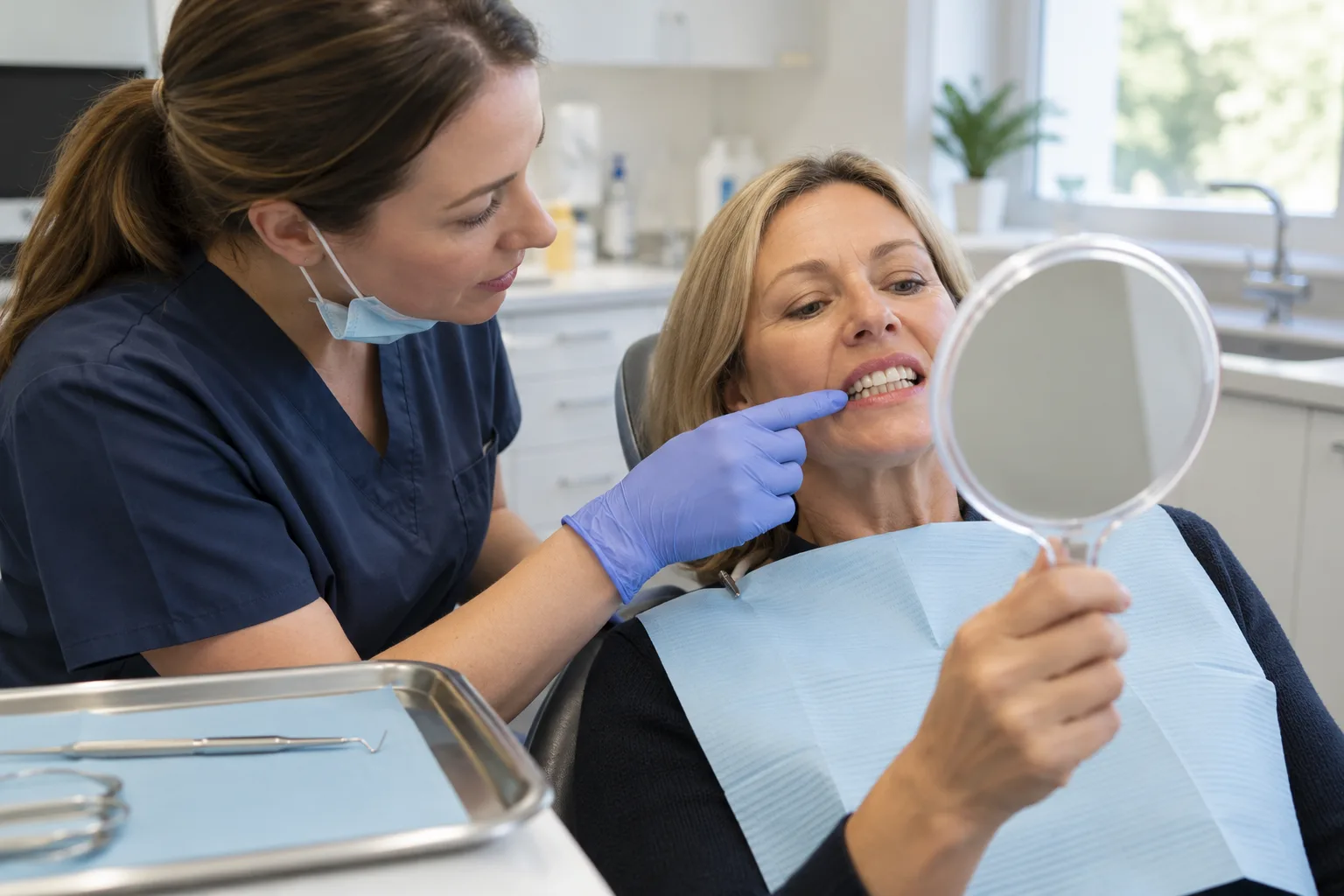
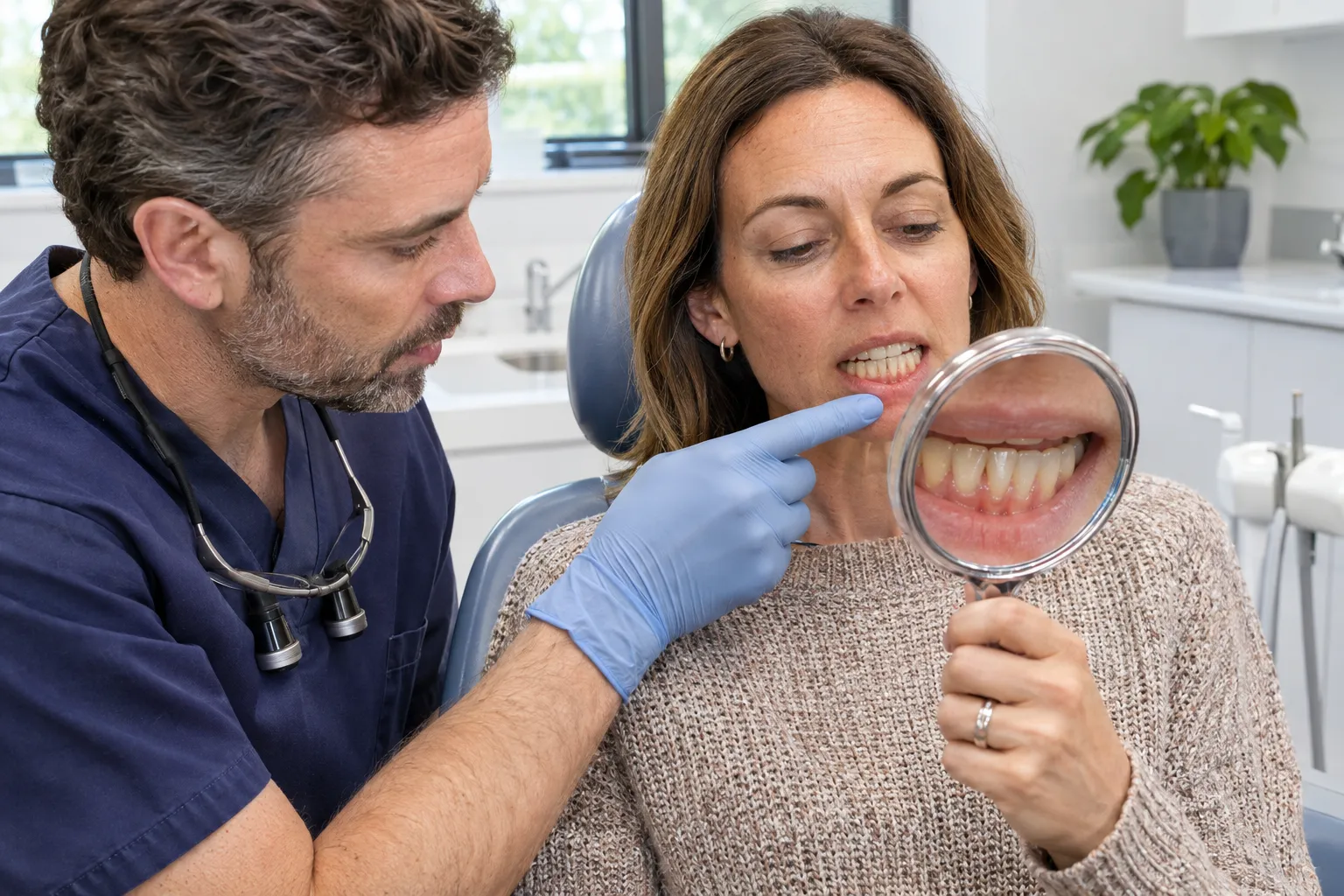
I'll look at your gums, measure the recession and the gap between gum and tooth with a thin probe, take X-rays if I need to see the bone, and tell you what's causing it and what we can do.
Call us today if:
- a tooth has become loose
- your gum is swollen and sore, or there's pus or a bad taste
- your gums are bleeding heavily or won't stop (see my gum won't stop bleeding)
- you have swelling with a fever or feel unwell
See your GP promptly, or call NHS 111, if: your gums are bleeding and you're also bruising easily for no reason, or feeling unusually tired, weak or unwell. The NHS says this kind of unexplained bleeding or bruising should be checked by a GP.
Call 999 or go to A&E, not a dentist, if:
- it's hard to breathe, swallow or speak
- swelling is spreading towards your eye or into your neck
- your eye is swollen or painful, or your eyesight suddenly changes
- you can't open your mouth properly because of swelling
In the meantime, the NHS advice is to brush twice a day with fluoride toothpaste, clean between your teeth daily, and not smoke.
If you're near Harlow or Enfield and your gums seem to be creeping back, I'd much rather take a look now than have you watch it happen in the mirror. Stopping it early protects far more than trying to fix it late.
This article is general information, not a diagnosis. Gum problems need examining in person to find the cause.