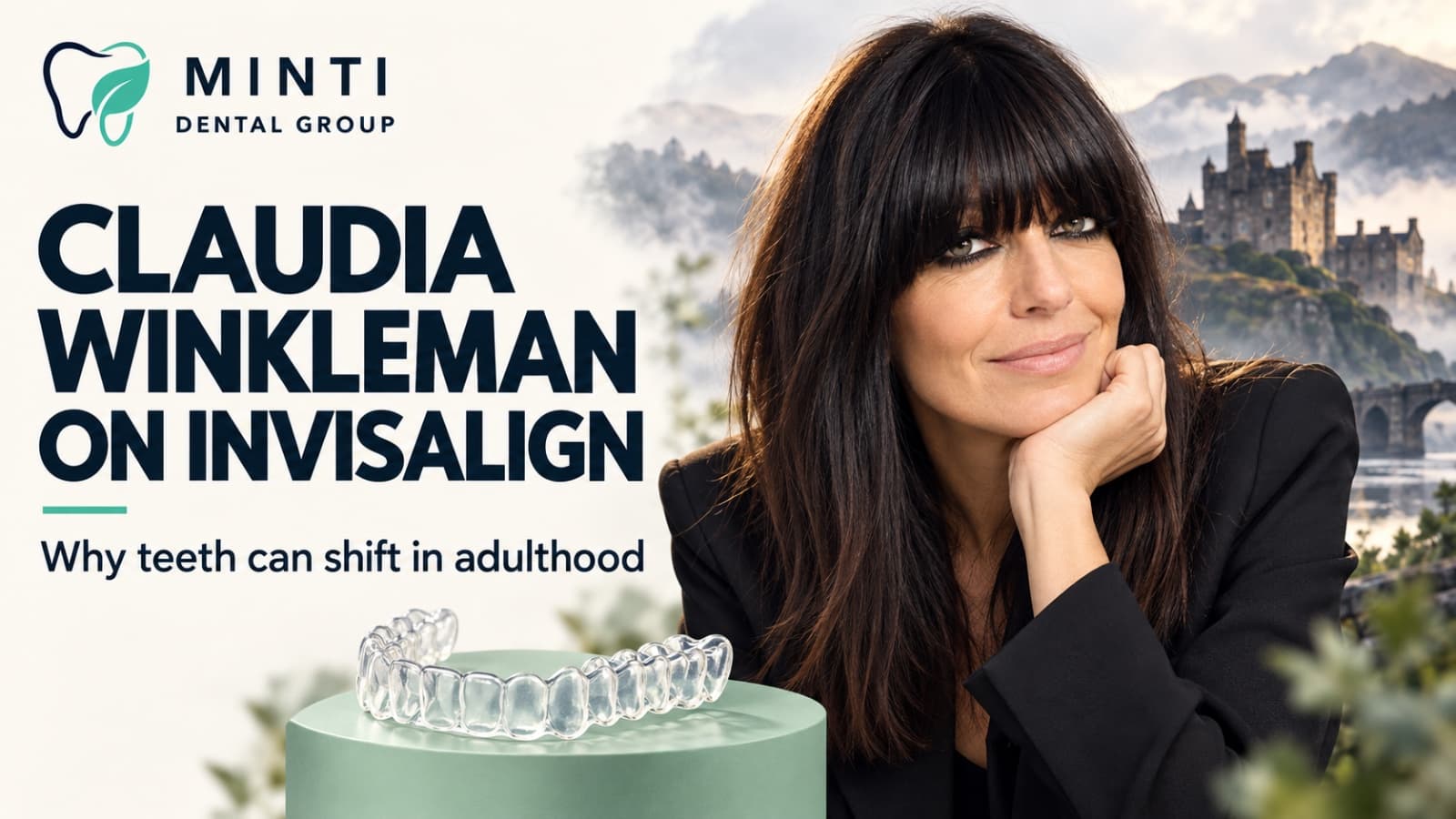
The Celebrity Traitors is back on BBC One on 8 October, which means a fresh round of hosting, knitwear and that fringe. And it's a good excuse to talk about one of my favourite celebrity teeth confessions of all time.
Back in 2018, on The Emma Guns Show podcast, Claudia Winkleman said she had Invisalign in, and why: "My teeth suddenly went crooked." She put it down as part of her mid-life crisis.
I love that quote, because it's exactly what a lot of adults are thinking and never say out loud. You had decent teeth for decades. Maybe you even had braces as a teenager. And now, somewhere in your 30s, 40s or 50s, you notice a front tooth has started to overlap its neighbour and you wonder whether you're imagining it.
You're not. Teeth move. Here's why.
The short answer: your teeth aren't set in concrete. They sit in bone, held by tiny ligaments, and they keep shifting slightly throughout life. The British Orthodontic Society describes it as "almost like a normal ageing phenomenon". The lower front teeth are often the first place it shows. Old braces without a retainer, gum disease, a missing tooth and clenching can all speed it up, which is why straightening teeth in adulthood is much more common than people think.
Can your teeth really move as an adult?
Yes, and this surprises people more than anything else I say in the chair.
Teeth aren't glued into your jaw. Each one sits in a socket, held by a ligament that acts like a very short, very strong hammock. That's what lets a tooth absorb the force of chewing, and it's also what lets teeth move. Orthodontics works because of it. So does the slow drift that happens without anyone asking.
The research on this is quite striking. One long-term study found that around a quarter of the movement in people's front teeth over 12 years came from natural changes with age, not from their braces "undoing". Teeth were never going to stay exactly where they were at 16.
Why do teeth suddenly go crooked?
"Suddenly" is usually how it feels, but it's normally been happening slowly for years. You just notice it one day in a photo or a zoom call. The usual reasons:
- Age. Small shifts are part of normal ageing, and crowding of the lower front teeth is a classic one.
- You stopped wearing your retainer. If you had braces as a teenager and the retainer went in a drawer around the time you left school, this is the big one. The NHS is clear that a retainer is what stops teeth moving back towards where they started.
- Gum disease. As gum disease advances, the bone holding the teeth can be lost, and teeth can loosen and drift. Gaps appearing between front teeth that used to touch is something I always take seriously.
- A missing tooth. Lose a back tooth and the neighbours start leaning into the space, like commuters on the Central line when a seat comes free.
- Clenching and grinding. A lot of force, night after night, doesn't help teeth stay put.
That third one is the reason I'd never just say "it's age" without looking. Crooked teeth on their own are a cosmetic question. Teeth that are shifting because the gums are struggling are a health one. If yours are moving and your gums bleed when you brush, or a tooth feels a bit loose, read my guide to gum disease and get it checked first.
I had braces as a teenager. Why are my teeth moving now?
This is the most common version of the question I hear, and the answer is nearly always the retainer.
For years, people were told to wear a retainer for a year or two and then they'd be done. That advice has changed. The British Orthodontic Society now says retainers are for "as long as you want straight teeth". In other words, for life. One piece of US research the Society has highlighted found that among people who only wore retainers for a year or two, 70% needed treatment again within ten years.
So if your teenage braces are slowly being undone, you didn't do anything wrong. You were just following old advice.
Is adult orthodontics only for people who never had braces?
Not at all, and that's the myth I'd most like to bust. Adult straightening falls broadly into three groups:
- People who never had braces and have always fancied straighter teeth.
- People who did have braces and have seen things drift back, which is often a smaller, quicker job.
- People whose teeth have moved for a reason, such as a lost tooth or gum problems, once that reason is under control.
Clear aligners are popular with adults because they're much less visible than fixed braces and come out for eating and brushing. They aren't magic, though. They only work if you wear them for the hours you're told, which is most of the day, and you'll need a retainer afterwards like anyone else. Otherwise you're paying to straighten your teeth twice.
On cost, the NHS is straightforward: if you're 18 or over, you'll usually have to pay for braces privately. Adult orthodontics on the NHS is limited to specific clinical cases.
What else can fix a slightly crooked tooth?
For a small overlap, straightening isn't the only route. Some people go for composite bonding to disguise it. My view: if the problem is the position of the teeth, moving them is usually the kinder long-term fix than building over them. You can read more about clear aligners on our services page.
So what should you take from Claudia's teeth?
That noticing your teeth have moved in mid-life is normal, common and fixable, and it's nothing to be embarrassed about. If someone who spends her autumn evenings in a castle on prime-time BBC One can say "my teeth suddenly went crooked" on a podcast, the rest of us can mention it at our next check-up.
The one thing I'd add: before you think about straightening, make sure the reason they've moved isn't your gums. Straight teeth on shaky foundations are nobody's idea of a win.
This article is general information, not a diagnosis. If your teeth have moved, loosened or developed new gaps, a dentist can check why in person.