
So. Something at the very back of your mouth has been grumbling for days. You've had a look with your phone torch, seen some red gum and possibly a corner of tooth, and now you're trying to decide whether this is "coming through, ride it out" or "infected, ring someone". You're not imagining it, and you're not the only one. It's one of the most common things I hear about in my surgery, and the question underneath is always the same: how worried should I be?
The short answer: a wisdom tooth that's simply coming through aches on and off for a few days and settles. A wisdom tooth infection hurts more, keeps hurting, and brings extras: a swollen gum over the tooth, a bad taste, a stiff jaw, sometimes a puffy cheek or a temperature. Infection needs a dentist, not a wait-and-see. It becomes a dental emergency when swelling spreads into your face or neck, or you're struggling to swallow or breathe. Near Harlow or Enfield? Call my emergency dentist team at Harlow or Enfield. Not local, or we're closed? NHS 111.
Call 999 or go to A&E, not a dentist, if: you're finding it hard to breathe, swallow or speak; swelling is spreading towards your eye or down into your neck; your eye is swollen or painful, or your eyesight has suddenly changed; you can't open your mouth properly because of the swelling; or you have a high temperature with confusion, fast breathing, or pale, blotchy or blue skin. The NHS says not to drive yourself: ask someone to take you, or call 999.
Wisdom tooth pain with swelling, a bad taste or a stiff jaw? Call your nearest Minti practice and tell reception it's urgent. I keep same-day appointments for pain and swelling wherever I can.
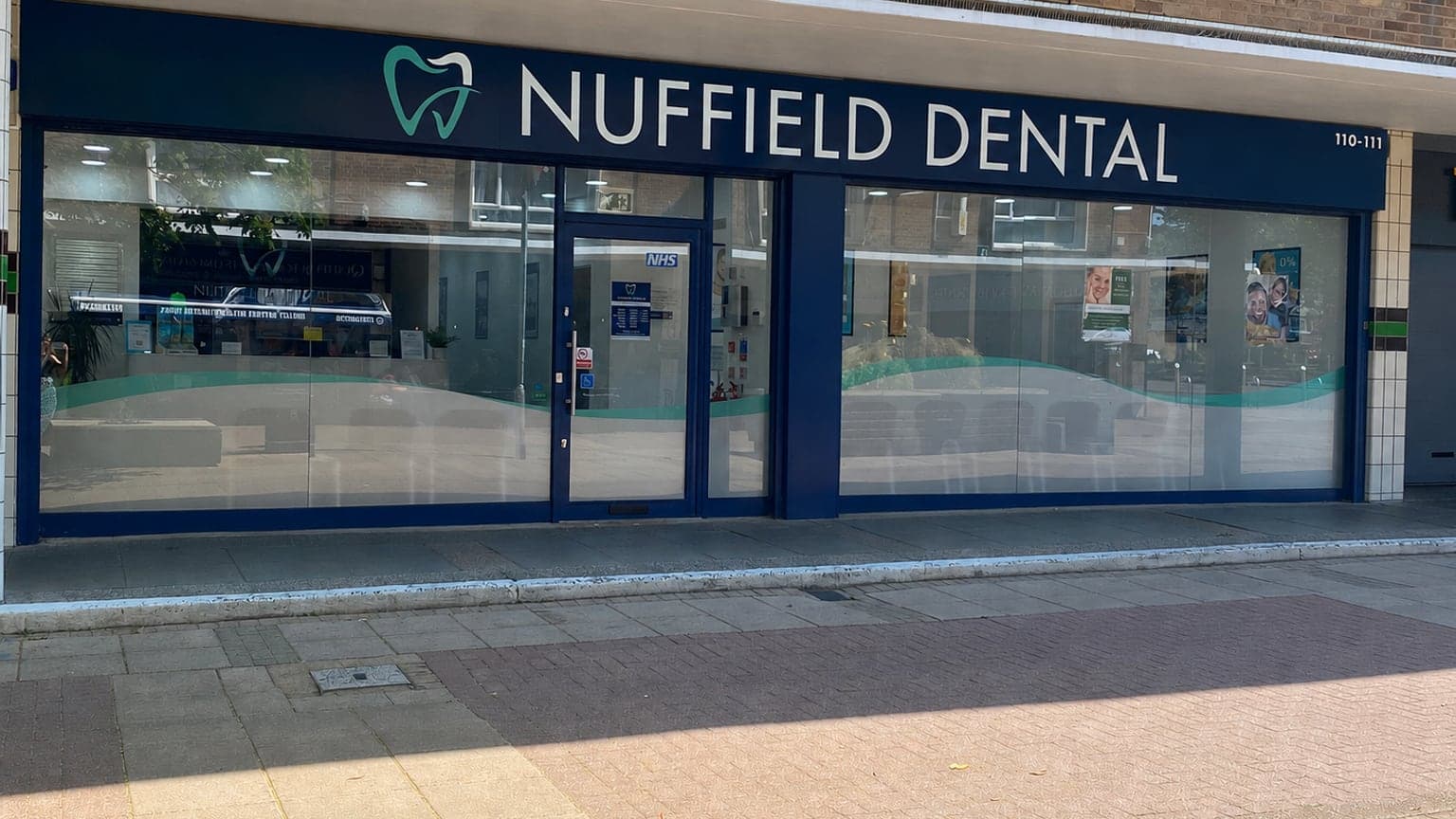
- Nuffield Dental Practice, Harlow: 01279 424 038
- Church Langley Dental, Harlow: 01279 306 690
- Enfield Smiles, Enfield: 020 8804 4320
Evening, weekend, or nowhere near us? Call NHS 111. Struggling to breathe or swallow? 999 or A&E.
Is my wisdom tooth pain just eruption, or an infection?
The two feel similar at the start, because they start in the same place. Wisdom teeth usually arrive between 17 and 25, the last guests to a party where every seat is already taken. Most come through at an angle, or only halfway, with a flap of gum over the bit that's showing.
Straightforward eruption is a dull ache and a tender gum at the very back, worse when you bite on it, coming and going over a few days as the tooth nudges up. Nothing much else happens.
Infection happens when food and plaque get trapped under that gum flap, about the hardest place in your mouth to clean. The flap gets inflamed, and the upper wisdom tooth often bites down on it, which doesn't help. The name is pericoronitis, which just means "inflammation around the crown", and it's the first thing I check for when someone points to the back of their mouth.
The clue that tips me from "coming through" to "infected" is that the pain stops behaving. It's there when you're not eating, and it's brought friends.
What does a wisdom tooth infection feel like?
I'll keep this bit straight. The signs I'm looking for are:
- a swollen, red, tender gum over or around the wisdom tooth
- pain that's constant rather than only when you bite, often worse with chewing
- a bad taste or bad breath that brushing doesn't shift, sometimes with a bit of pus from the gum
- a jaw that's stiff or won't open as wide as usual
- pain that seems to travel into your ear, throat or jaw on that side
- a swollen cheek, or tender lumps under your jaw (those are your lymph nodes doing their job)
- feeling generally rough, or a temperature
You don't need all of these. Two or three is enough for me to want you in.
One thing worth knowing: a wisdom tooth infection can settle for a bit and then come back. That's not the same as fixed. The flap is still there, so the trap is still set. That's the advice I give in the chair, and it's why I'd rather see it the first time than the third.
When does a wisdom tooth infection become an emergency?
Most wisdom tooth infections stay local and are sorted with a clean-out and, occasionally, antibiotics. The dangerous version is when infection spreads into the spaces of the face and neck. Lower wisdom teeth sit close to the floor of the mouth and the throat, which is why this matters more for them than for almost any other tooth.
The signs it's spreading are the ones at the top, and I'll repeat them because they matter: swelling moving down into the neck or under the tongue, difficulty swallowing, trouble breathing or a high-pitched noise when you breathe in, a mouth you can barely open, and fever with feeling really unwell. The NHS also lists confusion, very fast breathing, and pale, blotchy or blue skin as signs of sepsis that need 999.
If any of that is happening, please don't ring a dentist to ask. Go. A&E can protect your airway and get antibiotics into a vein, which I can't do in a dental chair.
Will I need antibiotics, or will the tooth need to come out?
Usually neither, at least straight away. The first thing I do is clean under the gum flap, where the problem lives: wash it out and clear the trapped debris, sometimes with a bit of local anaesthetic first. I'll check whether the upper wisdom tooth is biting onto the flap, because dealing with that can take the pressure off. Then salt-water rinses and painkiller advice, and most people feel a lot better within a day or two.
Antibiotics come in only if the infection is spreading (facial swelling, a jaw that won't open) or you're unwell with it. That's not me being mean: antibiotics don't clear the trapped gunk under the flap; cleaning does. UK guidance is clear on this and I follow it.
Removal is a longer conversation. The NHS follows NICE guidance: wisdom teeth aren't taken out just because they're there. A first bout of pericoronitis, unless severe, isn't usually a reason to remove the tooth. A second or third bout is. I can assess it, take an X-ray, treat the infection and refer you if removal is needed.
When should I see a dentist about wisdom tooth pain?
My rule: an ache with no swelling, no bad taste and a jaw that opens fine can be given a couple of days with salt-water rinses and careful cleaning. The NHS says to see a dentist for any toothache lasting more than two days, and I'd apply that here.
Call us today if:
- the gum over the wisdom tooth is swollen, or your cheek is puffy
- there's a bad taste, pus, or a smell that brushing doesn't fix
- your jaw is stiff or you can't open your mouth as wide as usual
- painkillers aren't touching it, you have a temperature, or you feel unwell with it
- this has happened before with the same tooth
Call 999 or go to A&E, not a dentist, if: you're finding it hard to breathe, swallow or speak; swelling is spreading towards your eye or down into your neck; your eye is swollen or painful, or your eyesight has suddenly changed; or you can't open your mouth properly because of the swelling.
While you wait, the NHS suggests warm salt-water rinses (half a teaspoon of salt in a glass of warm water, rinse and spit), soft food, and ibuprofen or paracetamol if they're safe for you, never more than the recommended dose. Keep brushing the area, gently.
If you're near Harlow or Enfield, I'd much rather take a look than have you spend another night with a torch in your mouth wondering which category you're in. Ring your nearest Minti practice, say it's a wisdom tooth, and we'll do our best to see you the same day. Anywhere else, or out of hours, call NHS 111.
This article is general information, not a diagnosis. Wisdom tooth pain needs examining in person to find the cause.