On this page
By Dr Nishma Kotecha, dentist
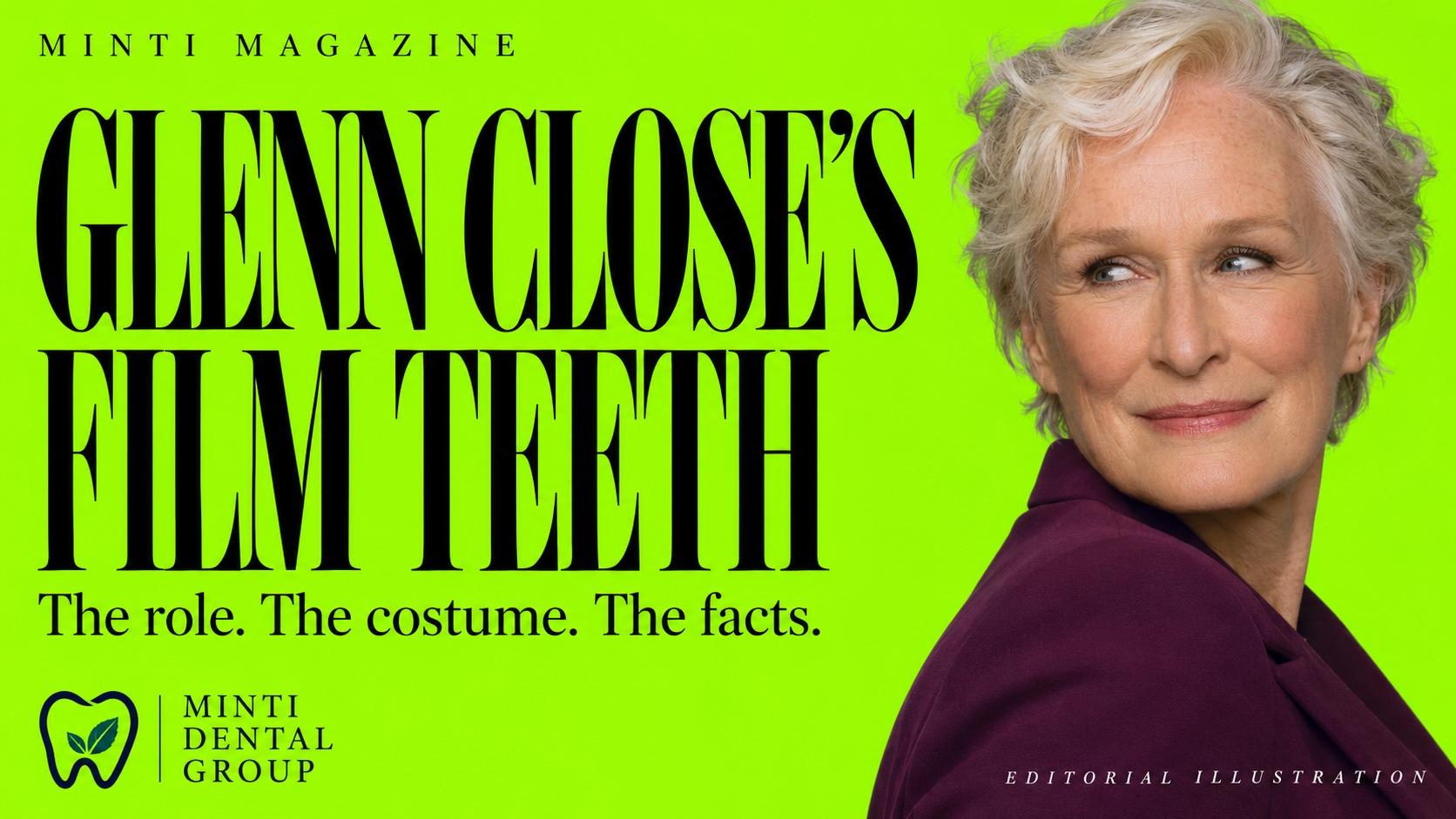
Glenn Close finally has an Oscar. After eight acting nominations, she was one of the honourees at the Academy's Governors Awards in Hollywood on 15 November, receiving an Honorary Award. The Academy's president praised her "unparalleled emotional range".
And true to form, her next role shows just how far she'll go to disappear into a character. In The Hunger Games: Sunrise on the Reaping, out on 20 November, she plays Drusilla Sickle, and she's almost unrecognisable. Part of that transformation? False teeth.
Before anyone starts googling "Glenn Close veneers": these teeth belong to the character, not to Glenn.
The short answer: the teeth Glenn Close wears as Drusilla Sickle are reported costume teeth, part of the character's look, not a change to her own smile. Film teeth like these are a form of prosthetic: made to be worn over the natural teeth for filming, then taken out. That's completely different from cosmetic dentistry, like veneers or composite bonding, which change your real teeth for everyday life. An Oscar-worthy transformation. But those teeth belong to the character. (Other stars' teeth have changed for roles too, from Ben Affleck fixing his for Armageddon to Tom Cruise's false teeth.)
What's been said about Glenn's Hunger Games teeth?
In a Harper's Bazaar UK interview published on 5 November, Glenn is described as almost unrecognisable as Drusilla Sickle, with "protruding false teeth", a stretched face and a ginger wig. According to Bazaar, the look came from Glenn herself, experimenting in front of the mirror. Separately, she has said of the transformation: "I think it aged me, like, 50 years," as Fashion Times reported.
That's what's on the record. I don't know exactly how the teeth were made, who made them, or what they're made from, and I'm not going to guess. What I can say is that these are described as costume teeth for a character. They're not evidence of any treatment on Glenn Close's own smile.
Film teeth vs real teeth
This is the bit I find fascinating, because people mix the two up all the time.
Film prosthetic teeth
Teeth made for film and TV are part of the costume and make-up. They're often designed to slip over the actor's natural teeth, a bit like a very detailed, very thin mouthguard with teeth on the front. They can make teeth look longer, shorter, crooked, stained, gappy, pointed, or anything else the character needs.
The key things about film teeth:
- They're temporary. They go in for filming and come out afterwards.
- They're removable. The actor's real teeth are still underneath, unchanged.
- They're designed for the camera. They need to look right on screen, not necessarily to be comfortable for eating a three-course meal.
- They're for the character. When filming ends, the character's teeth go back in their case.
Some can even change how an actor speaks or holds their mouth. If teeth protrude, like Drusilla's reportedly do, that can change the whole shape of the face. That's part of why prosthetic teeth can be such a powerful tool for actors.
Cosmetic dentistry
Cosmetic dentistry is a different world. Treatments like veneers, bonding, crowns, whitening and straightening change your actual teeth, for real life.
- Veneers are thin facings bonded permanently to the front of teeth. Many involve removing some enamel first, which doesn't grow back.
- Composite bonding adds tooth-coloured resin to reshape teeth.
- Whitening lightens the natural colour of your teeth.
- Straightening moves teeth into a new position.
These aren't costumes. You wear them every day, eat with them, and look after them for years.
And dentures?
Removable dentures are also sometimes called false teeth, but they're a medical treatment, not a costume. They replace missing teeth so people can eat, speak and smile comfortably. They're made to fit the mouth closely and to be worn day to day.
So "false teeth" can mean three very different things: a costume for a film, a cosmetic change, or a replacement for missing teeth.
Why this matters
Not every on-screen smile is a real smile
We're so used to the "celebrity veneers" storyline that every change to a famous smile gets the same explanation. But actors' teeth change on screen for all sorts of reasons, and very often, it's the costume department, not the dentist.
When you see a star with dramatically different teeth in a film, the most likely explanation is that the teeth belong to the character. Glenn's Drusilla is a great example.
Costume teeth aren't a DIY treatment
There are plenty of novelty and "instant smile" products sold online that clip over your teeth. For a fancy-dress party, that's one thing. But they're not a substitute for proper dental care, and a poorly fitting appliance worn for long periods can trap food and plaque against your teeth and rub your gums.
If you're unhappy with your smile, the answer is a conversation with a dentist, not a costume shop.
Your real smile is worth looking after
Film teeth are designed to be thrown in a box at the end of filming. Your real teeth have to last a lifetime. Whatever you choose for your own smile, look after the teeth underneath first.
What Glenn's transformation teaches us about smiles
Glenn Close has told Harper's Bazaar UK that she isn't a "classic beauty", and she's clearly not afraid to look unglamorous on screen. She's made a career out of becoming other people, and sometimes that means changing her teeth, her nose, her skin and her whole silhouette.
But off screen, those changes come off. That's the line between costume and treatment.
I love that, because it's a reminder that teeth are a huge part of how we read a face. Change the teeth, and you change the character. It's also why decisions about your own smile deserve time and care. If you're thinking about a smile makeover, I've written about how to tell if new teeth might be "too much", and about the stars who've kept their natural smiles.
A few quick questions
Did Glenn Close get veneers? There's no evidence of that. The false teeth she wears in The Hunger Games: Sunrise on the Reaping are reported costume teeth for her character, Drusilla Sickle.
What are film prosthetic teeth? They're removable teeth made for a role, often designed to fit over the actor's natural teeth to change how they look on screen.
Are film teeth the same as veneers? No. Film teeth are temporary and removable. Veneers are bonded permanently to the front of real teeth.
Are clip-on teeth safe to wear every day? Novelty clip-on teeth aren't a substitute for dental treatment. If you're unhappy with your smile, talk to a dentist about your options.
The verdict
Glenn Close's Drusilla Sickle is a masterclass in transformation, and the false teeth are a big part of it. But they're a costume, not a cosmetic makeover.
When filming wraps, the character's teeth come out, and Glenn's own smile is right there underneath. For the rest of us, that's a nice reminder: costumes are for films, and real teeth are for life. Look after yours.
This article is general information based on public reporting. It is not personal dental advice. Glenn Close, the Academy and the makers of The Hunger Games have no connection with this article.