
You've zoomed in on a stranger's teeth on social media, tried to work out whether they're composite or porcelain, and come away none the wiser. Then you read that one is "cheap and cheerful" and the other is "the gold standard", from two people who both seem to be selling something. You're not the only one stuck here. It's one of the most common questions I hear about veneers, and the fair answer is that each has a place.
The short answer: composite veneers are tooth-coloured resin, usually built up directly on the tooth in one visit, with little or no tooth removed. Porcelain veneers are thin ceramic shells made in a lab, which usually means removing some enamel, and that can't be undone. Composite is gentler and easier to repair but stains and chips more readily. Porcelain generally lasts longer and holds its colour better, but it's a bigger, permanent commitment. Which suits you depends on your teeth and how much you want to change. Read about porcelain veneers at Minti and composite bonding, then book a consultation. If a veneer has broken or a tooth hurts, that's a job for my emergency dentist team in Harlow or Enfield first.
Weighing up composite or porcelain? Book a consultation at your nearest Minti practice. I'll look at your teeth, talk you through both, including the downsides, and you'll get the plan and fee in writing before anything is done.
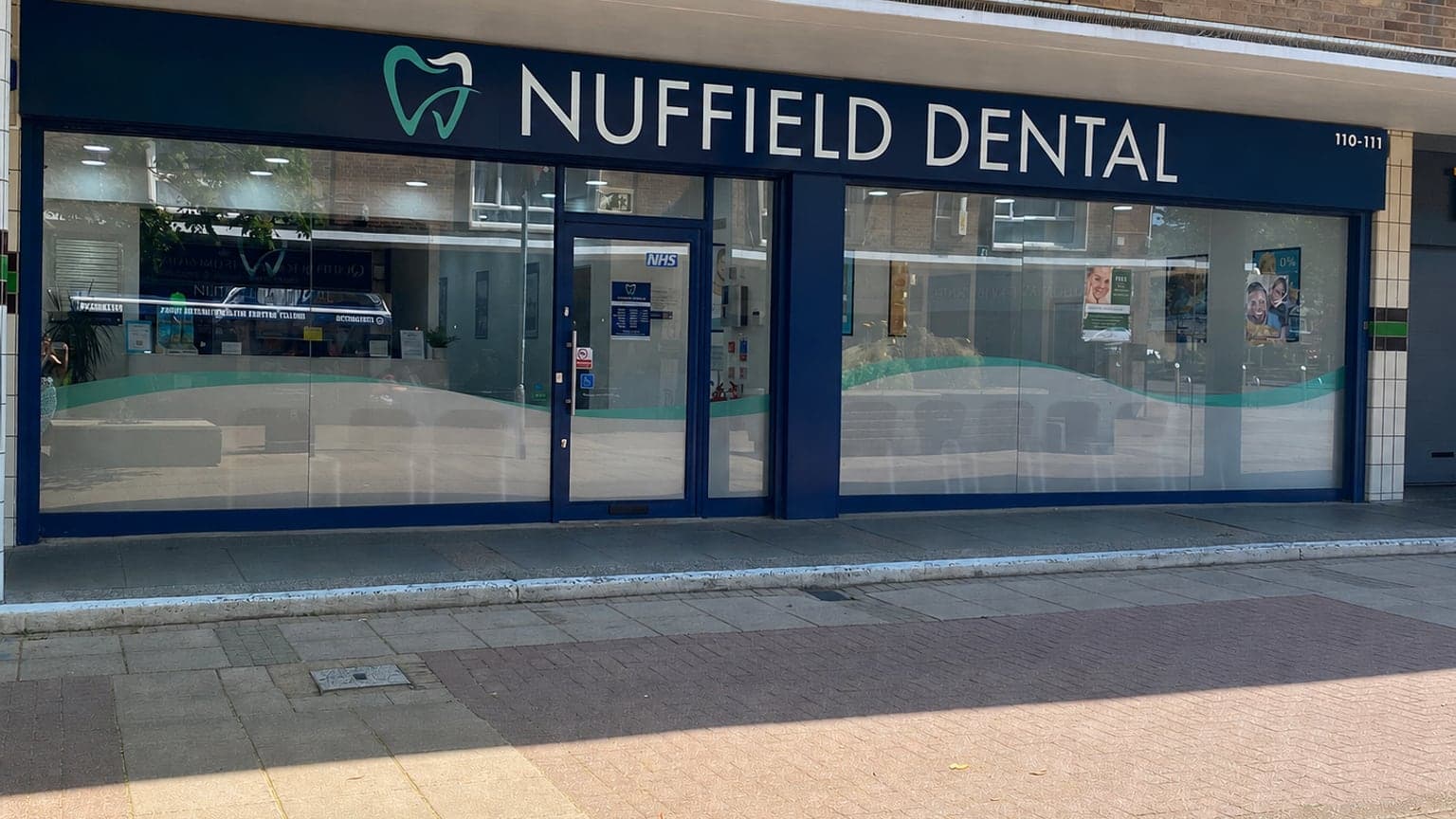
- Nuffield Dental Practice, Harlow: 01279 424 038
- Church Langley Dental, Harlow: 01279 306 690
- Enfield Smiles, Enfield: 020 8804 4320
Veneer broken or come off, had a knock, or in pain? Tell reception it's urgent. I keep same-day appointments for pain and swelling wherever I can. Evening, weekend, or nowhere near us? Call NHS 111.
What's the difference between composite and porcelain veneers?
The Oral Health Foundation describes a veneer as a thin covering fixed to the front of a tooth, a bit like a false nail over a natural nail. Where the two types differ is what they're made of and where they're made.
- Composite veneers use tooth-coloured resin, the same family of material as a white filling. Usually it's added to the tooth in layers, shaped by hand and set with a light, all in the chair. They can also be lab-made, but in-chair is the common route.
- Porcelain veneers are ceramic shells. The tooth is prepared, an impression or scan goes to a lab, and the veneer is bonded on at a later visit.
Think of composite as a sculpture made on site and porcelain as a made-to-measure piece from a workshop. Both can look natural. One is much easier to tweak later.
If you've come across "Emax", that's a type of porcelain, and I explain it in Emax veneers: what are they and are they worth it? And if you're wondering where composite bonding fits in, it overlaps heavily with composite veneers: see composite bonding vs veneers.
How much tooth does each need removing?
This is the question I'd put first, because it's the one you can't take back.
Porcelain veneers usually need a thin layer of enamel removed from the front of the tooth, so the veneer doesn't sit bulky. Enamel doesn't grow back, so once a tooth has been prepared, it will always need a veneer or a crown on it.
Composite usually needs little or no removal of healthy tooth, though the surface is conditioned so the resin can grip. That makes it the more conservative choice. But it isn't a free trial. The General Dental Council has warned that while composite can technically be removed, getting it all off without altering or damaging the enamel is extremely difficult. So "more reversible" is fair. "Reversible" isn't. More in are veneers permanent?
Which lasts longer and stays looking good?
Porcelain, on the whole. But neither is forever, and the research is less tidy than the adverts.
- A 2023 systematic review in the Journal of Evidence-Based Dental Practice found most composite veneers were still in place over follow-ups of roughly two to eight years, with direct composite doing better than lab-made composite. The commonest problems were surface roughness, colour mismatch and staining at the edges.
- A 10-year study of veneers placed in one practice, published in Dental Materials in 2022, found porcelain veneers failed less often than direct composite ones.
Colour is the other big difference. The GDC notes composite is more porous than enamel, so it picks up stain from coffee, tea, red wine, smoking and even turmeric. It also loses its shine over time and needs polishing. Porcelain is far more resistant to staining.
What happens when something goes wrong matters too. A small chip in composite can often be topped up in the chair. A cracked porcelain veneer usually needs replacing, which means another lab-made piece.
How do the costs and upkeep compare?
Both are almost always private. The NHS says veneers are generally only available privately unless there's a clinical need.
I won't quote prices here, because they depend on how many teeth and what each needs. My guide to how much veneers cost in the UK covers what drives the cost and what a quote should include, and our fees and finance page explains payment.
Whichever you choose, the GDC is clear that patients should understand the maintenance they're signing up for: polishing, repairs and, at some point, replacement. That's part of the price.
Which should I choose?
I'll be straight: I can't tell you from a blog. But here's roughly how I think about it in the chair.
- Composite often suits small chips, small gaps, uneven edges and modest reshaping, especially if you want to keep as much natural tooth as possible.
- Porcelain can suit teeth with heavy staining that whitening won't shift, bigger changes in shape, or someone who wants colour to stay stable for longer and accepts the enamel trade-off.
- Neither may be right if you grind heavily, have untreated decay or gum disease, or if the real fix is straightening. If a tooth is badly broken or heavily filled, a crown may be better: see crown vs veneer.
If it's only colour that bothers you, whitening is usually the first thing to discuss, and it has to happen before any veneer, because neither composite nor porcelain changes colour with whitening. See teeth whitening, and for the bigger picture, my veneers guide and composite bonding guide.
When should I book a consultation, and when is it urgent?
For cosmetic changes, there's no hurry. Book a consultation when you're ready. I'll check your teeth and gums first, go through both options with their downsides, and tell you if I think neither is right for you.
Call us today, and say it's urgent, if:
- a veneer or bonding has broken or come off, especially if the tooth underneath is sensitive or sharp (see my veneer fell off: is it an emergency?)
- you've had a knock to the mouth
- a tooth has started to ache, throb or swell
Call 999 or go to A&E, not a dentist, if a knock to the face came with a head injury, you think you've breathed in a piece of tooth or veneer, or you're struggling to breathe or swallow.
If you're near Harlow or Enfield and you're torn between the two, I'd much rather take a look and give you a straight answer than have you decide from zoomed-in photos. Ring your nearest Minti practice and book a consultation. If something has broken or it hurts, say it's urgent and we'll do our best to see you the same day. Anywhere else, or out of hours, call NHS 111.
This article is general information, not a treatment plan. Whether composite or porcelain suits your teeth needs an examination in person.