
You bent down to tie a shoelace, pick up a sock or load the dishwasher, and a tooth started thumping. Then, because you’re human, you stood up and did it again to check. Possibly a third time. Possibly followed by shaking your head like a dog climbing out of a pond. You’re not imagining it. It’s a properly recognised pattern, I ask about it deliberately when I’m taking a history, and lots of people get it.
The short answer: tooth pain that changes with your head position usually comes from one of two places. Either your sinuses are inflamed and your upper teeth are getting the blame, or the nerve inside one tooth is inflamed and the extra pressure when you bend is setting it off. One of those generally clears up without me. The other doesn’t. If it’s one tooth, it’s throbbing, or it kept you awake last night, ring us. My emergency dentist team sees urgent patients in Harlow and Enfield. If we’re closed or you’re not local, call NHS 111. Not sure which tooth it even is? I’ve written about why tooth pain is so hard to locate too.
In pain right now? Call your nearest Minti practice and tell reception it’s urgent. I keep same-day appointments for pain and swelling wherever I can.
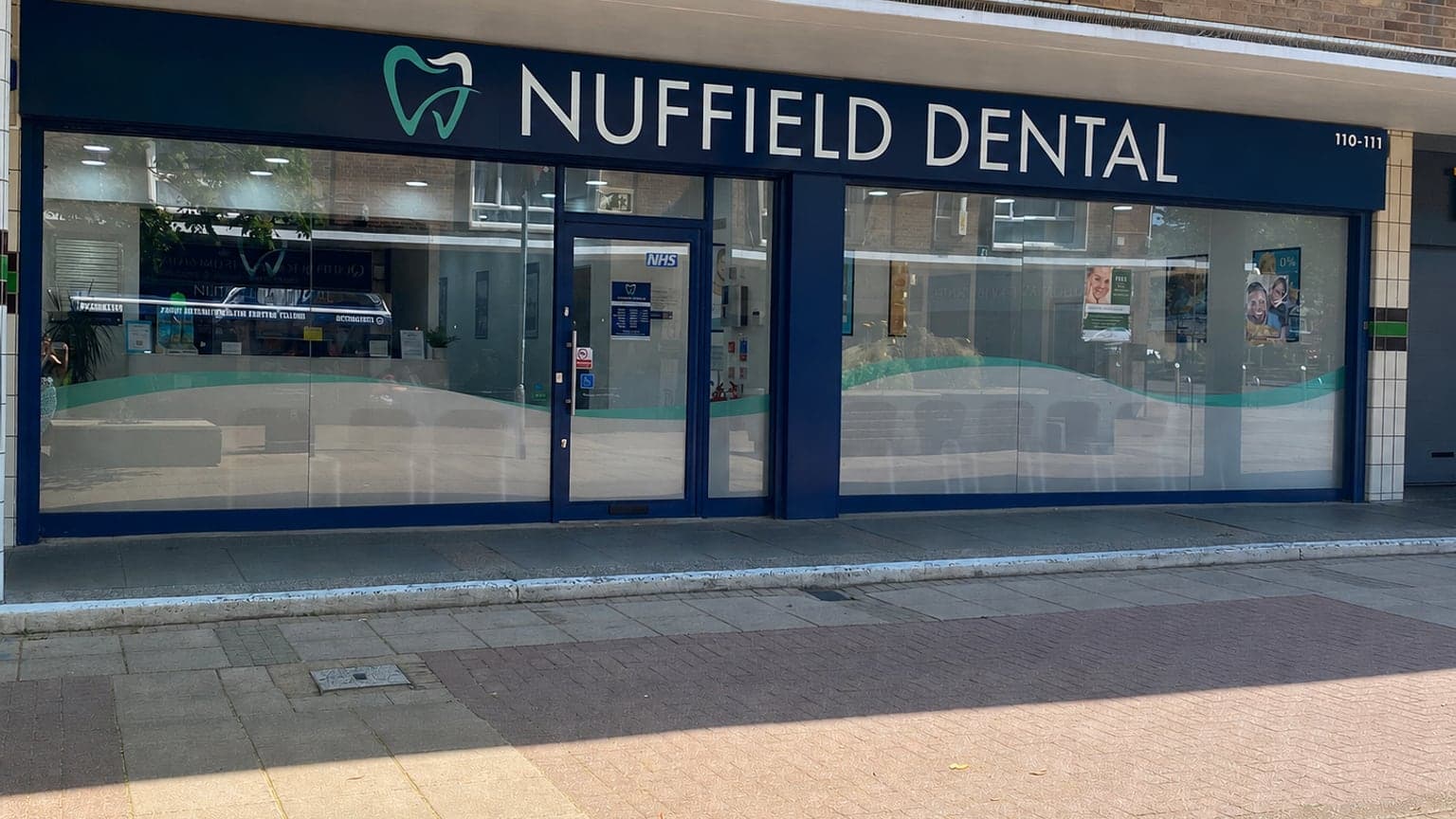
- Nuffield Dental Practice, Harlow: 01279 424 038
- Church Langley Dental, Harlow: 01279 306 690
- Enfield Smiles, Enfield: 020 8804 4320
Evening, weekend, or nowhere near us? Call NHS 111 and they’ll find you an urgent dental appointment. If you’re struggling to breathe or swallow, or swelling is spreading to your eye or neck, that’s 999 or A&E.
Why can bending over make a tooth hurt?
When you bend forward, your head drops below your heart and the pressure in everything above your neck goes up a notch. Normally you’d never notice. You notice when something up there is already inflamed and has no room to spare.
Two places fit that description. The first is your sinuses, the air spaces in your cheeks that sit directly above your upper back teeth. The second is the inside of a tooth. The nerve of a tooth lives in a tiny chamber with solid walls, and that’s the problem. Sprain your ankle and it swells outwards. An inflamed tooth nerve can’t swell anywhere, so the pressure builds in a sealed room with no windows, right on top of the nerve. Add the extra push from bending over, or from lying down at night, and it throbs. Pain that’s worse when you lie down or bend over is part of the formal description I use for a badly inflamed nerve, which we call irreversible pulpitis, and when a patient volunteers it unprompted, my ears prick up.
So the bend test tells you something is inflamed. It doesn’t tell you which of the two it is. The rest of this article is how I work that out.
Could sinus pressure cause tooth pain?
Yes, and it’s one of the classic cases of mistaken identity in my job. Your upper back teeth and your sinuses are upstairs-downstairs neighbours. The roots of those teeth sit just under the sinus floor, the bone between them is very thin, and they share nerves. When a cold or an allergy inflames the sinus lining, it’s as if the flat upstairs has let the bath overflow. The damp patch appears on your ceiling, and your teeth take the blame for a problem that isn’t theirs.
The NHS lists toothache as a recognised symptom of sinusitis, alongside a blocked or runny nose, pain and tenderness around the cheeks, eyes or forehead, green or yellow mucus and a reduced sense of smell. The pain classically gets worse when you tip your head forward. The teeth can even be tender to bite on or tap, usually several of them in a row rather than one.
The reassuring part: most sinusitis is caused by a virus and clears up by itself within about four weeks. Rest, fluids, paracetamol or ibuprofen and a salt-water nasal rinse are the NHS basics, and a pharmacist can help with the rest. It’s one for your GP if you’re not improving after three weeks, or sooner if you’re very unwell or painkillers aren’t helping.
Why does shaking my head make the tooth ache?
Jolting movements are in the same family as bending. Jumping, jogging, thumping down the stairs or a vigorous head shake all jar an inflamed sinus, and the textbooks list jarring movement as a typical aggravator of sinus-related tooth pain. So if your teeth ache with every heel strike on a run and you’ve got a stuffy nose, my money is on upstairs.
It isn’t proof, though. A tooth with inflammation around its root is sore to any knock, which is why it hurts when you tap it or bite on it. I’ll be honest: shaking your head isn’t a recognised dental test, and you won’t see me asking patients to do it in the chair. If it’s uncomfortable enough that you’ve noticed, take that as your cue to stop testing and start getting it looked at.
How can you tell sinus pain from dental pain?
You can’t always, and neither can I without testing. But there are decent clues, and the first is the easiest of all. If it’s a bottom tooth, your sinuses have an alibi. They live upstairs and can’t reach.
More likely your sinuses if:
- it’s several upper back teeth aching together, not one
- you’ve got, or have just had, a cold, a blocked nose or hay fever
- there’s pressure or tenderness around your cheeks, eyes or forehead
- bending forward makes it worse, and hot or cold drinks don’t leave a pain that lingers
More likely a tooth if:
- you can point to one tooth, or it’s a lower one
- hot or cold sets it off and the pain hangs around long after the drink has gone
- it throbs by itself, especially at night
- your nose is completely clear
In the surgery it’s usually quick for me to settle. With sinus trouble, the whole row of teeth tends to be a bit tender but each one responds normally when I test its nerve. With a tooth problem, one tooth stands out from its neighbours.
There’s one twist I always keep in mind, because it catches people out. Sometimes it’s both, and the tooth started it. An infected upper back tooth can leak into the sinus above and cause a sinus infection from below. The giveaways are that it’s on one side only, it drags on for months, antibiotics don’t shift it for good because the source is still there, and there’s often a foul smell or taste. Oddly, the guilty tooth frequently doesn’t hurt at all. So if you’ve got one-sided sinus trouble that never quite clears, in my view it’s worth letting me look at the teeth underneath.
What symptoms suggest the tooth itself is the problem?
I’ll play this section straight, because these are the ones I don’t want you sitting on. The signs that the tooth is the source rather than the victim:
- pain that lingers after hot or cold, often for thirty seconds or more
- throbbing that starts unprovoked, and gets worse when you lie down
- pain that ordinary painkillers barely dent
- one tooth that hurts to bite on or feels as if it’s sitting high
- a swollen or tender gum beside the tooth, or a bad taste in your mouth
- a swollen cheek or jaw, or a temperature
The first three point to a nerve that’s badly inflamed and unlikely to recover without help. The last three suggest an infection may be forming at the root. Neither gets better by waiting, and a dental abscess won’t go away by itself. What treatment involves depends on what I find, so I won’t guess from here.
When should you see a dentist?
If everything points to your sinuses, you’ve got a cold and it’s easing day by day, you can reasonably give it time. If you’re not sure, start with a dentist. That’s the standard advice, and it’s not me drumming up trade: I can rule the teeth in or out in one visit, and if they’re all innocent you can take that to your pharmacist or GP with confidence.
The NHS advice is to see a dentist if toothache lasts more than two days. Call sooner, today if you can, if:
- painkillers aren’t touching it, or it’s keeping you awake
- you’ve got a high temperature, a bad taste in your mouth, or a swollen gum, cheek or jaw
- it’s clearly one tooth and it’s getting worse, not better
Call 999 or go to A&E, not a dentist, if:
- you’re finding it hard to breathe, swallow or speak
- the area around your eye is swollen or red, or your vision is affected
- swelling is spreading down into your neck
- you have a severe headache with confusion or drowsiness
While you’re waiting to be seen, ibuprofen or paracetamol (as per the packet), soft food, chewing on the other side and avoiding anything very hot or very cold will take the edge off. They won’t fix the cause, so don’t let one good morning talk you out of making the call.
If you’re near Harlow or Enfield and it’s getting worse rather than better, I’d much rather take a look than have you spend another week avoiding your own shoelaces. Ring your nearest Minti practice, say it’s urgent if it is, and we’ll do our best to see you the same day. The numbers are at the top of this page and on my emergency dentist page. Anywhere else, or out of hours, call NHS 111.
This article is general information, not a diagnosis. Tooth and facial pain needs examining in person to find the cause.