
If one whole side of your face is throbbing and you’ve spent the evening pressing each tooth in turn like you’re checking avocados, I want to say two things before anything else. You’re not going mad, and you don’t need to solve this yourself. “It’s somewhere on this side, but I honestly couldn’t tell you which” is something I hear in my surgery more often than almost any other sentence. Teeth are brilliant at raising the alarm and useless at giving directions. A smoke alarm that won’t tell you which room.
Here’s the bit I care about most: you don’t need to know which tooth it is to get help. Finding the culprit is my job, not yours, and I’m considerably better equipped for it than you, a bathroom mirror and Google. If it’s been hurting for more than a couple of days, it kept you awake last night, or painkillers aren’t touching it, ring us. My emergency dentist team sees urgent patients in Harlow and Enfield. If we’re closed or you’re not local, call NHS 111.
In pain right now? Call your nearest Minti practice and tell reception it’s urgent. I keep same-day appointments for pain and swelling wherever I can.
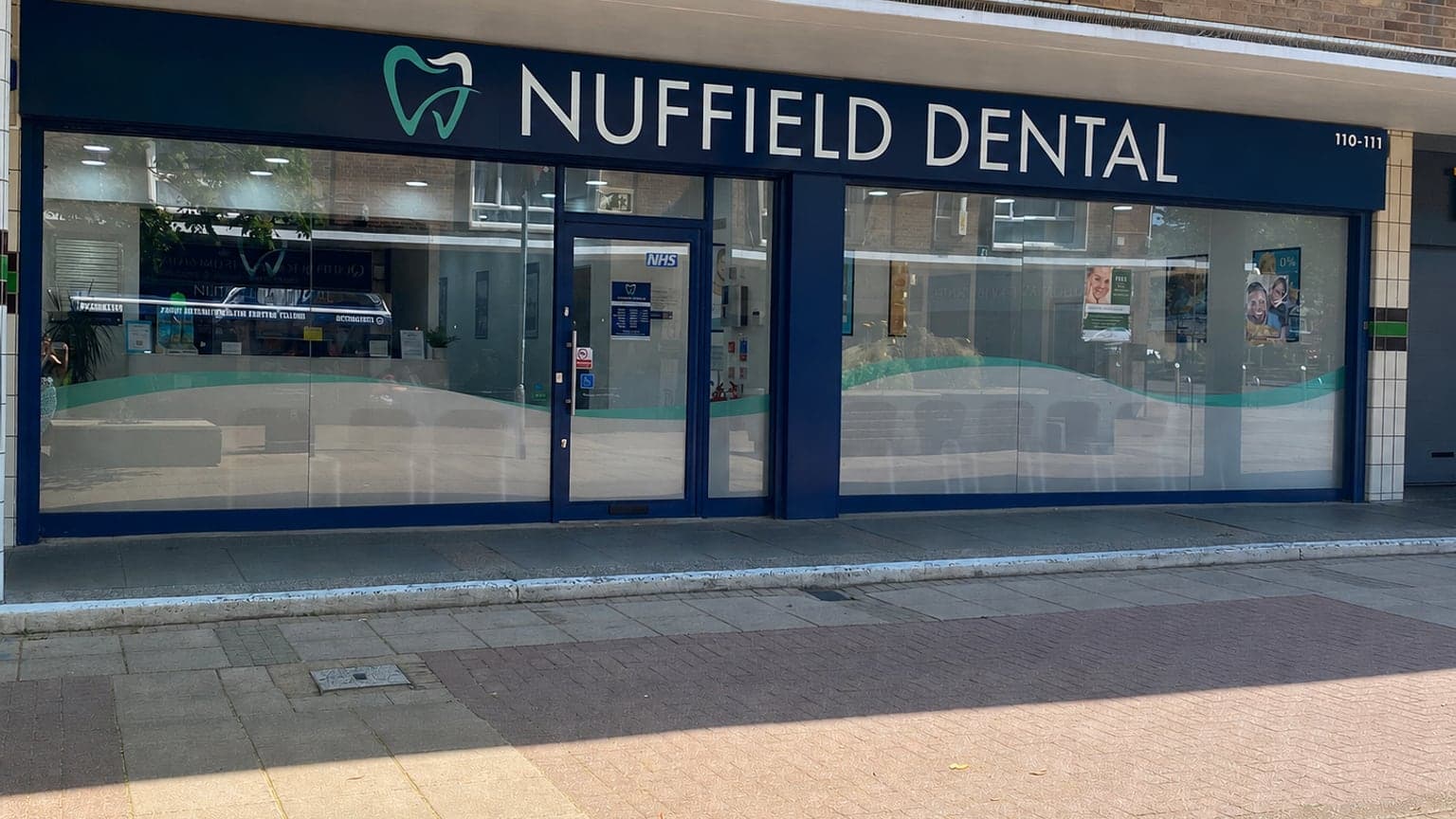
- Nuffield Dental Practice, Harlow: 01279 424 038
- Church Langley Dental, Harlow: 01279 306 690
- Enfield Smiles, Enfield: 020 8804 4320
Evening, weekend, or nowhere near us? Call NHS 111 and they’ll find you an urgent dental appointment. If you’re struggling to breathe or swallow, or swelling is spreading to your eye or neck, that’s 999 or A&E.
If you’d like to know why your mouth is being so unhelpful, read on. If you’re waiting for an appointment, my guide to what to do in a dental emergency before you reach us will help you through the next few hours.
Why can tooth pain be so difficult to locate?
Blame the wiring. In the middle of every tooth is the pulp, the soft bit with the nerve and blood supply. The nerves in there are specialists. They do pain, and they do it superbly, but nobody fitted them with the position sensors you’ve got in your skin. Prick your finger and you know exactly where. Upset the pulp and your brain gets the dental version of a text that just says “we need to talk”. Loud, alarming, no details.
So a deep, throbbing ache can feel like two or three teeth at once, and in my experience the back teeth are the worst offenders. When researchers tested this properly, most people could only get to within a tooth either side of the real one. Your vagueness isn’t you being a poor witness. It’s how the system was built.
There is a plot twist, and it’s one I always ask about. If the inflammation spreads to the ligament that holds the tooth in its socket, that ligament does have pressure sensors. Suddenly you can point straight at the tooth, it hurts when you bite, and it may feel a bit “high”, as if it’s arriving first when you close your teeth. Satisfying as it is to finally name the suspect, I’d never read that as a sign things are settling. It usually means the problem has moved on a stage, so that’s a good moment to pick up the phone.
Can one tooth make another tooth feel painful?
Yes, and it frames innocent teeth all the time. It’s called referred pain, which just means pain felt somewhere other than where it started. Think of a block of flats sharing one intercom. The nerves from your upper and lower teeth on one side all buzz through to the same main nerve, and your brain, answering the door, often has no idea which flat rang.
The classic case is a lower back tooth in trouble while its owner is absolutely certain it’s an upper one, or the other way round. The tooth that feels guilty often has a cast-iron alibi, and the real culprit is sitting quietly on the floor below. The pain does tend to stay on the same side of your face, so pain on both sides, or pain that seems to have swapped, makes me look beyond a single tooth. It’s also why I won’t treat a tooth on a hunch alone, yours or mine, however convincing the hunch. I’ve seen how often the hunch is wrong.
Could the pain actually be coming from your jaw or sinuses?
It could. Not everything that hurts like a tooth is a tooth, and you don’t need to work out which before you call. These are the usual impostors I check for.
Sinuses. The roots of your upper back teeth are next-door neighbours with the sinuses in your cheeks, and noisy neighbours at that. When the sinuses are inflamed, the NHS lists toothache as one of the symptoms. The giveaways: several upper teeth ache at once rather than one, you’ve had a cold or a blocked nose, and it’s worse when you bend forward, which makes tying your shoelaces an accidental diagnostic test. Sinusitis usually clears by itself within about four weeks. If it isn’t improving after three weeks, that’s one for your GP rather than me.
Jaw joint and muscles. Your chewing muscles already work all day, and if you clench or grind they’re pulling a night shift nobody asked for. Most people have no idea they do it, though whoever shares their bed often does. Overworked muscles ache, and that ache can feel exactly like toothache. Clues are pain around the jaw, ear and temple, clicking or popping when you open wide, and pain that’s worse when you’re chewing or stressed.
Nerve pain. Much rarer. Trigeminal neuralgia causes sudden, severe pain, often described as an electric shock in the jaw, teeth or gums, and it can be set off by something as light as washing your face, brushing your teeth or a breeze. The usual route is that I rule out the teeth first, then your GP takes it from there.
And one that matters more than all of those. Pain from the heart can spread to the jaw. If your jaw or lower teeth hurt along with chest pain or tightness, pain down your arm, breathlessness, sweating or feeling sick, don’t ring me. Call 999.
How does a dentist work out which tooth is responsible?
Much like a detective, minus the raincoat. I start with the witness, which is you. Does cold set it off, and does the pain hang about afterwards or clear off in seconds? Does it hurt when you bite, or when you let go? Did it wake you up? Pain that lingers after hot or cold, or starts up unprovoked and ruins your sleep, points me to a nerve that’s badly inflamed. A quick zing that vanishes is usually something milder. “It throbs at night and I can’t tell where” is a perfectly good witness statement, so don’t feel you need a neat answer before you come in.
Then I interview the suspects, one at a time. Nobody reaches for a drill to find out:
- A gentle tap on each tooth in turn. Healthy teeth are unbothered. One with inflammation around its root tends to confess immediately.
- A cold test, and sometimes a tiny electrical one, to compare how each nerve responds with its neighbours. Over-reacting is a clue. Not reacting at all is also a clue.
- Biting on a small plastic tool, one corner of the tooth at a time. Sharp pain on biting, or just as you let go, makes me suspect a crack.
- X-rays, to look for decay hiding under old fillings and changes around the root tips.
- Occasionally, numbing one area at a time. If the pain switches off when the lower teeth go numb, the upper tooth you were pointing at is officially cleared.
I’ll be honest: some cases take more than one visit. Cracks are the master criminals here, because they rarely show on an X-ray. If everything tests normally on day one, I’d rather review you than guess, because treating the wrong tooth helps nobody, and I say that as someone who has to look you in the eye afterwards. Even then, there’s usually plenty I can do about the pain while we track it down. What the fix is depends on what I find, so I won’t promise you a particular treatment before I’ve had a look.
When does difficult-to-locate pain need urgent attention?
Some vague tooth pain is sensitivity or a tired jaw, and it settles in a day or so. But nobody hands out medals for putting up with toothache. The NHS advice is to see a dentist if it lasts more than two days. Call sooner, today if you can, if:
- painkillers aren’t touching it, or it’s keeping you awake
- you’ve got a high temperature, a bad taste in your mouth, or a swollen cheek or jaw
- the pain started after a knock to the face or teeth
Call 999 or go to A&E, not a dentist, if:
- you’re finding it hard to breathe, swallow or speak
- swelling is spreading towards your eye or down into your neck
- you can’t open your mouth properly because of the swelling
One more thing people don’t expect, and in my view it’s the most important warning on this page. If a tooth that was throbbing badly suddenly goes quiet, the fire isn’t necessarily out. It can mean the alarm has stopped working: the nerve has died, and an infection can carry on building without any pain for a while. A dental abscess won’t go away by itself, so get it checked even though it has stopped hurting.
While you’re waiting to be seen, ibuprofen or paracetamol (as per the packet), soft food, chewing on the other side and avoiding anything very hot, very cold or sweet will take the edge off. They won’t fix the cause, so don’t let one good hour talk you out of making the call.
If you’re near Harlow or Enfield and it’s getting worse rather than better, I’d much rather take a look than have you spend another night wondering which tooth it is. Ring your nearest Minti practice, say it’s urgent, and we’ll do our best to see you the same day. The numbers are at the top of this page and on my emergency dentist page. Anywhere else, or out of hours, call NHS 111. Either way, make the call.
This article is general information, not a diagnosis. Tooth and facial pain needs examining in person to find the cause.