Rylan Clark is off to Children in Need. He was announced on 17 October as part of this year's presenting team alongside Alex Jones and Sara Cox, ready for the appeal show on 13 November. Which means that smile is about to be on prime-time BBC One again.
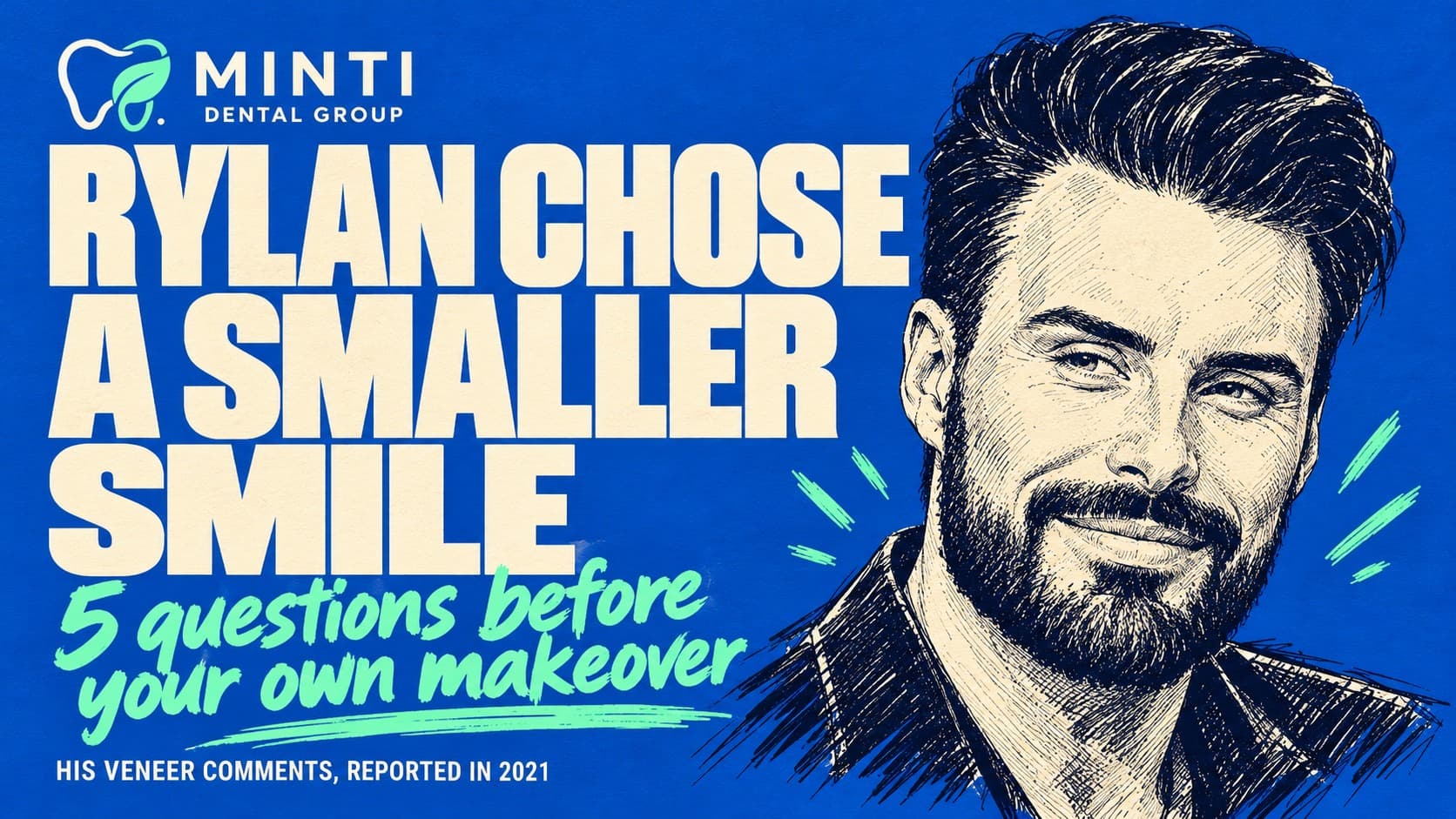
And it's a smile with a story. When Rylan first appeared on our screens, his bright white teeth became almost as famous as he did. Then, a few years ago, he had them replaced. And here's the twist I love: his second set wasn't bigger. It was smaller.
The short answer: Rylan has said his replacement veneers were "a hell of a lot smaller" and that he wanted them to look a lot more natural. It's a brilliant lesson for anyone thinking about a smile makeover: bigger and whiter isn't automatically better, and the best result is the one that suits your face. Before you commit to anything, there are five questions I'd want you to ask about size, shape, shade, how much tooth will be prepared, and what upkeep you're signing up for. (If you're new to the topic, start with my guide to veneers, or see what other celebrities have said about theirs.)
What did Rylan actually say?
Back in December 2021, Entertainment Daily reported Rylan's comments about his new teeth, made in an interview with MailOnline. In typical Rylan style, he didn't hold back.
"The new ones are a hell of a lot smaller," he said, adding that he'd wanted to make them "a lot more natural" (HuffPost UK reported the same comments). His explanation for the change was pure Rylan: "I couldn't fit the last ones on a plane to the Pacific."
He was clear he wasn't giving up on veneers altogether, joking that without them he'd look rather gummy. And as for the old set? He said they were in a bag somewhere and he was planning to get them framed. Which is the most showbiz thing I've ever heard about veneers.
That's his account, and it's not a new treatment revelation. I don't know what material his veneers are made of, how many teeth are involved, or exactly what his dentist did, and I won't guess. But his comments tell us something that I think every potential veneer patient should hear.
Why "smaller and more natural" is the real lesson
People thinking about veneers often bring photos of celebrity smiles. Usually very white, very straight, and very big.
But teeth that look amazing on one face can look completely wrong on another. Your teeth sit in the middle of your face, framed by your lips, your gums and your bone structure. Change their size, length or colour too dramatically, and they can start to look like they've arrived from somewhere else.
Rylan's original smile was a statement. His second one is quieter. The fact that he chose to go smaller and more natural tells you that a smile makeover isn't a one-time decision. Tastes change. Faces change. Fashions in teeth change, too.
So when you're planning yours, the question isn't "what's the best smile?" It's "what's the best smile for me?"
Question 1: What size should my teeth be?
This is the one Rylan's story is all about.
Ask your dentist how long and how wide your new teeth would be, and why. A good dentist will talk about proportions: how your front teeth relate to each other, to your lips when you smile, and to the rest of your face.
Bigger isn't always better. Teeth that are too long or too bulky can make it hard to close your lips comfortably, change how you speak, or simply look a bit much. Ask to see a mock-up or a preview of the planned shape before anything permanent is done.
Question 2: What shape suits my face?
Teeth come in more shapes than people realise. Some are squarer, some more rounded, some have softer edges. Natural teeth also aren't perfectly identical, and a smile where every tooth is exactly the same can look artificial.
Ask your dentist what shape they're recommending, and whether it's based on your existing teeth, your face, or just a standard template. You want a plan for your mouth, not a catalogue smile.
Question 3: What shade is right, and why?
Here's where a lot of regret happens.
Very bright white veneers can look brilliant in a selfie, but out of place next to your natural teeth, your skin tone or the whites of your eyes. And once a veneer is made, its colour doesn't change. Teeth whitening only works on natural teeth, not on veneers, crowns or fillings.
So if you're planning to whiten your other teeth, do it before your veneers are matched, not after. I've explained how whitening works in my teeth whitening guide. And ask to see the shade in natural daylight, not just under the bright lights of a dental surgery.
Question 4: How much of my natural tooth will be prepared?
This is the question I most want you to ask, because it's the one that matters most in the long run.
Many veneer procedures involve removing some of the natural enamel from the front of the tooth so the veneer sits flush and doesn't look bulky. Enamel doesn't grow back. That makes the decision permanent for those teeth, even if the veneers themselves get replaced later on.
Some options need less preparation than others, and some situations can be handled with something gentler altogether, like composite bonding, which is built up on the tooth with little or no drilling. My composite bonding guide explains how the two compare. So ask directly: how much tooth will you remove, and is there a less invasive way to get the result I want?
Rylan's own comments are a useful reminder of this. He said he was keeping veneers rather than going back to his natural teeth. Once you're on that road, you're usually on it for good.
Question 5: What maintenance will I need?
Veneers aren't a one-off purchase. They're more like a long-term relationship.
Ask your dentist:
- How long are these likely to last?
- What happens if one chips or comes loose?
- What will repairs or replacements cost in the future?
- What check-ups and hygiene visits will I need?
No veneer has a guaranteed lifespan. They can chip, crack, stain at the edges or start to look dated as your gums and face change. Replacing them, as Rylan did, is a normal part of having them. I've written more about this in how long a smile makeover actually lasts, and the cost side is covered in Cardi B's $12,500 veneers.
A makeover should reflect your preferences, not someone else's smile
This is the bit I feel strongly about. Social media has made it very easy to fall in love with someone else's teeth. But your smile needs to work for your face, your bite and your life.
If you take one thing from Rylan's story, let it be this: it's completely fine to want a natural-looking result. And it's completely fine to change your mind about what you like. The best time to work that out is before treatment starts, with a proper plan, previews and plenty of questions, rather than afterwards.
And whatever you decide, the teeth underneath still need looking after. Brush twice a day with fluoride toothpaste, clean between your teeth, and keep up with your check-ups.
A few quick questions
Did Rylan get rid of his veneers? No. He replaced his original set with a smaller, more natural-looking set, and said he was keeping veneers.
Why did Rylan change his veneers? In his own words, he wanted the new ones to be "a lot more natural", and said they were "a hell of a lot smaller" than the originals.
Can veneers be made smaller? Veneers can be replaced with a new set of a different size, shape or shade. Whether that's possible, and what it involves, depends on your teeth and needs a dentist's assessment.
Are veneers permanent? The veneers themselves may need replacing over time, but because many procedures remove some natural enamel, the decision to have them is usually permanent for those teeth.
The verdict
Rylan's first smile made headlines. His second one made a better point: sometimes less really is more.
If you're thinking about your own smile makeover, don't start with a celebrity photo. Start with questions about size, shape, shade, tooth preparation and upkeep. Get those right, and you'll end up with a smile that looks like you, just a bit more confident.
This article is general information based on what Rylan Clark has said publicly. It is not personal dental advice. Rylan Clark and BBC Children in Need have no connection with this article.