
On this page
The injection should have worn off ages ago. You've slept on it, eaten on the other side, and poked your lip more times than you'd admit. But a patch of your lip, chin or tongue still feels numb, tingly or just not quite yours. Of course you've ended up searching for nerve damage. It's a worrying thing to notice, and it's a sensible thing to ask about.
The short answer: numbness that lasts days after dental work is uncommon, and when a nerve has been irritated or bruised, it usually recovers. It's most linked to lower wisdom tooth removal and implant surgery in the lower jaw, and rarely to the injection itself. The NHS says nerve problems after wisdom tooth removal usually get better but can last a few weeks or months. Don't wait it out on your own, though: if you're still numb the day after treatment, ring our emergency dentist team in Harlow or Enfield, or NHS 111 if we're closed. If your treatment was in hospital, contact that team too.
Call 999 straight away if one side of your face droops and you also have weakness in an arm or slurred or confused speech. These are the NHS FAST signs of a stroke. Don't wait to see if it passes, and don't assume it's the dental anaesthetic.
Still numb the day after treatment? Call your nearest Minti practice and tell reception what you had done, when, and where the numbness is. I keep same-day appointments for pain and swelling wherever I can.
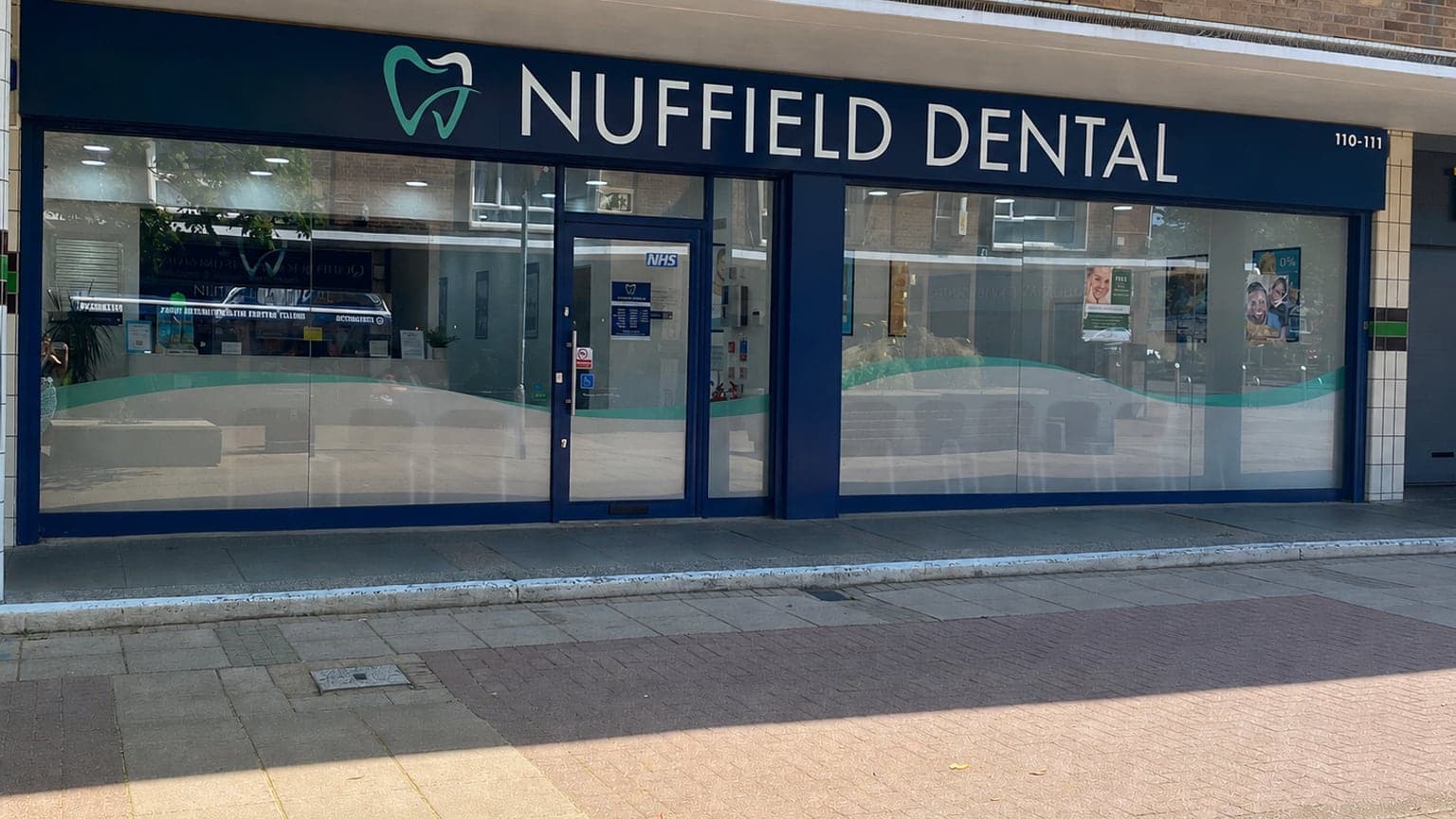
- Nuffield Dental Practice, Harlow: 01279 424 038
- Church Langley Dental, Harlow: 01279 306 690
- Enfield Smiles, Enfield: 020 8804 4320
Evening, weekend, or nowhere near us? Call NHS 111. If you're struggling to breathe or swallow, or swelling is spreading to your eye or neck, that's 999 or A&E.
Is it normal to still be numb days after dental work?
No. Normal numbness from a dental injection wears off within hours. NHS hospital leaflets say a couple of hours to two or three hours, and a dental review puts soft-tissue numbness at three to five hours. I've set out the typical timings in how long numbness lasts after the dentist.
Lower wisdom tooth surgery is the exception to "a few hours". One NHS trust says numbness after it "can last quite a few hours and even longer", and asks patients to contact the surgical team urgently if it's still there after a week. A day of numbness after a small upper filling is unusual. A slow return of feeling after a difficult lower wisdom tooth is more expected, but it still needs reporting. Not normal doesn't mean permanent.
What can damage a nerve during dental treatment?
Two nerves run close to the lower back teeth. BAOMS, the oral and maxillofacial surgeons' association, explains that one supplies feeling to the lower lip and the skin over the chin, and the other supplies the tongue. Anything done close to them can occasionally bruise or injure them.
- Lower wisdom tooth removal. This is the best-known risk. BAOMS says the risk to the lip and chin nerve is small, and higher when the tooth sits in very close contact with the nerve. The risk to the tongue nerve is smaller still.
- Implants in the lower jaw. An NHS hospital leaflet explains that these nerves can sometimes be bruised when an implant is placed, causing tingling or numbness in the lip, chin or tongue.
- The injection itself. Rarely, the needle used to numb lower teeth can injure the nerve directly. StatPearls notes that this can lead to lasting numbness or altered feeling in the lower lip, tongue or teeth, and that most cases resolve on their own.
What does nerve damage feel like?
BAOMS describes it as numbness or pins and needles in the tongue, lower lip, skin over the chin, or any combination of these. Taste is rarely affected, though the hospital implant leaflet lists altered taste as a rarer possibility.
What to tell us when you ring:
- exactly where the numbness is, and whether it's one side only
- whether it's total numbness or tingling
- whether it's shrinking, staying the same or spreading
- what treatment you had, and when
Does nerve damage after dental work go away?
Usually, yes. This is the reassuring part:
- The NHS says nerve damage after wisdom tooth removal usually gets better but can last a few weeks or months.
- BAOMS says it may take up to 18 months to recover, and that rarely the nerve doesn't recover fully, leaving small patches of numbness on the lip or chin.
- The hospital implant leaflet says altered feeling usually recovers after a few months and is rarely permanent.
Recovery is often gradual. What helps most is being seen early, so the numb area can be recorded and checked over time, and so you're referred to a specialist team if it needs one.
Could facial numbness or drooping be something else?
I'll keep this bit plain. Occasionally, when the lower jaw is numbed, the anaesthetic spreads to the nerve that moves the face, and one side of the face droops for a while. StatPearls notes this usually resolves within hours as the anaesthetic wears off. It happens at the time of treatment, not days later.
But you should never assume a drooping face is the dental anaesthetic. The NHS FAST test is:
- Face: has one side drooped?
- Arms: can you lift both arms and keep them there?
- Speech: is it slurred or confused?
- Time: call 999 if you notice any of these.
The NHS says to call 999 even if the symptoms go away. If you're unsure whether it's the anaesthetic or something else, call 999 anyway.
When should you see a dentist about numbness that won't go?
My rule: if you're still numb the day after an ordinary filling or treatment, ring us. After surgery, follow the timescale on your aftercare leaflet, and ring sooner if you're worried. The NHS advice on local anaesthetic side effects is to get help from 111 or a GP if you're worried or they don't get better.
When you come in, we'll check exactly where the altered feeling is and how strong it is, look at the area that was treated, and write it down so it can be compared over the following weeks. If it needs a specialist opinion, we can refer you to an oral surgery team. If the whole thing has left you wary of injections, our nervous patients page explains how we take things at your pace.
Call us today if:
- you're still numb the day after routine treatment
- you're still numb days after a wisdom tooth or implant procedure (and contact the team who did it)
- the numb area is spreading or getting worse
- there's swelling, a temperature or increasing pain where you were treated (see sore injection site after the dentist)
Call 999 or go to A&E, not a dentist, if:
- one side of your face droops and you have arm weakness or slurred or confused speech, even if it passes
- you're finding it hard to breathe, swallow or speak
- swelling is spreading towards your eye or down into your neck
- you can't open your mouth properly because of swelling
While you're waiting, take care with hot drinks and food on the numb side, because you may not notice a burn or a bite. My guide to recovery after dental treatment covers what's normal in the days after, and my tooth extraction guide covers aftercare if you had a tooth out.
If you're near Harlow or Enfield and part of your mouth still feels numb when it shouldn't, I'd much rather take a look now than have you spend weeks wondering whether it's getting better. Ring your nearest Minti practice and we'll do our best to see you the same day. Anywhere else, or out of hours, call NHS 111.
This article is general information, not a diagnosis. Numbness that lasts longer than expected needs examining in person.