By Dr Nishma Kotecha, dentist
Remember, remember the fifth of November. And this year, Matthew Lewis wants you to remember it properly. The actor who played Neville Longbottom in Harry Potter has just launched a BBC podcast, Gunpowder and Treason: The Real Guy Fawkes, digging into the real story behind the Gunpowder Plot, just in time for Bonfire Night.
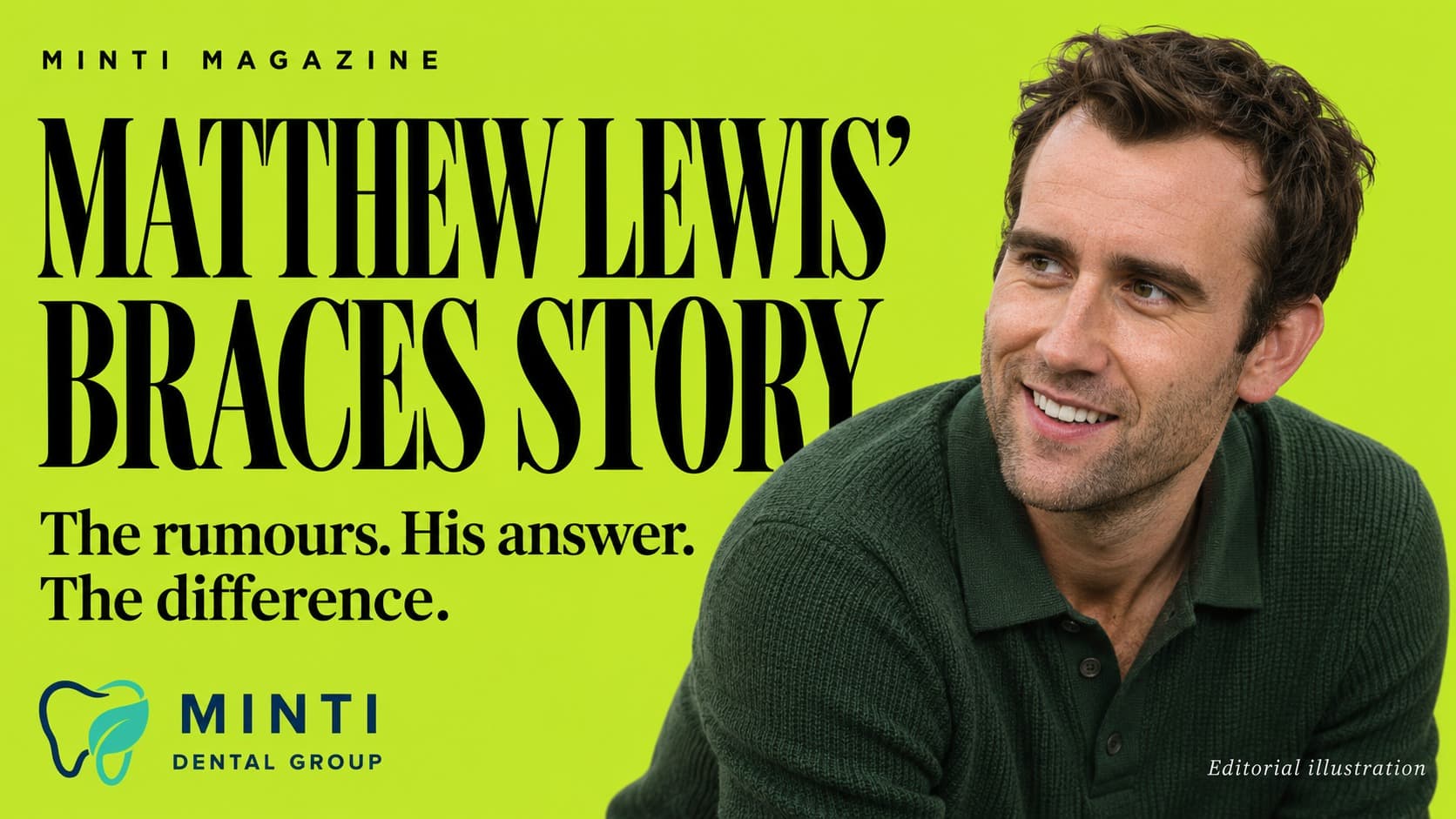
So while he's busy separating fact from myth about 1605, I'd like to do the same for a myth about him. Because for years, people have been convinced that the Neville Longbottom glow-up came courtesy of a set of veneers.
His answer? Braces.
The short answer: in his 2015 Attitude interview, Matthew Lewis said people from home "always talk about my veneers", and set the record straight: "I haven't got veneers, these are my actual teeth!" He said he wasn't allowed braces while filming Potter, and first got them when he wrapped on the last film. That's a really useful example of something I explain all the time: straightening teeth and covering them with veneers are completely different approaches. Not every celebrity smile transformation means veneers. (He's in good company, too: Tom Cruise wore braces at 39, and plenty of royals have worn braces as well.)
What did Matthew Lewis actually say?
In his interview with Attitude magazine, first published in May 2015 and reported by Out, Matthew talked about the reaction he gets when he goes home.
"Whenever I go back to Leeds or see people I went to school with they always talk about my veneers," he said. "I'm like, 'I haven't got veneers, these are my actual teeth!'"
He explained, as Attitude reported, that he "wasn't allowed to have braces" on his teeth as a teenager while he was playing Neville. "So I first got braces when I wrapped on the last Potter film."
He wore them for six months, and was fairly colourful about how much fun that was. Let's just say he described them as painful, with a word I'm not allowed to put on a dental blog.
That's what's on the record. I don't know what type of braces he had, what his teeth were like before, or what else, if anything, he's had done since. I'm not going to guess. What I can say is that he's told us, in his own words, that his smile is his own teeth, straightened.
Why everyone assumed veneers
I get why people jumped to veneers. The change was big, and it happened in public. One minute he was a teenager on screen, with Neville's slightly goofy, endearing look. The next, he was on red carpets looking like a leading man.
And these days, "they've had veneers" is the internet's default explanation for any celebrity whose smile looks better than it used to. I've written about the celebrities who really have talked about their veneers, but for every one who has, there are plenty of people who've been "diagnosed" with veneers by a comment section.
The problem is, a photo can't tell you what's been done. Straight, even teeth can come from orthodontics, veneers, composite bonding, crowns, whitening, or a mixture. Or just good genes and a decent toothbrush. It's the same reason I couldn't confirm what Miley Cyrus has had done. Photos aren't treatment plans.
Straightening vs covering: the big difference
This is the bit I really want you to take away, because people mix these two up all the time.
Straightening moves your teeth
Braces and clear aligners like Invisalign work by gently moving your own teeth into a better position over time. Nothing is put on top of your teeth permanently, and the teeth themselves usually aren't drilled or reshaped. When treatment's finished, what you're smiling with is still you.
The trade-off is time. Straightening takes months, sometimes longer, and it needs commitment: wearing your aligners, going to appointments, and keeping your teeth clean around brackets or trays.
Veneers cover your teeth
Veneers are thin facings bonded to the front of your teeth. They change the colour, shape and sometimes the apparent position of teeth by covering them, not by moving them.
The Oral Health Foundation explains that a small amount of enamel is usually removed so the veneer doesn't feel bulky. Enamel doesn't grow back, so that's a long-term decision. Veneers can also chip, wear and need replacing over the years, which I covered in how long a smile makeover lasts.
Why it matters
If your main issue is that your teeth are crooked, crowded or gappy, covering them doesn't fix the underlying position. It disguises it. Sometimes that's the right choice, for example if teeth are also badly worn or discoloured. But often, moving the teeth first gives a more natural result and keeps more of your own tooth.
Think of it like a wonky picture frame. You can straighten the frame, or you can paint a straight frame over the top of it. Both might look fine from across the room, but only one of them actually fixes the frame.
Why couldn't he have braces while filming?
Matthew said he "wasn't allowed" braces while he was playing Neville, and he didn't get them until he'd wrapped on the last film. That makes sense from a film-making point of view. The Potter films were shot over about a decade, and continuity matters. Neville's look was part of the character, and suddenly appearing with a mouth full of metal halfway through the series would have been tricky to explain at Hogwarts.
The upside of this story is that it shows it's never too late. He didn't straighten his teeth as a child. He did it as a young adult, after the films, and it worked brilliantly.
Can adults still straighten their teeth?
Yes. This is one of the most common questions I get, and the answer surprises a lot of people.
The British Orthodontic Society says teeth can be moved at any age, as long as your teeth and gums are healthy. So adults in their twenties, thirties, forties and beyond can have orthodontic treatment.
A few things to know:
- Gum health comes first. Moving teeth in unhealthy gums isn't a good idea, so a check-up and any gum treatment come before anything else. (Here's what gum disease looks like.)
- There are discreet options. Clear aligners and tooth-coloured braces mean adult treatment doesn't have to be obvious.
- Retainers are for life, really. The BOS says teeth tend to want to move back, and recommends long-term retention. If you've had braces before and your teeth have crept, you're not alone. It's one of the main reasons teeth move as you get older.
- Sometimes it's a combination. Some people straighten first, then whiten or add a little bonding to finish. Straightening first can mean needing far less cosmetic work afterwards.
So which one is right for you?
There's no one answer, but here's how I'd think about it.
Straightening might suit you if your teeth are healthy but crooked, crowded or gappy, you'd like to keep as much of your natural tooth as possible, and you don't mind it taking a bit of time.
Covering, with veneers or bonding, might be considered if your teeth are also chipped, worn, discoloured or misshapen, and moving them alone wouldn't give the result you want.
And quite often, the best plan is a bit of both, in the right order. The key is that someone looks at your teeth, your bite and your gums, and talks you through every option, including the ones that don't involve covering anything. If you're weighing up costs, here's what veneers cost in the UK.
A few quick questions
Does Matthew Lewis have veneers? No, according to him. In his 2015 Attitude interview he said: "I haven't got veneers, these are my actual teeth!"
Did Matthew Lewis wear braces? Yes. He said he first got braces when he wrapped on the last Harry Potter film, and wore them for six months.
Why didn't Matthew Lewis have braces during Harry Potter? He said he wasn't allowed to have braces while filming. He got them after the final film wrapped.
What's the difference between braces and veneers? Braces and aligners move your own teeth into a better position. Veneers are thin facings fitted over the front of teeth to change how they look, and usually involve removing some enamel.
The verdict
The Neville Longbottom glow-up had everyone guessing, and most people guessed wrong. Matthew Lewis's smile isn't a set of veneers. It's his own teeth, straightened with braces once the cameras stopped rolling.
That's a great reminder that a better smile doesn't automatically mean covering your teeth. Sometimes it just means moving them. So before you assume you need veneers, ask whether straightening could get you there first. Your enamel will thank you.
Now go and enjoy the fireworks. Just maybe skip the toffee apples.
This article is general information based on public reporting. It is not personal dental advice. Matthew Lewis and the BBC have no connection with this article.