By Dr Nishma Kotecha, dentist
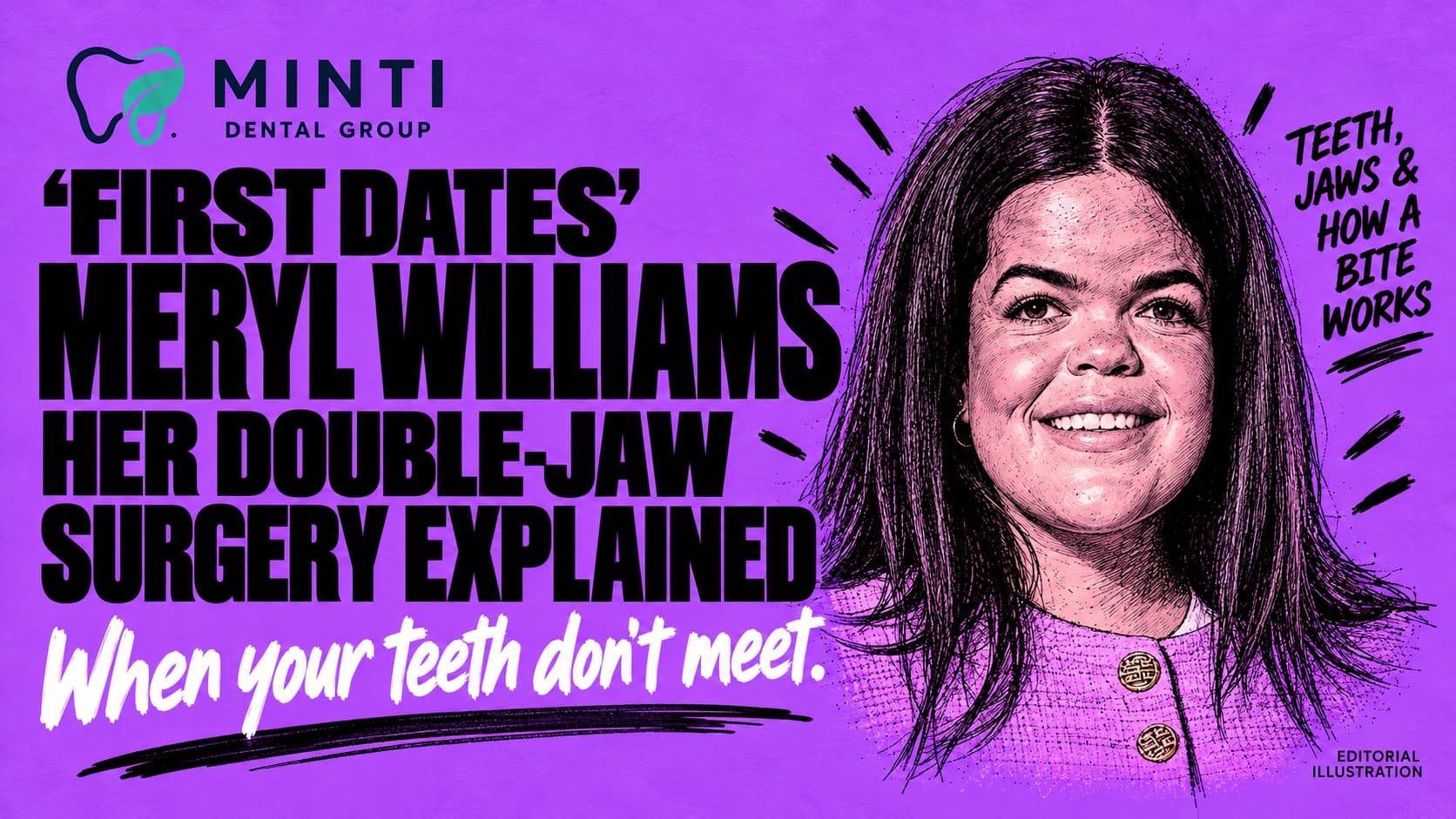
Meryl Williams is looking for love. The woman who won the very first civilian series of The Traitors is one of the singletons on the new series of First Dates, which starts on Channel 4 tonight at 10pm. Red dress, nervous smile, the full First Dates experience.
That smile has a bigger backstory than most people realise. Meryl has told The Guardian that she had double-jaw surgery at 22, because her teeth didn't close together properly.
And I want to be really clear about what that means, because it's easy to lump it in with every other celebrity "smile makeover". It isn't. This wasn't about whiter teeth or a trendy shape. It was about her top and bottom teeth not meeting.
The short answer: double-jaw surgery (sometimes called bimaxillary surgery) means operating on both the upper and lower jaws to move them into a better position. It's used when the problem isn't just crooked teeth, but how the jaws themselves line up, so the bite can't be fixed with braces alone. It's a functional treatment, usually done alongside braces before and after, and it takes years, not weeks. Most people with a bite problem will never need it. (If you're an adult wondering about your own teeth, I've written about straightening teeth as an adult, and how Tom Cruise had braces at 39 to correct his bite.)
What did Meryl actually say?
In an interview with The Guardian, Meryl explained that she had double-jaw surgery aged 22 because her teeth didn't close together.
That's what's on the record. I don't know the exact details of her bite, how long her treatment took, or what her surgeons did, and I'm not going to guess. But "my teeth didn't close together" tells me something important: this was about function first. It's a very different story from someone choosing veneers because they want a brighter smile. (And for the record, plenty of stars have chosen to keep their natural smiles, as I wrote in Keira Knightley's 'wonky teeth'.)
Teeth vs jaws: why it's not just about straightness
Most people think orthodontics is about straight teeth. Line them up nicely, job done.
But there's a bigger question underneath: do your upper and lower jaws actually fit together?
Think of it like a lid and a box. If the lid's a bit wonky, you can wiggle it into place. That's what braces do: they move individual teeth. But if the lid is simply the wrong size for the box, or sits too far forward or back, no amount of wiggling will make it fit. That's a jaw problem, not a tooth problem.
Your bite is how your upper and lower teeth meet when you close your mouth. When the jaws are out of proportion, you might see things like:
- An open bite, where the front teeth don't touch at all when the back teeth are closed. You can bite down and still have a gap at the front.
- The lower jaw sitting too far forward, so the bottom teeth close in front of the top teeth.
- The lower jaw sitting too far back, so there's a big gap between the top and bottom front teeth.
- Asymmetry, where the jaws are lopsided compared with each other.
These can affect much more than looks. They can make biting into food difficult, put uneven pressure on certain teeth, and sometimes affect speech or comfort.
When braces alone aren't enough
This is the key bit. According to Cambridge University Hospitals' NHS patient information, jaw surgery is performed to correct the bite when it "cannot be corrected by orthodontics alone".
Nottingham University Hospitals describe the kind of people it's for: those with a large size mismatch between the upper and lower jaws, major asymmetry, or jaws that have grown apart and left a gap between the front teeth.
The proper name for this is orthognathic surgery, which is a mouthful. It just means surgery to straighten the jaws. "Ortho" means straight, "gnathic" means jaw.
When both the upper and lower jaws need moving, that's what people call double-jaw surgery.
What does the treatment actually involve?
Here's what surprises people most: the surgery is only one part of a much longer journey.
According to Nottingham University Hospitals, a typical pathway looks something like this:
- Braces before surgery. Around 18 months of tooth alignment to get the teeth in the right position for the jaws to be moved.
- The operation. Done under general anaesthetic, usually with one or two nights in hospital.
- Recovery. Around four to six weeks after leaving hospital.
- Braces after surgery. At least six months more to fine-tune the bite.
- Retainers. To hold everything in place once the braces come off.
Overall, the treatment takes on average two and a half to three years.
Cambridge's NHS guidance adds that swelling is usually worst in the first couple of days and mostly settles within two weeks, that people start on liquids and soft food, and that normal eating usually returns after four to six weeks.
So when you see a celebrity's before-and-after jaw surgery photos, remember that what you're looking at is often years of braces, appointments and recovery, not a quick fix.
What are the risks?
Like any operation, jaw surgery has risks, and it's important to go in with your eyes open.
Cambridge's patient information says the lower lip is typically numb after lower jaw surgery. It reports that around one in ten people have tingling or numbness that lasts several weeks, and fewer than one in a hundred have problems lasting more than a year, which may be permanent. Other risks include bleeding, infection around the plates and screws, and occasionally needing a second, smaller operation to adjust the bite. (That kind of nerve-related numbness is very different from the short-lived numbness after a filling, which I explain in how long numbness lasts after the dentist.)
None of that is meant to frighten anyone. It's just why jaw surgery is a carefully planned, specialist decision, made by orthodontists and maxillofacial surgeons together, and never something to rush into.
Most bite problems don't need surgery
I don't want anyone reading this to panic that their slightly uneven bite means an operation. It almost certainly doesn't.
Many bite problems are mild and can be treated with braces or aligners alone. The British Orthodontic Society says teeth can be moved at any age, as long as the teeth and gums are healthy. For milder alignment problems, clear aligners like Invisalign may be enough. Bigger bite problems may need fixed braces, which plenty of famous faces have worn, as I covered in the royals who wore braces.
Surgery is generally for the cases where the jaws themselves are the problem, and that's a much smaller group of people.
Signs your bite might need looking at
You don't need to diagnose yourself, but these are worth mentioning at your next check-up:
- your front teeth don't touch when you bite together
- you find it hard to bite into things like sandwiches or apples with your front teeth
- your lower teeth sit in front of your upper teeth
- your jaw clicks, aches or feels tired after eating
- you notice uneven wear on some teeth
- your teeth have started to shift as you've got older
If any of those sound familiar, your dentist can assess your bite and, if needed, refer you to an orthodontist. Jaw aches and clenching can have other causes too, which I've covered in why your tooth hurts when you clench.
A few quick questions
What is double-jaw surgery? It's surgery on both the upper and lower jaws to move them into a better position, usually because the bite can't be corrected with braces alone.
Why did Meryl Williams have jaw surgery? She told The Guardian she had double-jaw surgery at 22 because her teeth didn't close together.
Is jaw surgery cosmetic? It's mainly done to correct how the jaws and teeth meet, which is a functional problem. It can also change how the face looks, but that isn't usually the main reason.
How long does jaw surgery treatment take? Including braces before and after, it typically takes around two and a half to three years.
The verdict
Meryl Williams' smile isn't the result of a quick cosmetic tweak. It's the result of fixing something much more fundamental: how her teeth and jaws come together.
That's a useful reminder for all of us. Straight teeth are only half the story. A good bite, where the top and bottom teeth meet comfortably, matters just as much. And if braces can't get you there on their own, there are specialist options that can.
Good luck tonight, Meryl. May your date be as well-matched as your bite.
This article is general information based on public reporting. It is not personal dental advice. Meryl Williams and First Dates have no connection with this article.