
You've been told you need a root canal, and the first thing you did was open your calendar. How long do I need off work? Will it be one visit or five? Can I squeeze it into a lunch break? It's one of the most common things I hear in my surgery, and it's a very sensible thing to want to plan for.
The short answer: a root canal usually takes one or two appointments, and each one typically lasts somewhere between about half an hour and two hours, depending on the tooth. Front teeth are often quicker; back teeth, and teeth that have been treated before, usually take longer. If you need a crown afterwards, that's usually a separate visit or two. I'll give you a proper estimate once I've examined the tooth and seen an X-ray, and you can read how I do it on my root canal treatment page. If the tooth is throbbing or your face is swelling, don't wait for a routine slot: call my emergency dentist team in Harlow or Enfield, or NHS 111 if we're closed. The full picture is in my root canal treatment guide.
Tooth throbbing, or need to plan your root canal? Call your nearest Minti practice. If it's hurting, tell reception it's urgent. I keep same-day appointments for pain and swelling wherever I can.
- Nuffield Dental Practice, Harlow: 01279 424 038
- Church Langley Dental, Harlow: 01279 306 690
- Enfield Smiles, Enfield: 020 8804 4320
Evening, weekend, or nowhere near us? Call NHS 111. If you're struggling to breathe or swallow, or swelling is spreading to your eye or neck, that's 999 or A&E.
How long does each root canal appointment take?
Here's where the sources give slightly different answers, so I'll give you all of them rather than pretend there's one number:
- The British Endodontic Society, the UK body for root canal specialists, says appointments last between 30 and 120 minutes.
- The NHS says appointments may last 1 to 2 hours, or sometimes longer.
- The American Association of Endodontists says each appointment is around 90 minutes.
Plan for anything from half an hour to a couple of hours in the chair, with a straightforward tooth at the shorter end and a complicated one at the longer end. Some of that time is the numbing and setting up, so the drilling part isn't the whole appointment.
If it's the time with your mouth open that's worrying you, that's normal. You can have a break whenever you need one. More on what it feels like is in is a root canal painful?
How many root canal appointments will I need?
Usually one or two. The British Endodontic Society says most cases can be treated in one or two visits. The NHS says it usually takes two or more appointments, and the Oral Health Foundation describes a minimum of two. So there's a bit of a spread, and it depends on your tooth and on how your dentist chooses to do it.
Here's the thing: one visit isn't automatically better than two. Sometimes it makes sense to clean the tooth, seal it with a temporary filling and let things settle before finishing. Sometimes it can be done in one go. That's a decision I make once I've seen the tooth, and I'll explain why.
If the tooth needed urgent attention first, the treatment might start with an emergency visit to take the pressure off and get you out of pain, with the rest completed afterwards.
Root Canal Treatment at Minti
Private root canal treatment is £325 to £475 depending on the tooth. On the NHS, it falls under Band 2, £76.60.
Ask about root canal treatment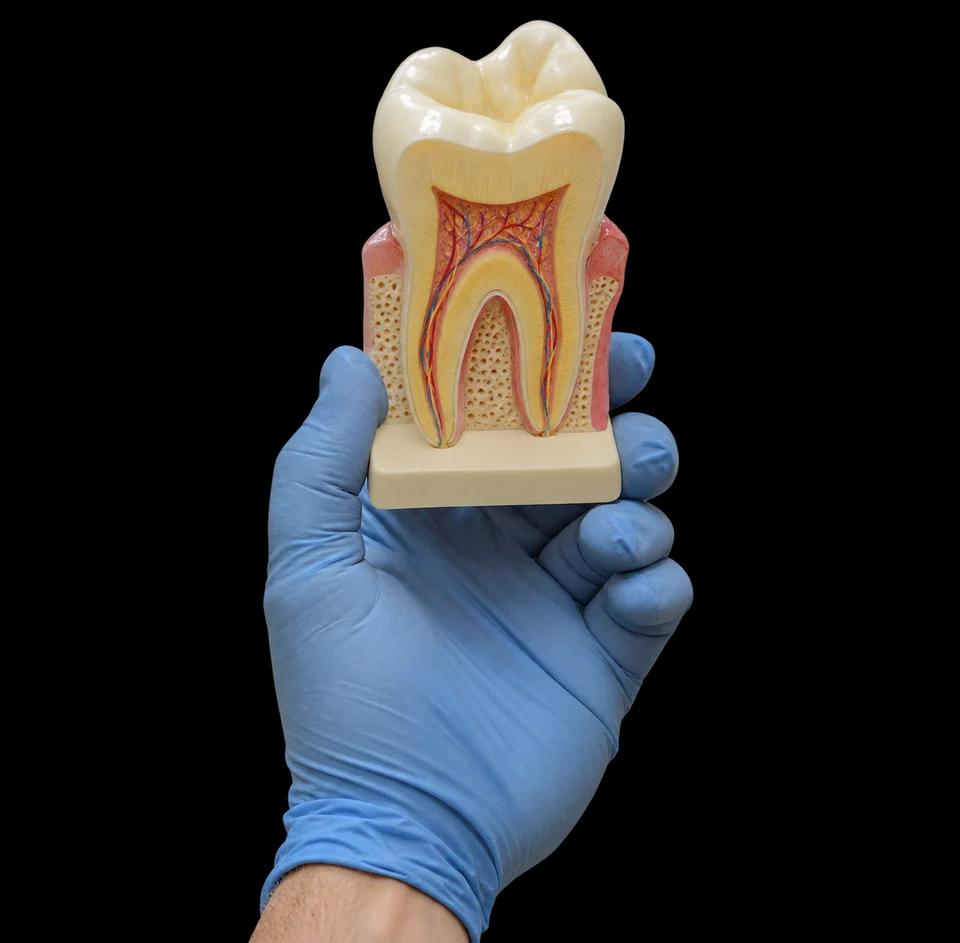
Why do some root canals take longer?
It mostly comes down to how many canals there are and how easy they are to get at. A front tooth usually has one canal, like a studio flat: one room, easy to find, quick to clean. A molar at the back is more like a house with several bedrooms up a narrow staircase, and every room needs doing. Which? notes that back teeth tend to cost more privately, for much the same reason.
Other things that add time:
- Curved, narrow or partly blocked canals, which need more careful work.
- A tooth that's been root filled before, because the old filling material has to come out first. If that's you, see my root canal tooth has started hurting again.
- An active infection, which may be dealt with first so the tooth can settle before it's finished.
More time on a difficult tooth isn't a bad sign. It's the job being done properly.
What happens between root canal appointments?
If your treatment is split over two visits, the NHS says a temporary filling is usually put in to protect the tooth in between. A few simple rules while you wait:
- Go easy on the tooth. The American Association of Endodontists advises not chewing on it until it's been properly restored. A temporary filling is a bit like a tent: fine for now, not built for a storm.
- Expect a bit of tenderness. The British Endodontic Society says any discomfort can normally be controlled with paracetamol or ibuprofen and usually lasts no more than a few days.
- Keep your next appointment. Leaving a half-finished root canal for months gives bacteria a chance to get back in.
If the temporary filling falls out, or the pain gets worse instead of better, ring us. What's normal after treatment is covered in pain after a root canal and root canal recovery.
Written Quotes Before You Decide
Your practice explains your options and sets out the cost in writing before treatment starts. Every quote is held for 30 days.
Request an appointment
How long until the tooth is completely finished?
The root canal itself is only part of the job. Afterwards, the tooth needs a permanent filling or a crown to protect it. The British Endodontic Society says the tooth will need a permanent filling and/or crown, and the NHS says a crown may be needed if the tooth was badly infected.
If you need a crown, that usually means extra appointments, often two to three weeks apart while it's made. My dental crowns page explains how that works. So from first visit to finished tooth, it's worth thinking in weeks rather than days, even though the time in the chair is only a few hours in total.
If you're working out what it'll cost as well, see how much is a root canal on the NHS?
When should you get the tooth seen?
If you've been told you need a root canal and the tooth is quiet, book it in rather than waiting for a quiet month that never comes. The NHS says that an infected tooth left without root canal treatment may need to be taken out. The tooth you treat early is the one you're most likely to keep.
Call us today if:
- the tooth throbs, keeps you awake, or painkillers aren't helping
- it's getting more painful to bite on
- your gum is swelling, or there's a bad taste or a spot on the gum
- a temporary filling has come out between appointments
The NHS says toothache lasting more than two days needs a dentist.
Call 999 or go to A&E, not a dentist, if:
- you're finding it hard to breathe, swallow or speak
- swelling is spreading towards your eye or down into your neck
- your eye is swollen or painful, or your eyesight changes suddenly
- you can't open your mouth properly because of swelling
Until you're seen, the NHS advice for toothache is paracetamol or ibuprofen if you can take them, and avoiding very hot, cold or sweet food on that side.
If you're near Harlow or Enfield, I'd much rather take a look and give you a proper plan than have you guessing how much time to book off. Ring your nearest Minti practice. If it's already hurting, say it's urgent and we'll do our best to see you the same day. Anywhere else, or out of hours, call NHS 111.
This article is general information, not a diagnosis. Tooth pain needs examining in person to find the cause.