Somebody said the words "root canal" and your stomach dropped. Since then you've heard at least one friend say they'd "rather have a root canal" than sit through something dull, and you've read three forums at midnight that did nothing for your nerves. It's one of the most common things I hear in my surgery: "Is it going to hurt?" It's a fair question, and you're far from the only one asking it.
The short answer: for most people, a root canal is not painful while it's being done. The tooth is numbed with local anaesthetic first, so what you feel is pressure, vibration and the odd bit of fiddling, much like a filling. The tooth can be sore for a few days afterwards, which usually settles with paracetamol or ibuprofen. In fact, the treatment is what gets rid of the pain from an infected tooth. If you've been told you need one, you can read how I do it on my root canal treatment page, and the full picture is in my root canal treatment guide. If the tooth is throbbing, keeping you awake or your face is swelling, don't wait: call my emergency dentist team in Harlow or Enfield, or NHS 111 if we're closed.
Tooth throbbing, or a root canal you've been putting off? Call your nearest Minti practice and tell reception if it's urgent. I keep same-day appointments for pain and swelling wherever I can.
- Nuffield Dental Practice, Harlow: 01279 424 038
- Church Langley Dental, Harlow: 01279 306 690
- Enfield Smiles, Enfield: 020 8804 4320
Evening, weekend, or nowhere near us? Call NHS 111. If you're struggling to breathe or swallow, or swelling is spreading to your eye or neck, that's 999 or A&E.
Does a root canal hurt while it's being done?
It shouldn't. The NHS says you'll have a local anaesthetic before the treatment starts, and the British Endodontic Society, the UK body for root canal specialists, puts it bluntly: modern anaesthetic techniques mean the treatment can be done without pain. The Oral Health Foundation compares the experience to having a filling.
So why does everyone flinch at the name? Because root canal treatment gets blamed for the toothache that came before it. That throbbing, can't-sleep, painkillers-aren't-touching-it pain is the infection inside the tooth. The root canal is what stops it. Blaming the root canal for the pain is like blaming the fire brigade for the fire.
Here's the thing: I'd rather you knew what you'll feel than pretend you'll feel nothing at all. Being numb doesn't mean being unaware. You'll know things are happening. They just shouldn't hurt.
What does a root canal actually feel like in the chair?
Mostly, it feels like a long filling. Here's roughly how it goes:
- The numbing. A small scratch as the anaesthetic goes in, then the familiar fat-lip feeling. I always make sure the tooth is numb before I start.
- The rubber dam. A thin sheet that sits around the tooth like a little raincoat, keeping it clean and dry and stopping bits going down your throat. It looks odd but it's comfortable, and plenty of people find it makes the whole thing feel less "in your mouth".
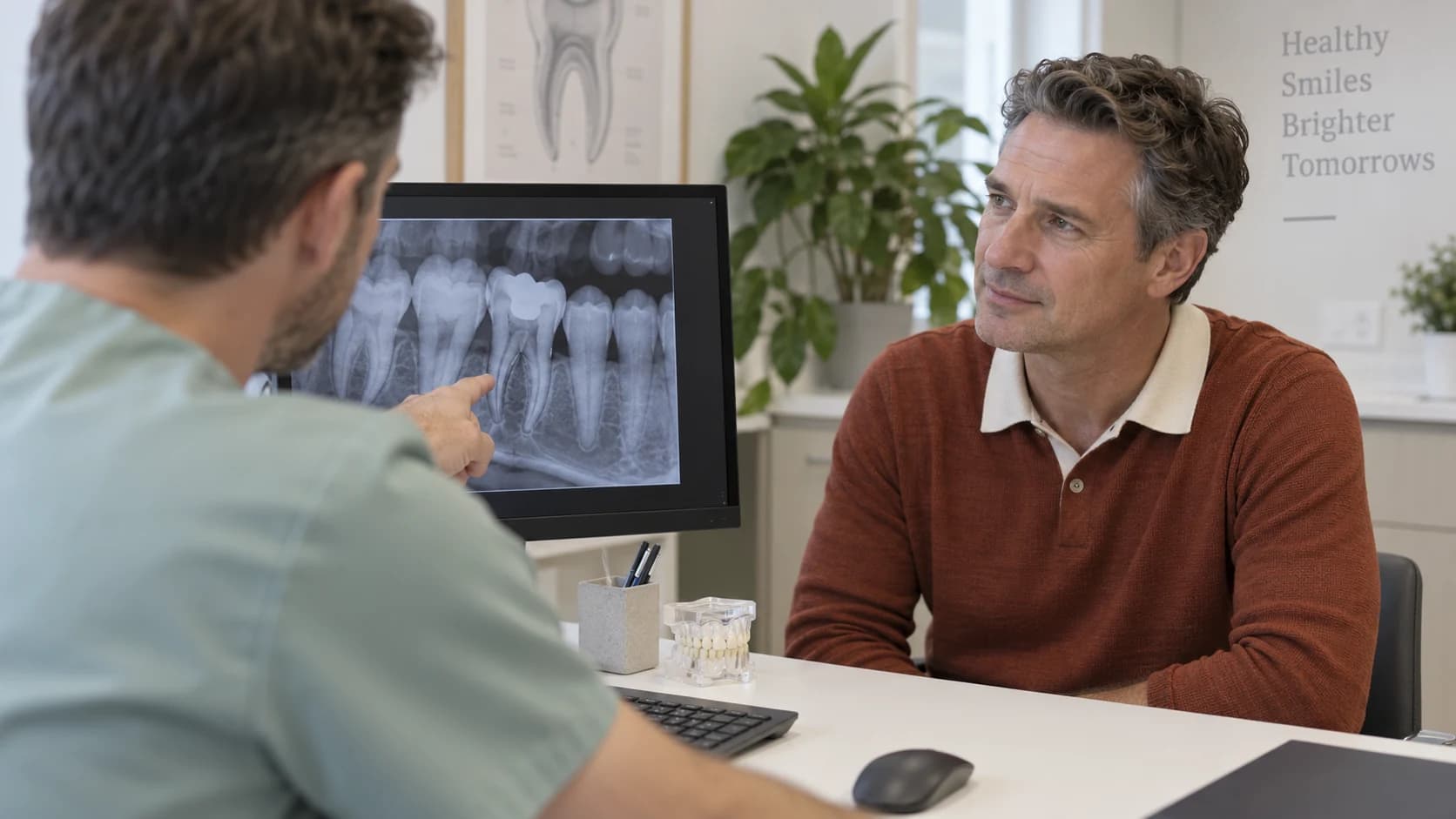
- The work. The tooth is opened, the infected or inflamed pulp inside is removed, and the canals are cleaned, shaped and filled. You'll feel pressure, vibration and some gentle pushing. You won't feel what's going on inside the tooth.
- The sealing. The tooth is closed with a filling, sometimes a temporary one if there's a second visit.
The hardest part for most people is keeping their mouth open for a while. Bring headphones if it helps. If you need a break, a hand signal is all it takes, and I'd much rather pause than have you grit your teeth through it.
How long all this takes is in how long does a root canal take?
What if I can still feel something?
Tell me. Straight away, mid-sentence if you have to. Feeling pressure is normal. Feeling sharp pain is not, and it isn't something you're meant to put up with. More anaesthetic can be given, and I'd always rather top it up than have you sit there being brave.
If you're anxious about dentists in general, say so when you book and again when you sit down. There's no need to feel embarrassed. Nerves about a root canal are completely normal, and knowing in advance helps me go at your pace and explain each step before it happens.
Does a root canal hurt afterwards?
It can feel sore for a few days, and that's normal. Once the anaesthetic wears off, the tooth and the gum around it are often tender, especially to bite on. The British Endodontic Society says this is normally controlled with paracetamol or ibuprofen and usually lasts no more than a few days. The American Association of Endodontists says much the same, with most soreness easing within a few days.
Two things help. Take painkillers as directed on the packet if you need them. And go easy on the tooth: the American Association of Endodontists advises not chewing on it until it's been properly restored, because a tooth with a temporary filling isn't at full strength yet.
What's normal day by day is in pain after a root canal, and when the tooth should feel like itself again is in root canal recovery. If it's specifically sore to bite on, see root canal tooth hurts when I bite.
Is it worse than having the tooth out?
Both are done under local anaesthetic, and neither should hurt during the procedure. The difference is what you're left with. After a root canal you keep your own tooth. The British Endodontic Society says a treated tooth can usually be kept indefinitely, which saves you from the gap, or from an implant, bridge or denture to fill it.
Sometimes a tooth is too broken to save, and then taking it out is the right call. That's something I can only judge by looking at it and taking an X-ray, not from a description. I'll talk you through both options before anything happens.
When should you get the tooth seen?
If you've been told you need a root canal and the tooth is quiet, don't leave it for months. The Oral Health Foundation warns that without treatment, repeated infection can mean the tooth has to come out. I say this to everyone: the tooth you treat early is the one you're most likely to keep.
Call us today if:
- the tooth throbs, keeps you awake, or painkillers aren't helping
- it hurts to bite on and it's getting worse
- your gum is swelling, or there's a bad taste or a spot on the gum
- pain after a root canal is getting worse after the first few days instead of better, or your face is swelling after a root canal
The NHS says toothache lasting more than two days needs a dentist.
Call 999 or go to A&E, not a dentist, if:
- you're finding it hard to breathe, swallow or speak
- swelling is spreading towards your eye or down into your neck
- your eye is swollen or painful, or your eyesight changes suddenly
- you can't open your mouth properly because of swelling
Until you're seen, the NHS advice for toothache is paracetamol or ibuprofen if you can take them, and avoiding very hot, cold or sweet food on that side.
If you're near Harlow or Enfield, I'd much rather take a look and talk you through it than have you dreading a treatment that's usually far kinder than the toothache it fixes. Ring your nearest Minti practice to book. If it's already hurting, say it's urgent and we'll do our best to see you the same day. Anywhere else, or out of hours, call NHS 111.
This article is general information, not a diagnosis. Tooth pain needs examining in person to find the cause.