By Dr Nishma Kotecha, dentist
Robbie Williams is the headline act at Flemington today. He's performing on Lexus Melbourne Cup Day, in front of one of the biggest crowds in Australian sport, and you can bet he'll be grinning from ear to ear.
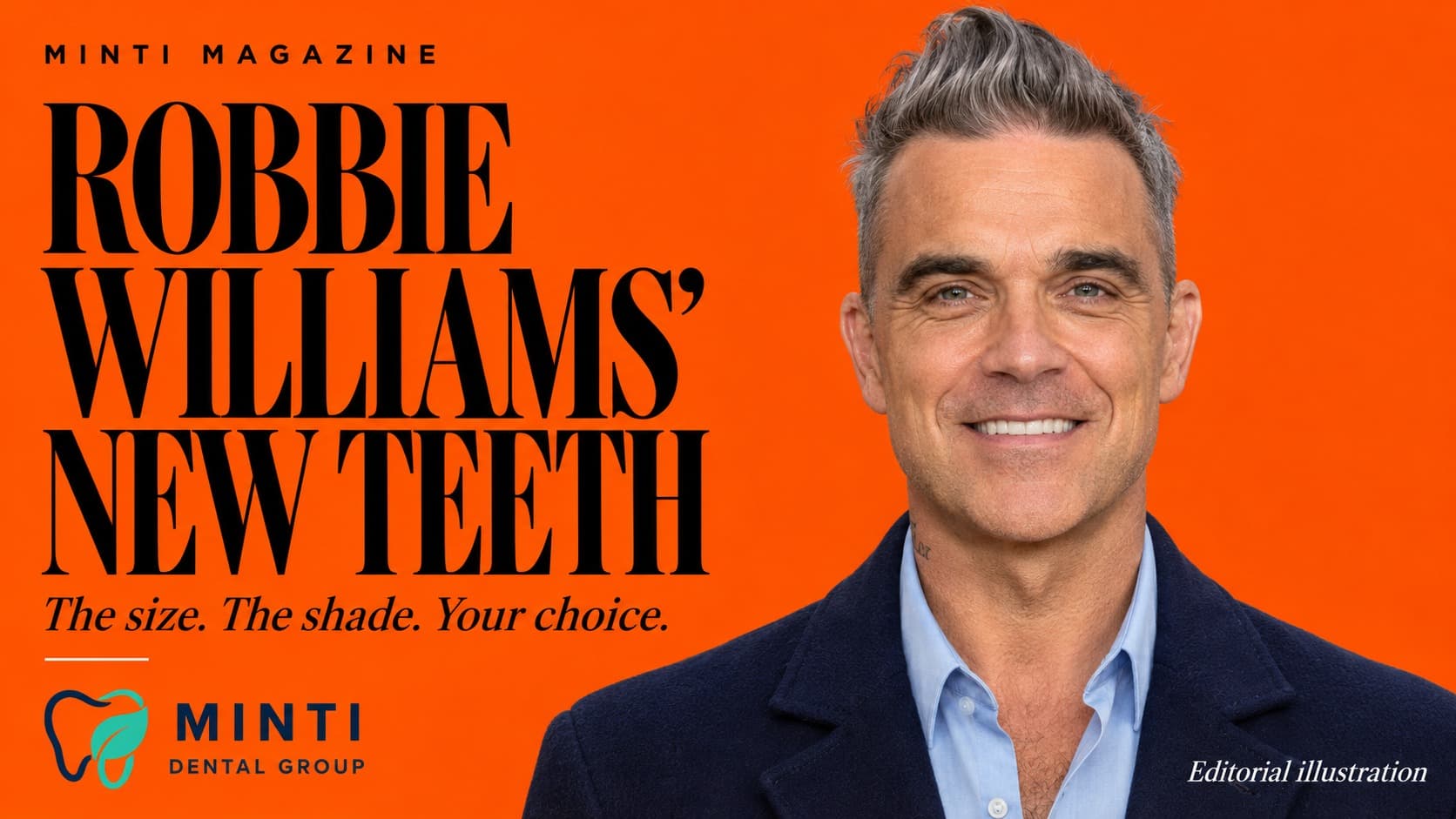
That grin got its own moment in the spotlight in January 2025. On Watch What Happens Live, Robbie showed off his new teeth, asked the studio audience for a round of applause, and then asked the question I wish more people asked out loud: "Not too much, right?"
The short answer: Robbie's question is one of the most useful things anyone can ask before, during and after a smile makeover. The aim isn't necessarily the biggest, whitest smile possible. It's a smile you feel comfortable wearing, that suits your face and still feels like you. The coverage described his new teeth as veneers, but I don't know how many teeth were treated, what material was used or what his plan involved, and I'm not going to guess. What I can do is explain how to judge "too much" for yourself. (Rylan asked himself the same question, and went for a smaller, more natural set the second time round.)
What did Robbie actually say?
Robbie was on Andy Cohen's show in January 2025 while promoting his biopic Better Man. As reported by People and syndicated on Yahoo, he asked the audience for a "round of applause for my new teeth", joking that they were "not like the yellow knobs that I used to have", and that "these were so expensive and you pay for what you get".
Then came the question: "Not too much, right?"
Andy Cohen's verdict was reassuring: "No. They suit you." He also said they looked great, and added: "They're nice. They're a little small."
I love this exchange, because it captures exactly what goes through people's heads after a smile makeover. Excitement, a bit of nervousness, and that nagging feeling of "do these look natural, or does everyone think I've overdone it?"
Robbie's new teeth were his choice, and I'm not here to judge them. They're also not something I've examined. But his question is the perfect starting point for anyone thinking about changing their own smile.
Why "too much" is the right question to ask
Most people walk into a cosmetic consultation thinking about what they want to fix. A chip. A gap. Stains. Teeth they feel are too small or too uneven.
What fewer people think about is where the line is. When does "better" tip over into "obviously done"?
That line is different for everyone. Some people want a dramatic, camera-ready smile and love it. Others want a smile that nobody would ever guess had been changed. Neither is wrong. But you need to know which one you want before anything permanent happens, because many veneer procedures involve removing some of your natural enamel, and enamel doesn't grow back.
The four things that decide whether a smile looks "too much"
When I'm judging whether a smile looks natural, these are the things I look at.
1. Size
Teeth that are too long or too wide for your face are one of the most common reasons a smile looks overdone. Your front teeth should sit comfortably with your lips, both at rest and when you smile. If you can't close your lips easily, or your teeth look like they're arriving a few seconds before the rest of you, they're probably too big.
Interestingly, Andy Cohen thought Robbie's were "a little small", which shows how personal this is.
2. Shape
Natural teeth aren't perfect rectangles. They have slightly softer corners, small variations, and a gentle curve along the edges. A smile where every tooth is identical, perfectly square and razor-straight can look artificial, even if each tooth looks "perfect" on its own.
3. Shade
This is the big one. Very bright white teeth can look stunning in photos, but out of place in real life, especially next to your skin tone or the whites of your eyes. I covered why "Hollywood white" isn't a real target in my piece on Cat Deeley's whitening habit.
4. Expectations
The last one isn't about teeth at all. It's about what you're hoping the new smile will do for you. If you're expecting it to change your life, any result can feel disappointing. If you're expecting it to help you feel more comfortable smiling in photos, that's much more achievable.
How to avoid "too much" before it happens
The best time to ask Robbie's question is before treatment, not after. Here's how to do that:
- Ask for a preview. Many dentists can show you a mock-up of the planned shape and size before anything permanent is done. Smile at yourself in the mirror with it. Talk with it. Check it from the side, not just the front.
- Look in daylight. Surgery lights are bright and flattering. Check shades near a window.
- Bring photos of smiles you like, and ones you don't. The "don't like" pile is often more useful than the "like" pile.
- Ask about less invasive options. Sometimes teeth whitening, composite bonding or straightening with Invisalign gets you most of the way with much less change to your natural teeth.
- Think long term. A smile that looks amazing at 30 should still suit you at 50. Trends in teeth change, just like trends in eyebrows.
What if you've already had treatment and you're not sure?
It's very common to feel a bit odd about a new smile at first. Your lips, tongue and brain are all used to your old teeth. Speech can feel strange for a few days, and you'll catch yourself in the mirror more than usual.
Give it a little time before you decide you hate it. But if, after a few weeks, something still bothers you, talk to the dentist who did the work. Small adjustments to shape or length are sometimes possible, depending on what was done.
And remember that most cosmetic work isn't forever anyway. Veneers wear and may need replacing, as I explained in how long a smile makeover lasts. When that time comes, it's a chance to go more natural if you want to, just like Rylan did.
Whose opinion should you listen to?
Robbie asked a whole studio audience. Most of us ask our partner, our mum or our group chat.
Friends and family are great for gut reactions, but their opinions can be shaped by how used they are to your old smile. Social media opinions are even less reliable, because comment sections tend to swing between "perfect!" and "too much!" with very little in between.
In my view, the most important opinion is yours, followed by your dentist's. You're the one who has to wear it every day. Your dentist is the one who can tell you what's realistic, what's healthy for your teeth and what will still look good in years to come.
If you'd like to see how other famous smiles have changed, and what the people behind them have said, take a look at what celebrities have said about their veneers, or the stars who kept their natural smiles.
A few quick questions
Did Robbie Williams get new teeth? Yes. He showed off new teeth on Watch What Happens Live in January 2025, which coverage described as veneers.
What did Robbie Williams say about his teeth? He asked "Not too much, right?" and joked they were "not like the yellow knobs that I used to have". Andy Cohen told him: "They suit you."
How do I know if veneers will look too much? Ask for a preview or mock-up, check the shade in daylight, and make sure the size and shape suit your face and lips.
Can veneers look natural? Yes. Size, shape and shade that suit your face, plus small natural variations between teeth, make a big difference.
The verdict
Robbie Williams has never been one for understatement, but his question about his teeth was spot on. "Not too much, right?" is the question every smile makeover should start with, not end with.
The best smile isn't the biggest or the whitest. It's the one you feel comfortable wearing, every day, without thinking about it. Whether that's a full set of veneers or a bit of whitening, make sure it still looks like you. Start with a check-up and an open conversation, and know what veneers cost in the UK before you commit.
This article is general information based on public reporting. It is not personal dental advice. Robbie Williams and the Melbourne Cup have no connection with this article.